


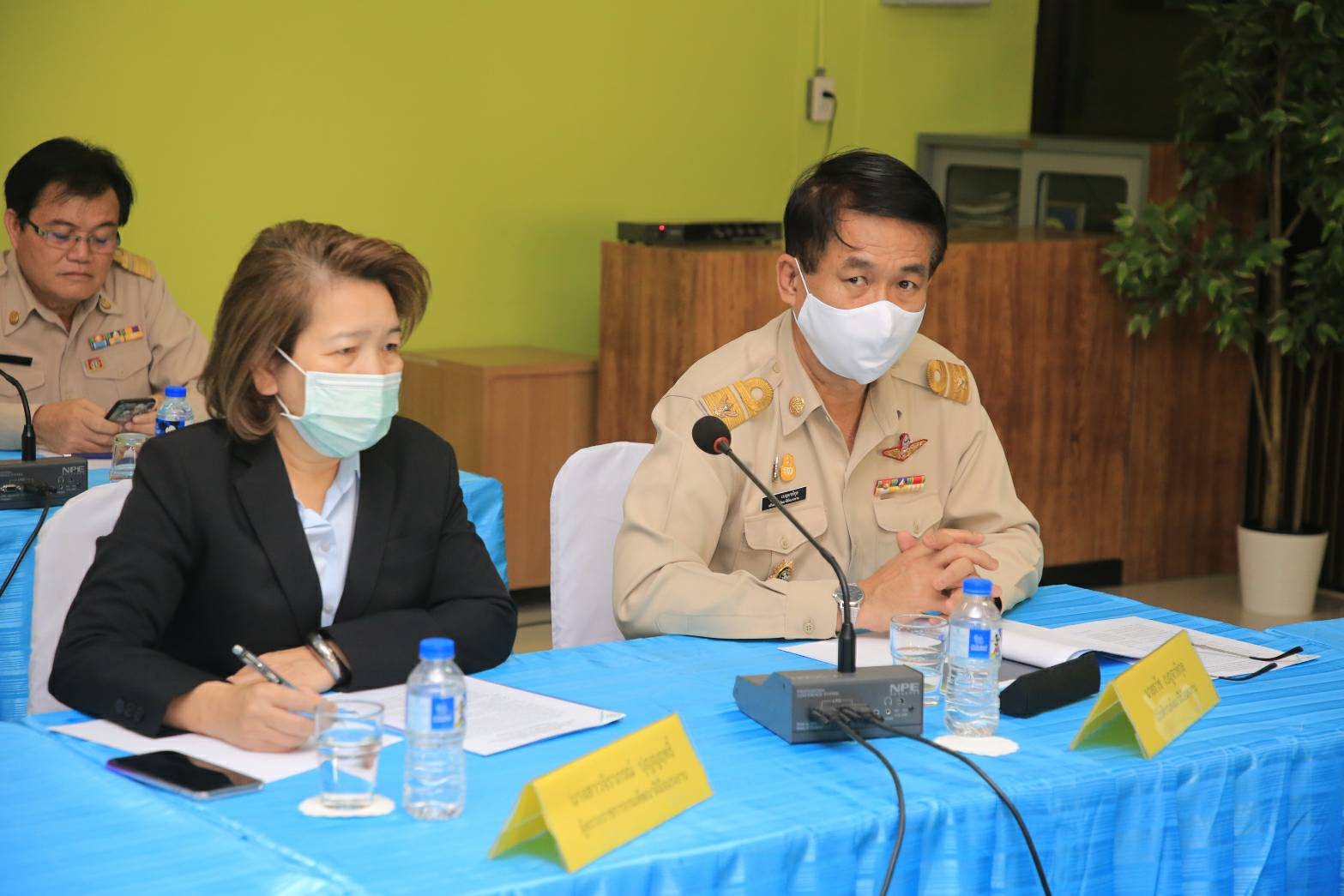
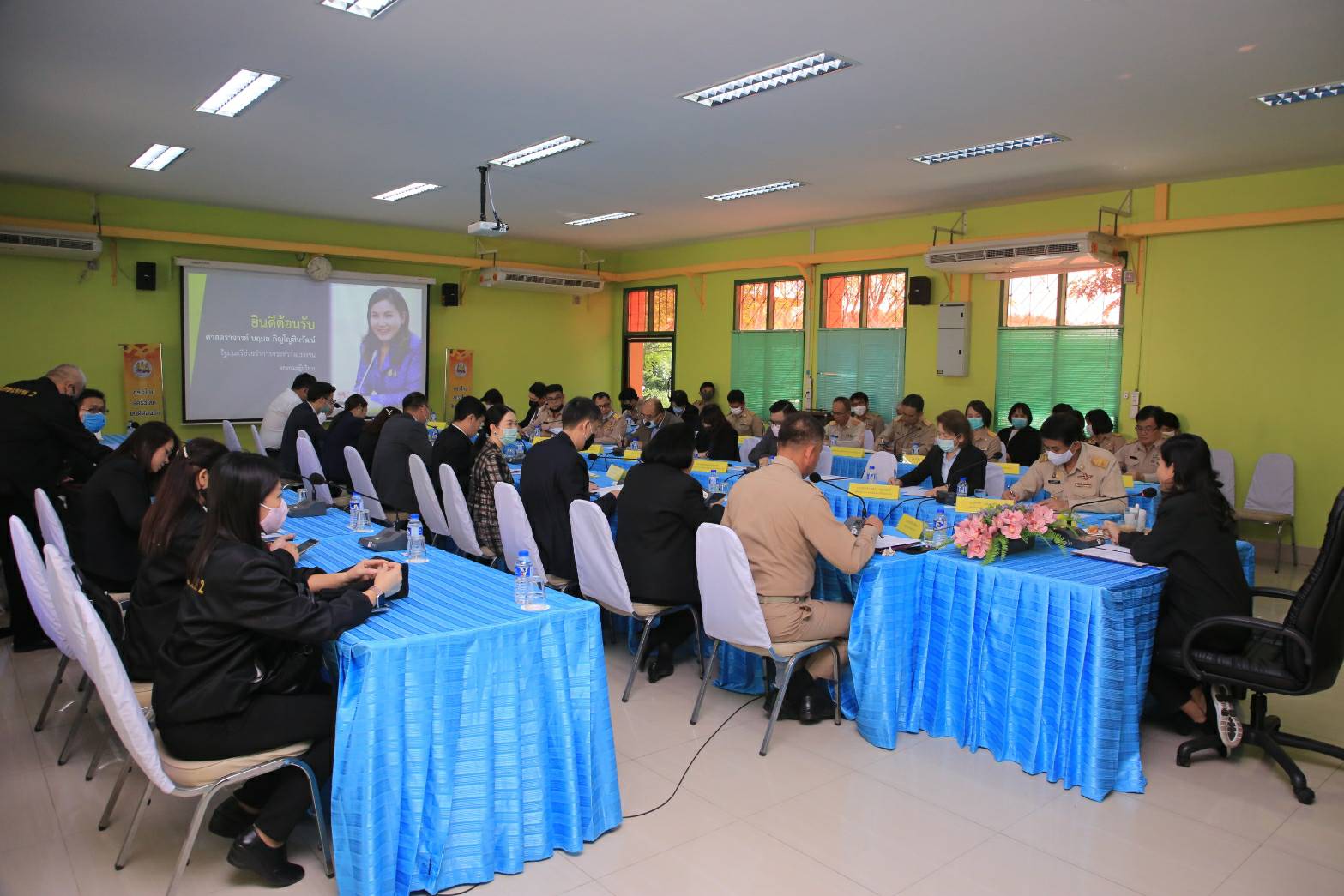
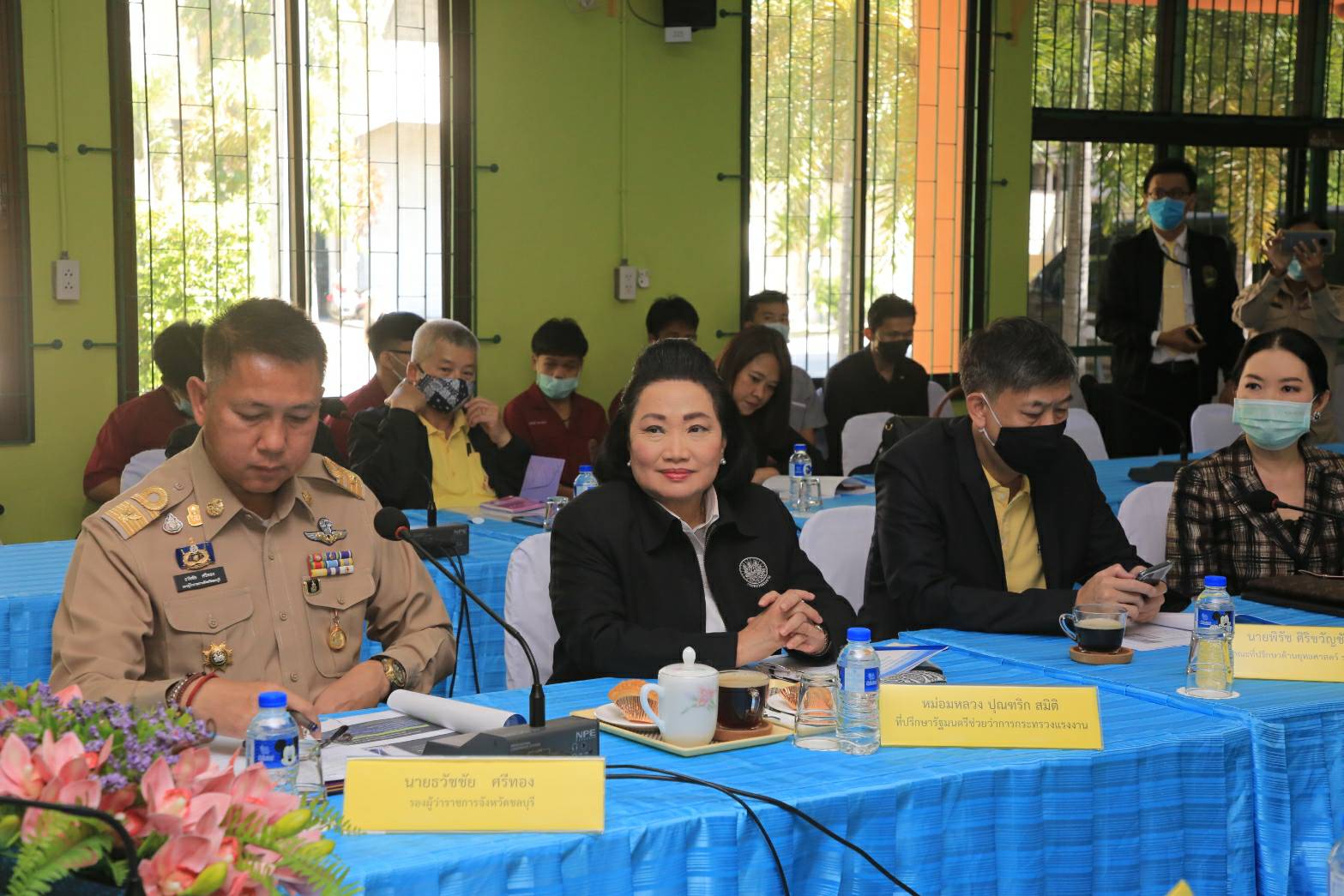
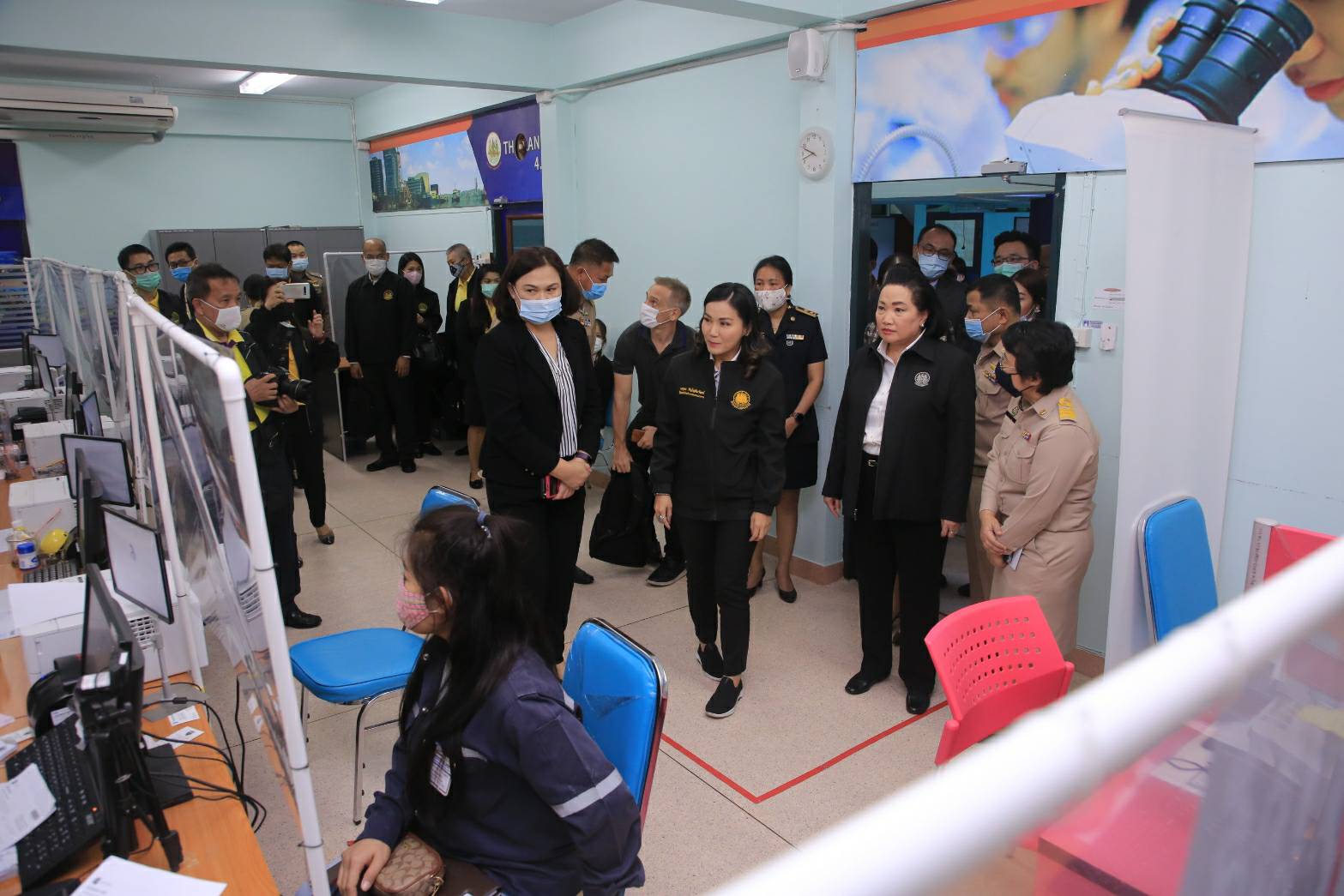
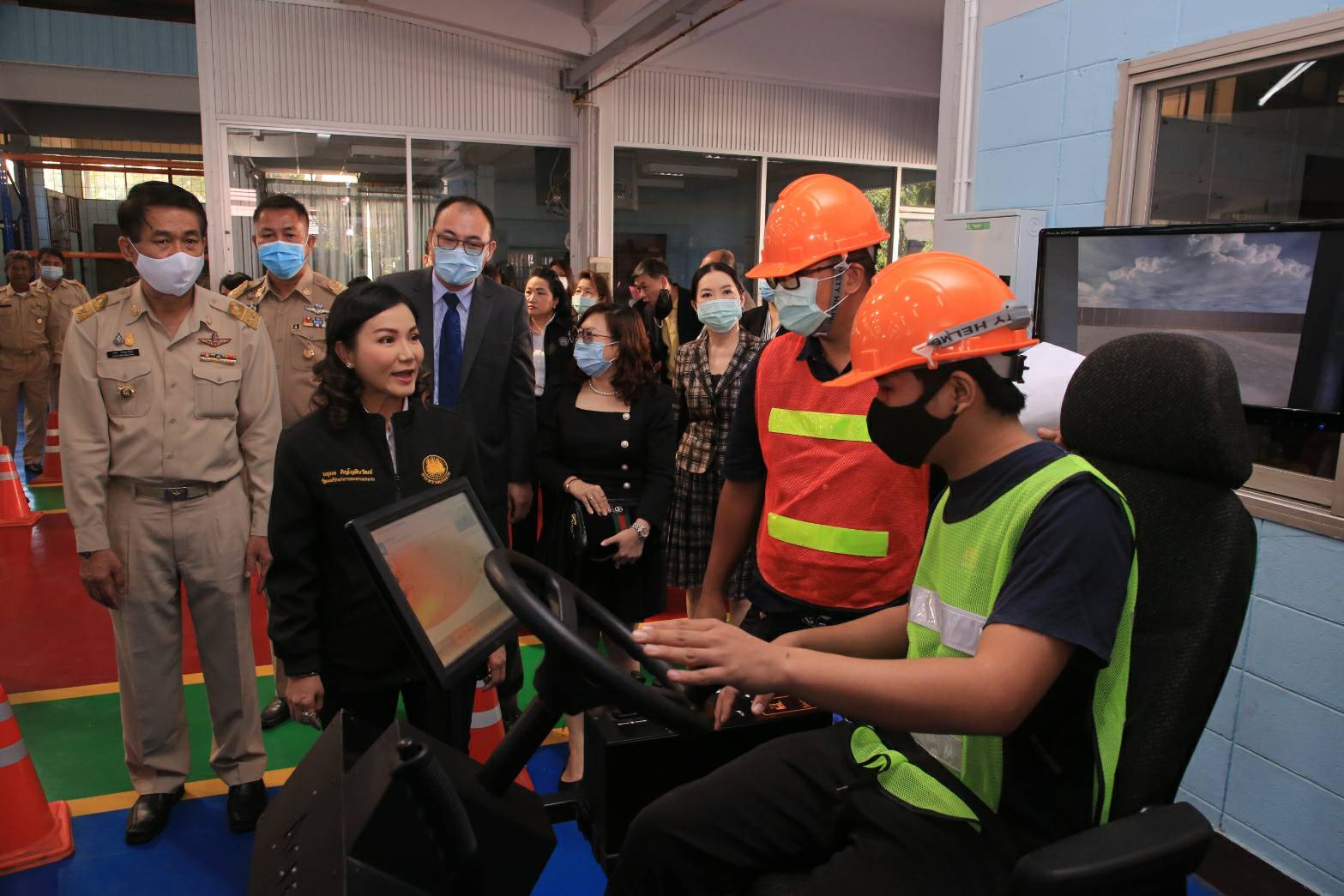
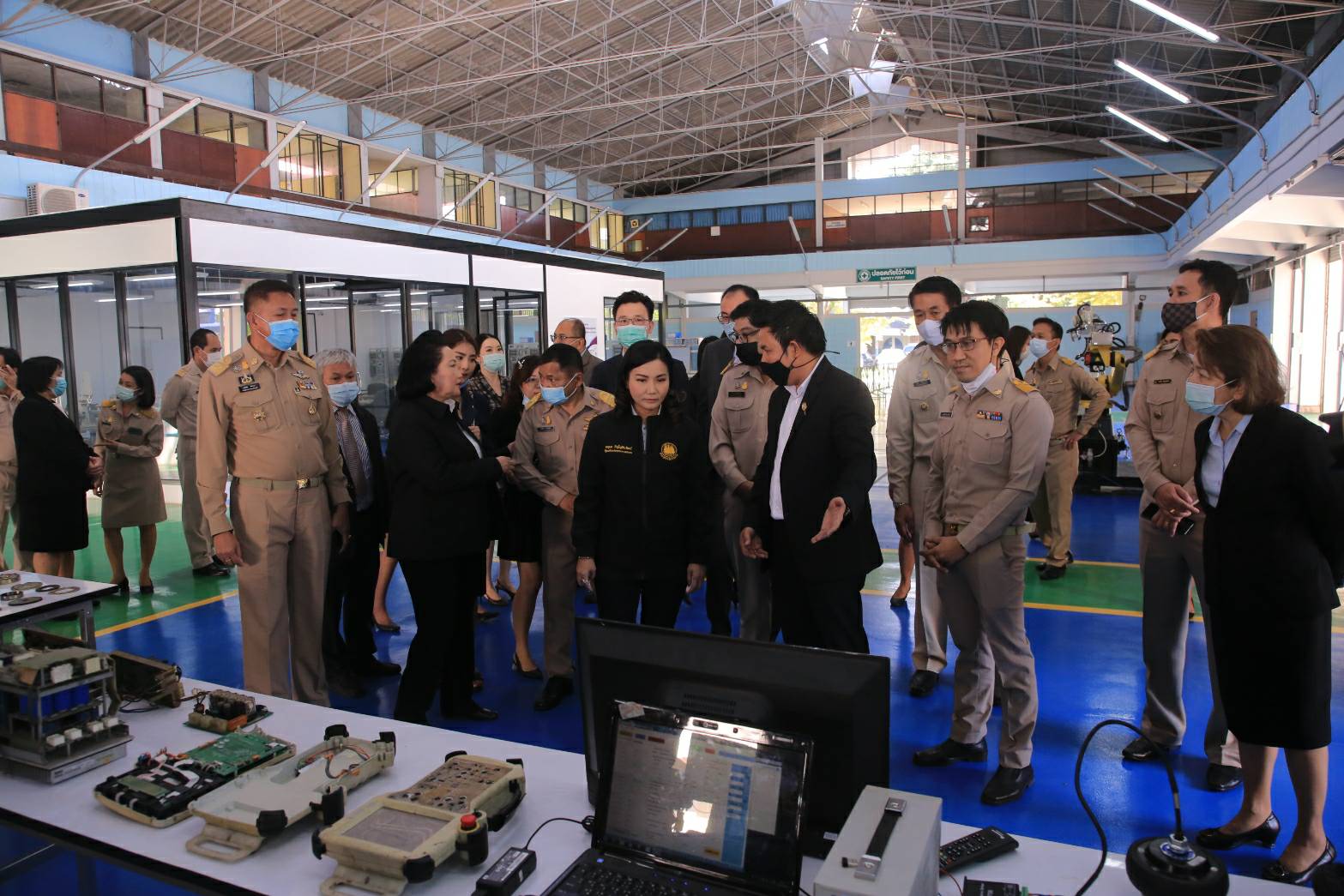
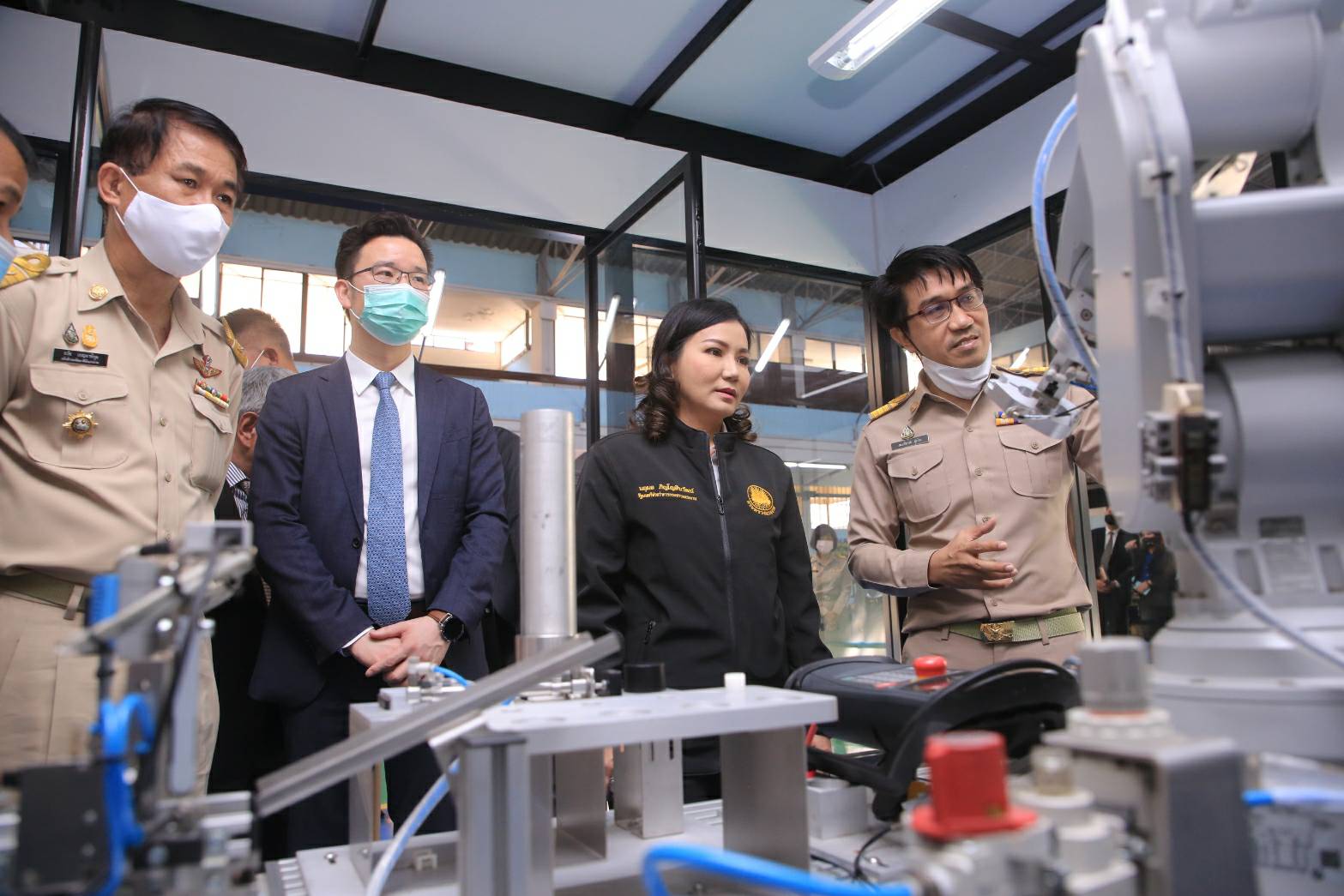
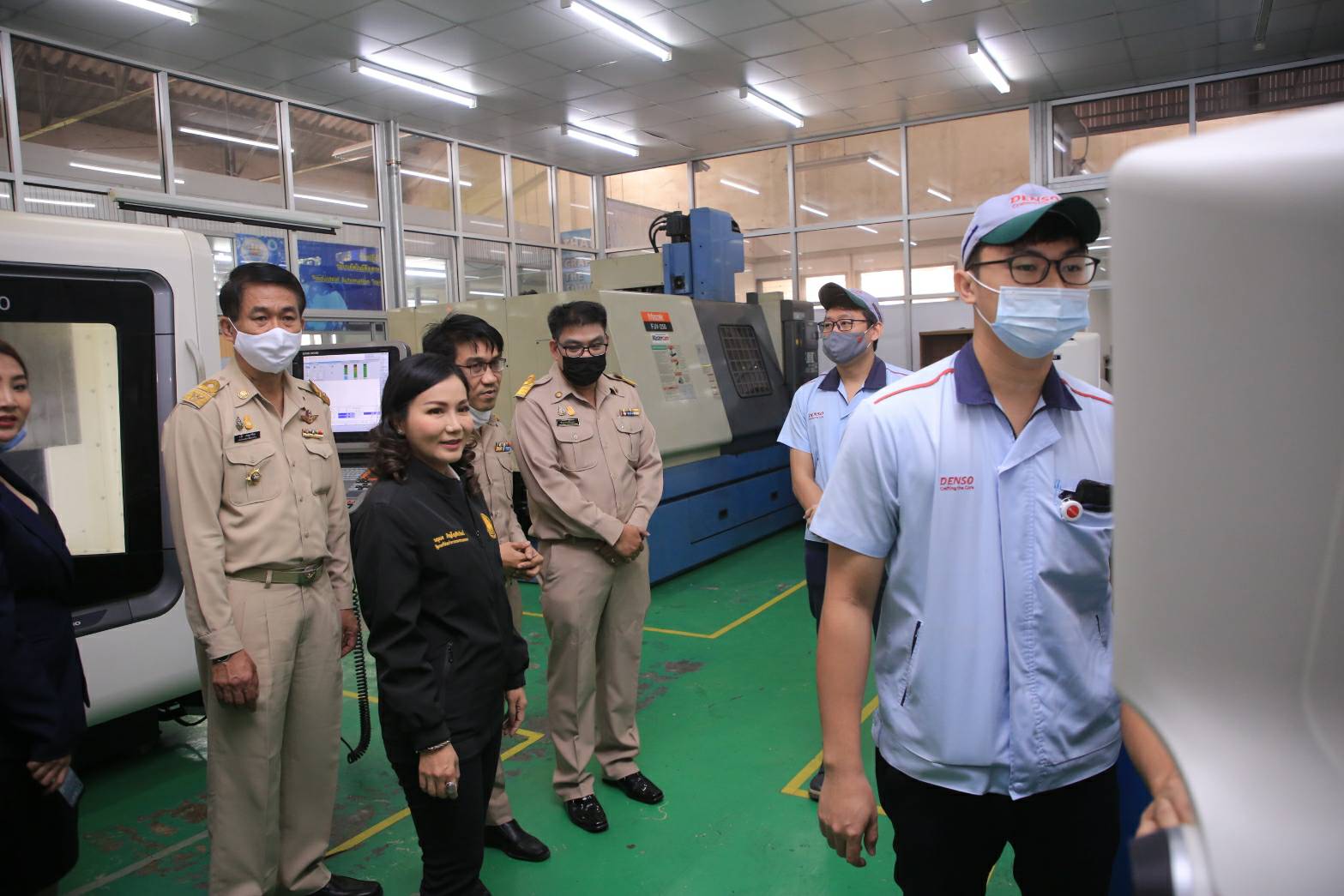
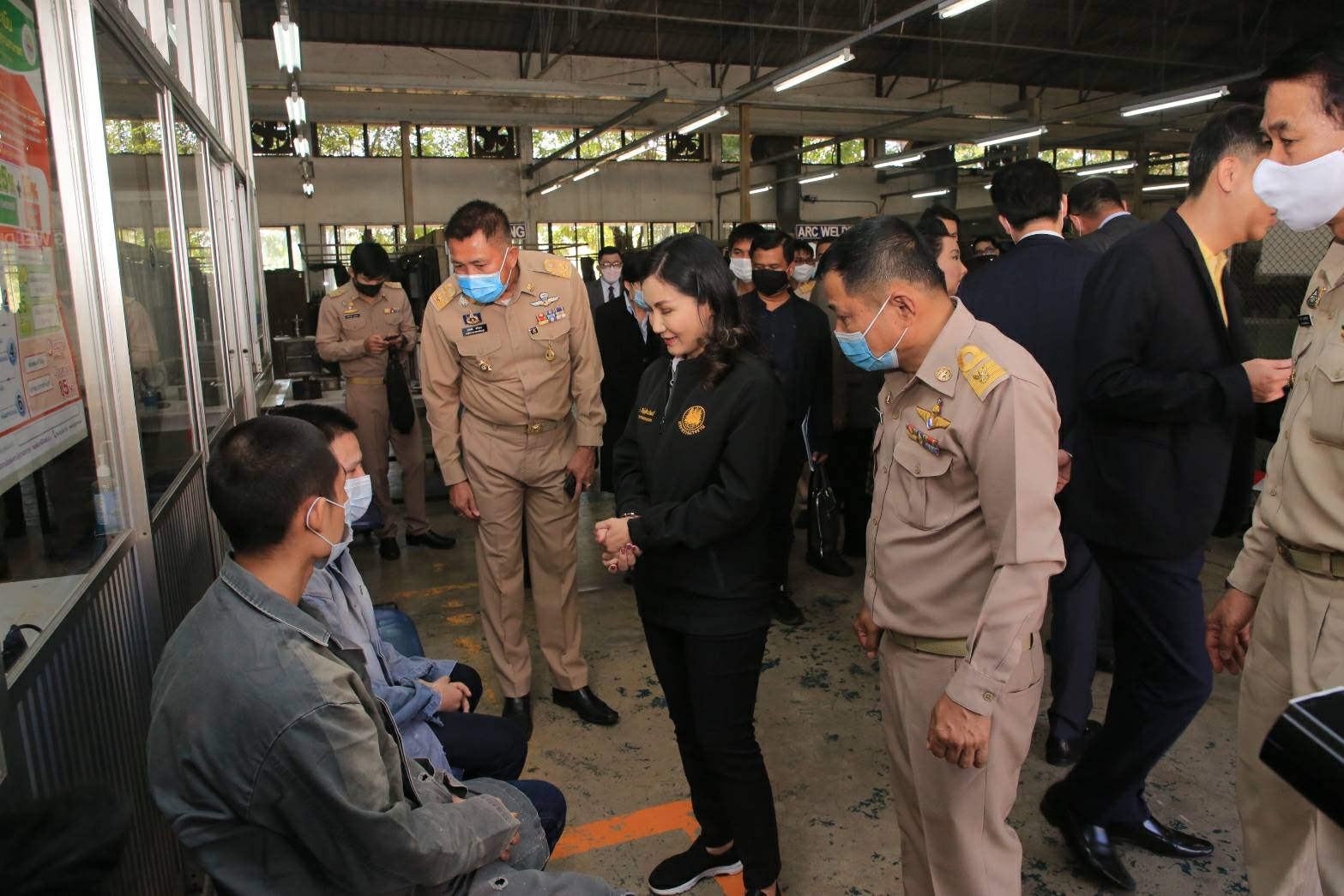
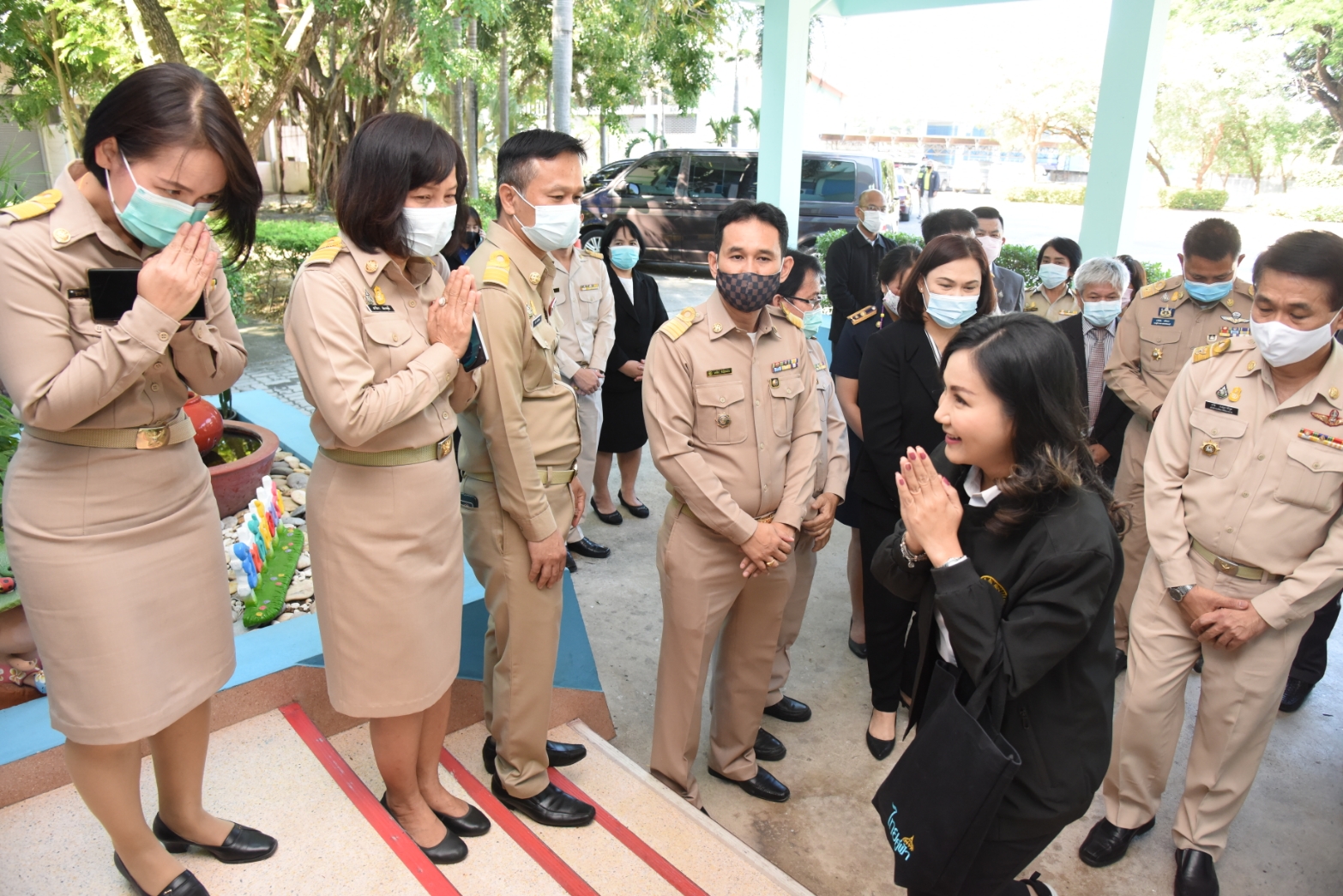
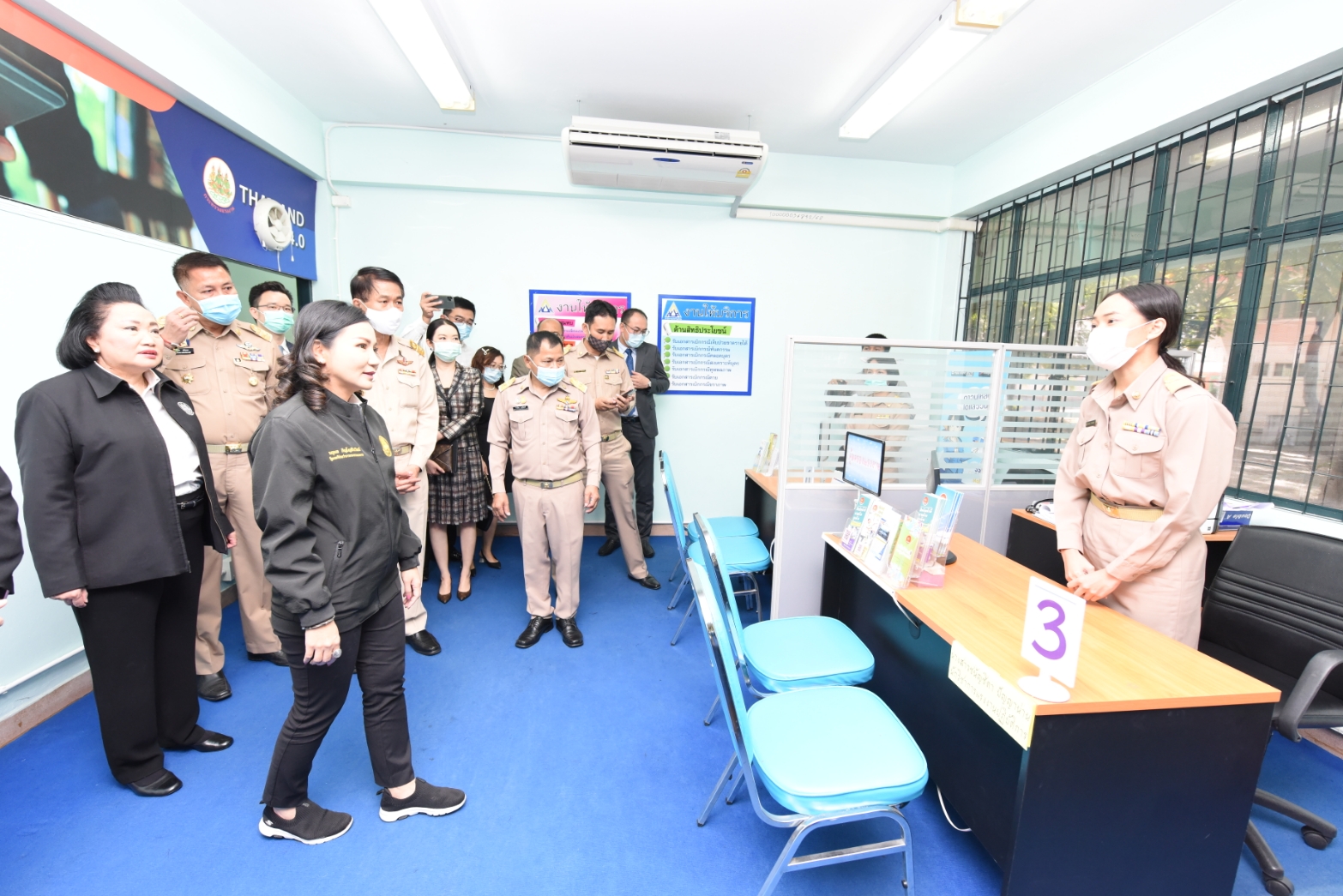
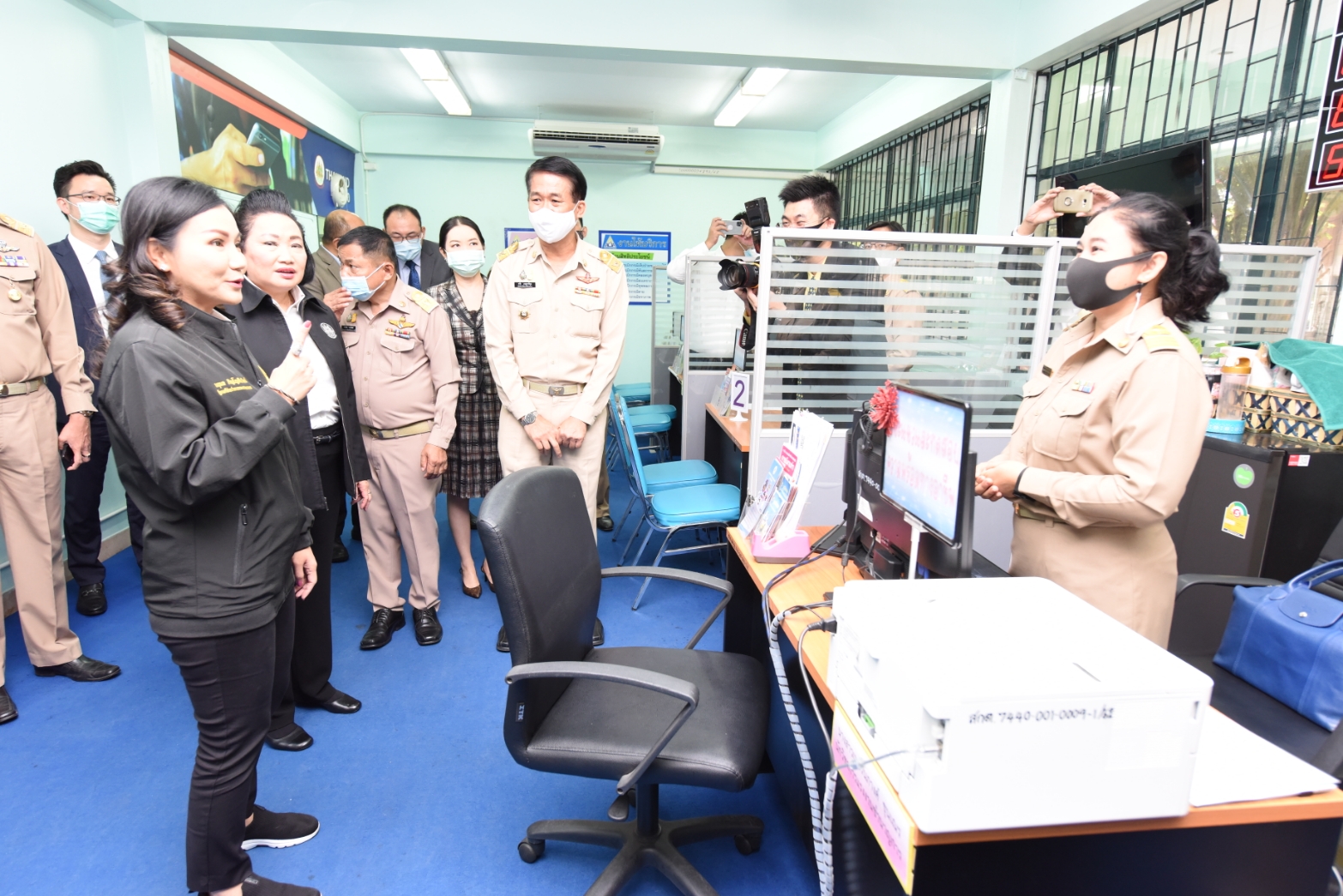
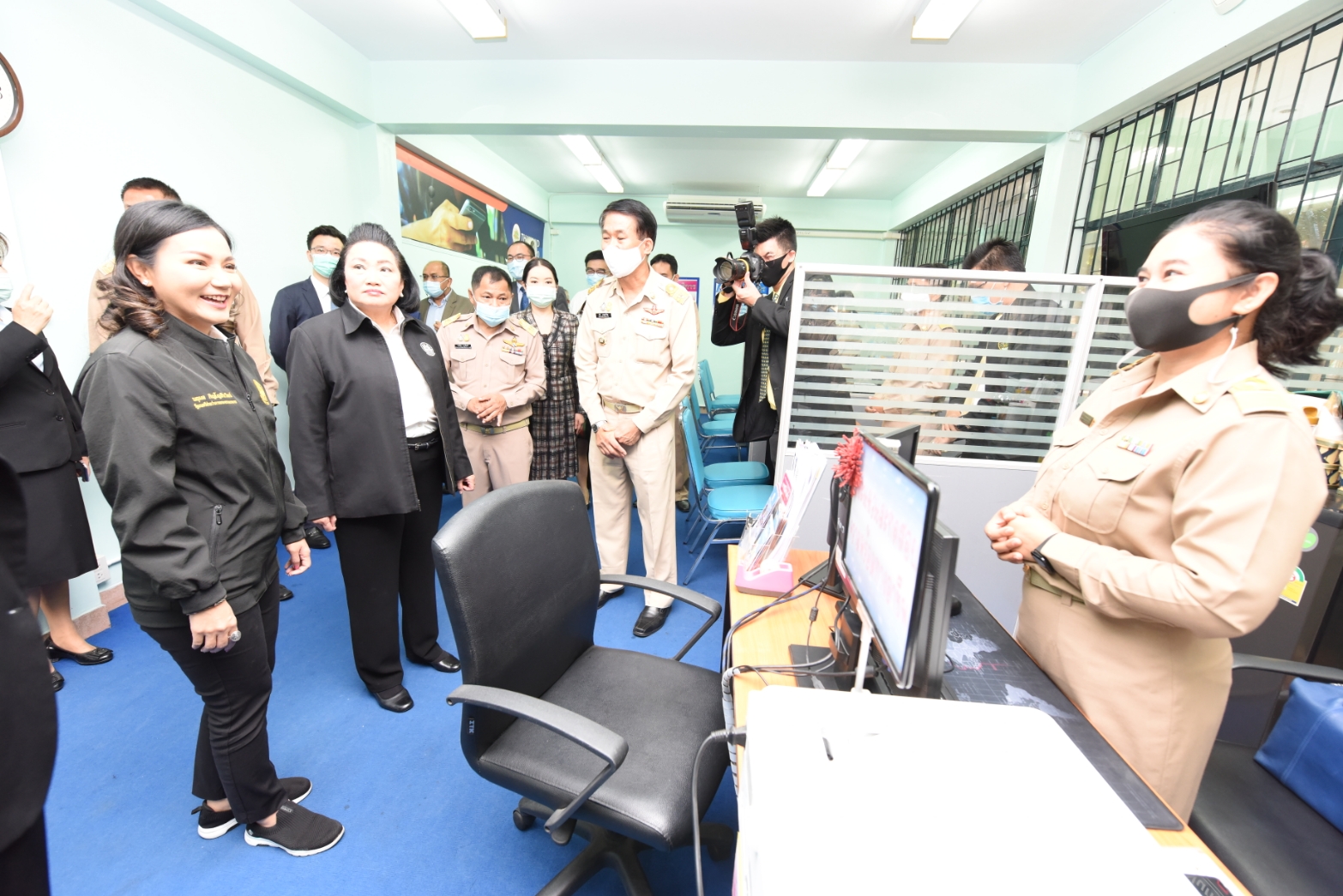
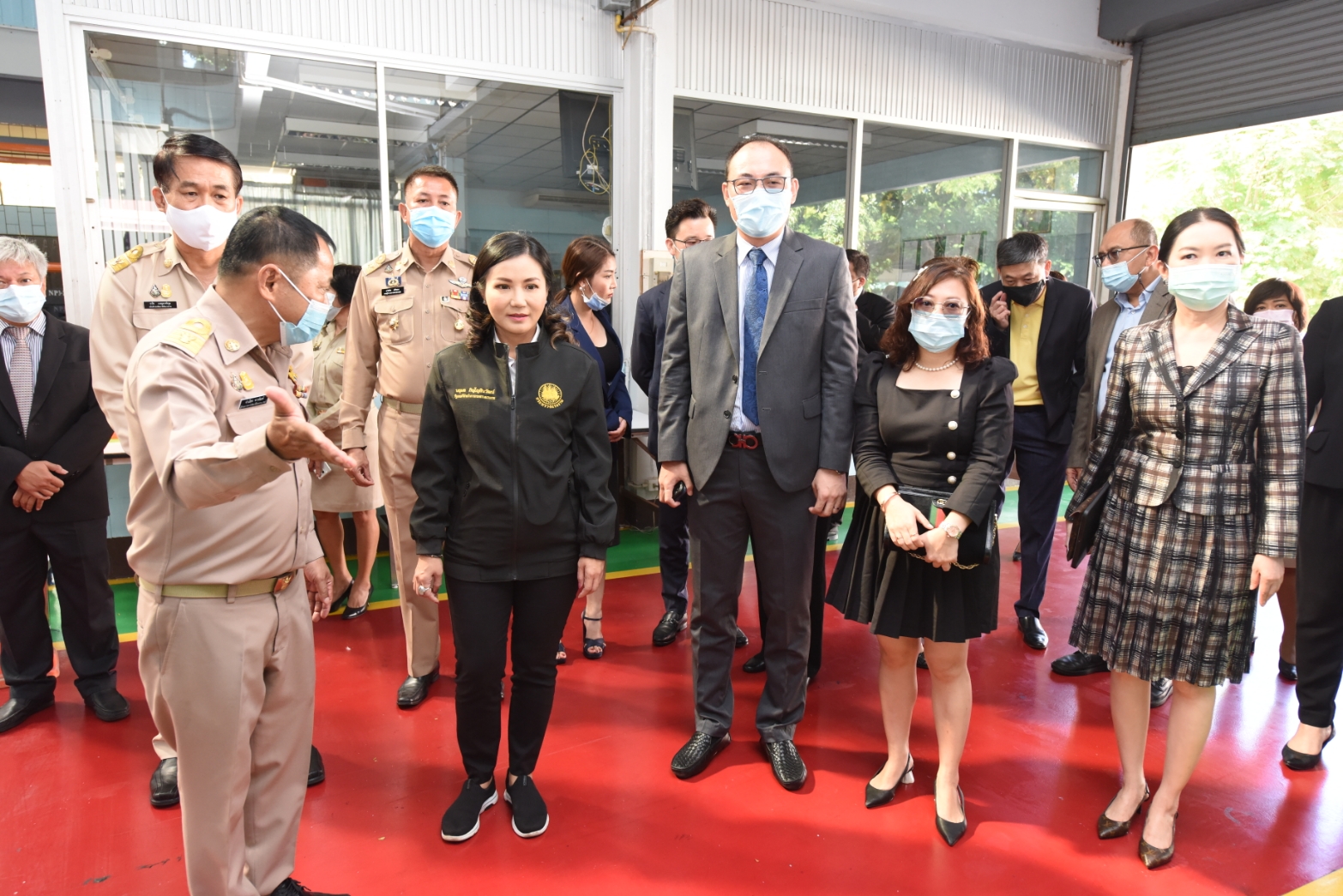

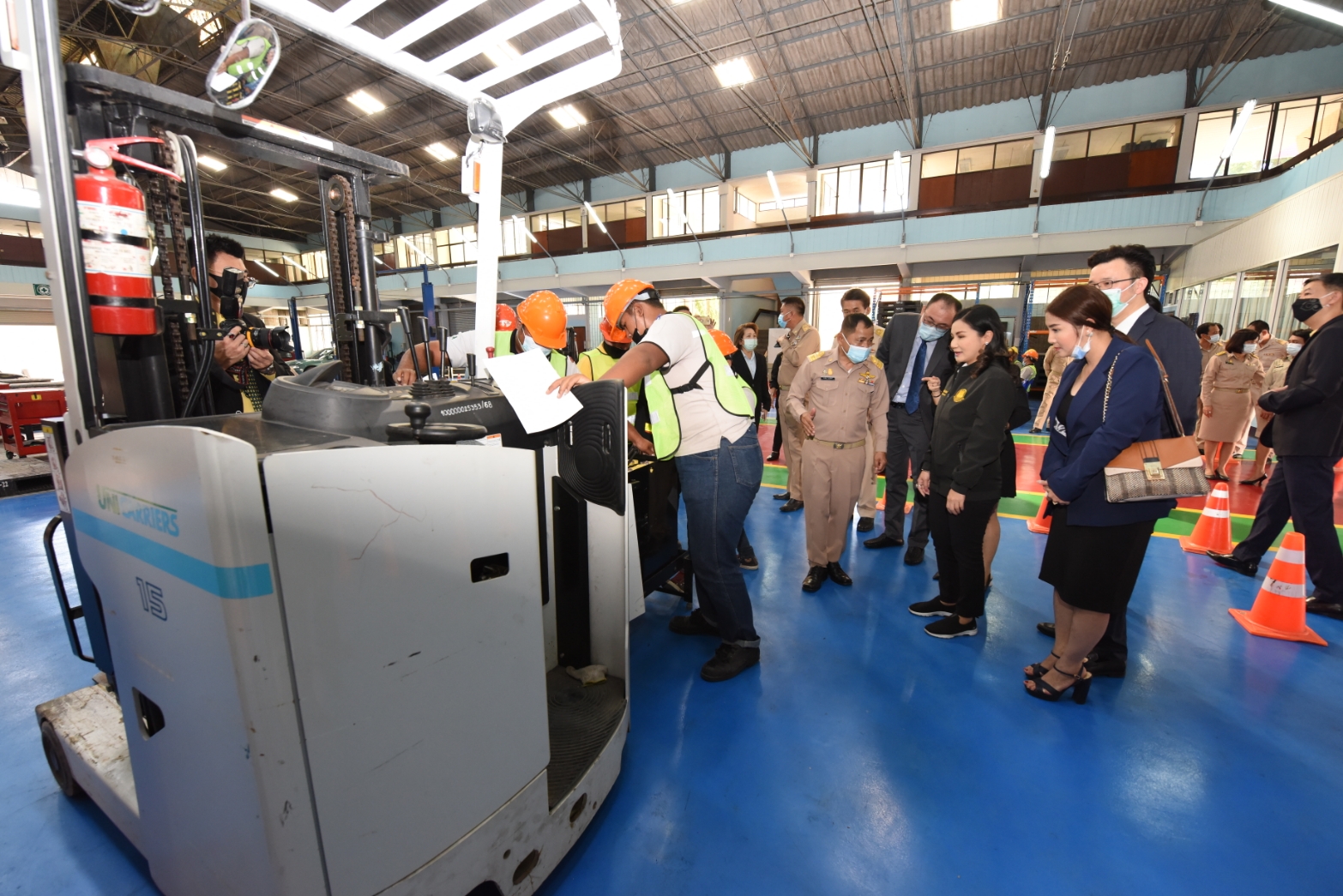
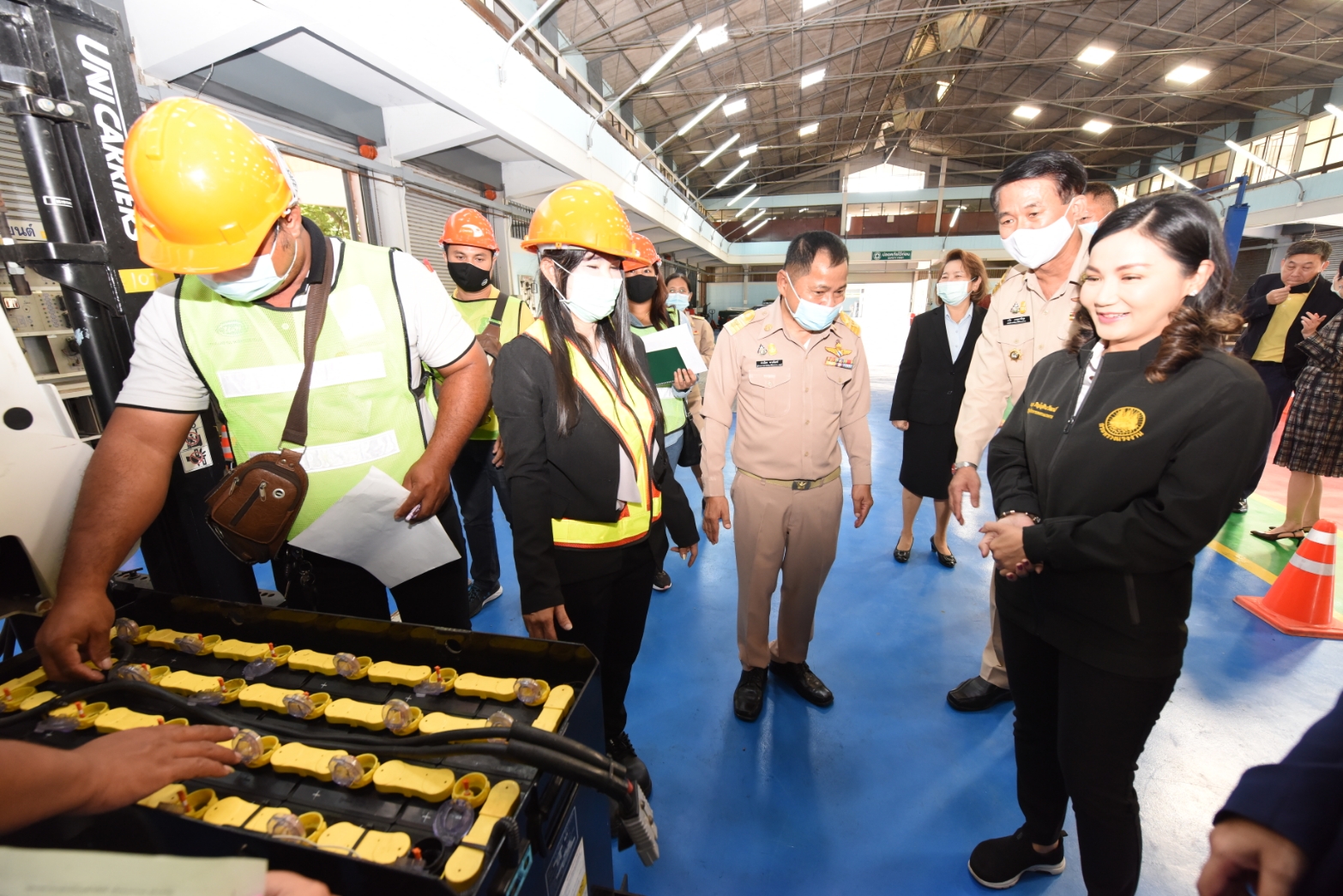
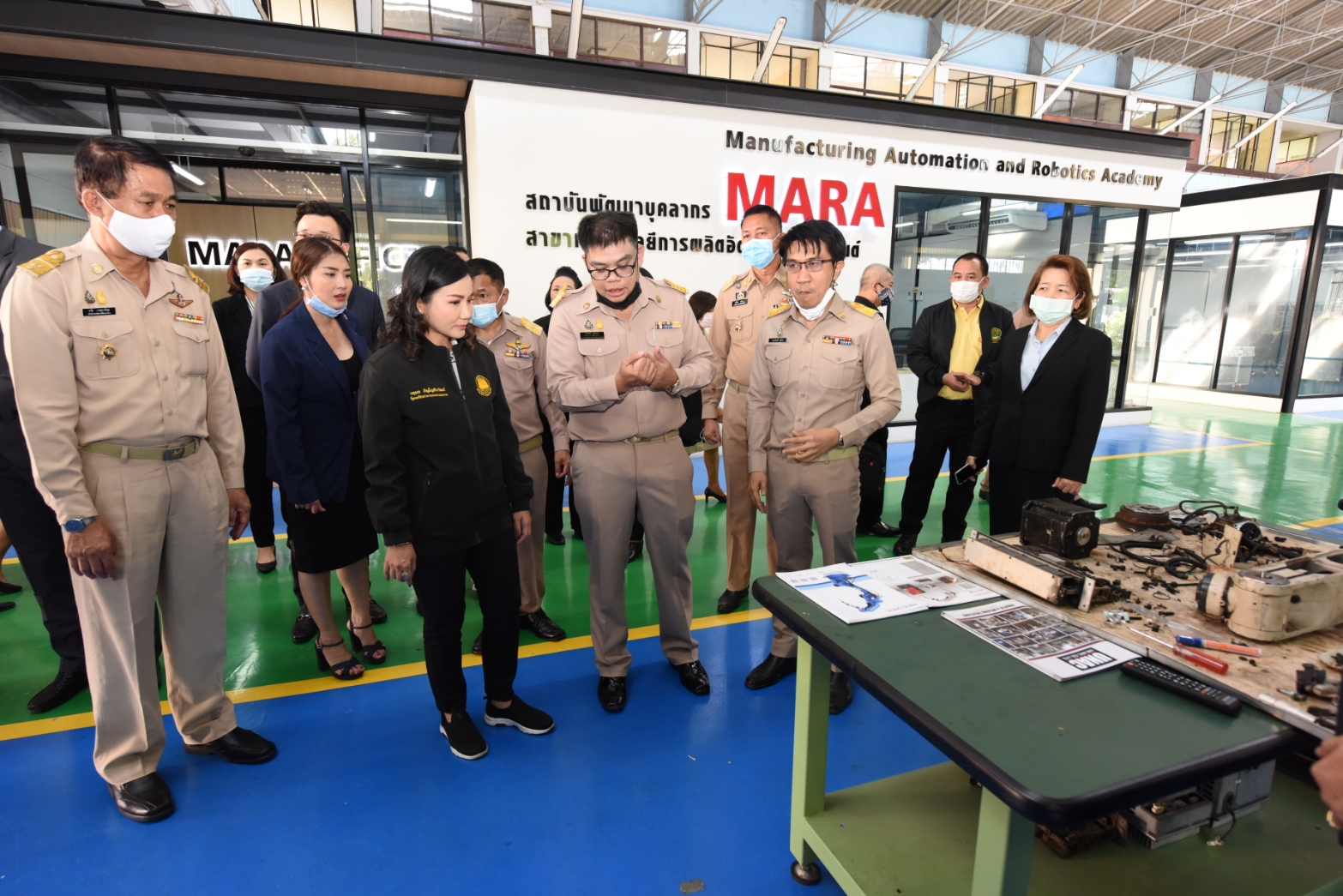
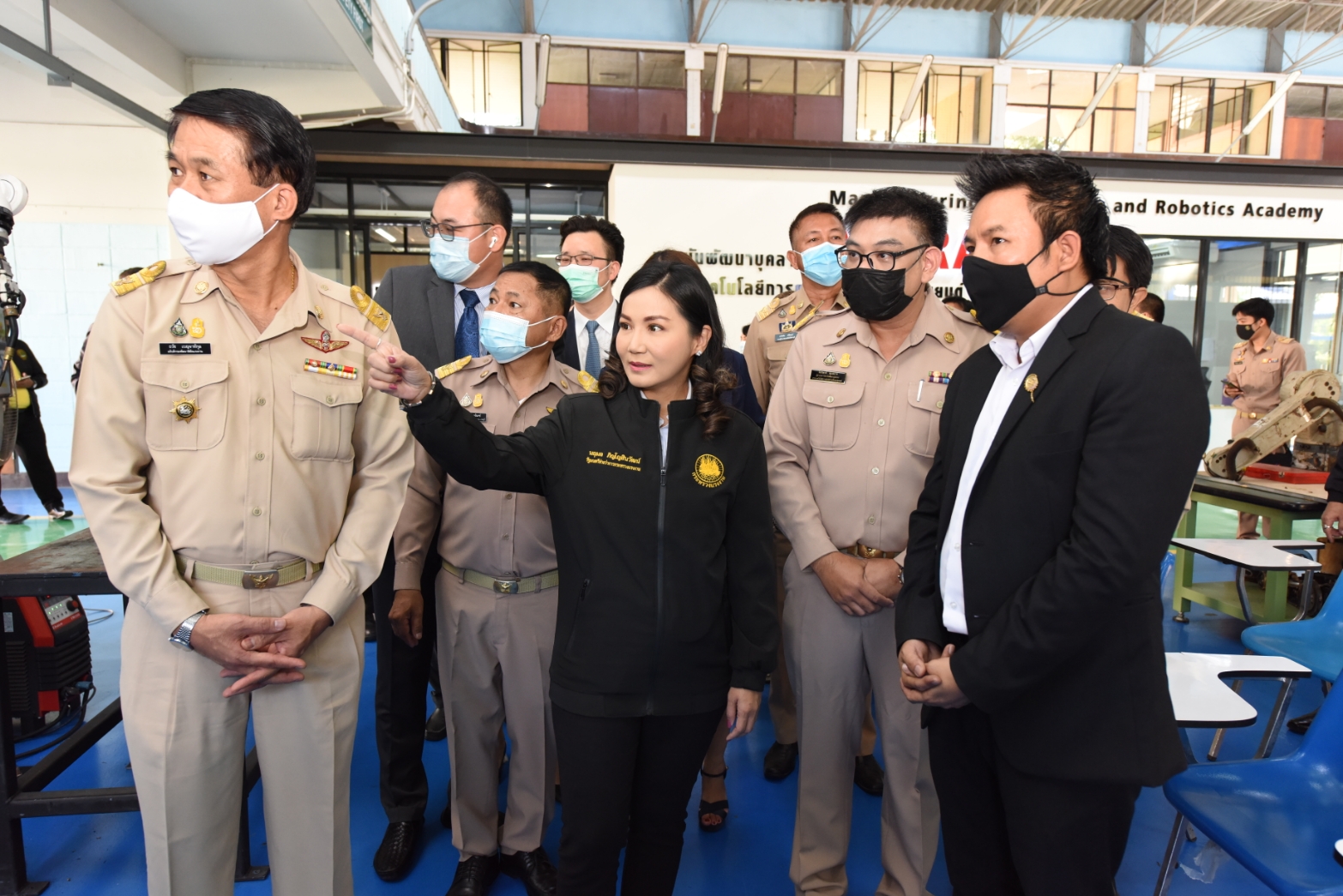
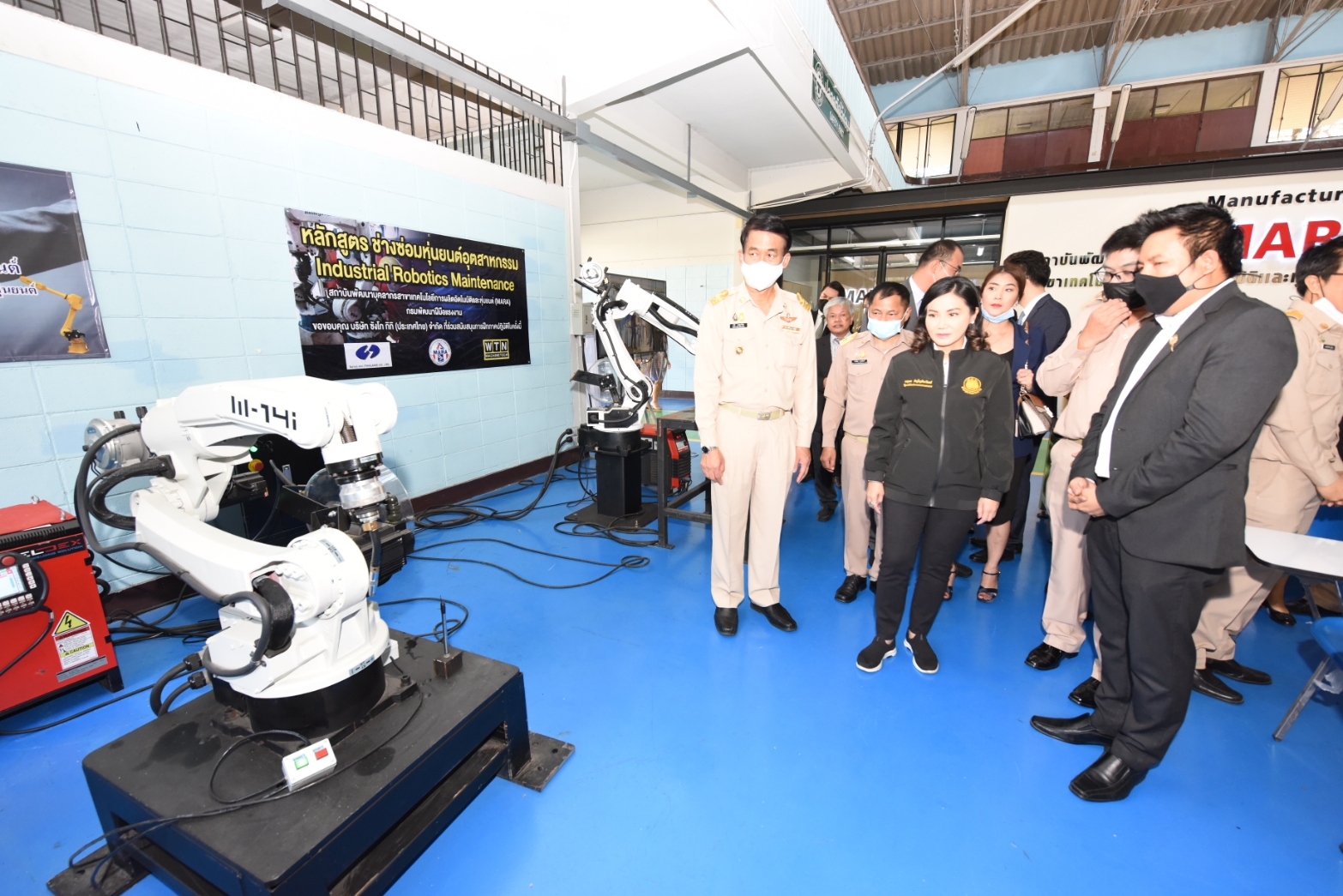
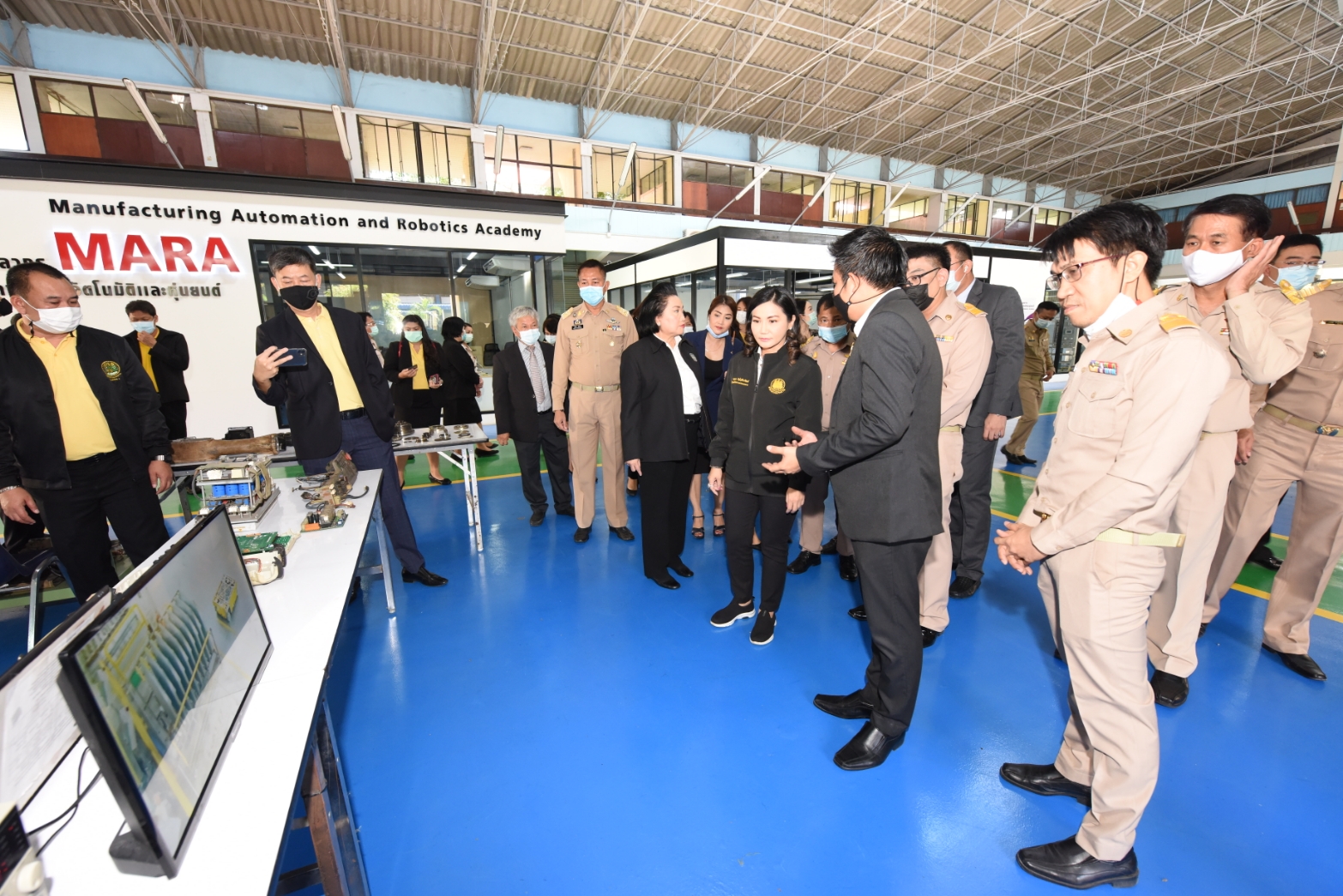
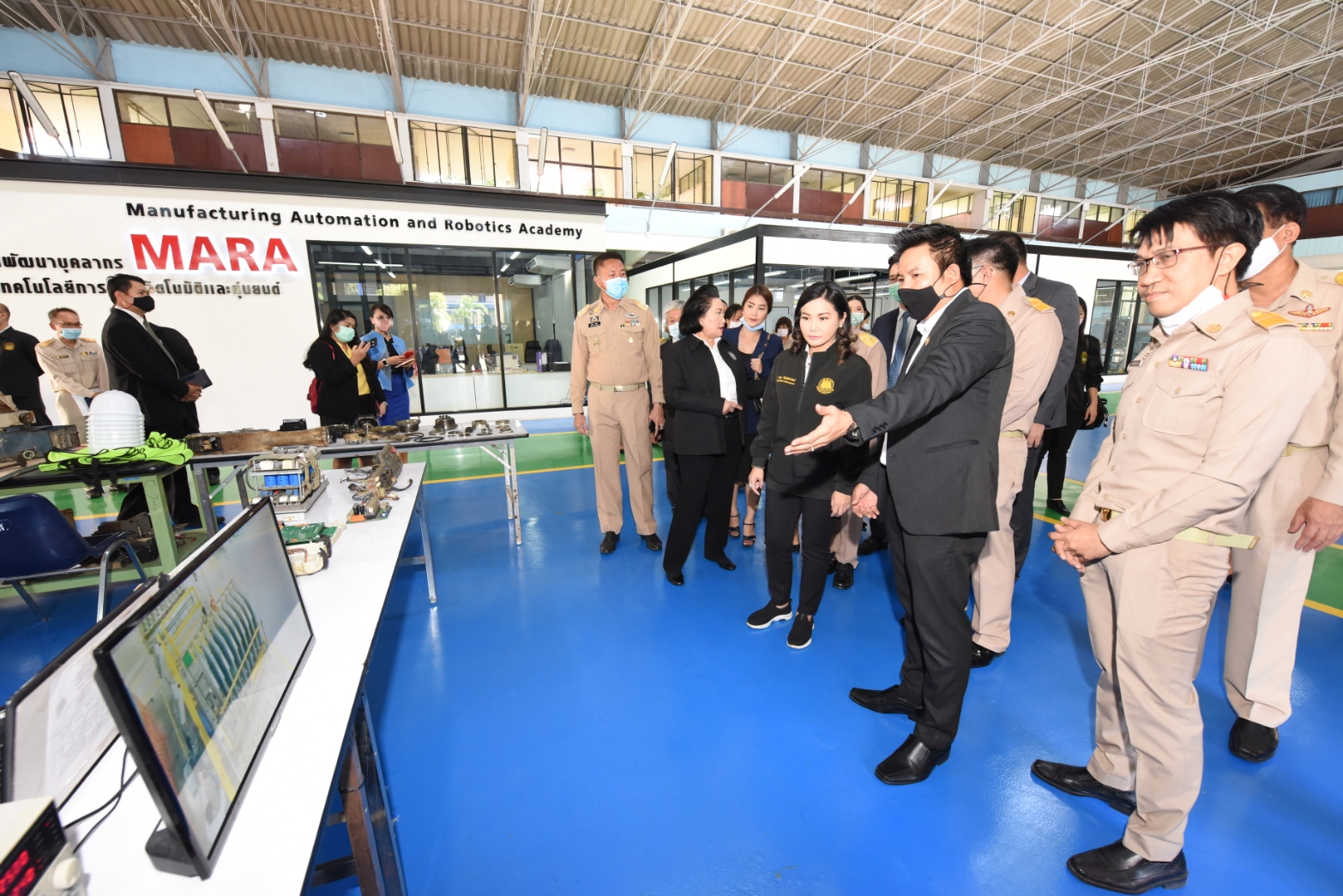
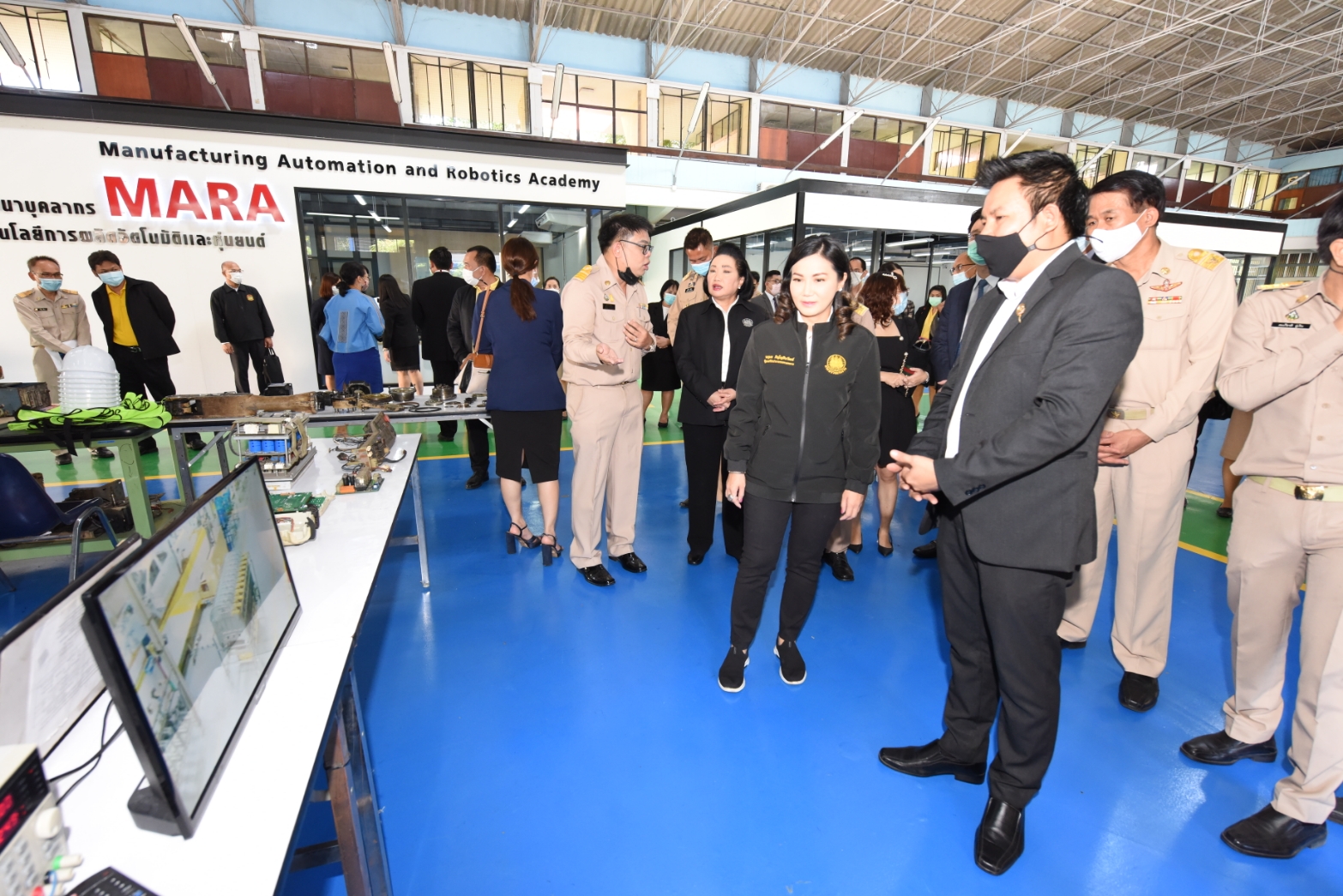
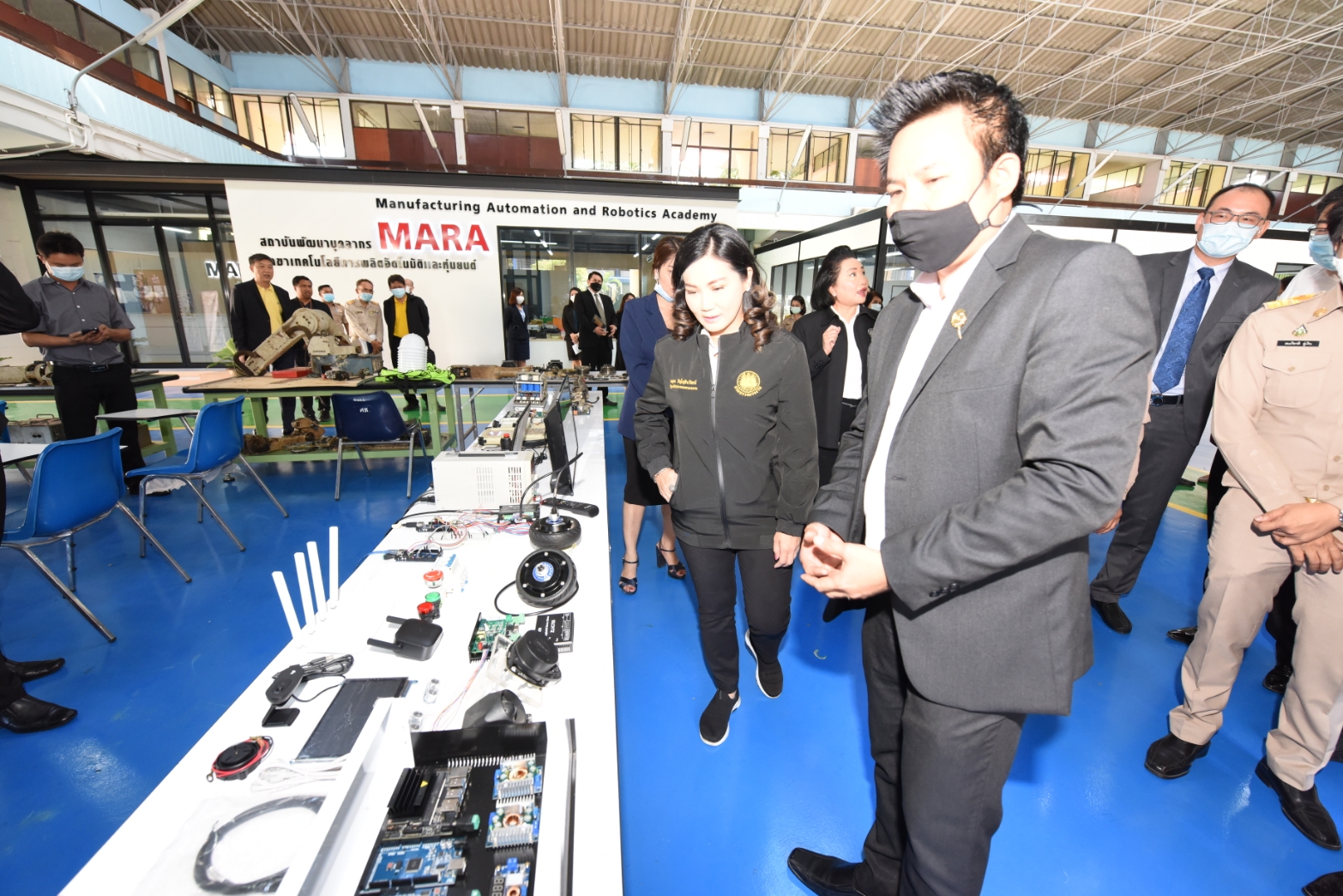

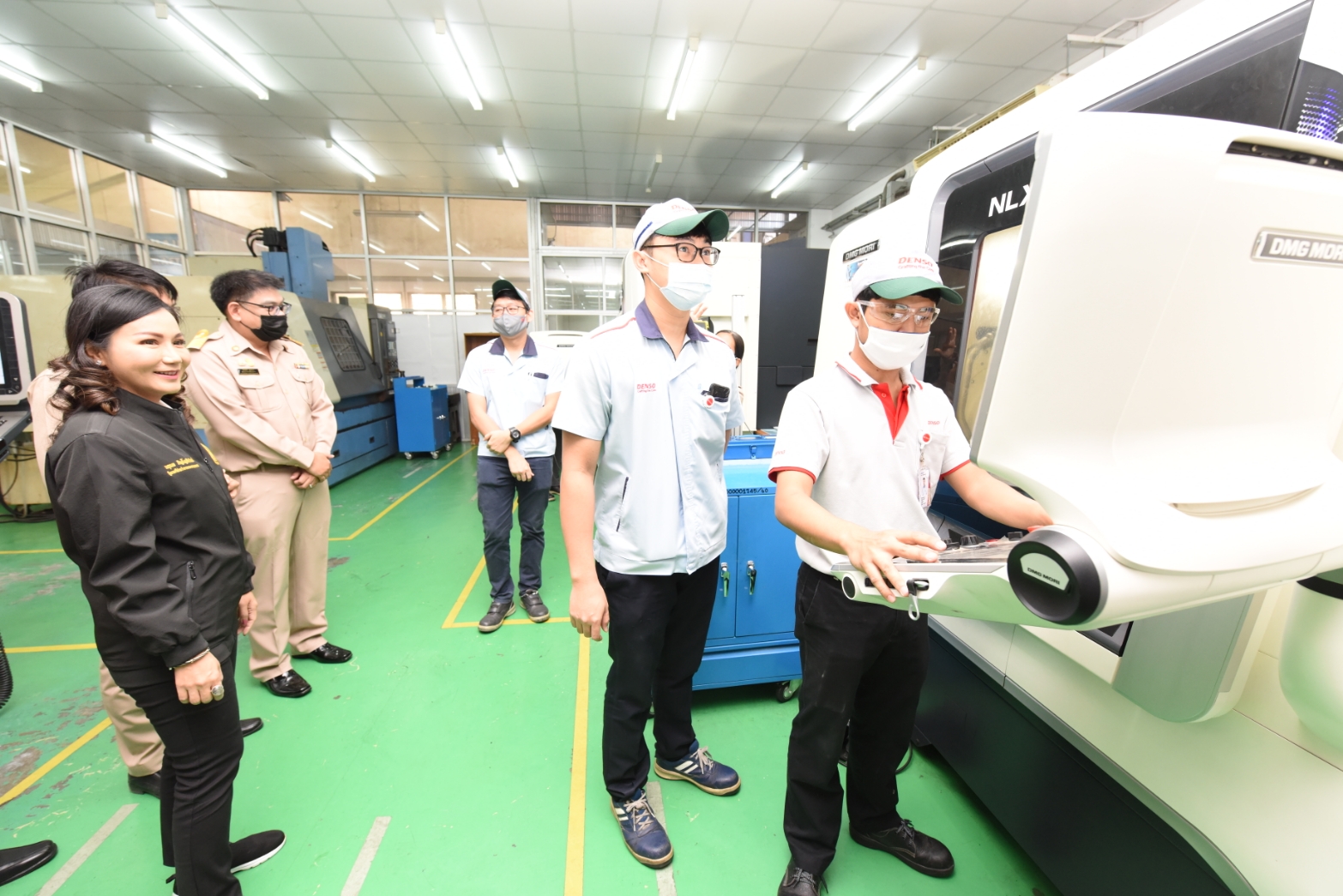
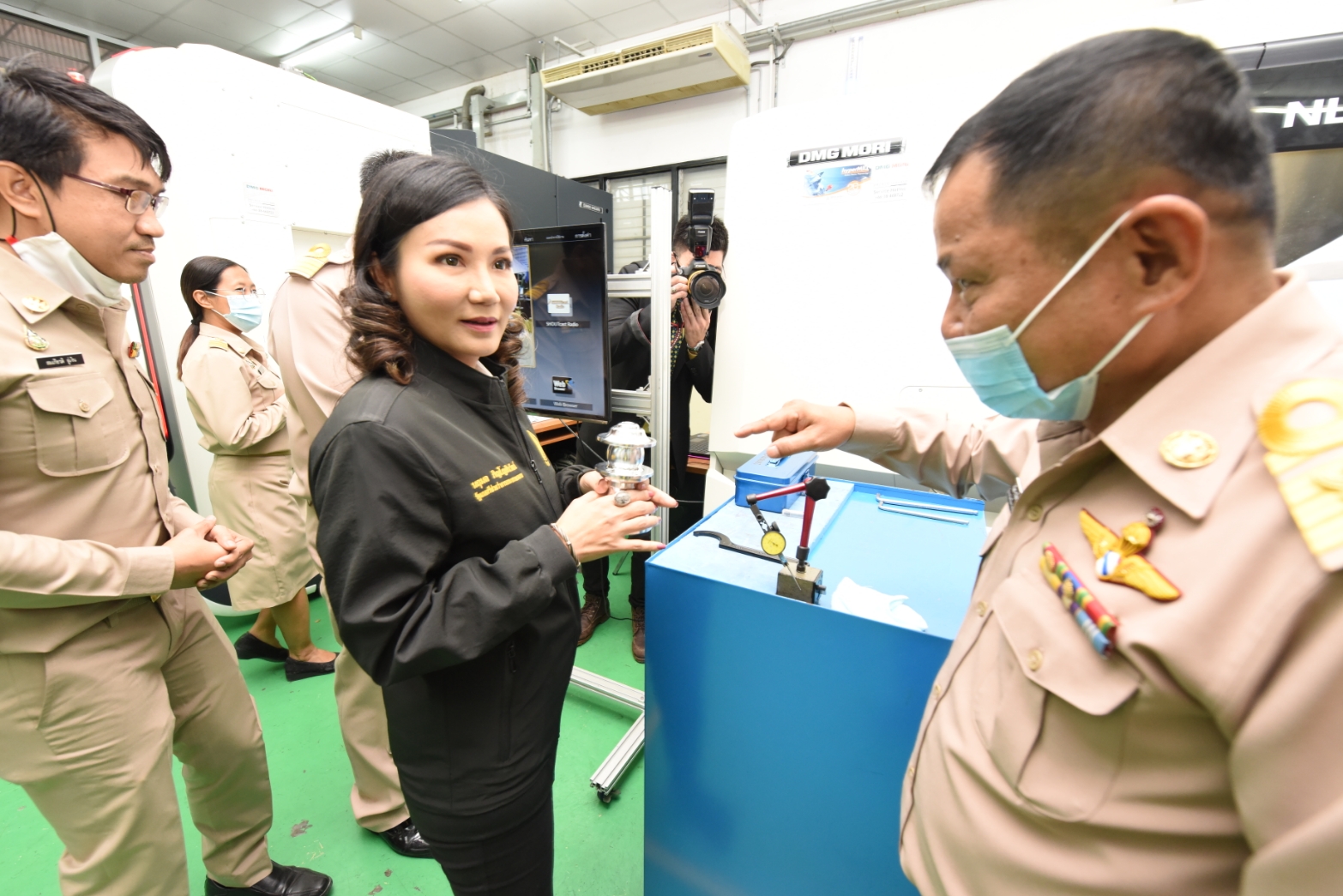

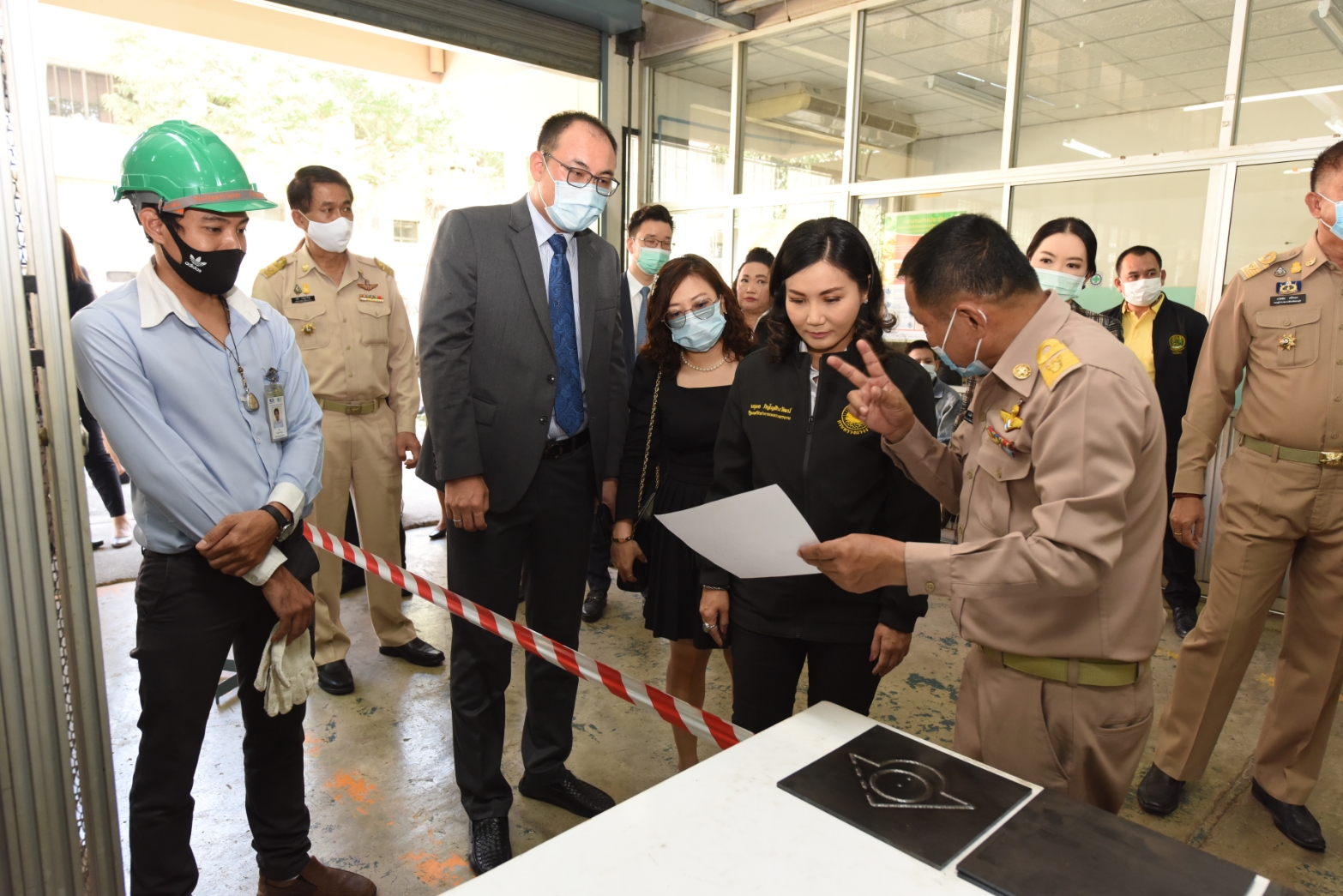


On November 16, 2020, Deputy Labour Minister Prof. Narumon Pinyosinwat visited the Chonburi Skill Development Institute 3 and the Manufacturing Automation and Robotics Academy (MARA) to present the policy guidelines for driving the action plan for the 2021 fiscal year and labour development in the EEC area. They also observed the skill standards assessments in welding and training for forklift driving. The Department of Skill Development’s Director-General Mr. Tawat Benchatikul and heads of government offices in Chonburi gave a welcoming and led the visit at the Chonburi Skill Development Institute 3.
Prof. Narumon said that the government, under the leadership of Prime Minister General Prayuth Chan-ocha, has focused on workforce development and emphasizes the development of the country’s labour skills to meet the labor market’s needs to promote work, income and reduce the unemployment rate. The Department of Skill Development (DSD) has operational guidelines for enhancing labour quality, especially in applying advanced technology and innovation in work to increase productivity and create more competitive opportunities. The DSD focuses on feeding labour into the EEC’s 12 target industries as a critical mechanism in driving the country’s economy sustainably through integration between the public and private sectors. The Ministry of Labour established the EEC Labour Management Center to carry missions to increase the workforce’s potential in Chonburi, Rayong, and Chachoengsao provinces.
The Deputy Labour Minister further stated that the training visit of the Chonburi Skill Development Institute 3 and the Manufacturing Automation and Robotics Academy (MARA) provide interesting training courses that meet the needs of companies in the area. There are training courses that are up to date with new technologies, especially in automation and robotics. The data report found that in 2021 year, the Chonburi Skill Development Institute 3 aims to develop 3,620 workers’ skills and promote companies to launch training programs, covering another 308,000 people following the Workforce Skill Development Promotion Act B.E. 2545. The training comprises courses to raise the workforce level, develop labour potential to support the payment aligning with skill standards and the national skill standard assessments. Training also includes hard and soft skills to support target industries such as modern vehicles, intelligent electronics, tourism and health tourism, aviation, and digital logistics.
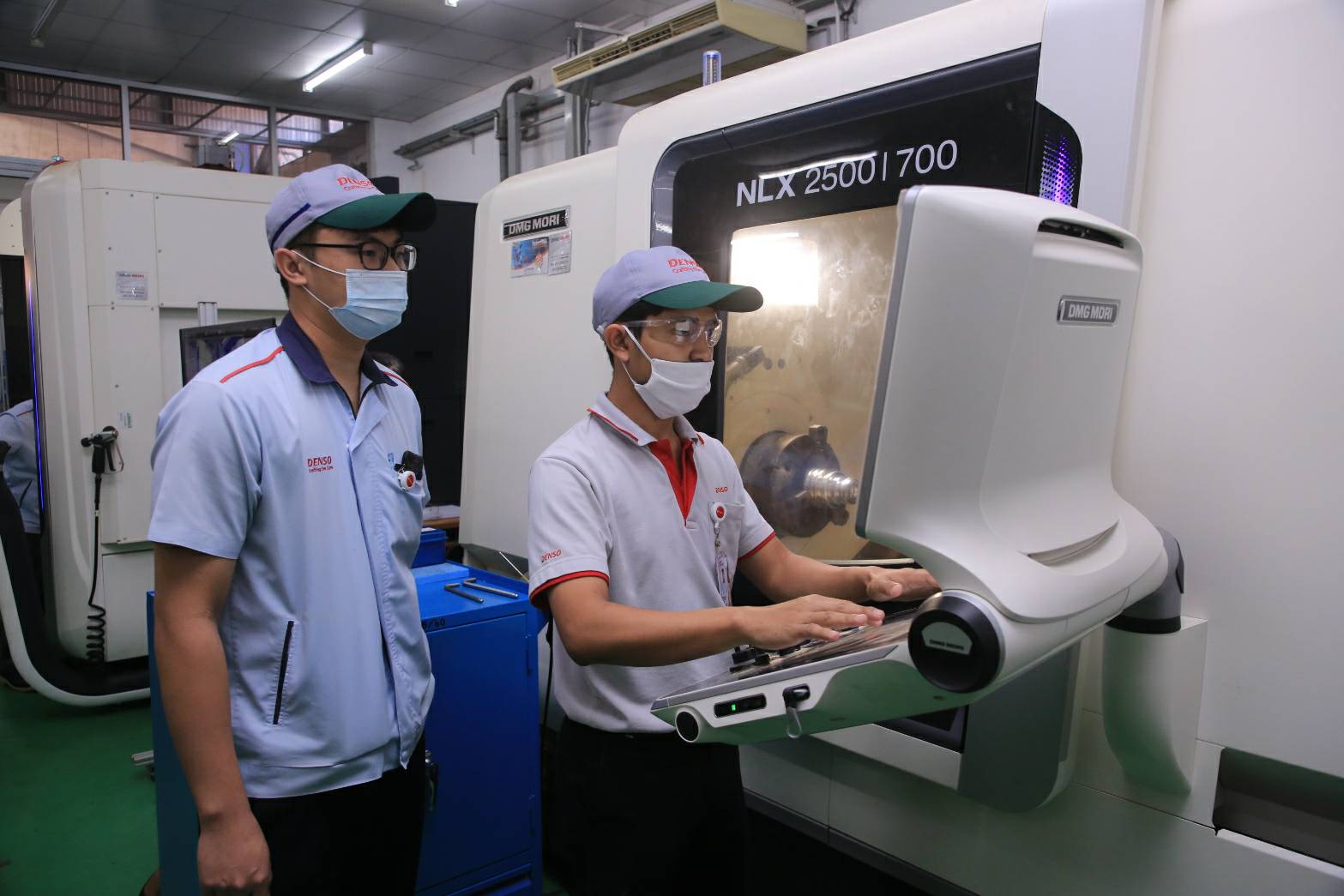
In addition, there is also the operations of the Manufacturing Automation and Robotics Academy (MARA), serving as a training unit focusing on automated production technology. There is another training plan for 1,100 people. The training courses will be related to automation technology, robots, production programs, and production machinery. This will lead to a labour skills standard assessment plan. MARA also aims to integrate cooperation with the local sector in the EEC Model Type B training plan for another 100 people, such as in industrial robot control and wiring of electrical control cabinets for automation, for example.
“Skill development for the workforce cannot be done alone. The effort requires cooperation from partners for support, and there is a need to seek more cooperation. The government has designated the EEC as one of the mechanisms to drive the 20-year national strategy and the Thailand 4.0 policy to focus on developing 12 target industries. This includes industries and services with technology and innovation in production to increase the competitiveness of the nation. Therefore, human resource development in the EEC area is a key factor in achieving the government’s goals. Today, we want to emphasize and focus on developing the workforce, on helping drive the country’s economy further,” concluded the Deputy Labour Minister.
———————-
Division of Public Relations