

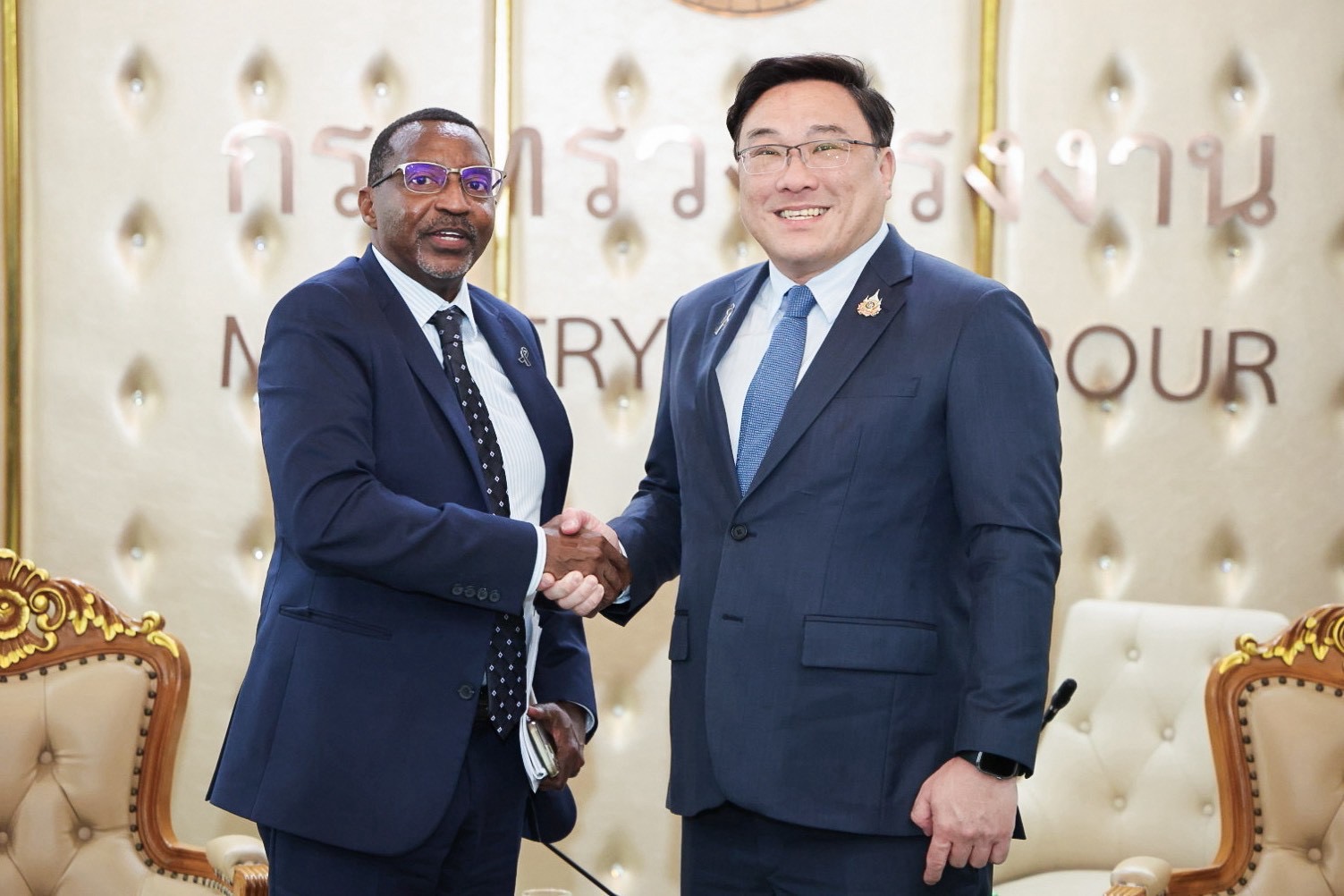
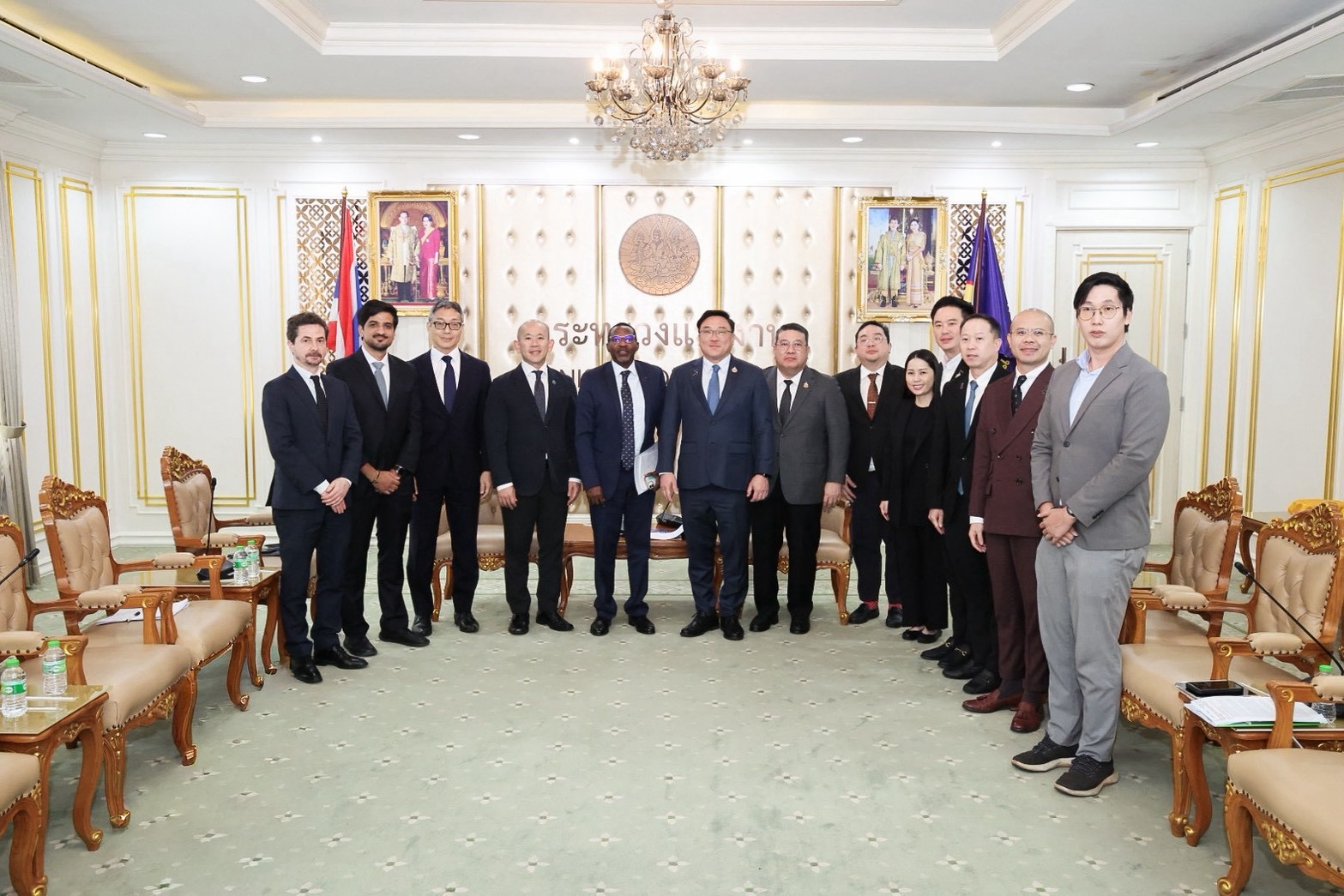
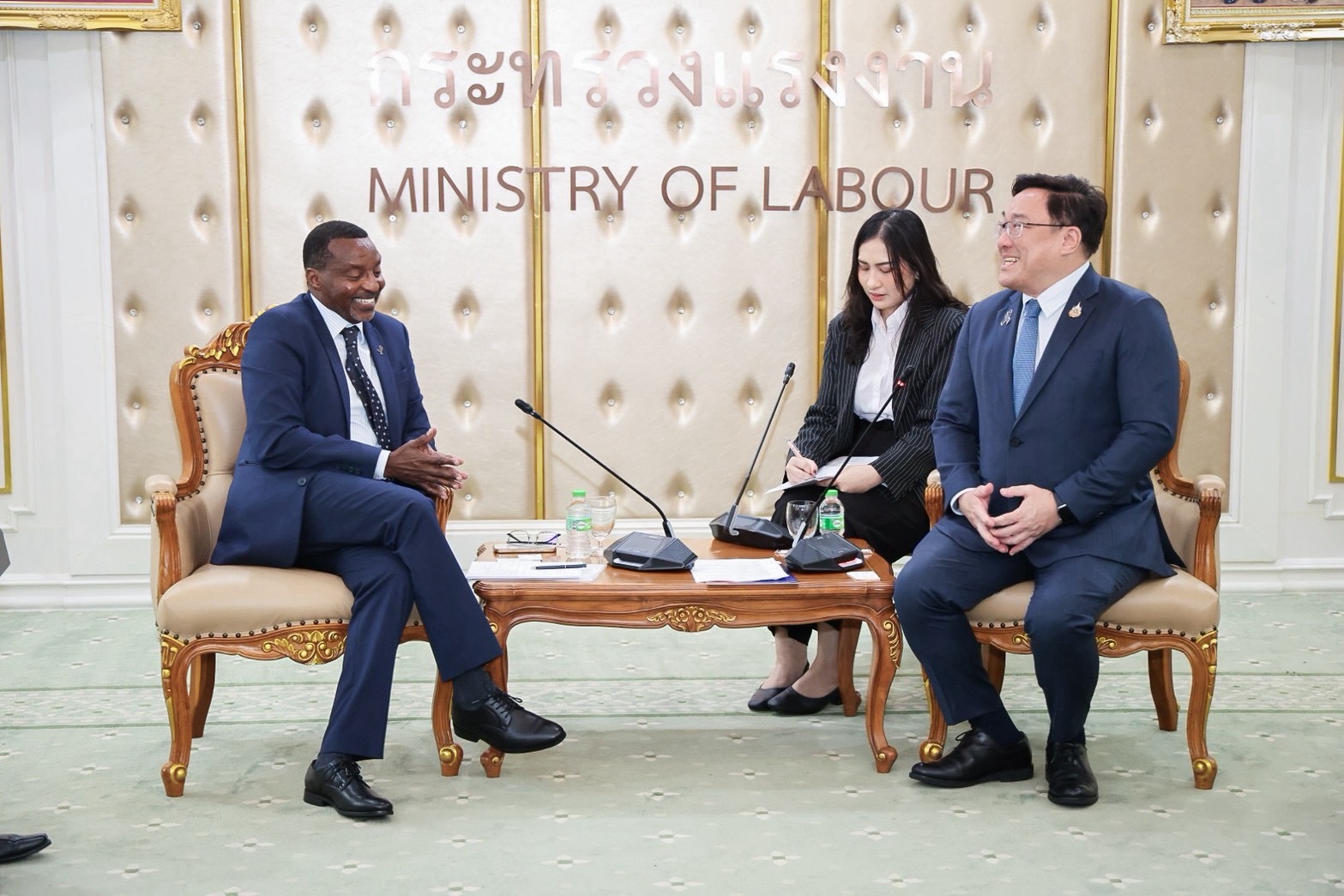
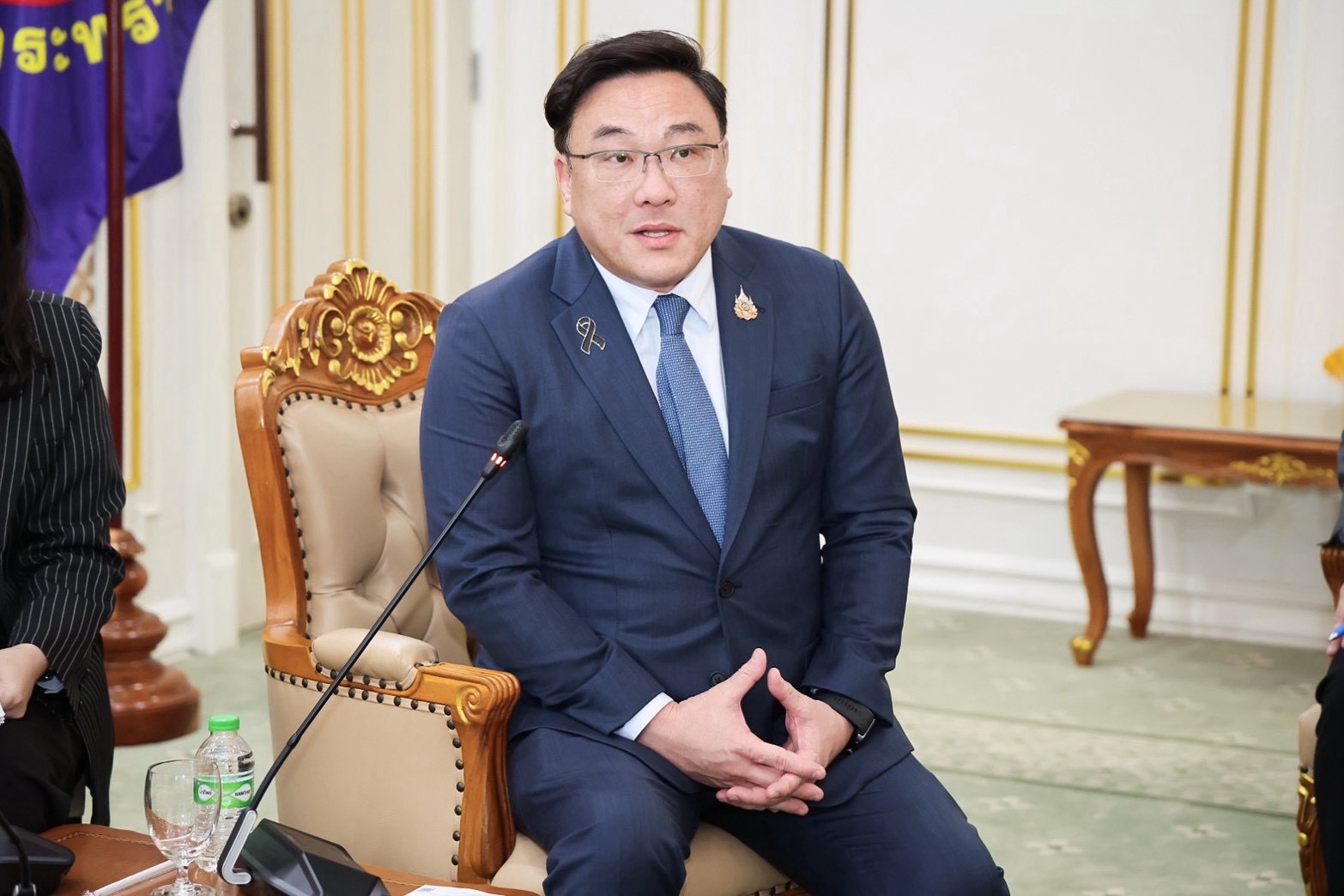
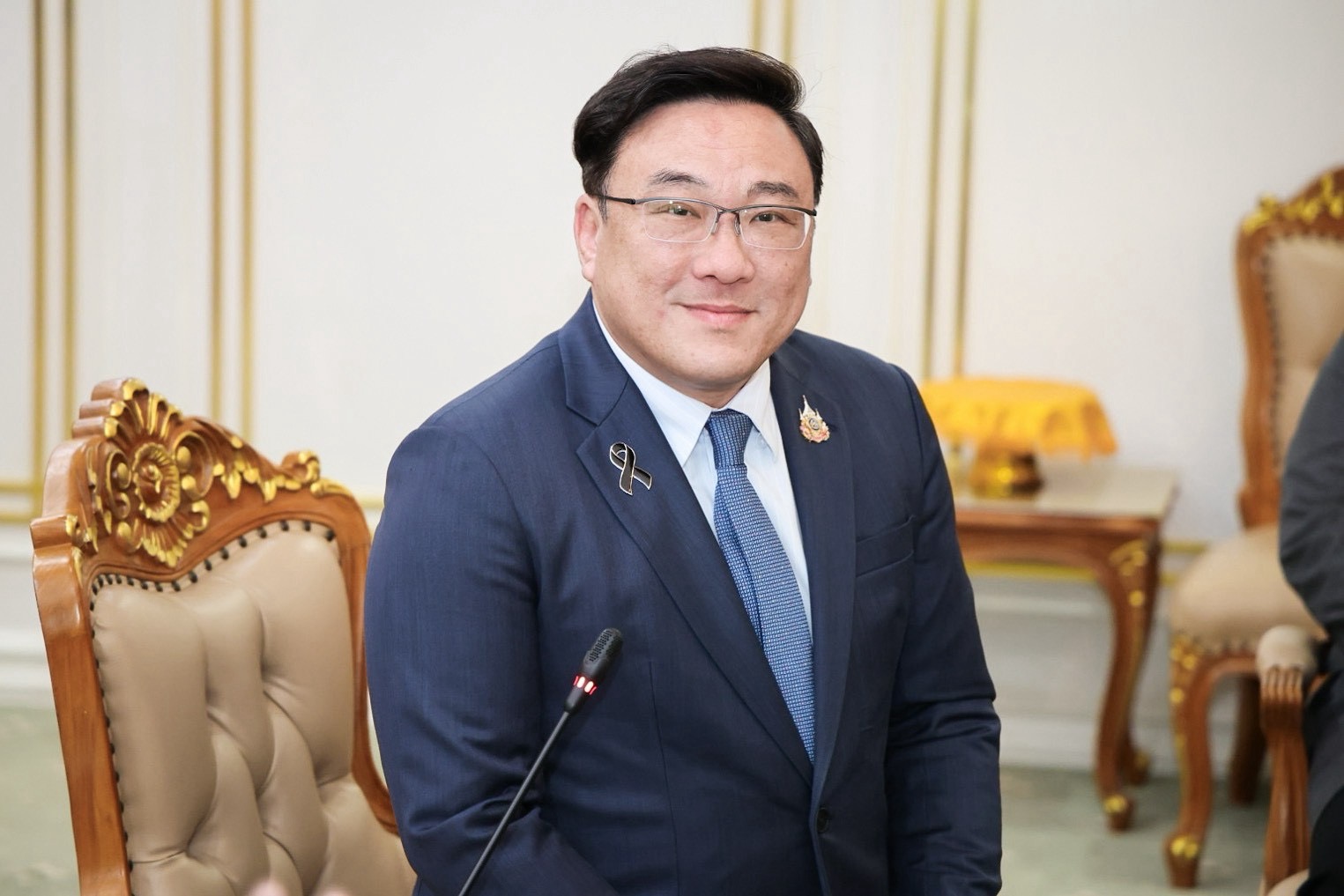
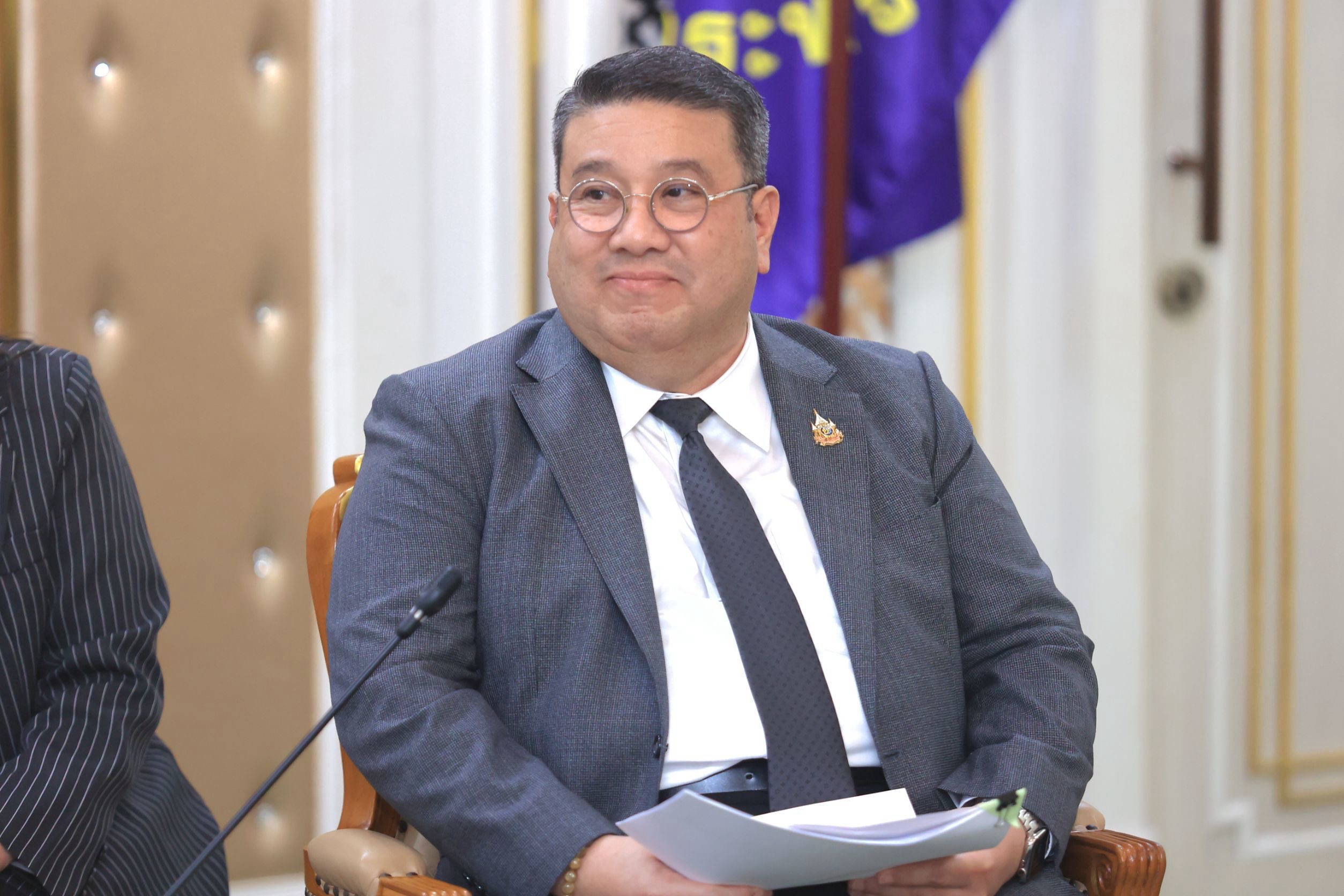
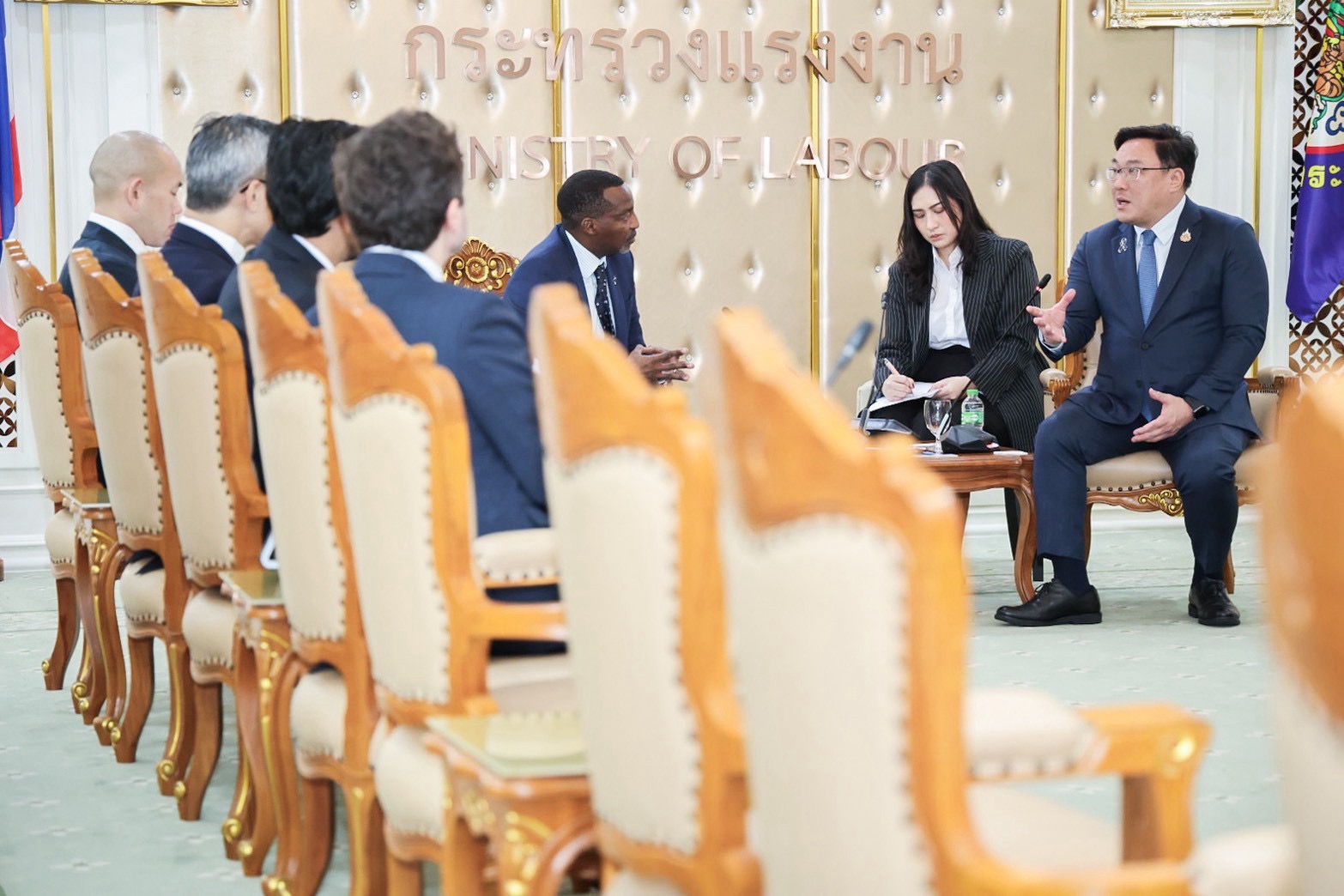
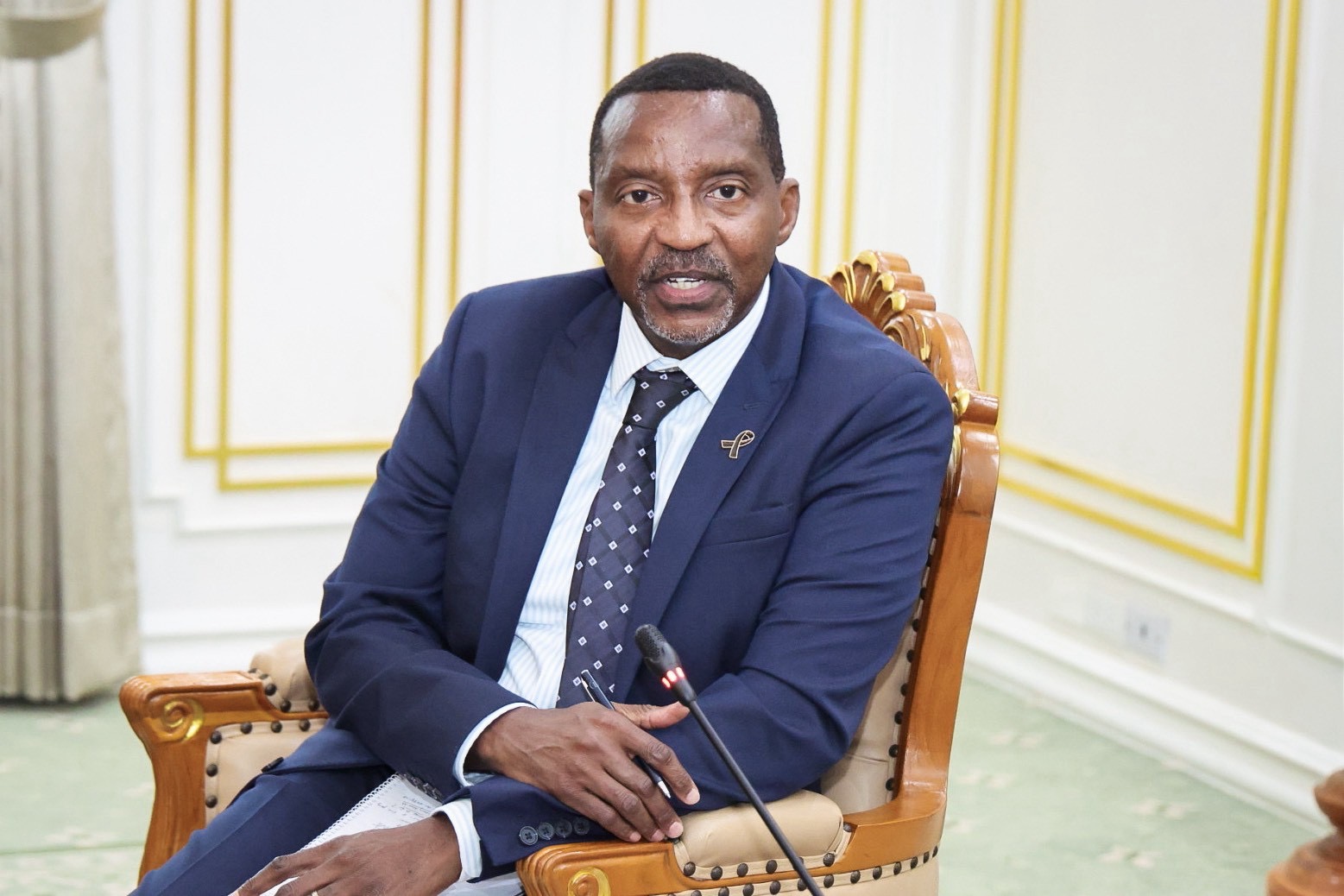
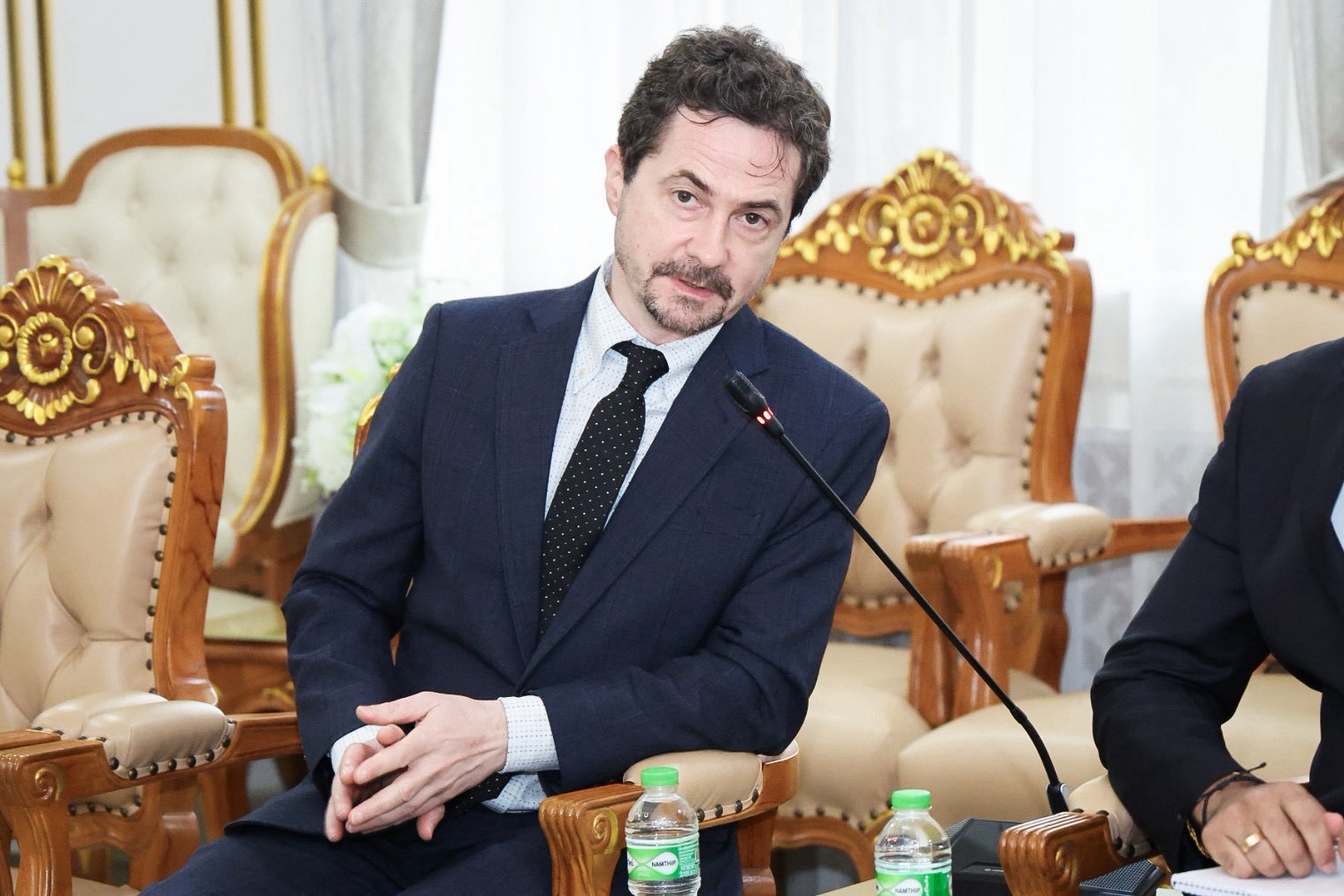
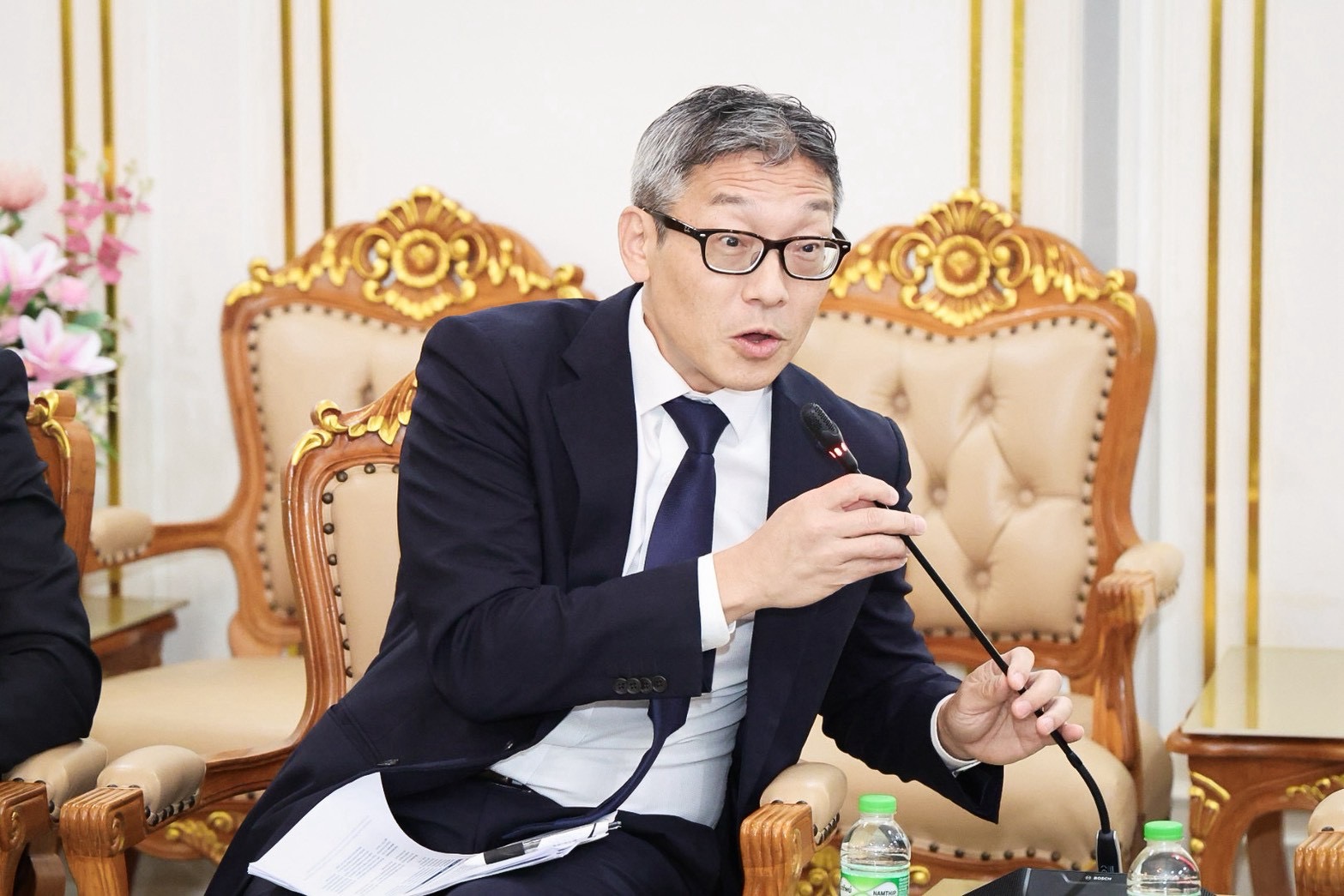
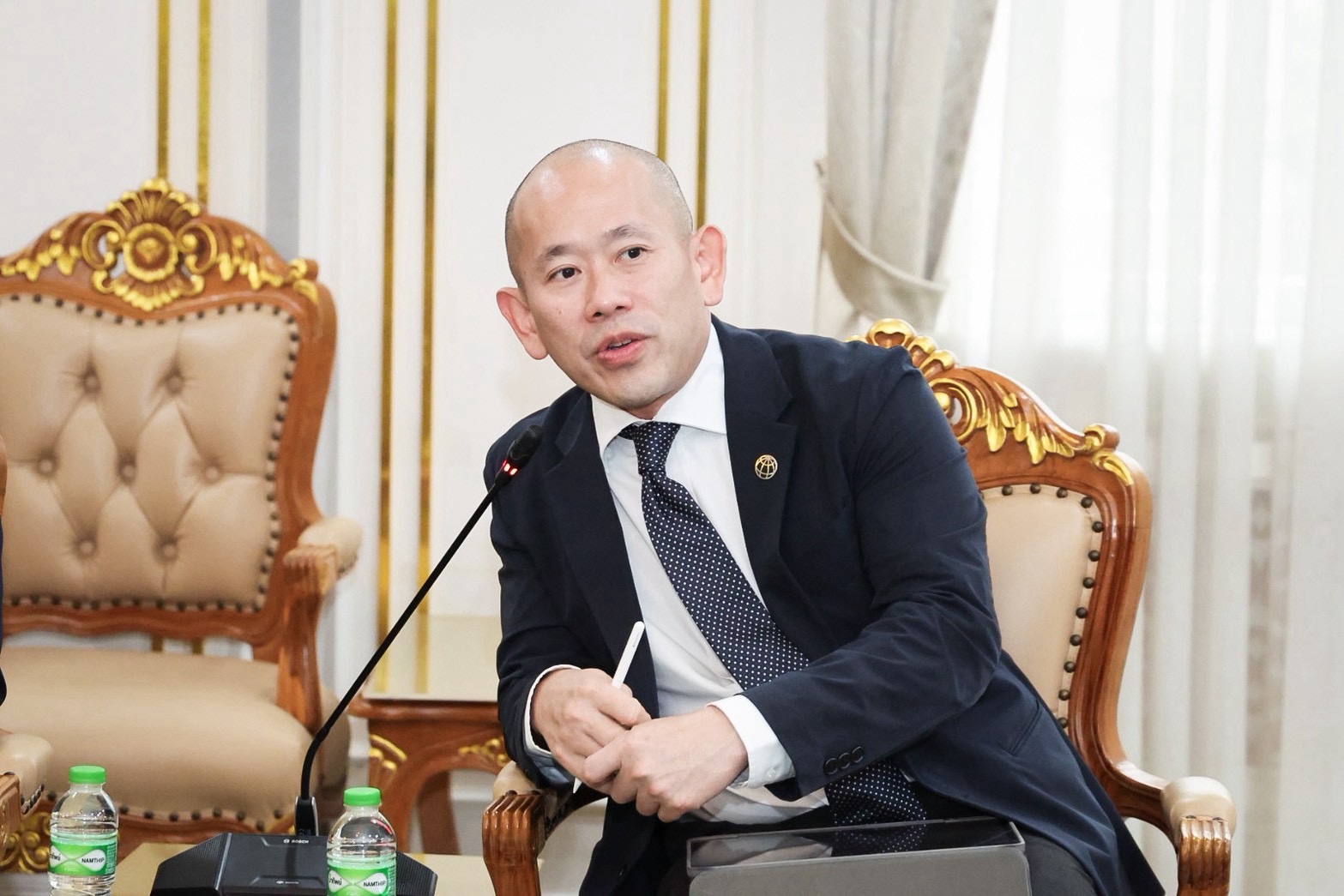
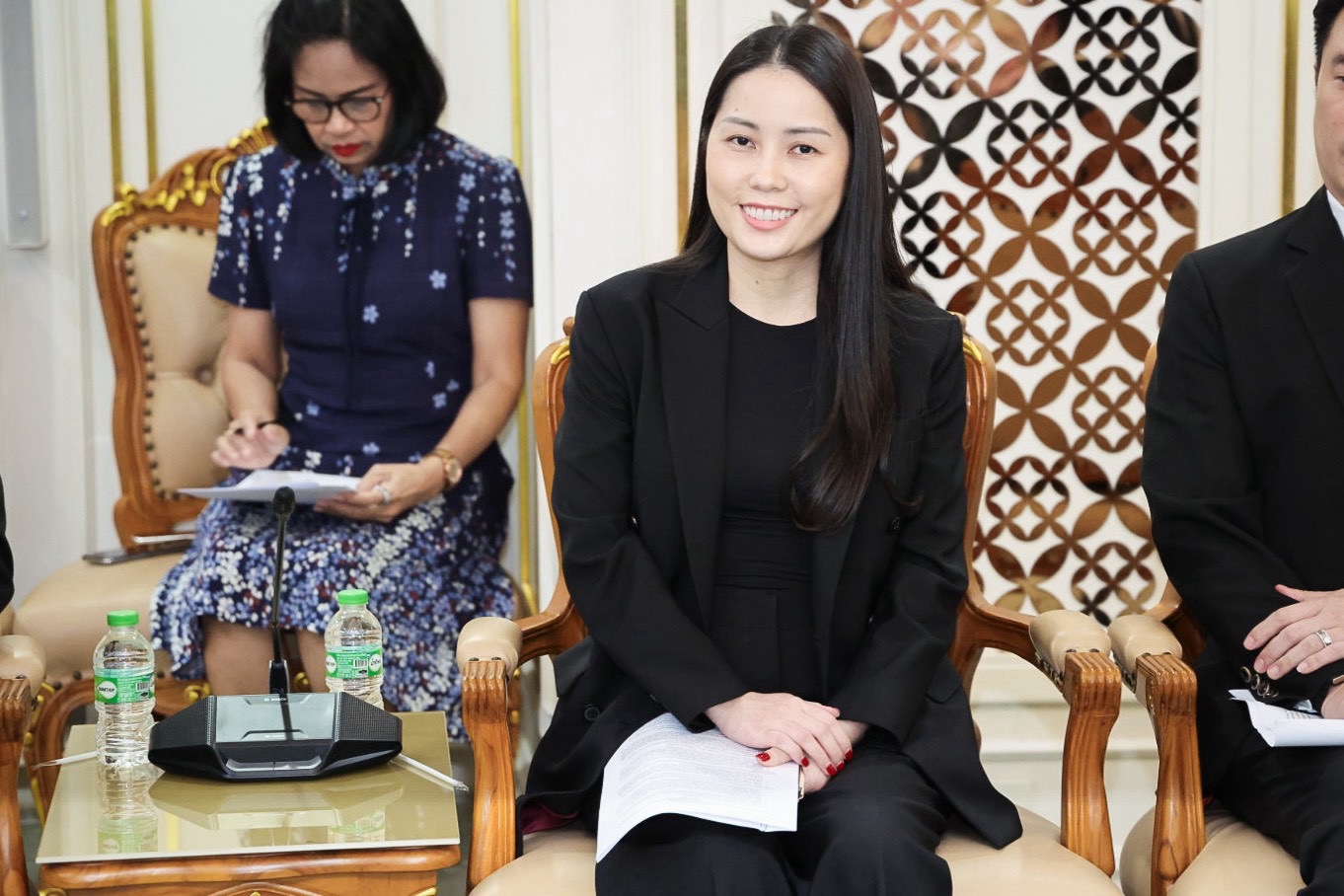
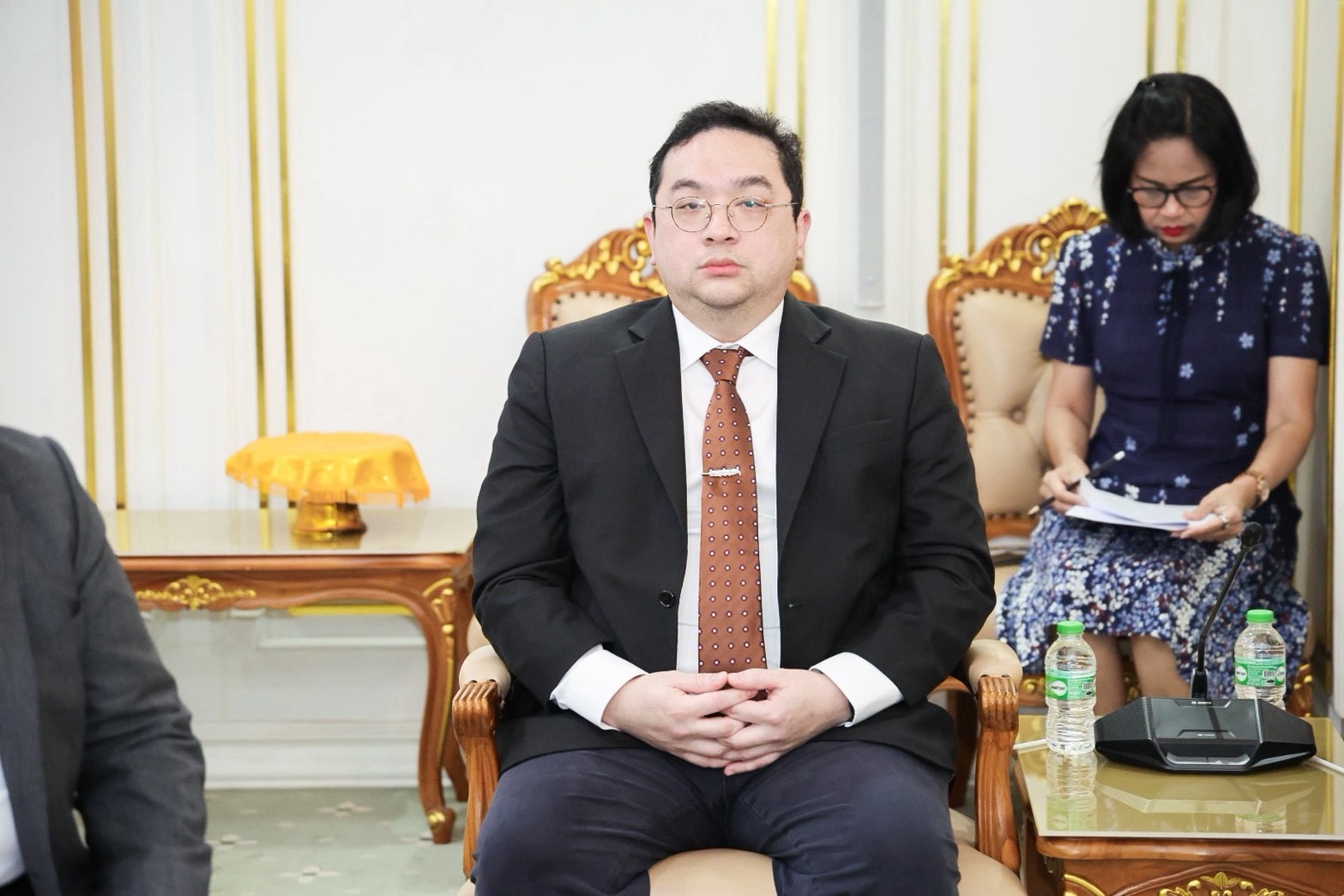
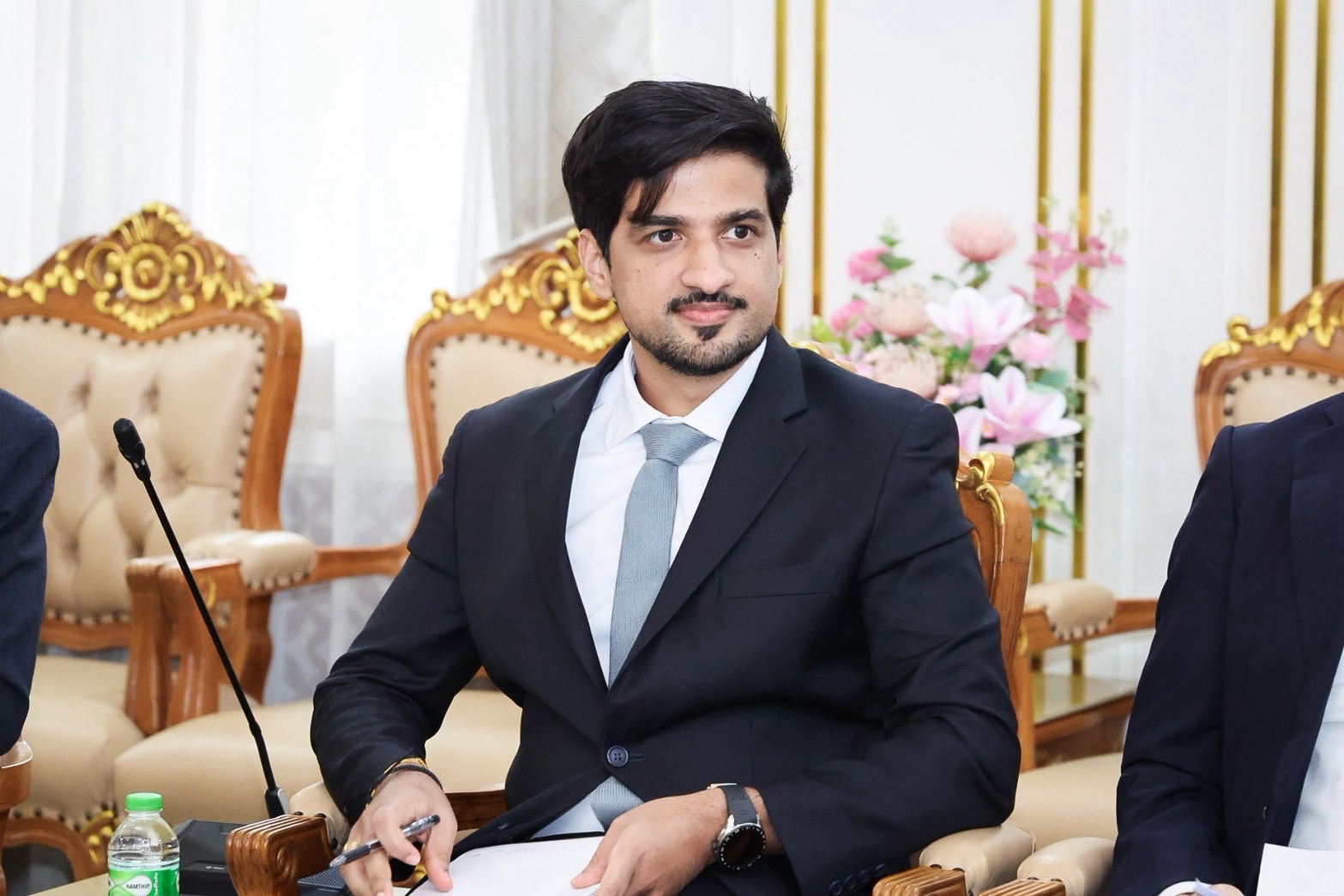
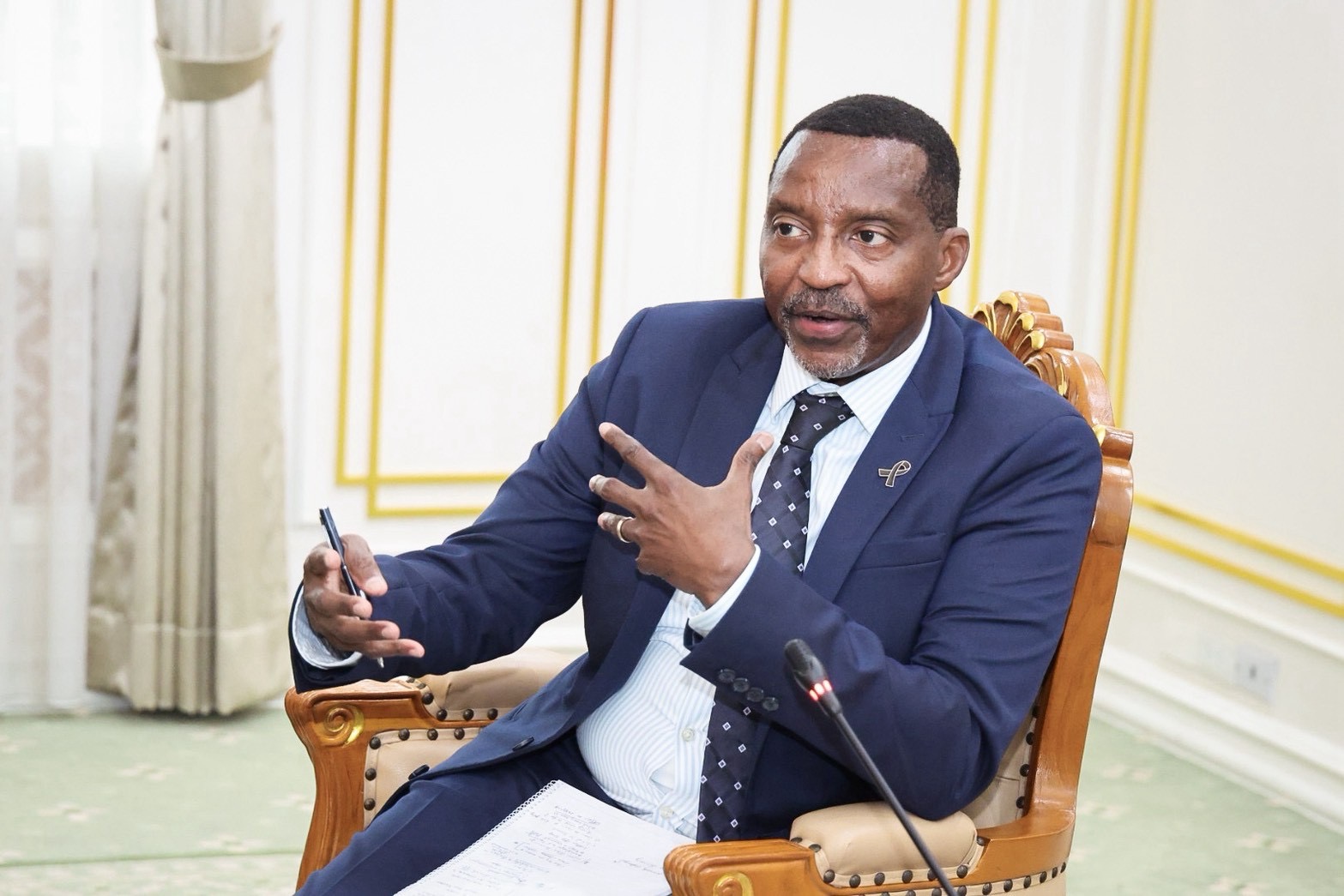
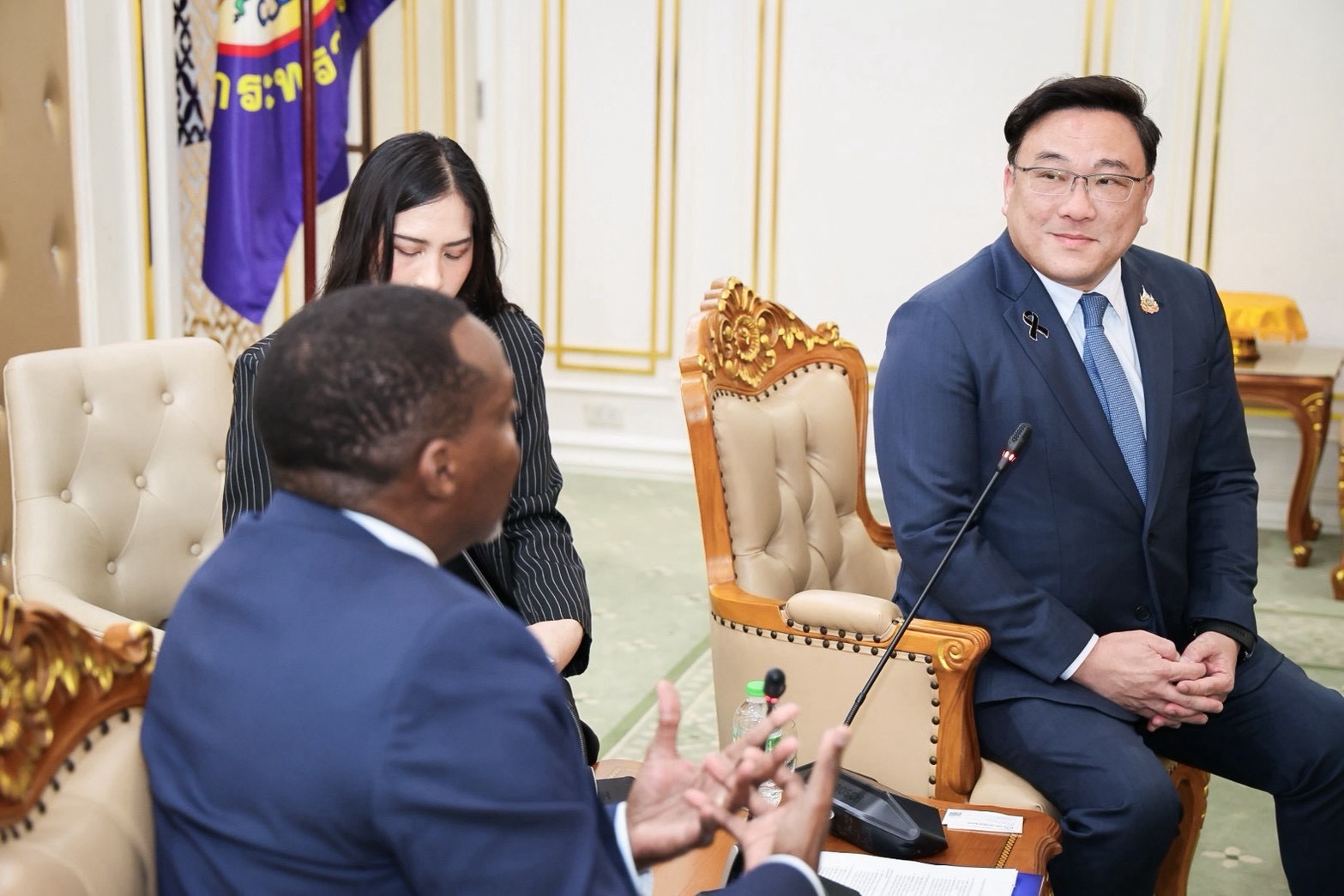
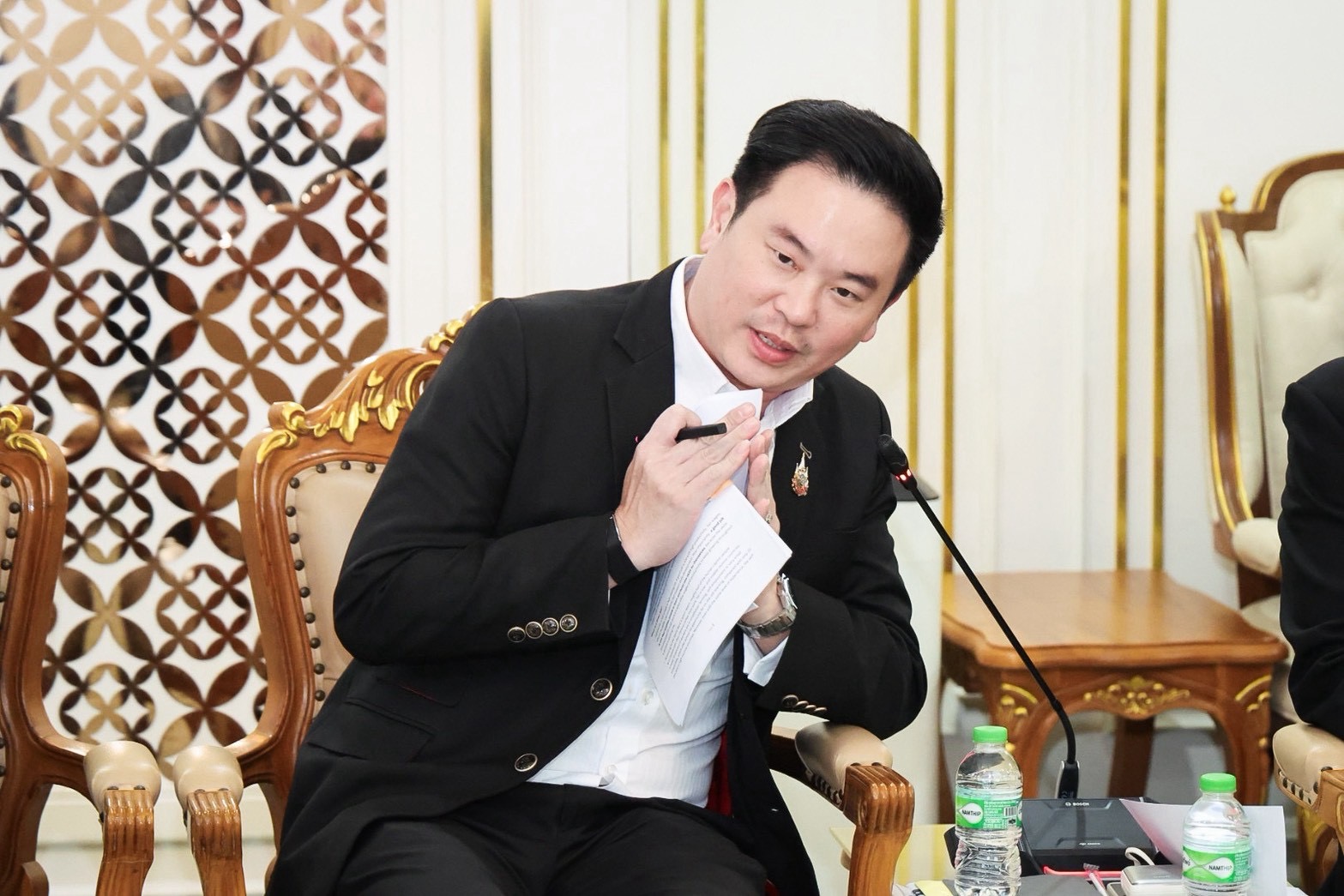
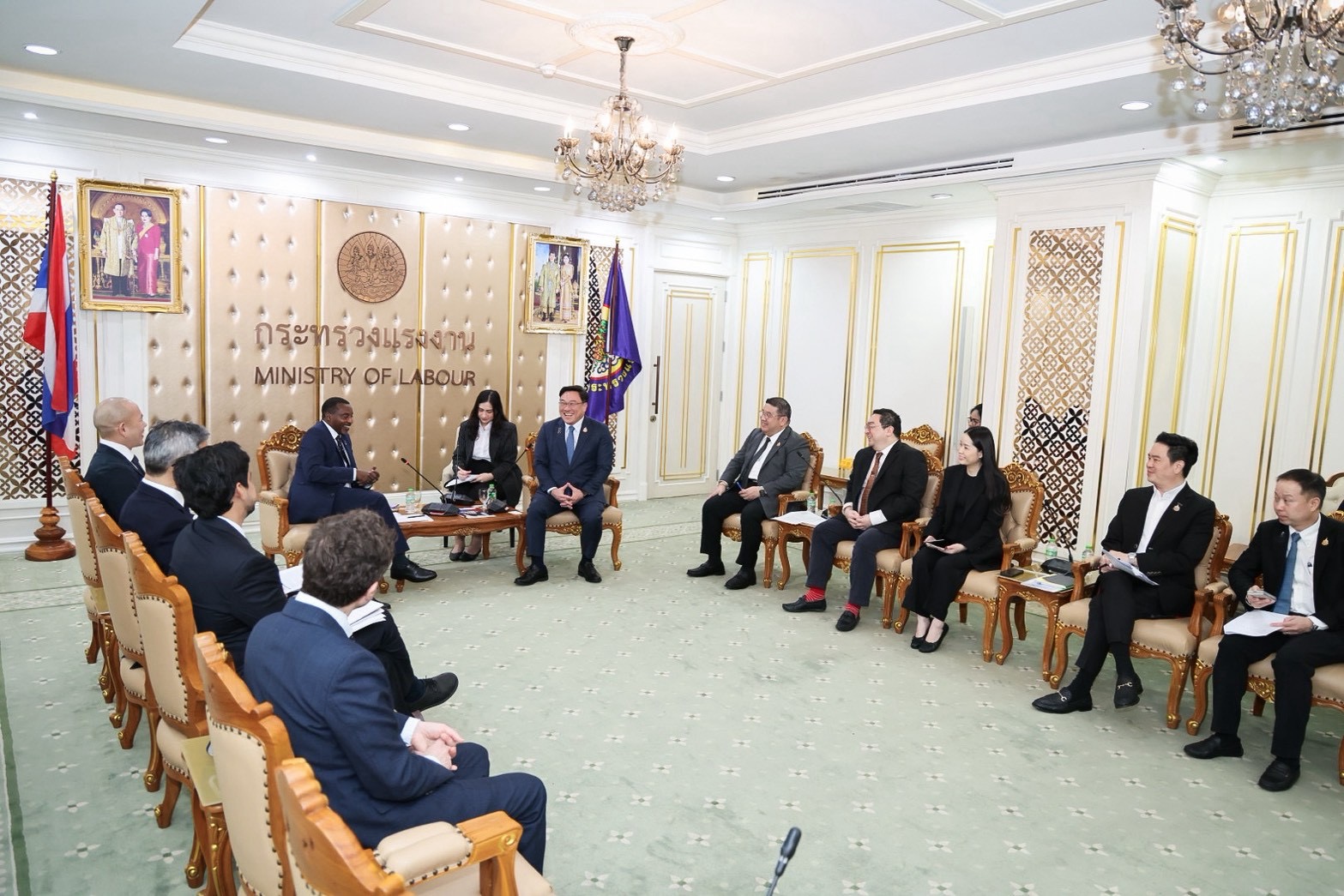
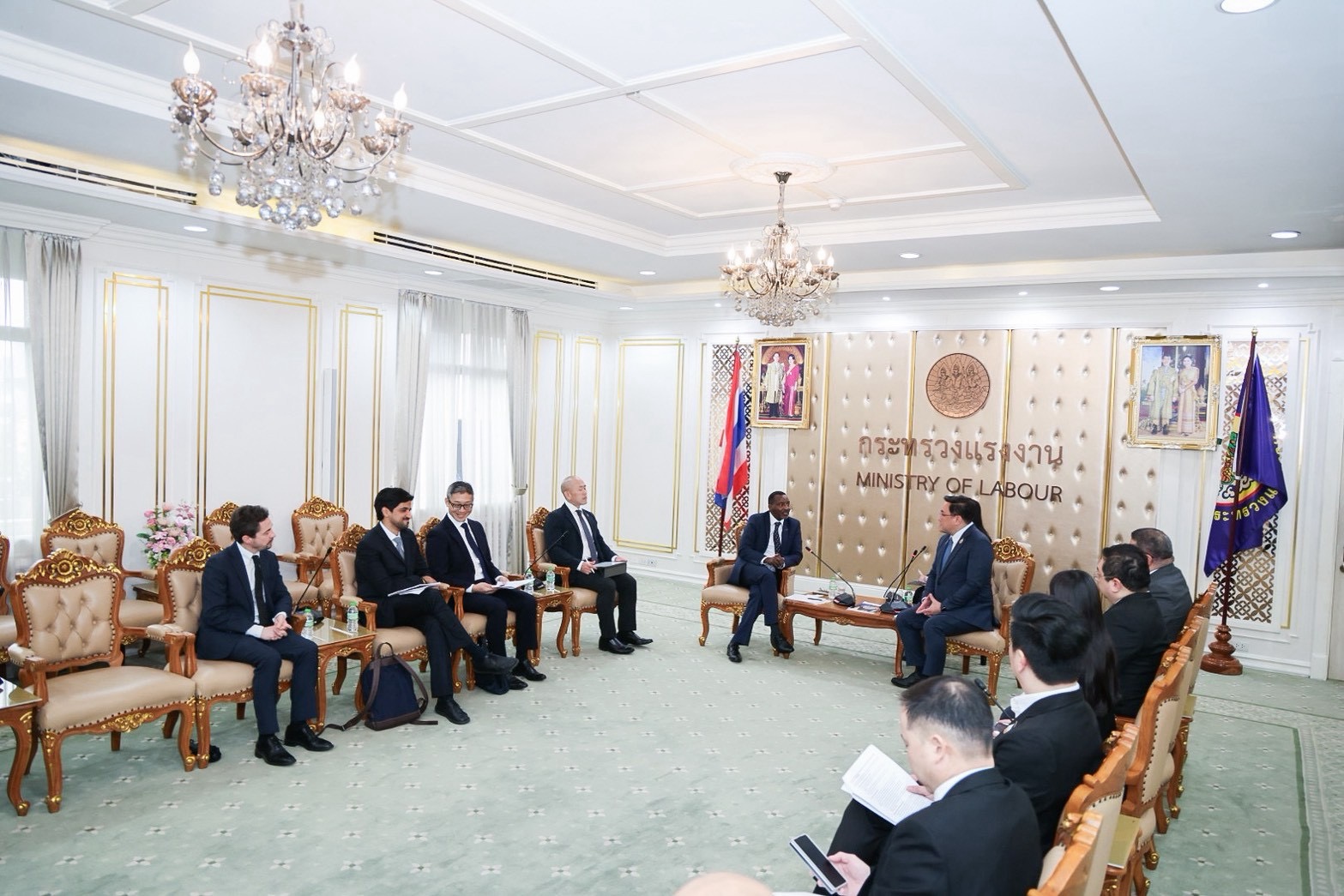
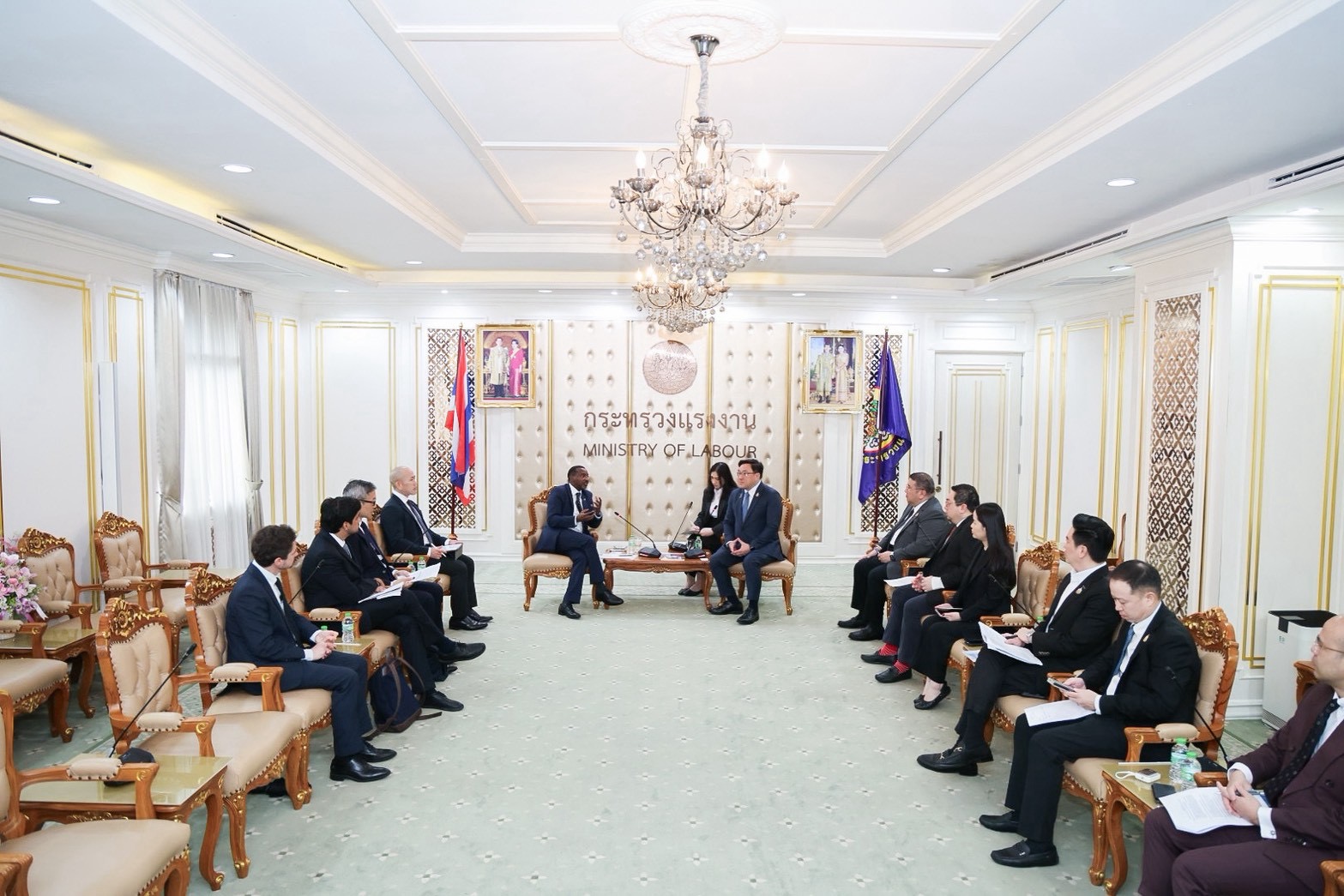
October 5, 2026 at 14:00 hours – Mr. Julapun Amornvivat, Minister of Labour, held discussions with Mr. Stephen N. Ndegwa, Incoming Division Director for Thailand and Myanmar of the World Bank, and his delegation, to drive strategic cooperation in developing the Thai labour market in line with the changing global economic context. Also joining the discussions were Pol. Lt. Col. Wannapong Kotcharak, Permanent Secretary of Labour, Mr. Kritikakon Wongsawangphanit, Mr. Chakkarapon Tangsudhithum, Mr. Kritsada Tanthoedthit, and Ms. Thidarath Yingcharoen, Advisers to the Labour Minister. The meeting took place at the Jatumongkol Room, 6th Floor, Ministry of Labour Building.
The discussions covered five key strategic issues, as follows:
1. Driving the Good Jobs Economy and upskilling the workforce -The Ministry of Labour aims to transition the country from industries reliant on cheap labour towards industries of the future, namely modern automotive, automation, smart electronics, and the green economy, through the “Learn and Get a Budget, Graduate and Get a Job” policy, in partnership with the private sector and the Science, Research and Innovation (SRI) agencies, with a request to the World Bank for support in evaluating and co-designing pilot projects.
2. Enhancing data capability – Preparations to establish a National Labour Database by 2027 to support a Smart Job Matching system, along with a request for World Bank support in developing labour market early-warning tools and enhancing personnel capacity for in-depth data analysis.
3. Reforming Social Security Fund investment – To address the risk of the fund being depleted in the period 2051-2058 due to the impact of an ageing society, the Ministry of Labour is seeking recommendations from the World Bank on investment risk diversification, investment governance, and risk management to generate sustainable returns.
4. Developing a Thai Global Labour Opportunity Map – Requesting World Bank cooperation in providing data on global labour market demand, to plan the systematic export of high-skilled workers and develop training in line with international standards.
5. The Thailand Zero Dropout Project in the labour dimension – Assisting those who have dropped out of the education system, both adults through upskilling, and young people aged 15-17 through the creation of learning pathways and Quality Apprenticeships, drawing on international case studies from the World Bank.
This round of discussions is an important step in drawing on international expertise to support reforms to Thailand’s labour structure, make it competitive, and build long-term security and sustainability for the country’s labour system.
+++++++++++++++++++
Division of Public Relations
Priyaron Phromsakha Na Sakon Nakhon – Photos and News