

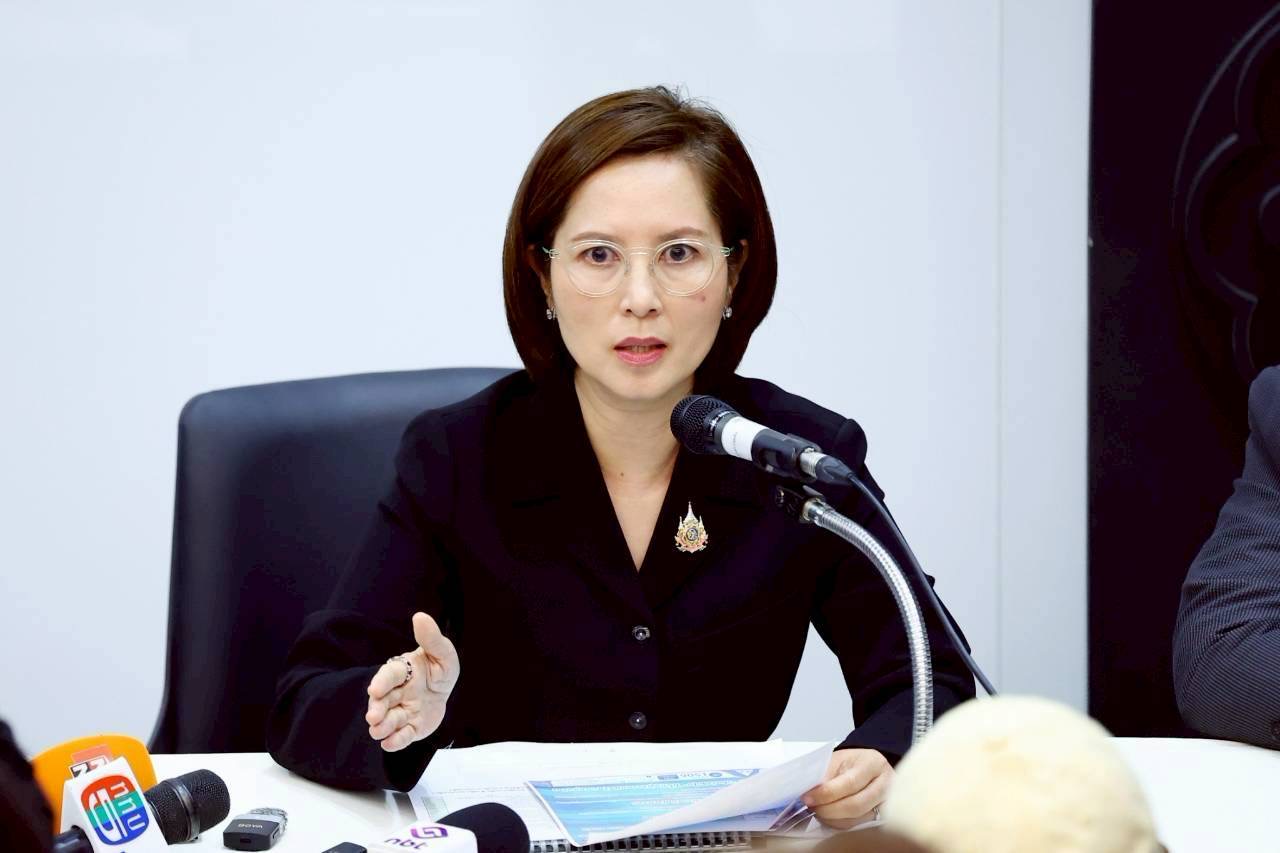
Ms. Trinuch Thienthong, Minister of Labour, revealed that she had received a report from Pol. Lt. Col. Wannapong Kotcharak, Permanent Secretary of Labour, in his capacity as Chair of the Working Group on the Study of the Structural Reform of the Social Security Office. The Working Group held its first meeting on February 6, during which members reached a shared conclusion on the urgent problems facing the Social Security Office in three key areas, including being constrained by the civil service system, resulting in delays that fail to respond in a timely manner to the needs or hardships of insured persons; public confidence in transparency and good governance, with the need for citizens to have access to information; and the need to improve the organisation’s management model so that it is suitable for future social contexts.
The Minister of Labour stated that reform of the Social Security system is not intended to privatise it, but rather to transform it into a “state organisation managed professionally”, so that every Baht and satang contributed by more than 24.5 million insured persons and over 500,000 employers is used efficiently and in line with the objective of being an institution that provides security for people’s lives. To grow the fund’s assets, investment management strategies must not only be handled professionally but also take into account the participation of all stakeholders, including insured persons, employers, and relevant government agencies.
“It must be acknowledged that the Social Security Fund is extremely large, to the extent that a low-risk management approach based on civil service regulations may no longer be sufficient to meet future benefit payments. Simply put, there is a risk of insufficient funds if management continues as is. This is why there have previously been proposals to establish a clearly separate, professional investment management body, similar to the model of the Government Pension Fund,” Ms. Trinuch said. She added that fund management inherently involves risk, but professionals understand how to diversify investments across a broader range of assets to generate returns that outpace inflation and support an ageing society arriving earlier than anticipated.
Ms. Trinuch further stated that, with regard to organisational restructuring, the key challenge is to reduce bureaucratic rigidity, increase management agility, and move away from outdated regulations. This would enable the organisation to attract highly skilled professionals in areas such as finance and investment, offering remuneration that can compete with the private sector. Most importantly, the organisation must operate with transparency, under a robust system of good governance subject to scrutiny, and, ideally, be independent of political influence.
The Minister of Labour concluded that, in terms of service delivery, there is a need for significant upgrading through the adoption of modern digital technologies, including AI, Co-Bots, and Big Data, with real-time data integration linking hospitals, employers, and insured persons. Such systems would enable more effective analysis and design of benefits tailored to the needs of insured persons across different occupational groups.
+++++++++++++++++++
Division of Public Relations