

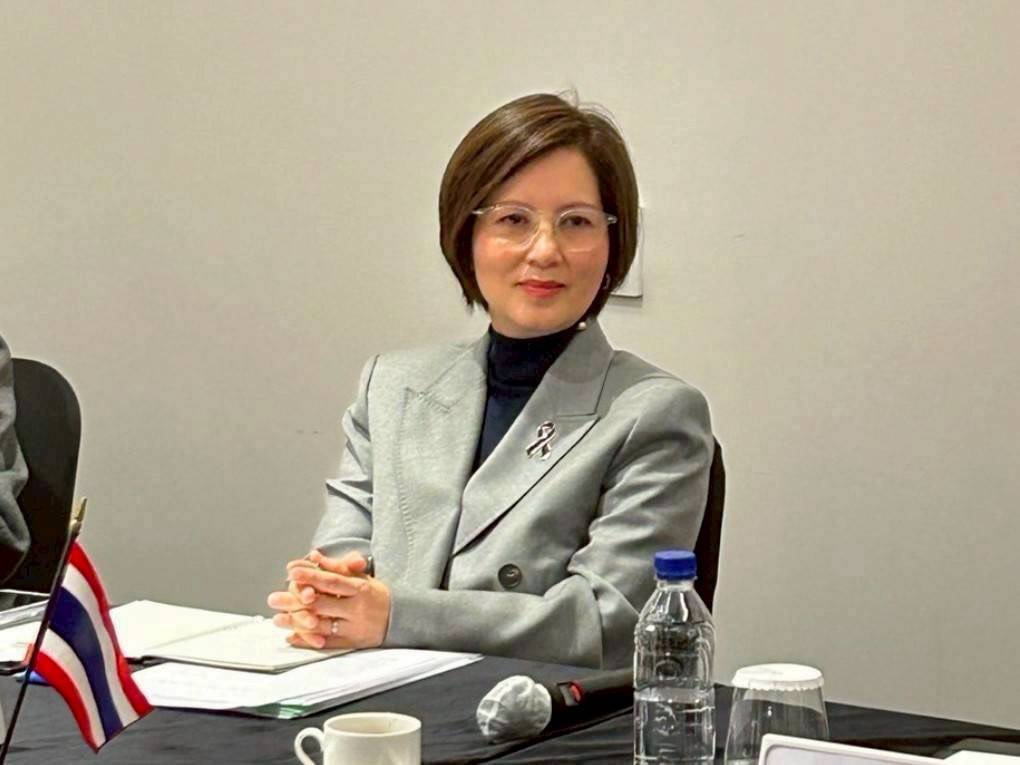
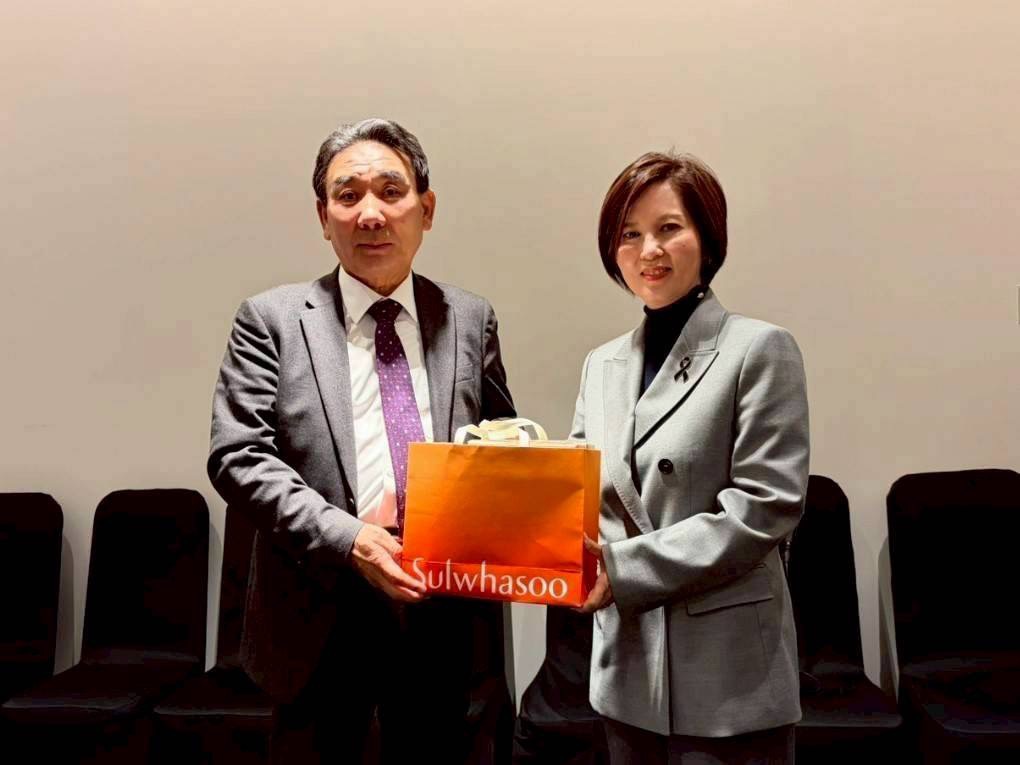
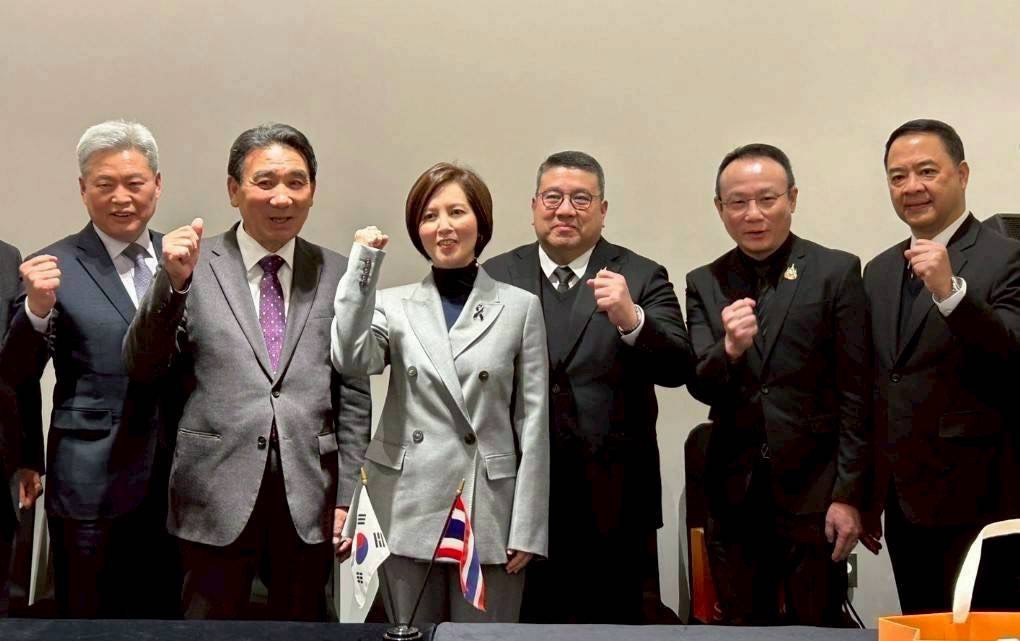
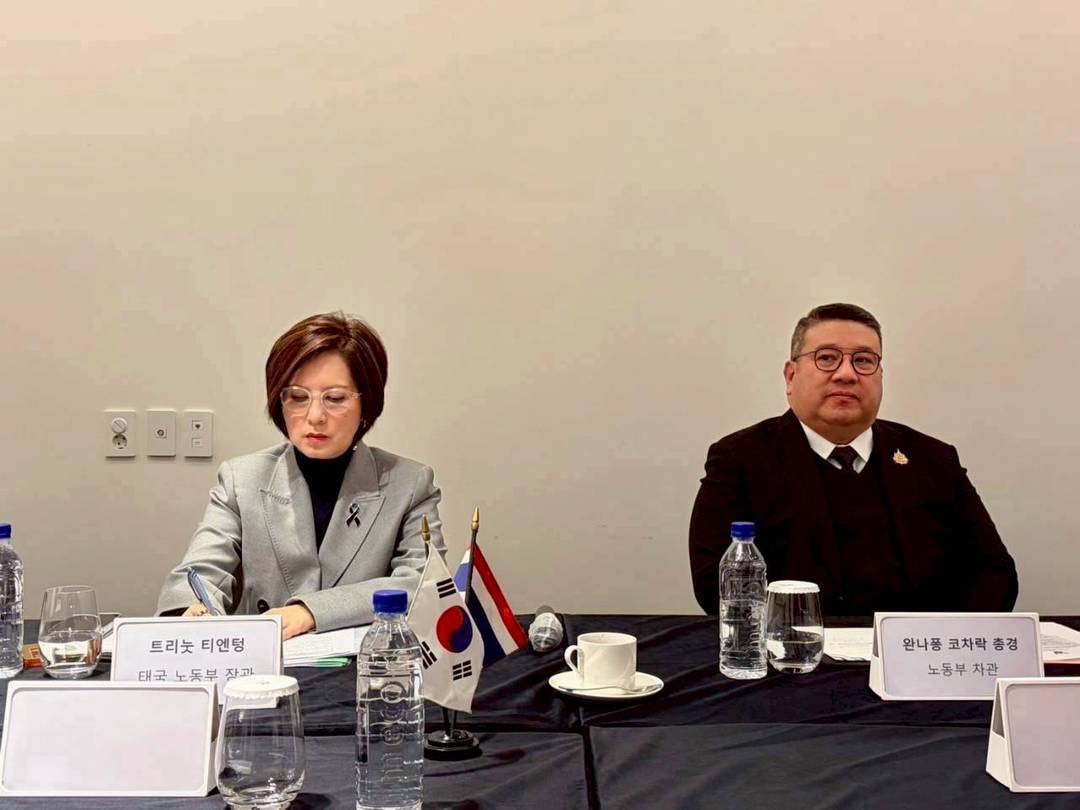
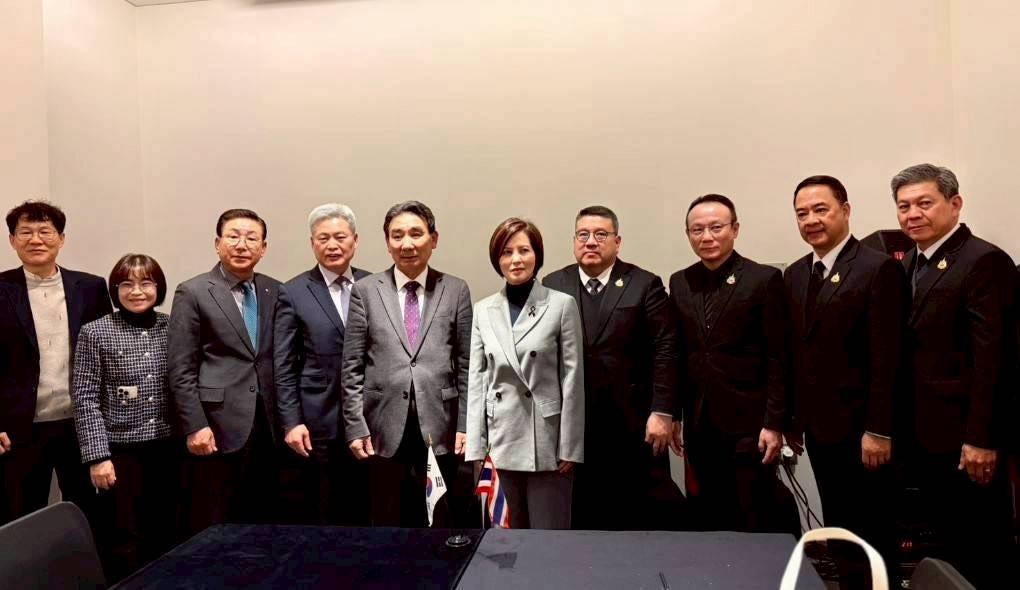
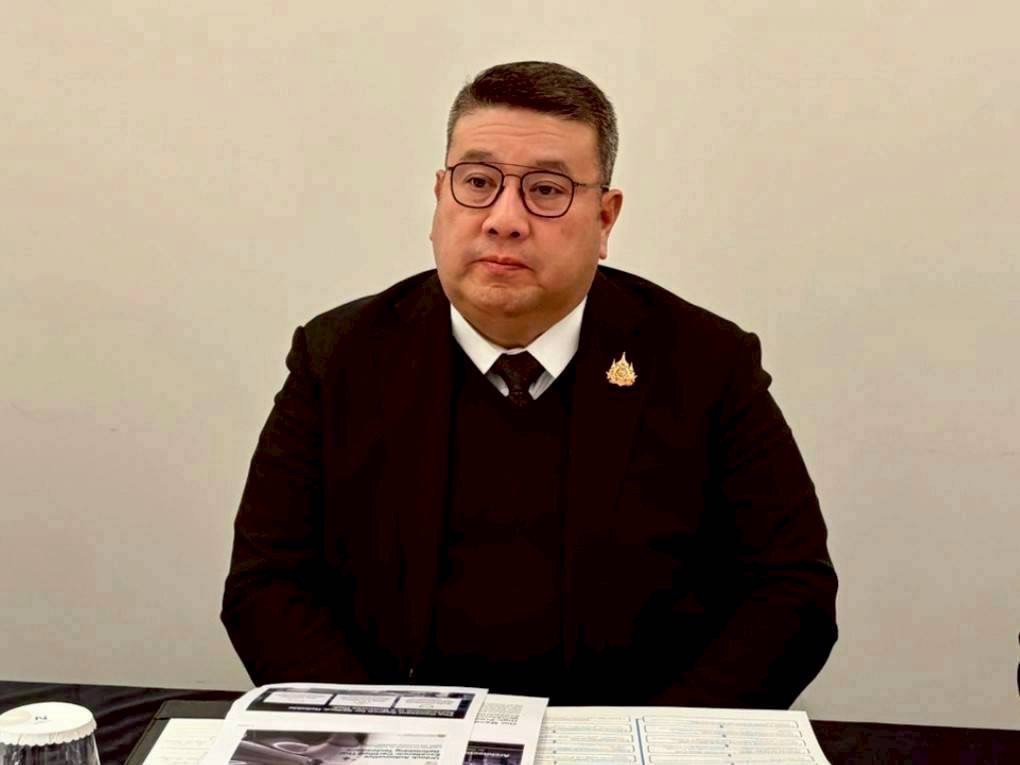
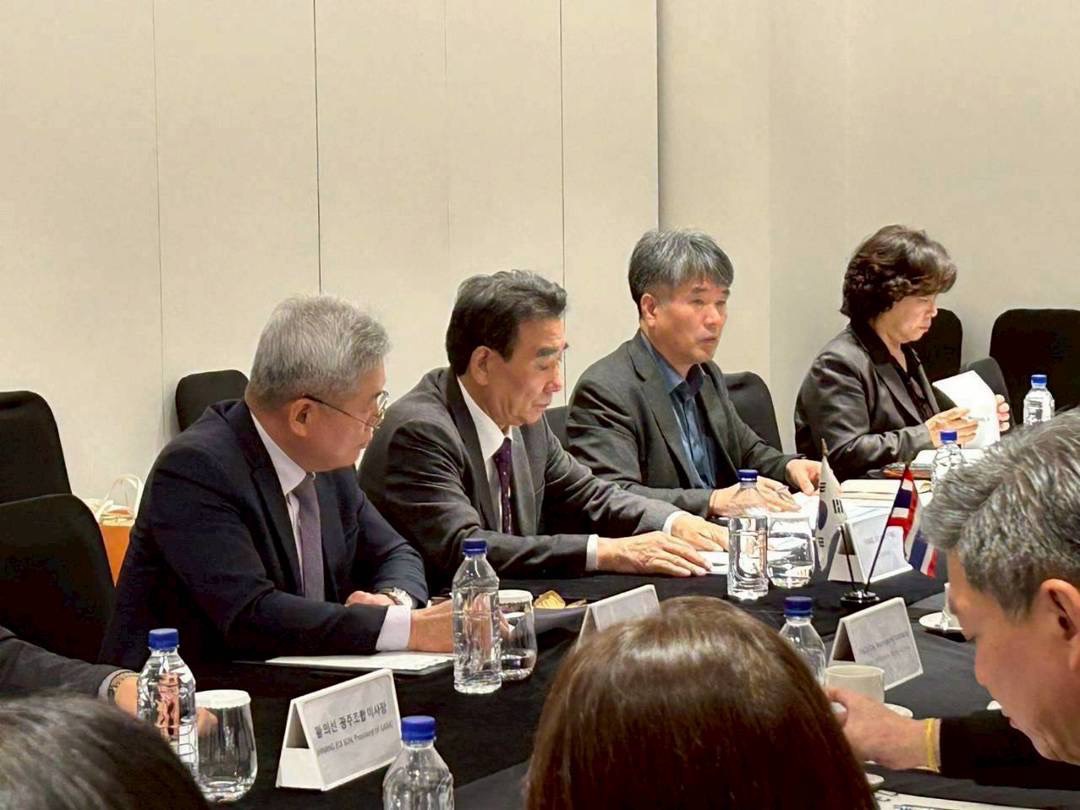
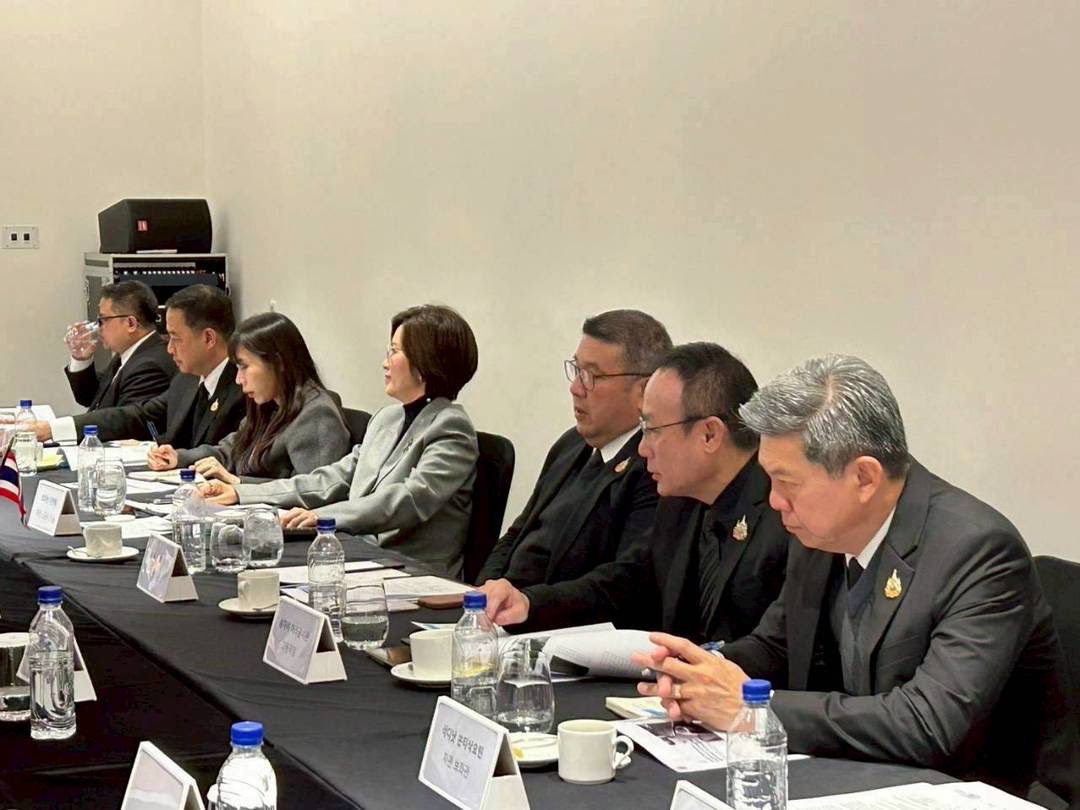
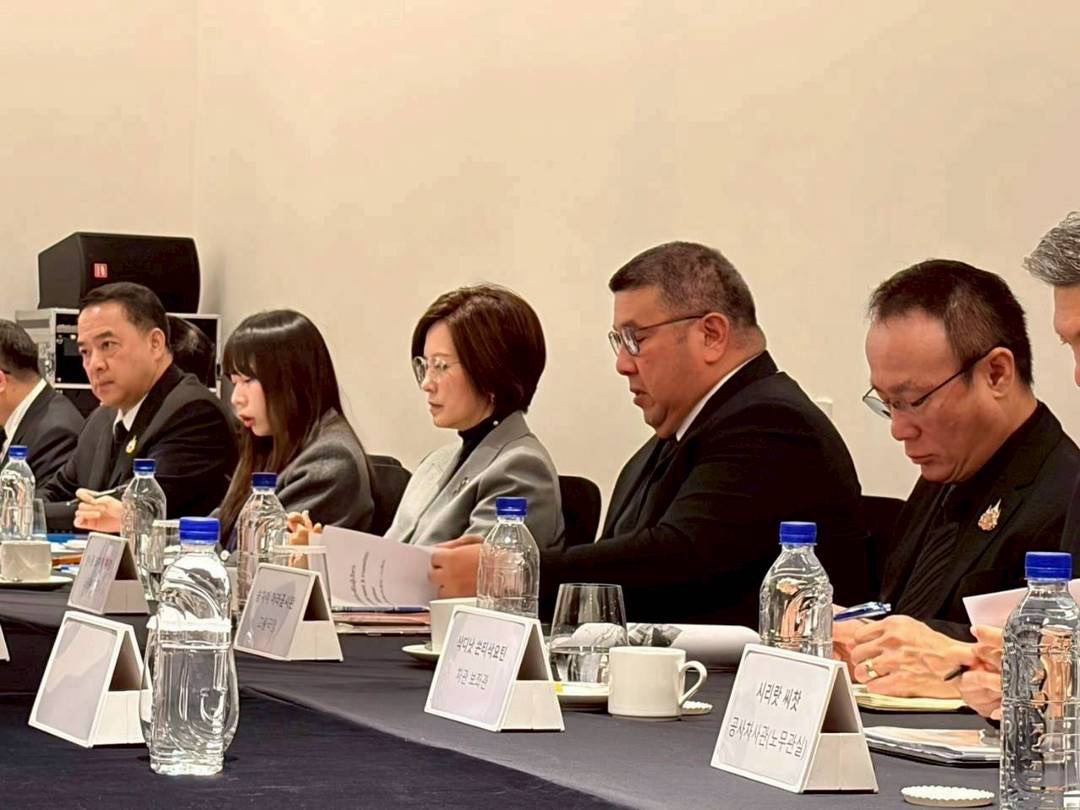
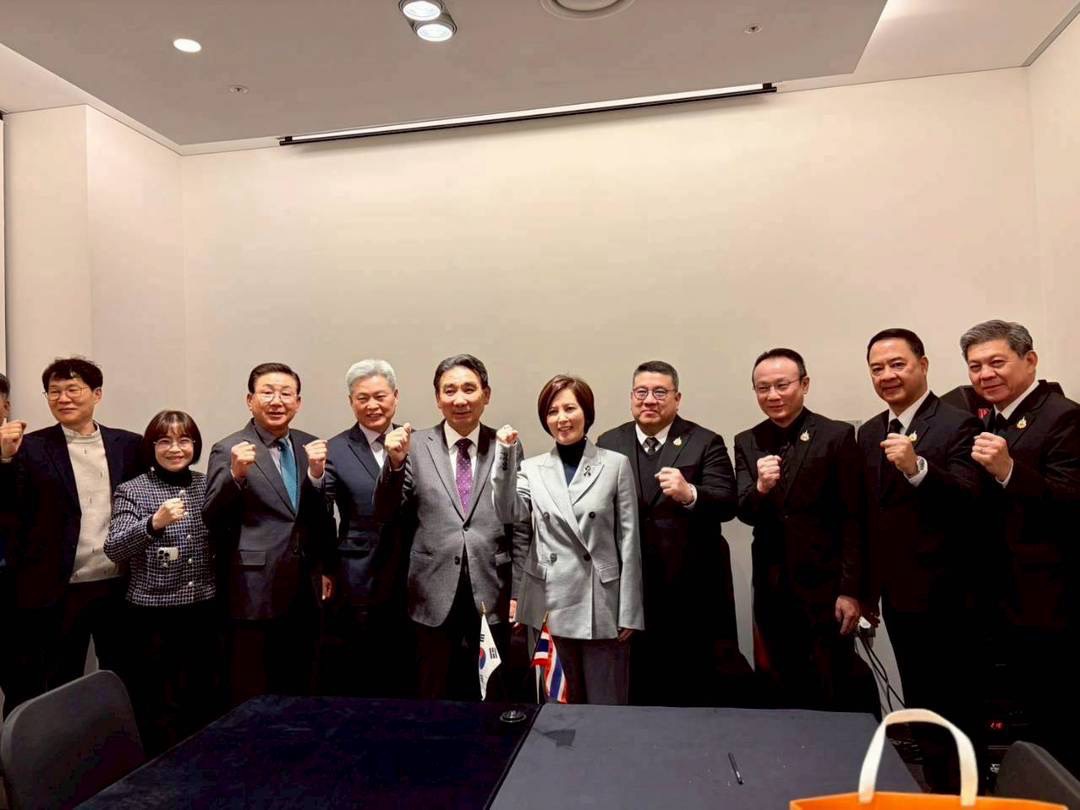
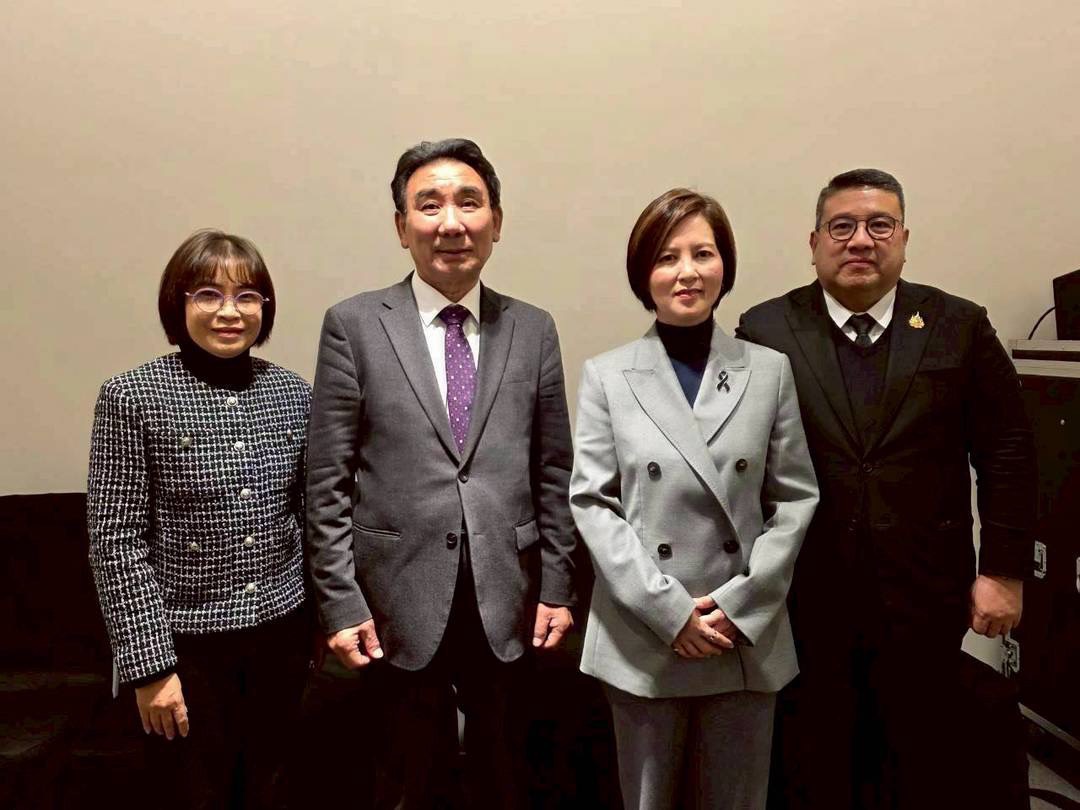
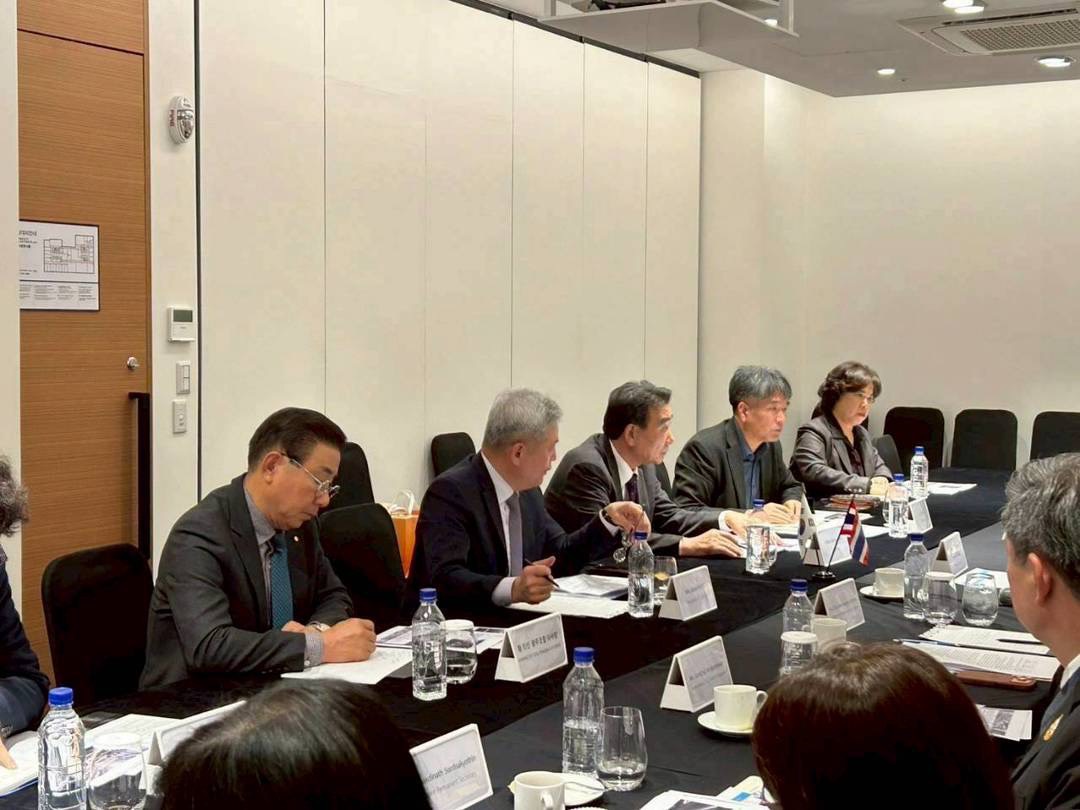
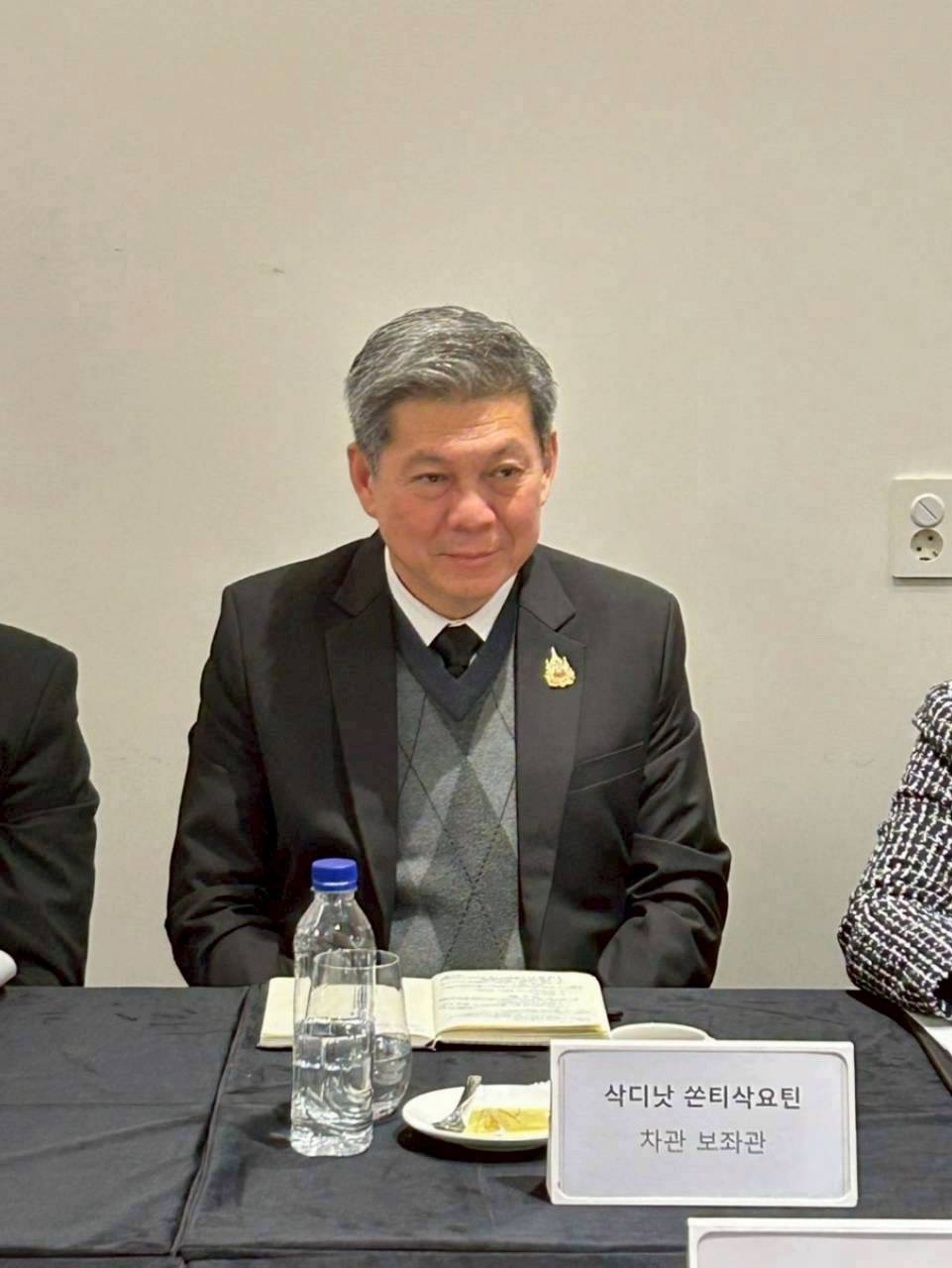
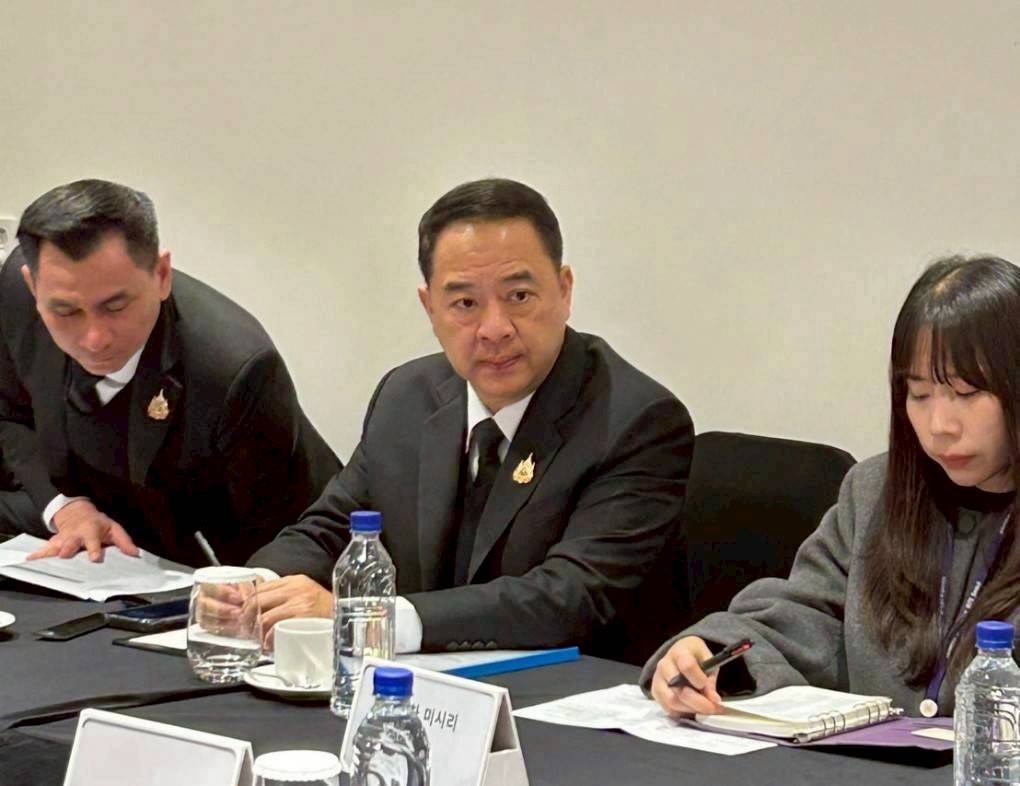
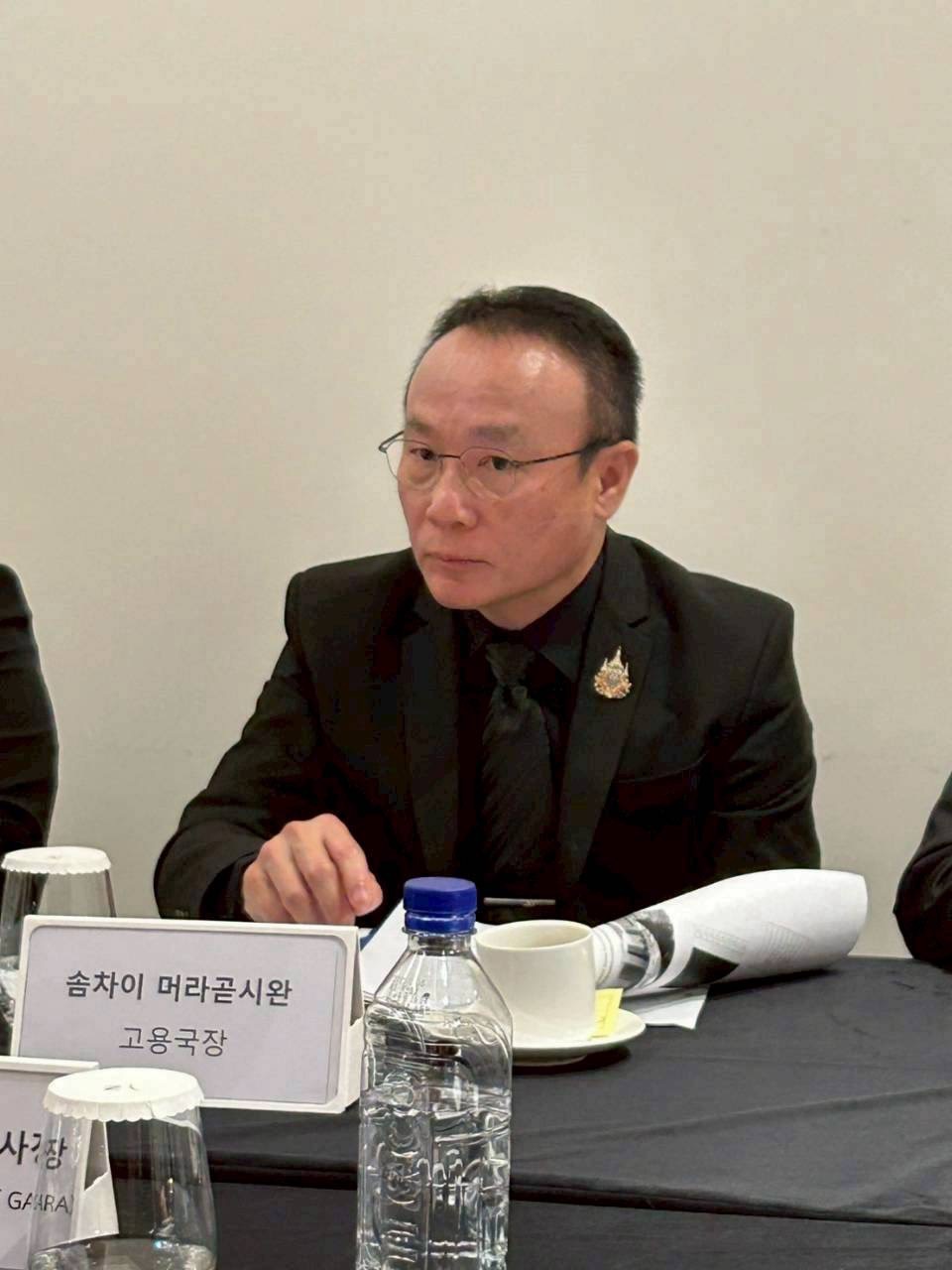
December 22, 2025, 10.30 hours local time in the Republic of Korea – Ms. Trinuch Thienthong, Minister of Labour, together with Pol. Lt. Col. Wannapong Kotcharak, Permanent Secretary of Labour, Mr. Somchai Maruksriwan, Director-General of the Department of Employment, Mr. Samat Pattamasukon, Director-General of the Department of Skills Development, Mr. Sakdinart Sontisakyothin, Assistant to the Permanent Secretary of Labour, Mr. Somchat Supharee, Deputy Director-General of the Department of Skills Development, Ms. Sirirat Srichat, Labour Attaché, and the delegation, held discussions with Mr. Yang Seungyong, executive of the Korea Automobile Repair & Inspection Federation, to promote employment opportunities for Thai workers in automobile repair workshops in the Republic of Korea and to strengthen relations between Thailand’s Ministry of Labour and Korean agencies involved in employing Thai workers.
Ms. Trinuch Thienthong, Minister of Labour, said that this visit followed information that the Republic of Korea is facing labour shortages in automobile repair workshops, particularly in vehicle paint and auto body repair technicians, and that employers wish to hire Thai workers due to their capabilities and skills. This represents a valuable opportunity to open a new labour market sector for Thai workers in automotive repair.
Ms. Trinuch added that the Federation has indicated a demand for 330 vehicle paint technicians, with the following qualifications:
- Aged 20 – 40 years.
- Applicants without formal qualifications must have at least 5 years of experience; those with an associate degree must have at least 3 years of experience. Workers must provide certified documentation of work experience.
The Federation has received approval from the Korean Ministry of Justice to run a pilot programme employing 330 foreign workers per year. The Federation prefers Thai workers, as they perform well, possess strong skills, are favoured by employers, and align with the Korean government’s focus on employing highly skilled foreign labour.
In addition, in 2026, workers employed under the E-7-3 skilled worker visa will receive an average monthly salary of approximately 2,920,000 Won (about 68,620 Baht). They may bring their families to live in the Republic of Korea. With diligence and firm performance, employers may continue to renew work visas without a fixed limit. Thai workers employed in the Republic of Korea will receive the same rights, welfare, and legal protection as Korean workers.
The Ministry of Labour confirmed its readiness to deploy Thai workers to the Republic of Korea. The Department of Employment will be responsible for selecting and deploying qualified jobseekers, while the Department of Skill Development will enhance workers’ skills in line with the Federation’s needs. In addition, the Labour Section at the Royal Thai Embassy in Seoul, under the Office of the Permanent Secretary, will coordinate and facilitate employment matters and related support. The Ministry is confident that Thai workers can help address the shortage of skilled labour faced by the Federation.
The Minister of Labour expressed her appreciation to the Federation for recognising the value of employing Thai workers and reaffirmed Thailand’s willingness to cooperate fully in sending Thai workers to more skilled positions. She also assigned the Labour Section to continue coordination and discussions with the Federation.
Pol. Lt. Col. Wannapong Kotcharak, Permanent Secretary of Labour, added that the Ministry of Labour is concerned for Thai workers travelling to work in the Republic of Korea and therefore seeks cooperation from the Federation and employers in caring for Thai workers in areas such as adaptation to the working environment and culture, occupational safety, and legal rights and protections, to ensure stable employment and good quality of life. He also emphasised the Ministry’s focus on developing labour skills, particularly in auto body and vehicle painting positions, which are in high demand by the Federation.
Mr. Samat Pattamasukon, Director-General of the Department of Skills Development, said that the Department will invite Thai workers to test their competencies before overseas employment. The Department can also collaborate to develop training curricula aligned with employer needs, with training emphasising safety, work attitude, and Korean language skills. These programmes can be delivered nationwide through the Department’s fully prepared institutions. He expressed hope that this cooperation would contribute to shared knowledge and sustainable human resource development.
Mr. Somchai Maruksriwan, Director-General of the Department of Employment, further noted that the Department’s mission includes promoting employment and deploying Thai workers abroad. He offered recommendations for the Federation to collaborate with the Department of Skill Development to define the skill standards required by the Korean side. Workers who meet these standards and are selected will receive training on culture and daily life to enable them to work effectively with Korean employers. Deployment to the Republic of Korea can be conducted either through government-to-government placement, in which workers are responsible only for personal expenses such as airfare, passport and visa fees, criminal record checks, and medical examinations, or through private recruitment agencies, where additional service fees apply. He encouraged consideration of state-managed deployment to minimise costs for Thai workers.
Both sides agreed to continue discussions at the operational level, with the Labour Section coordinating further with the Federation.