
The Labour Minister discussed with representatives of five types of disabilities to find ways to help people with disabilities, including vocational training, employment, and social equality.
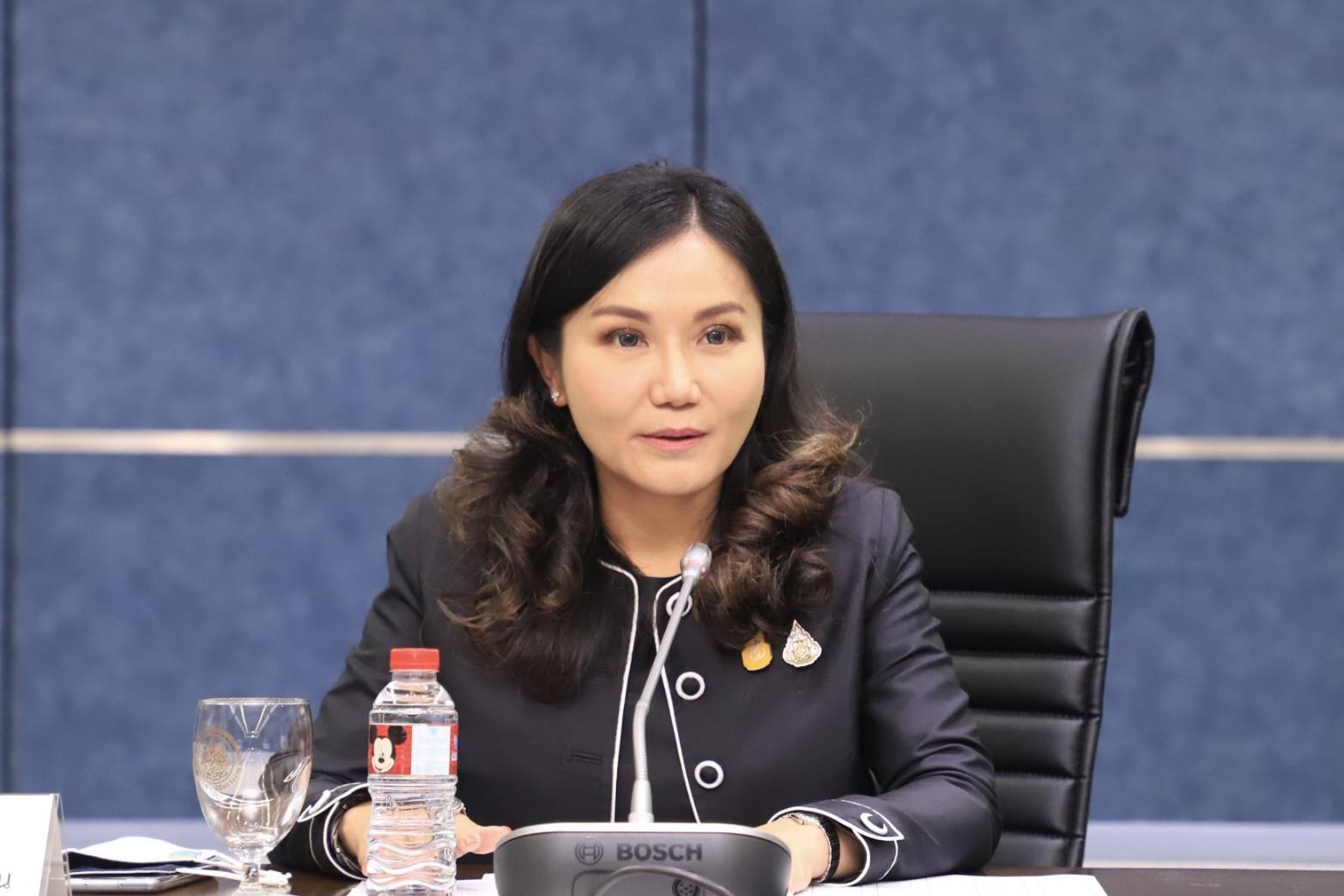
Deputy Labour Minister Prof. Narumon Pinyosinwat chaired the meeting on skills development for the disabled, with representatives of 5 types of disabilities attending the meeting. The representative’s proposed guidelines for skills development for people with disabilities voiced problems and obstacles and needs for assistance in developing skills to support people with disabilities. Meeting participants consisted of representatives from the Council of Disabled People of Thailand, National Association of The Deaf in Thailand, Parents Association for People with Intellectual Disabilities, and the Parents Association of People with Autism (Thai).
Prof. Narumon said that the Prime Minister had given great importance to helping people with disabilities. The Ministry of Labour has been assigned to work with the relevant ministries to help people with disabilities, and their families have a better life, in line with the concept of “create, elevate and give; uniting Thailand to create a nation” under the mission of the Ministry of Labour. The Department of Skill Development continues to aid in skills development for people with disabilities, but by operating as just one agency, they cannot provide comprehensive assistance to the existing number of people with disabilities; therefore, it must work with relevant agencies, both public and private. Therefore, the department drafted an order to appoint a joint subcommittee with a representative from people with disabilities associations as joint subcommittee members and propose the Deputy Prime Minister (General Prawit Wongsuwan) as the chairman of the National Labour Development and Coordination Committee to consider appointment again. Today’s meeting was held to set guidelines for skill development for people with disabilities and outline the need for government assistance in skills training, employment, and equality. There will be another meeting on October 22, 2020.
The meeting presented information and issues, such as the government’s demand for around 8,000 positions for people with disabilities. However, it found that there was an inability to find people with disabilities that meet their needs. Therefore, it is suggested to analyze the numbers and find ways to push people with disabilities to work in the public sector. The government should set an example in hiring people with disabilities by increasing the employment ratio to 100 people to 2 people with disabilities. There is also a lack of a database for hiring people with disabilities. The meeting discussed encouraging workplaces to provide workplace facilities when hiring people with disabilities, especially for employers that are not yet in operations. The meeting, therefore, requested that the Ministry of Labour create understanding among such employers. The non-empirical disabled group, such as autism, requires vocational training such as post-new normal career training, a job coach (with mentors), or a job club system in the form of community enterprises.
The meeting also proposed to help the private sector to hire people with disabilities of all types so that unseen people with disabilities can work. The employment opportunity must be sustainable and not a year-to-year employment basis. The effort is integration among training agencies for the disabled, comprising the government and private agencies, by having the Department of Skill Development or the disabled’s organizations to join and run training to meet standards and develop skills for people with disabilities to become more versatile. For example, a blind person can do more than be a masseuse, such as a programmer, online sales businessperson, or call center. If people with disabilities are trained properly, they will work in the private sector more, elevating people with disabilities to a social enterprise level. The meeting also discussed a disability trade fair to determine which products should be supported next, by providing markets to support the distribution of such products and educate the private sector in hiring people with disabilities, to help drive hiring and be presented further to the government. In regard to living allowance, it discussed giving persons with disabilities equal access to living allowances to reduce inequality of people with disabilities, sharing the government label quota for people with disabilities to enable people with disabilities to have real access to work.
“Driving action to assist people with disabilities will be achieved through the cooperation of all parties. Initially, the Ministry of Labour’s Department of Skill Development has acted as the main body and reports on the problems of hiring people with disabilities in the government sector, such as the budget rate framework for the Prime Minister to acknowledge further,” said the Deputy Labour Minister.
——————————————————————————–
Division of Public Relations
21 October 2020