

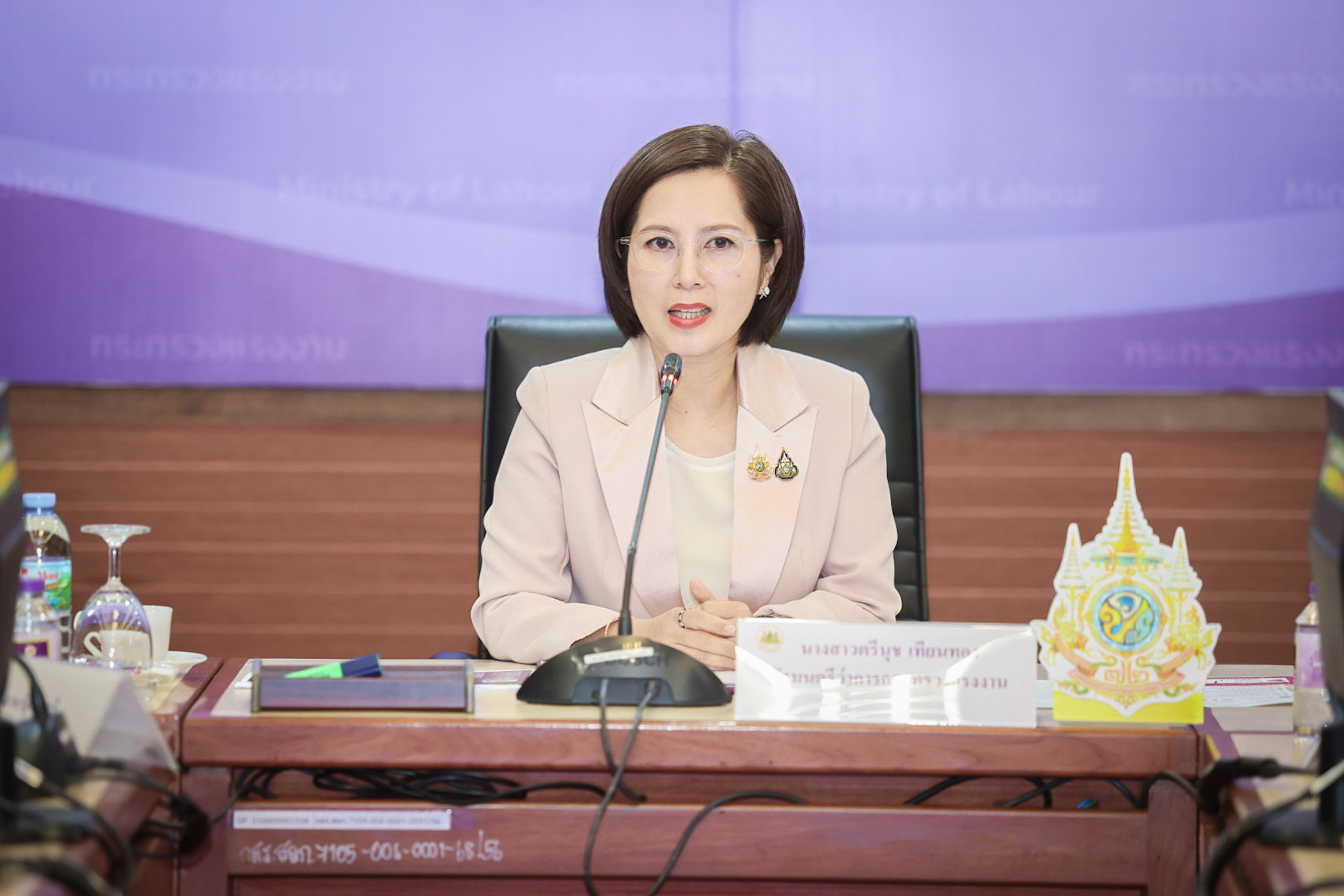
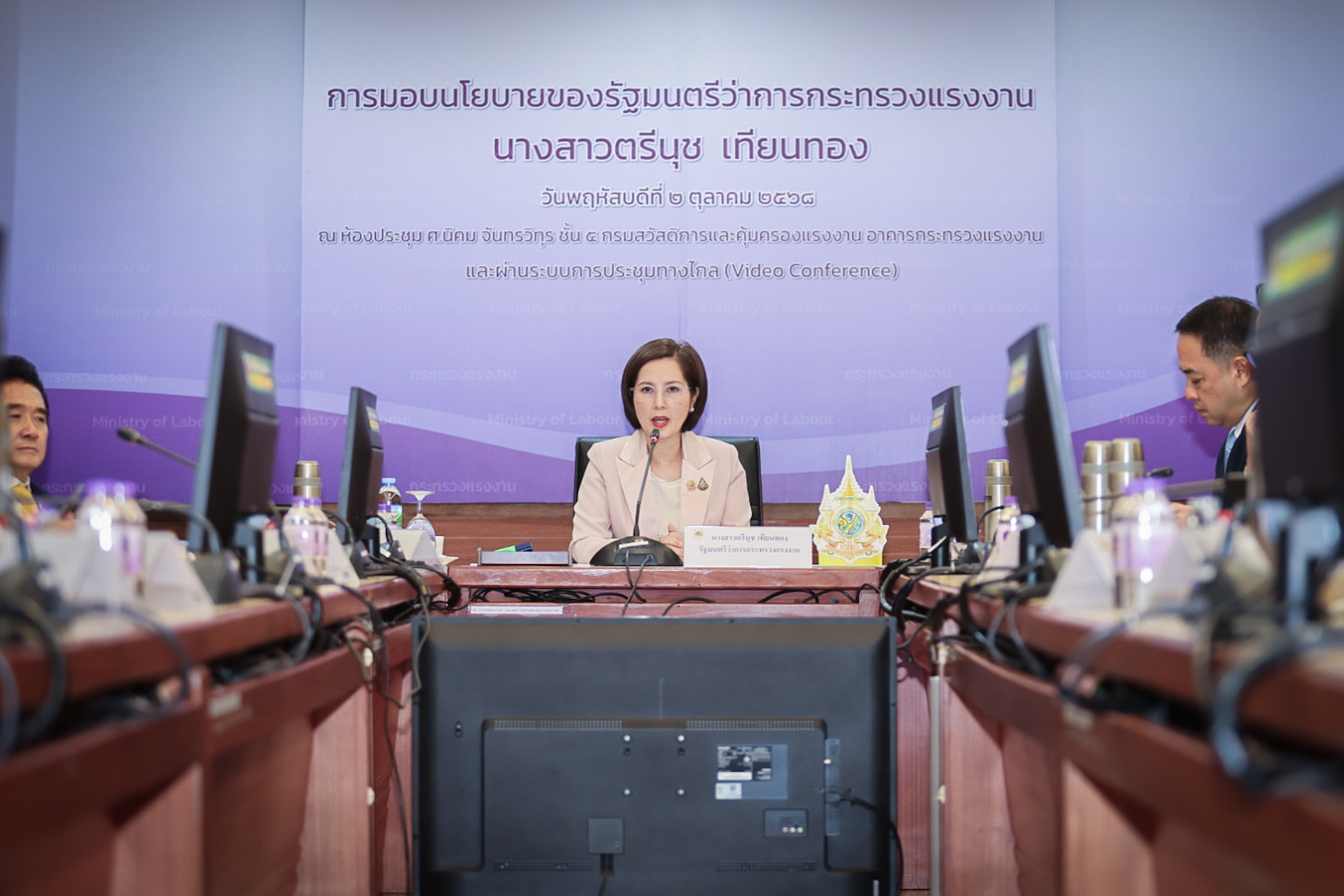
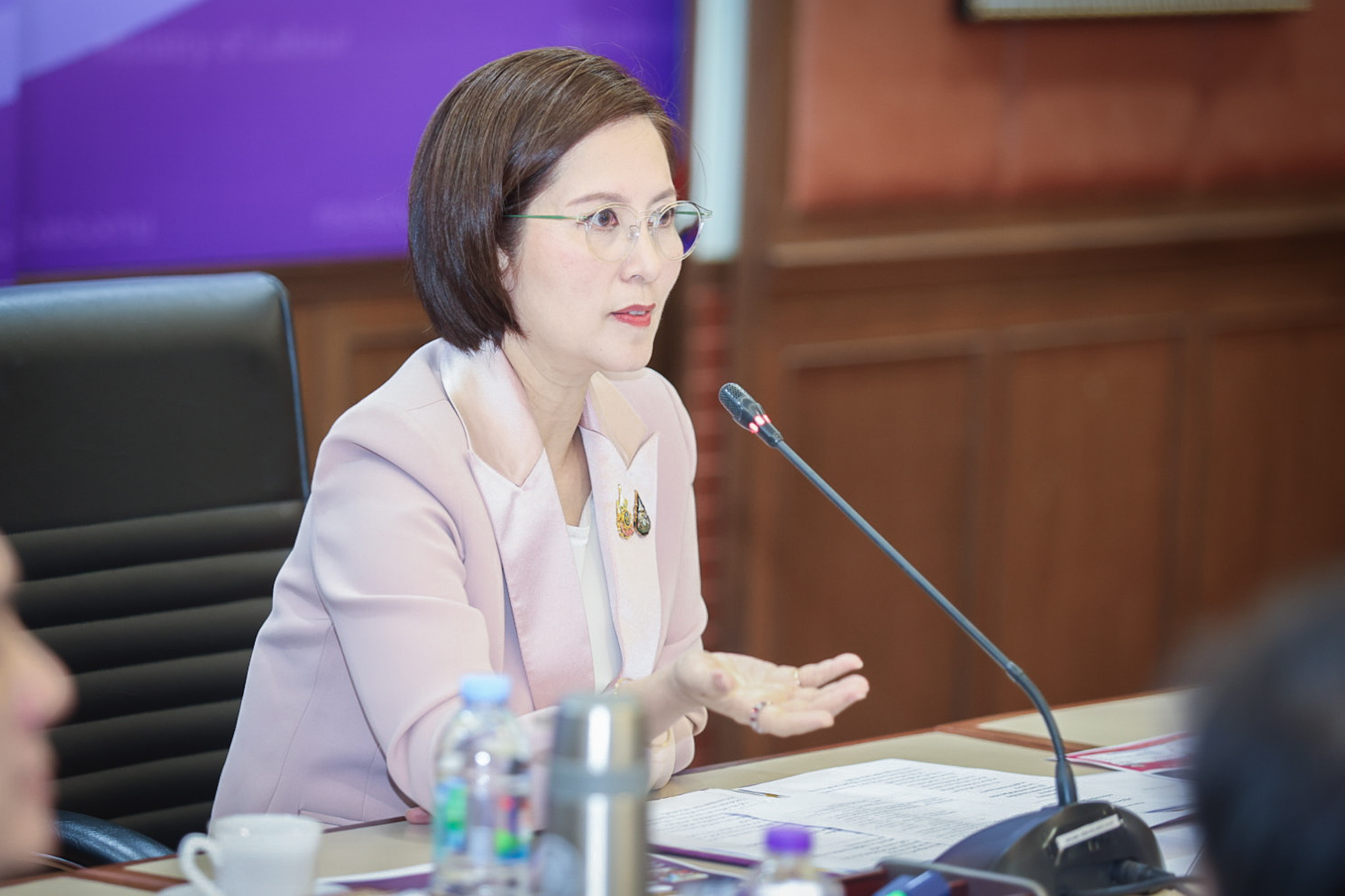
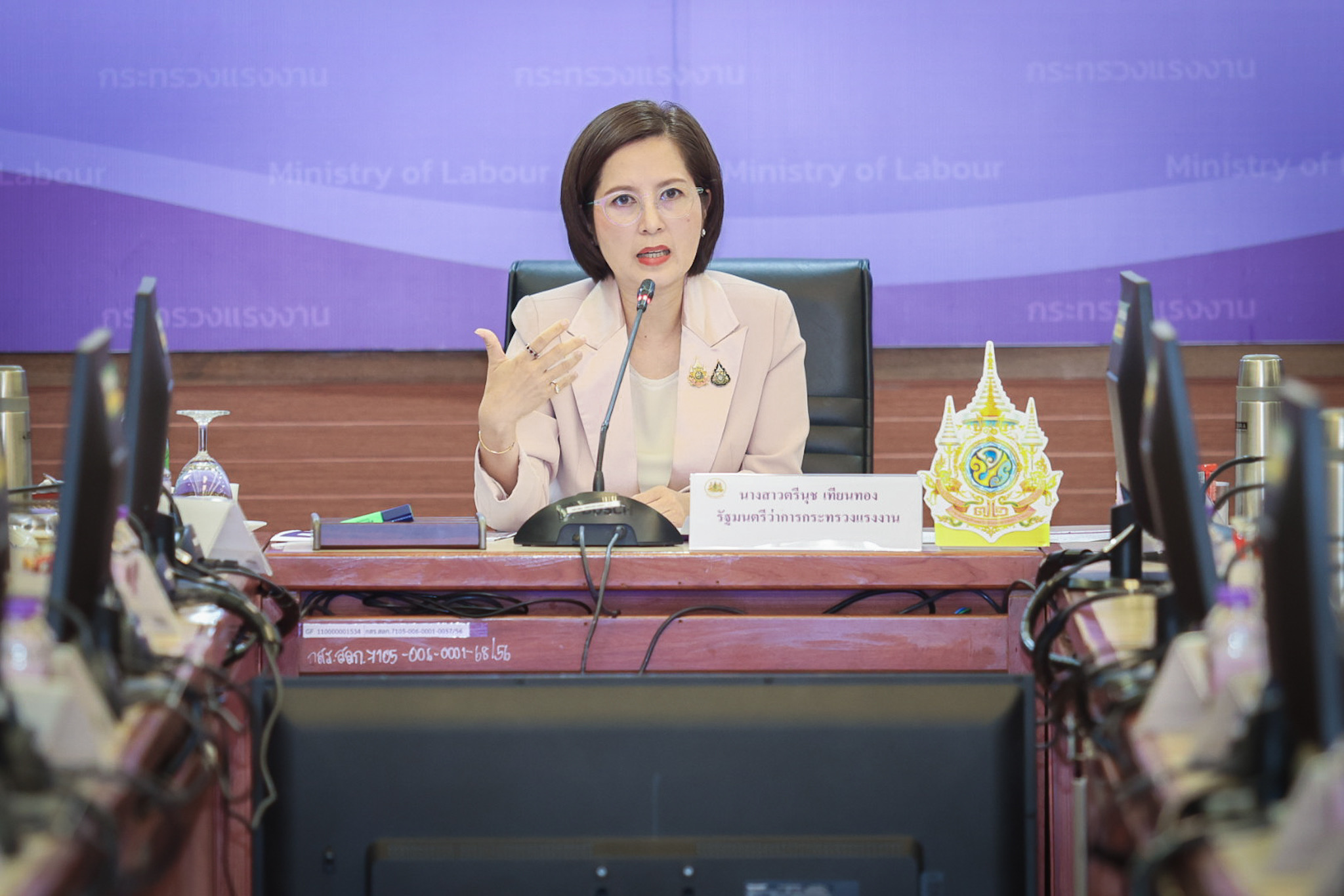
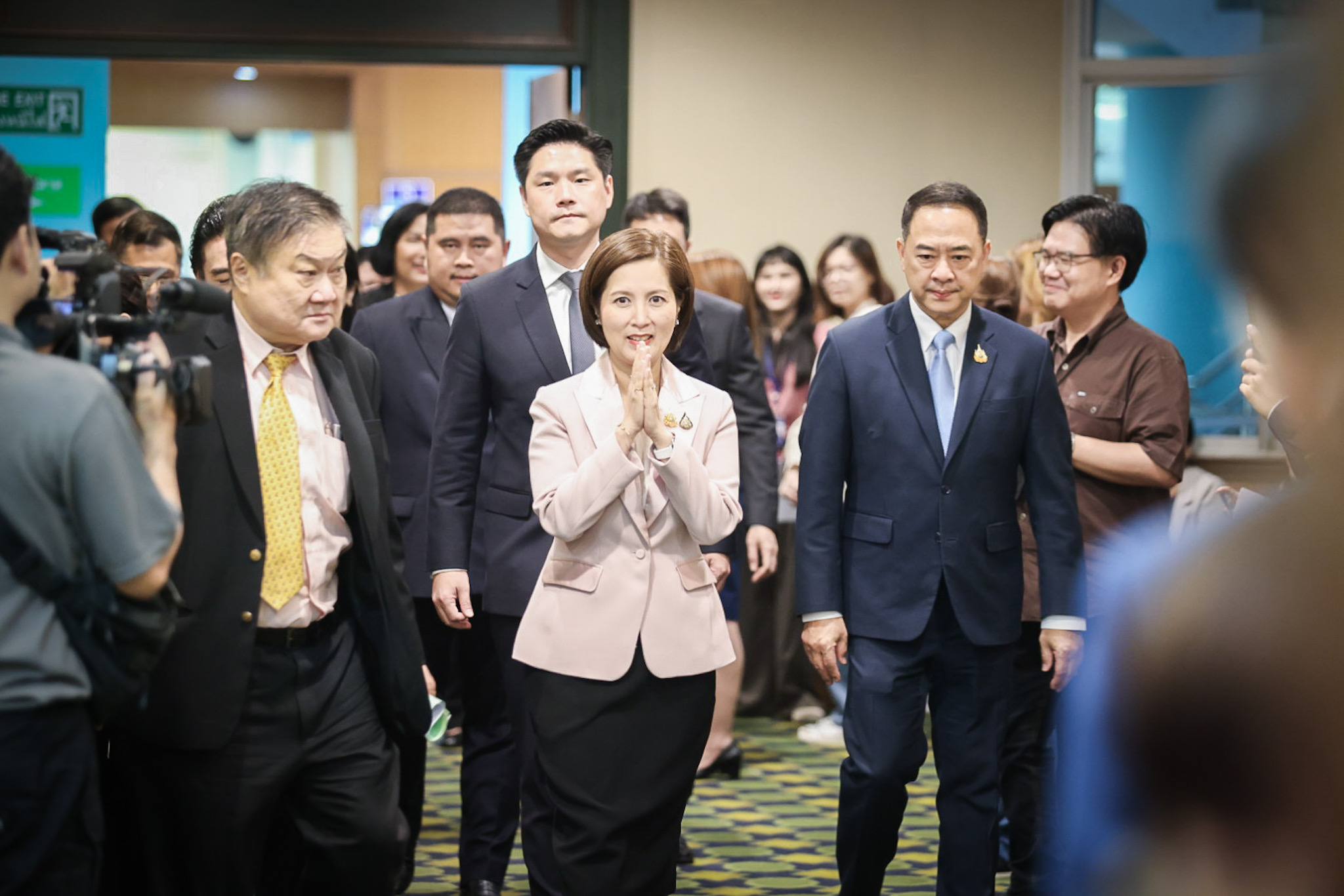
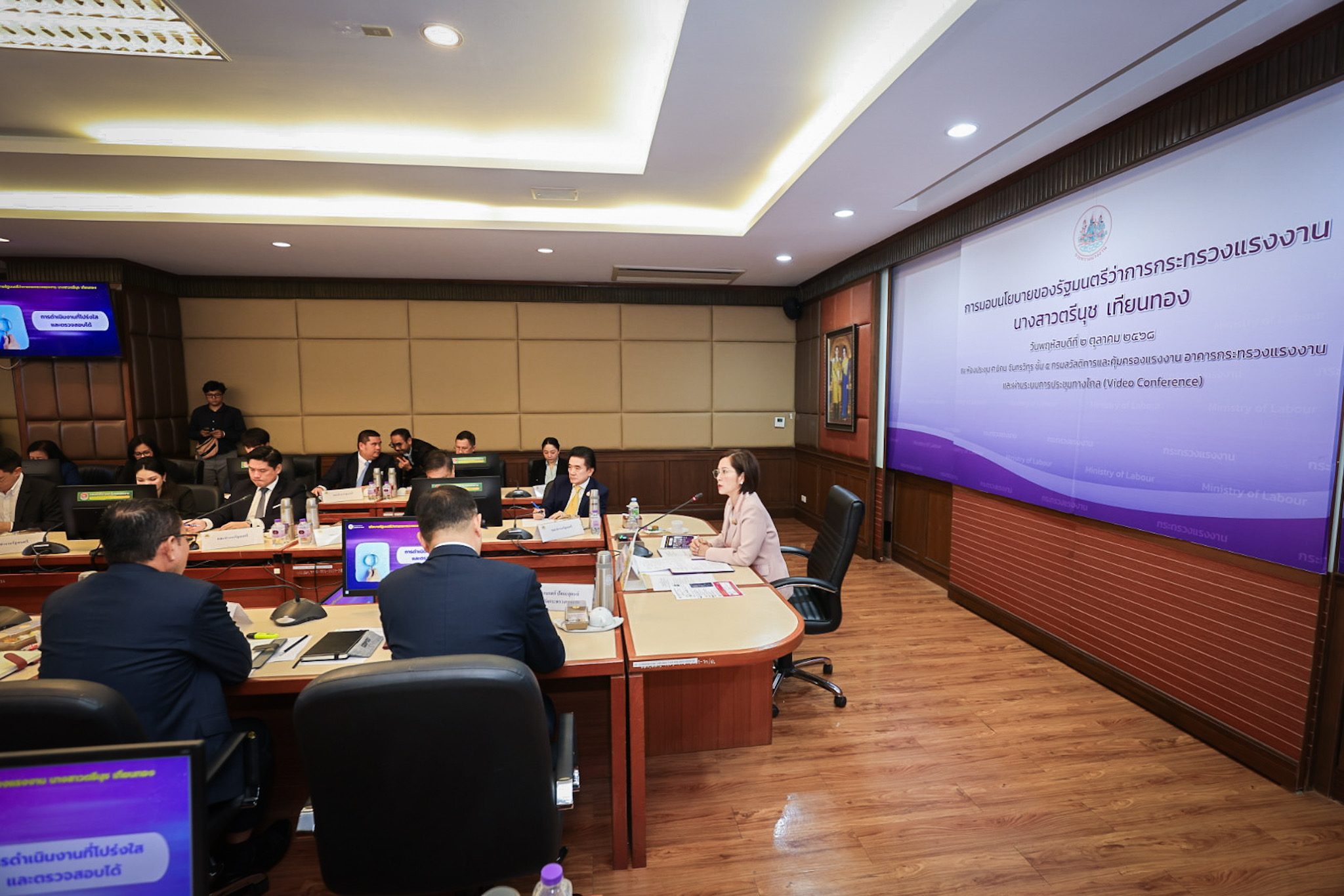
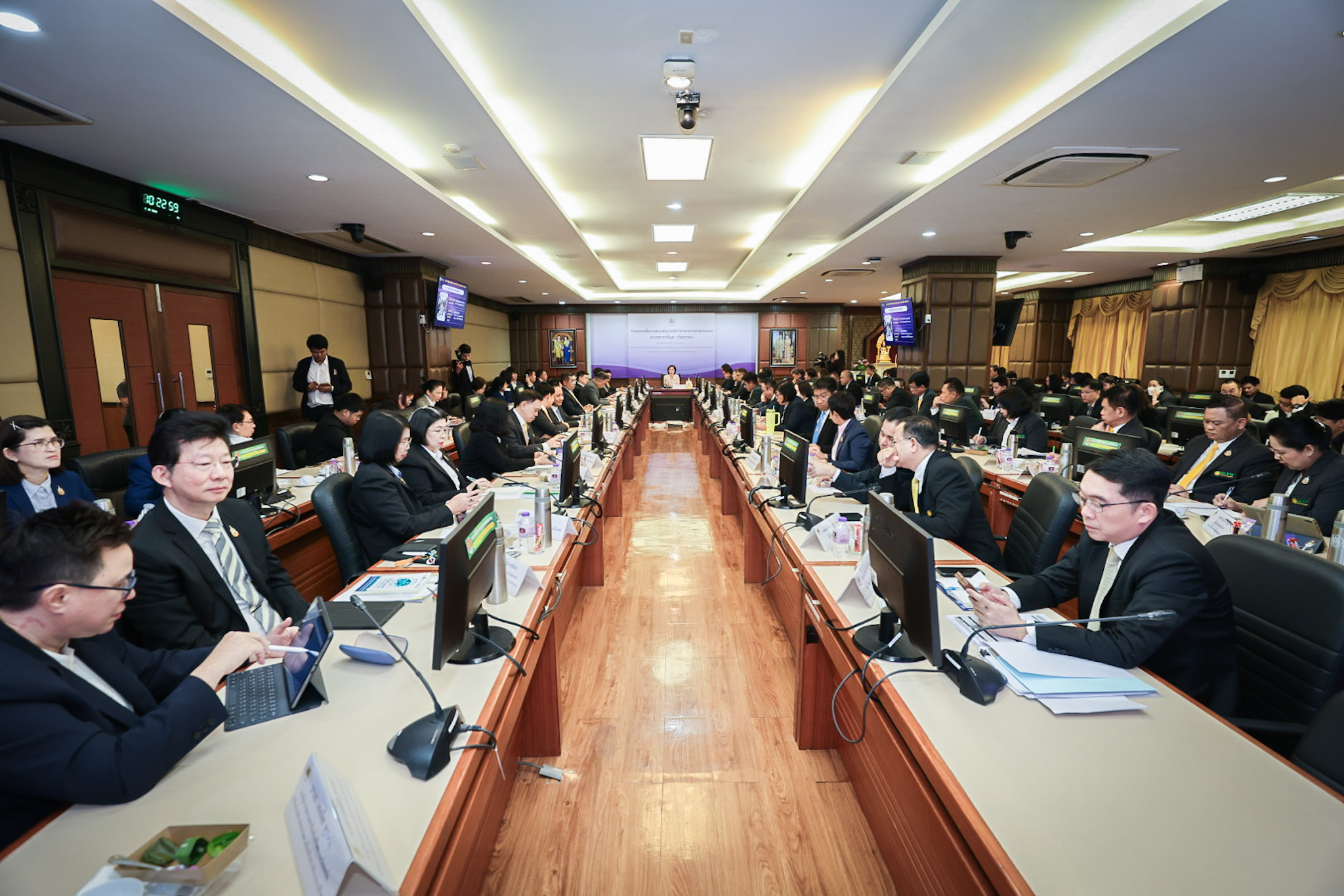
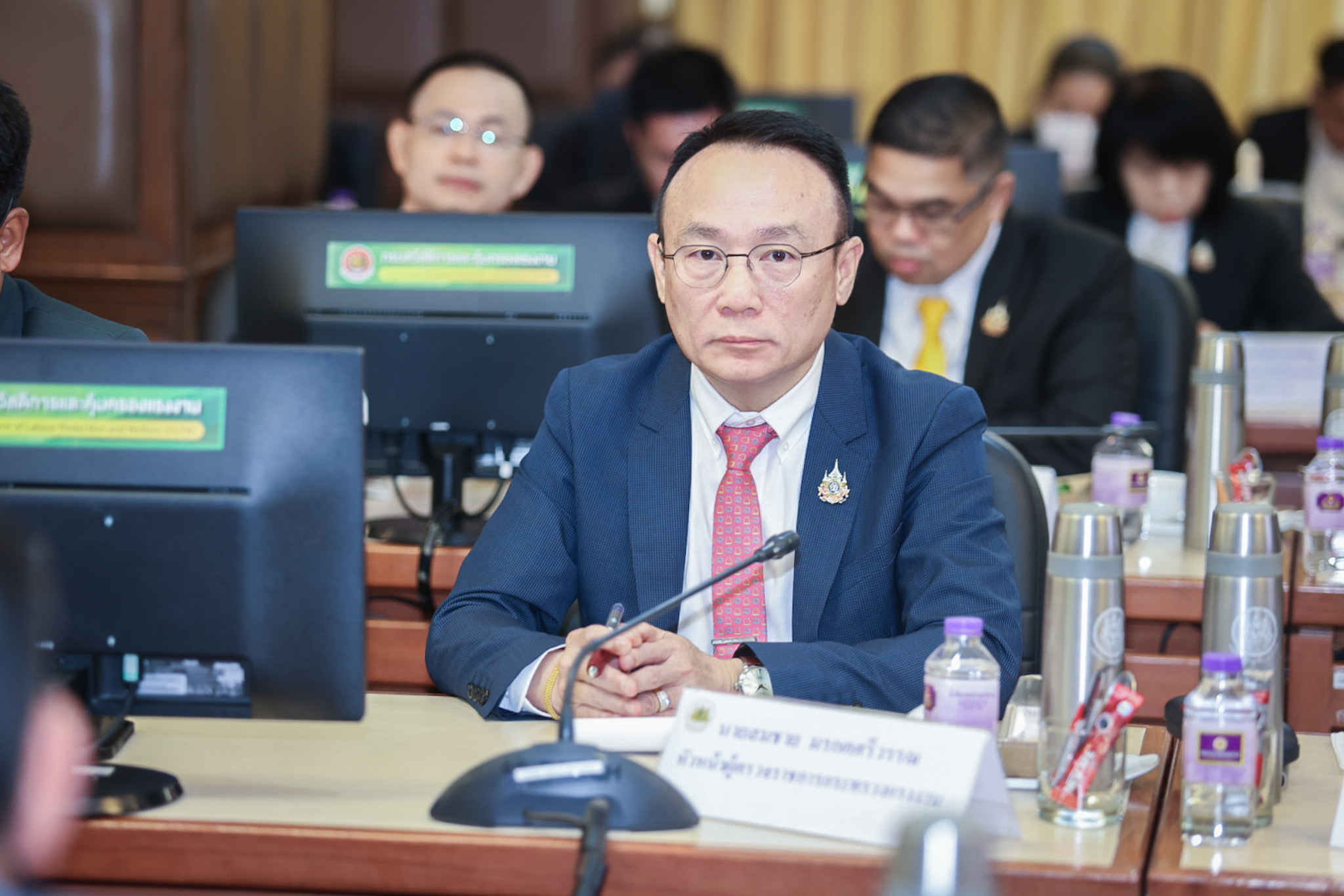
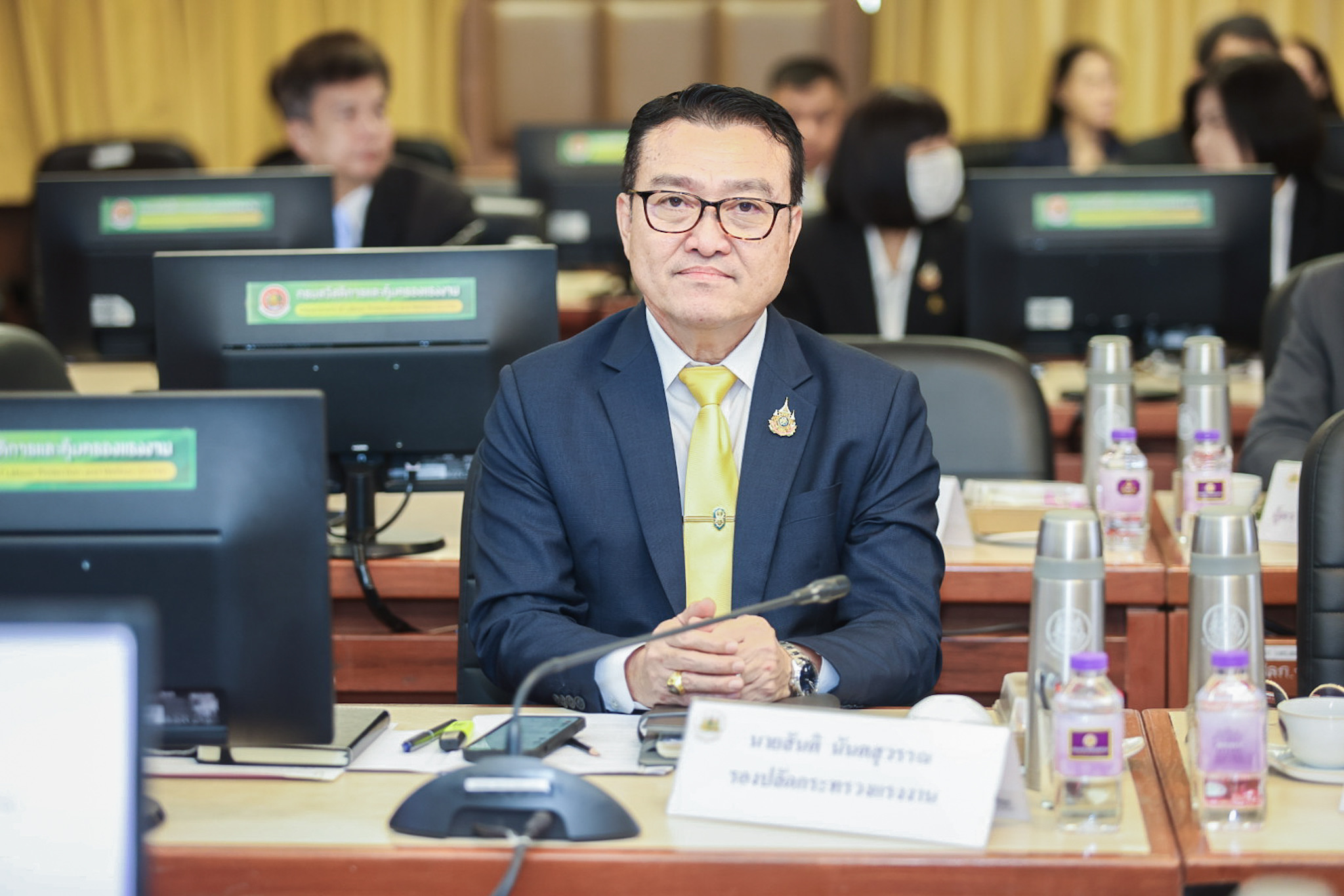
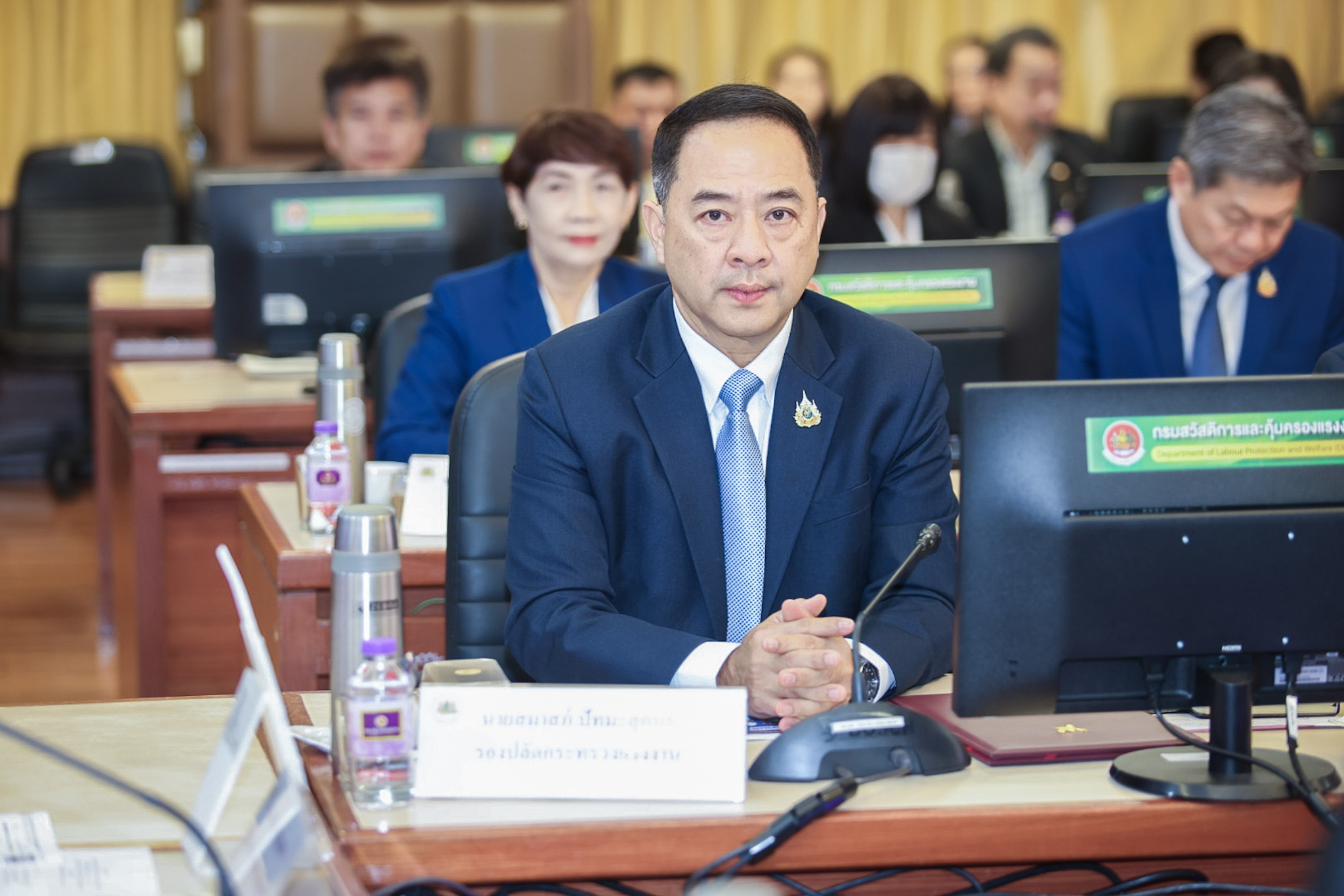
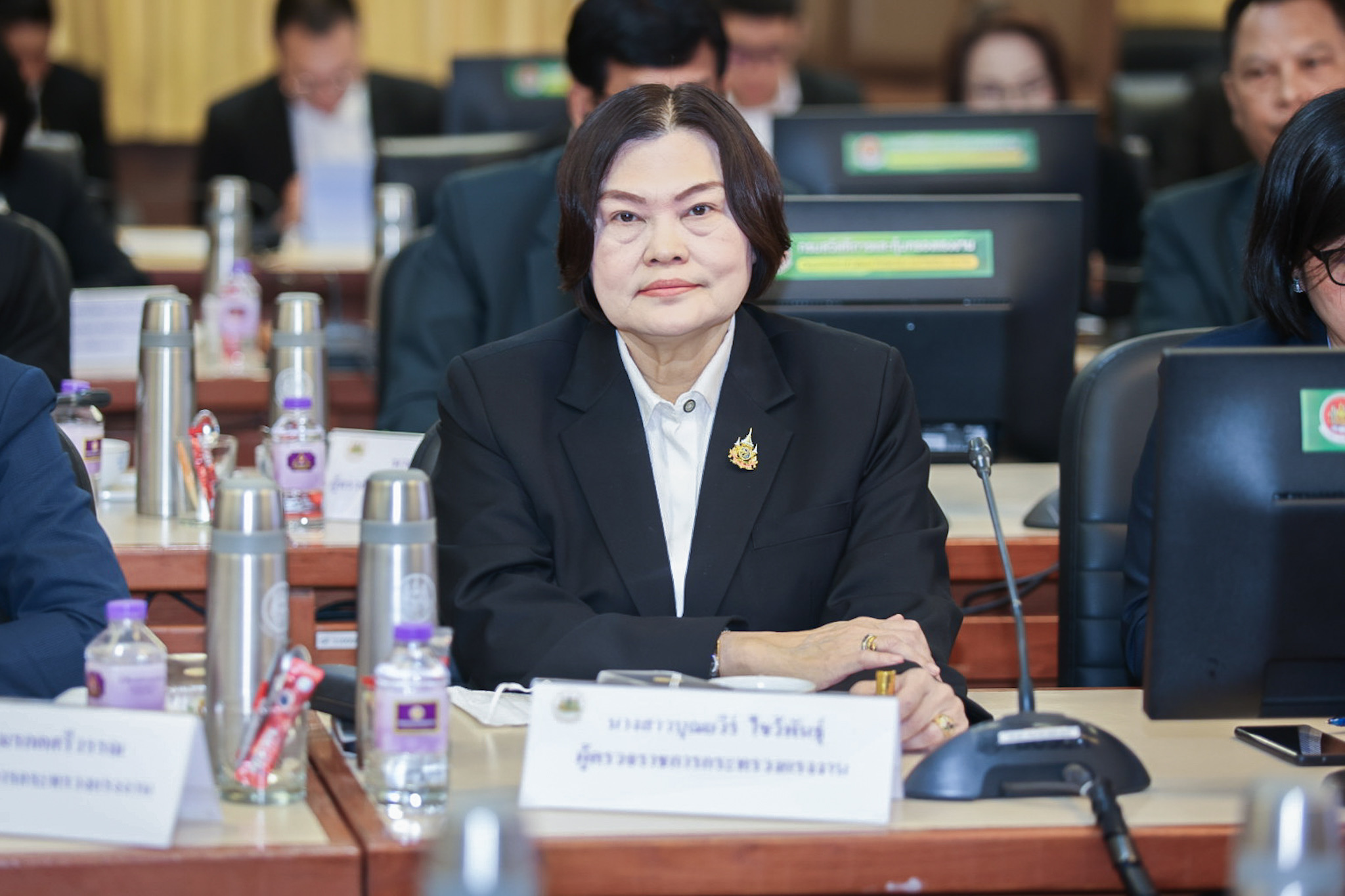
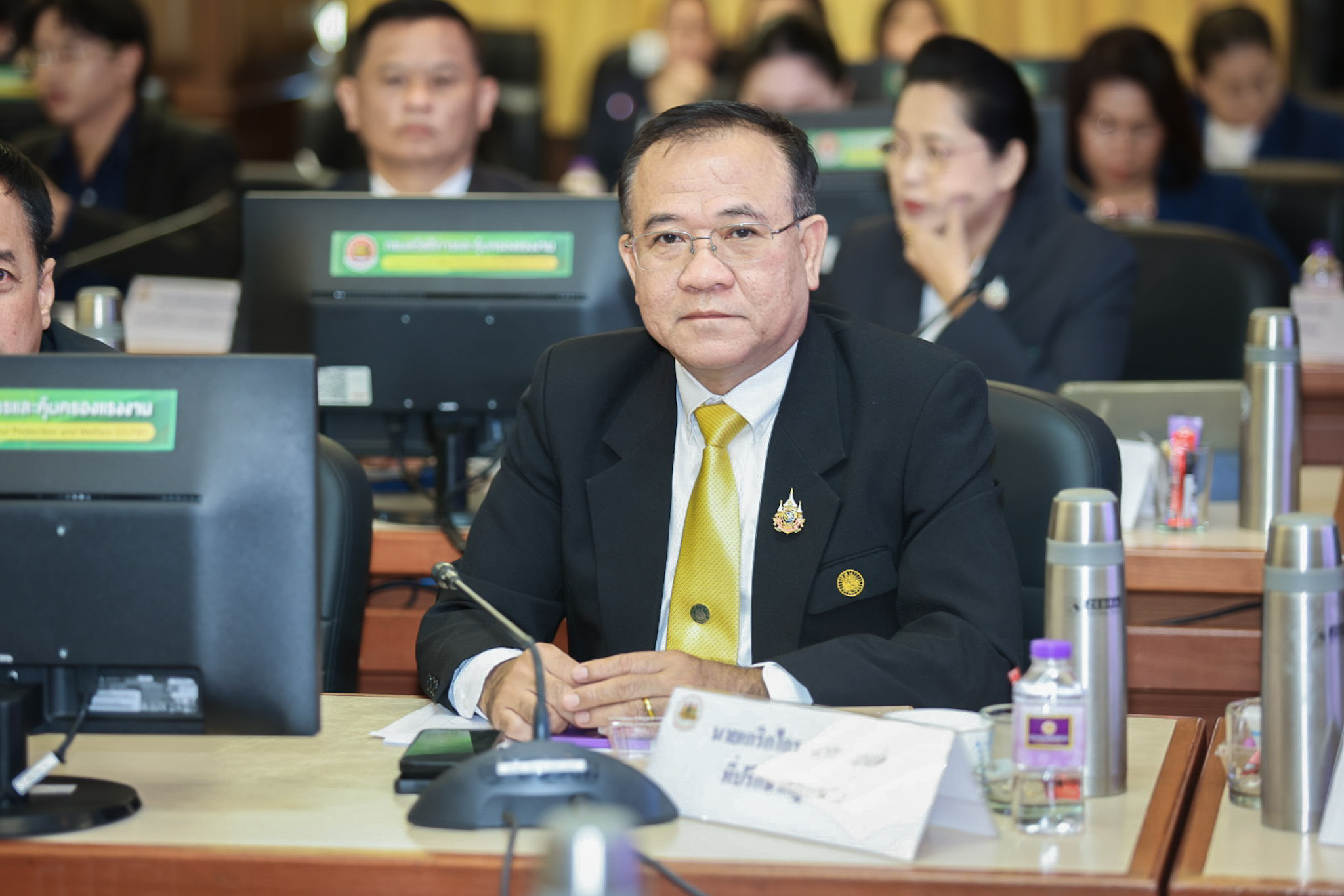
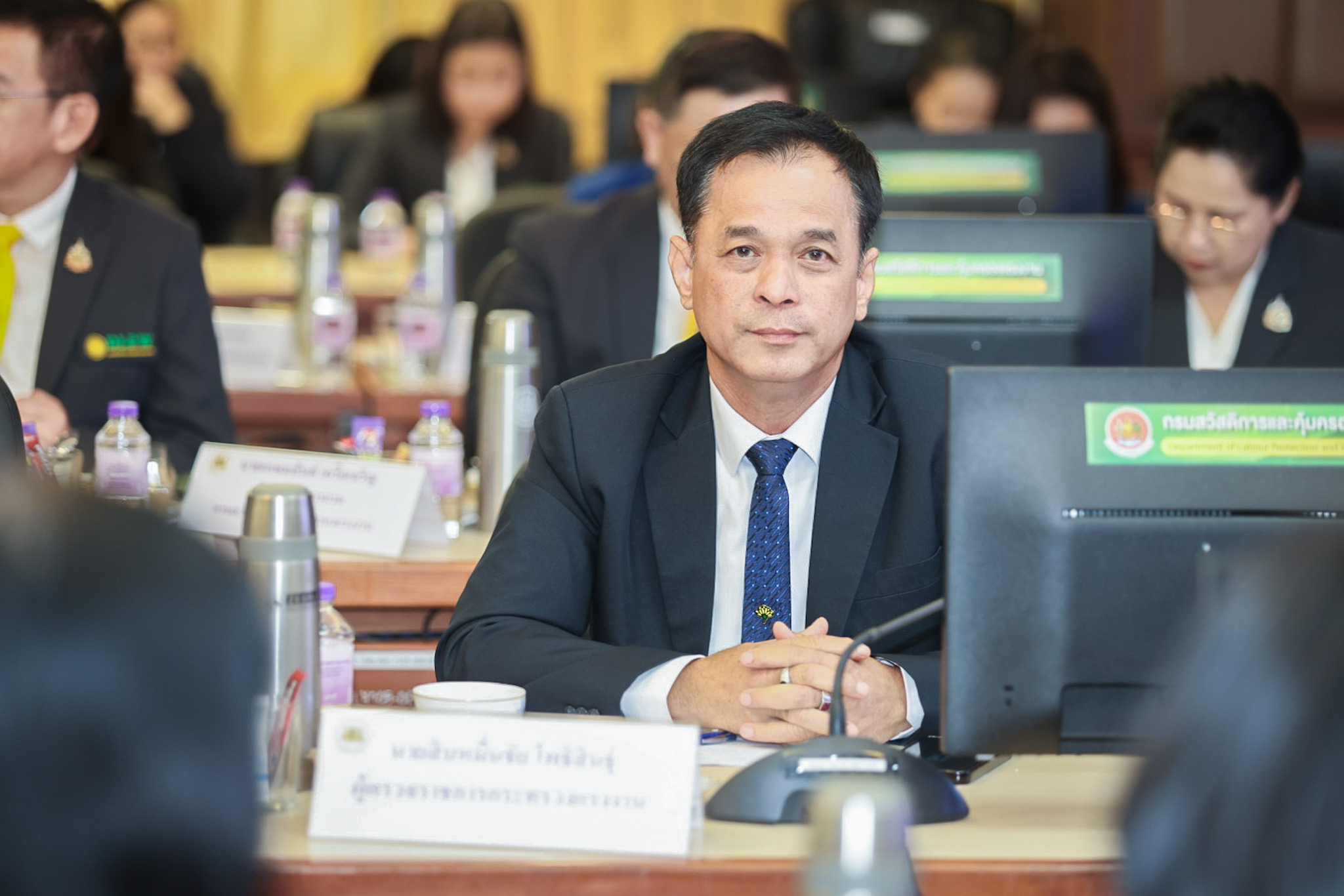
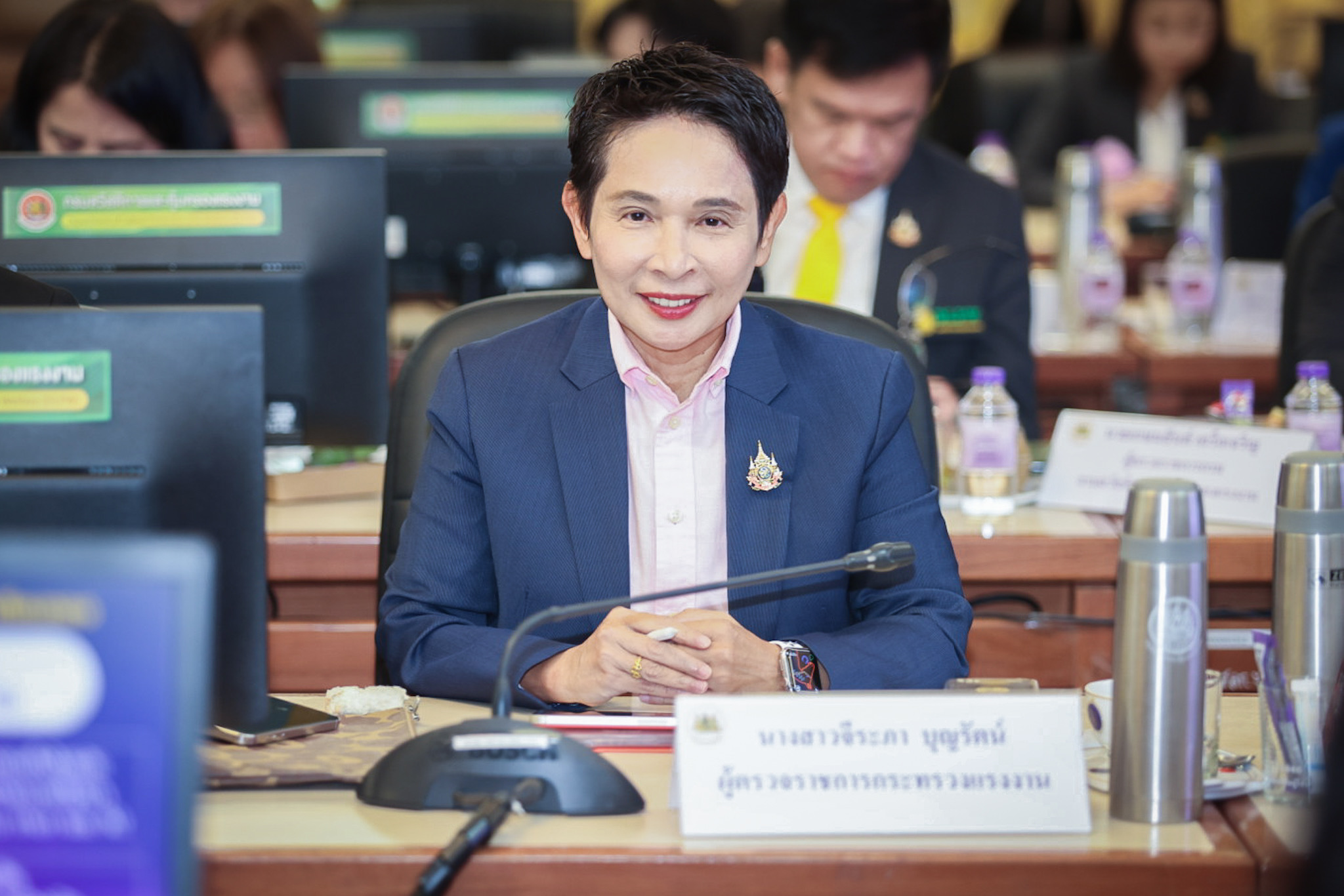
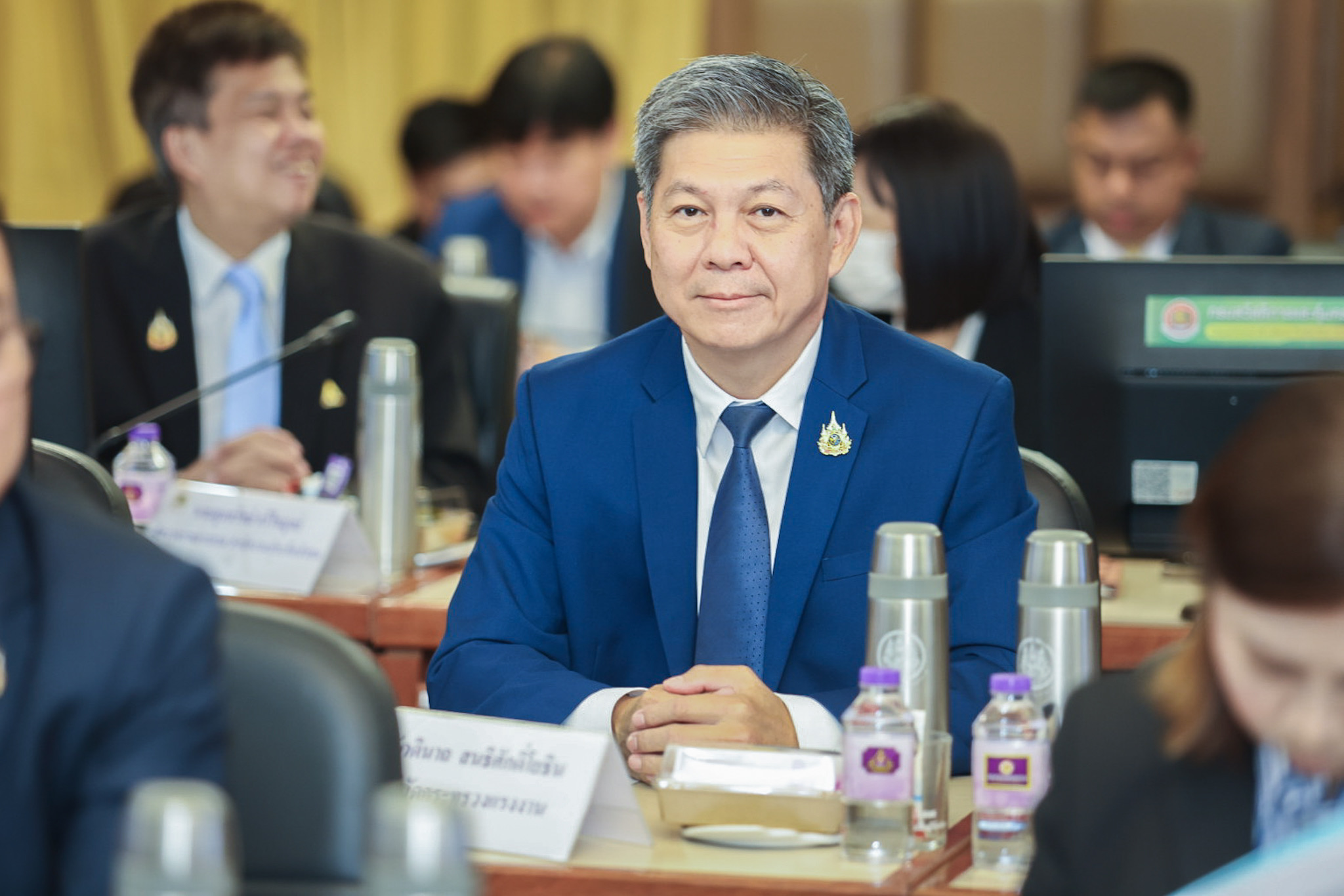
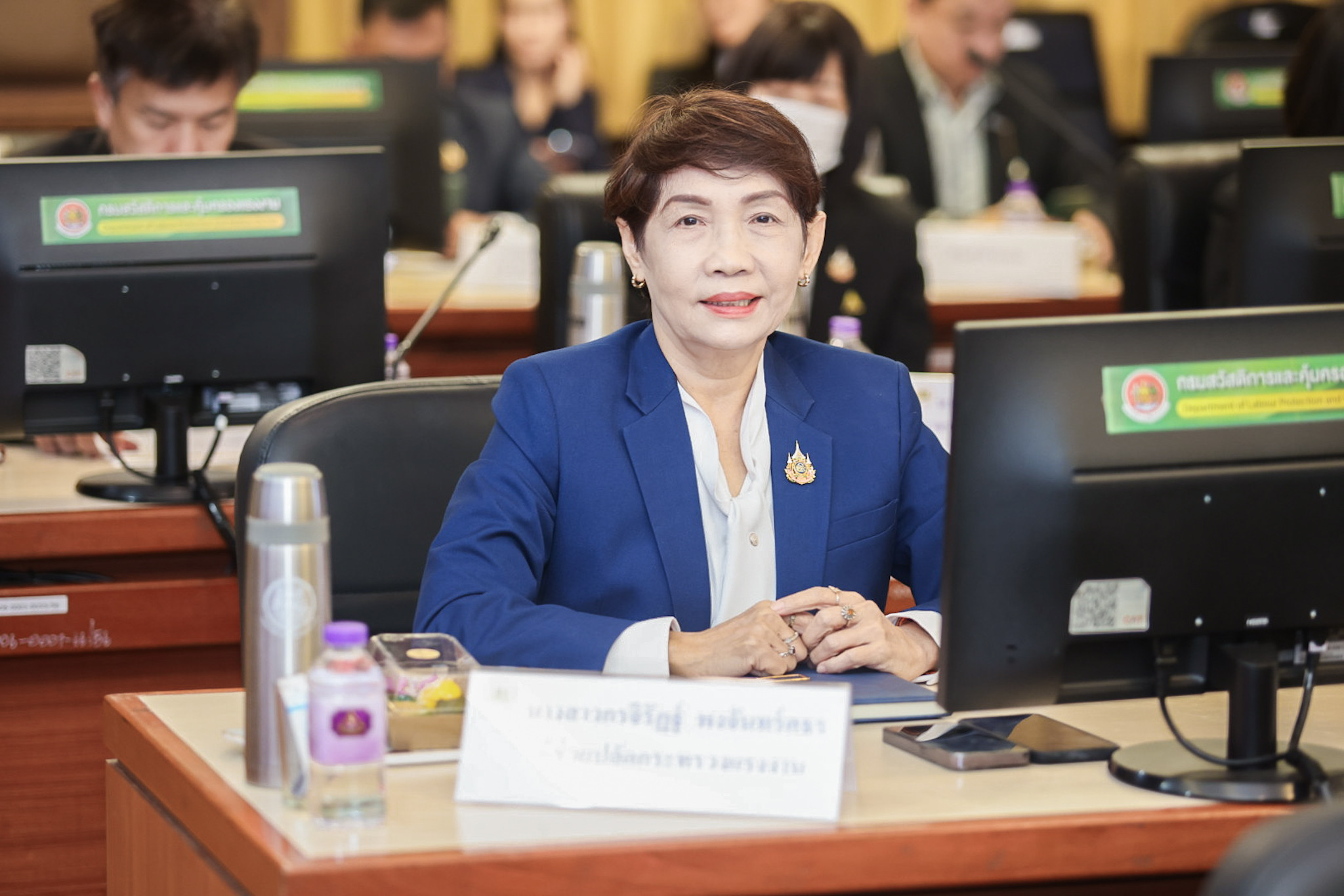
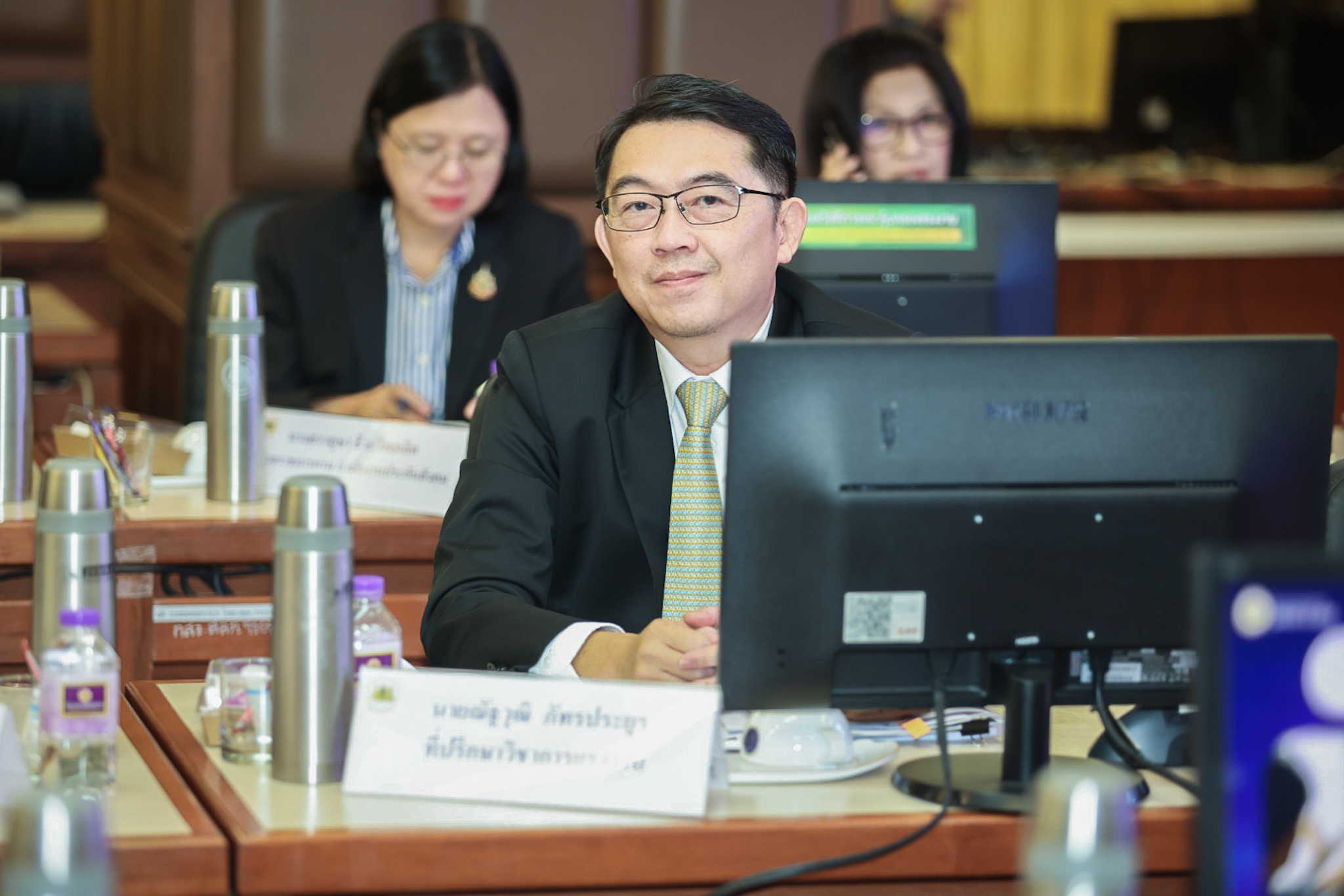
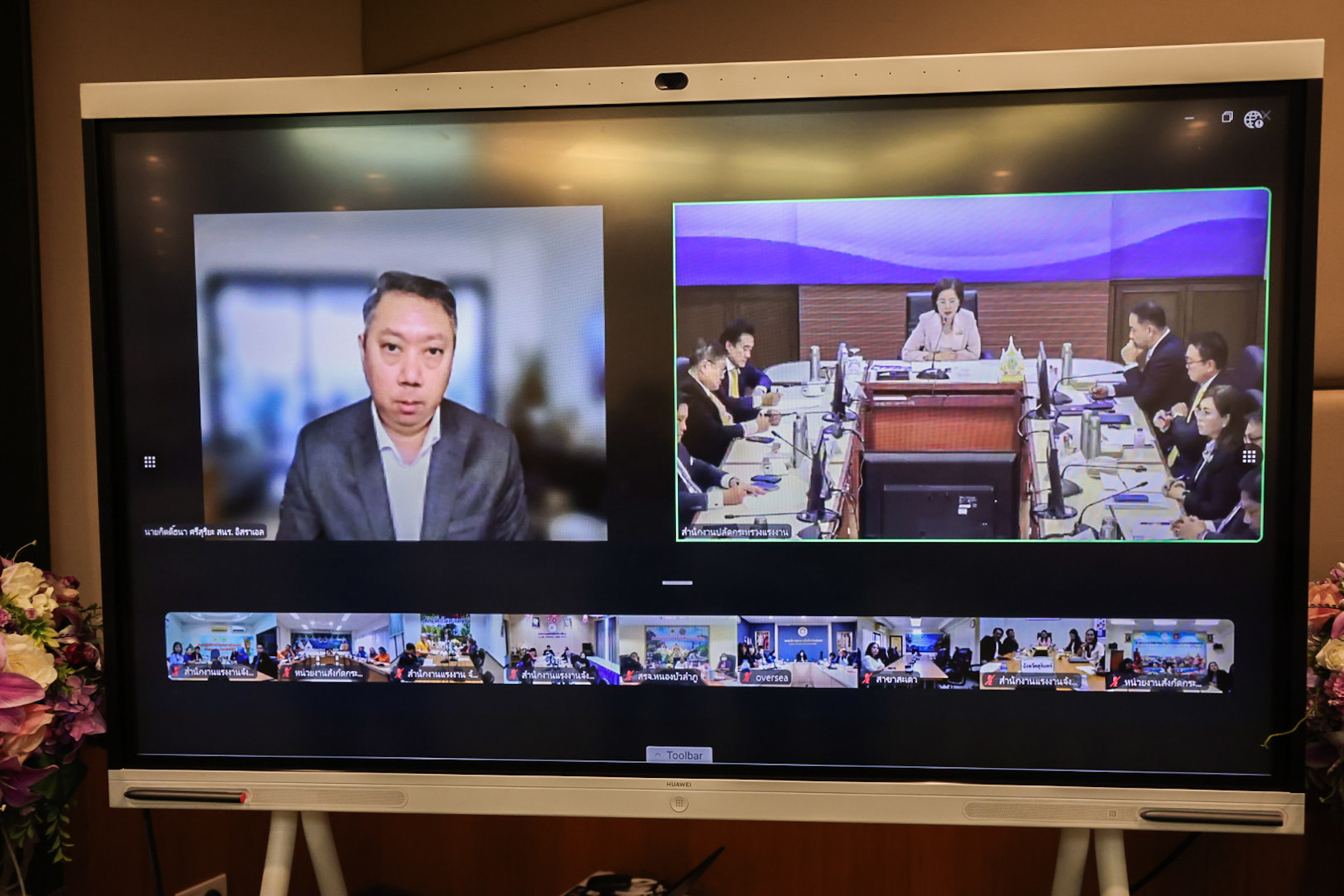
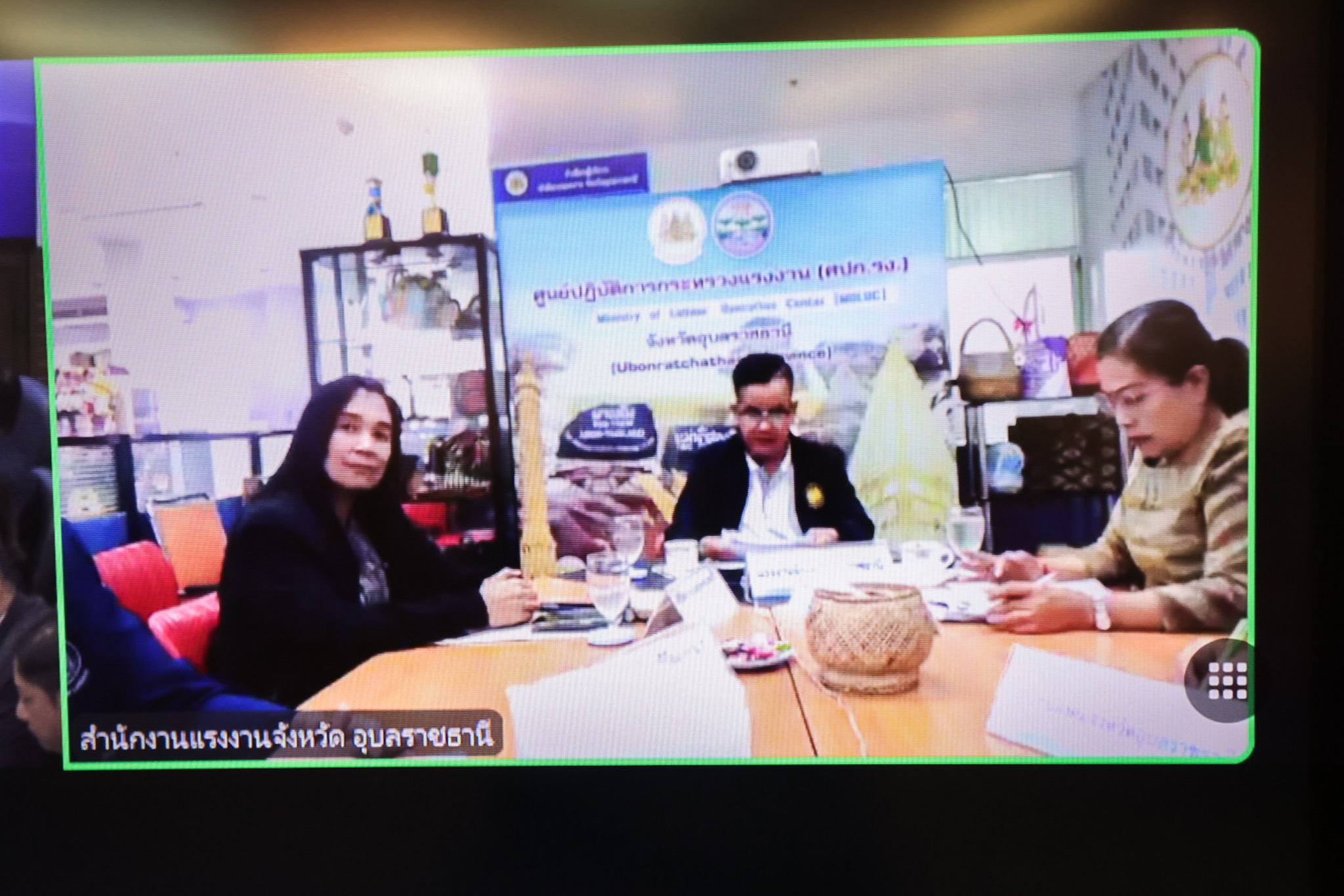
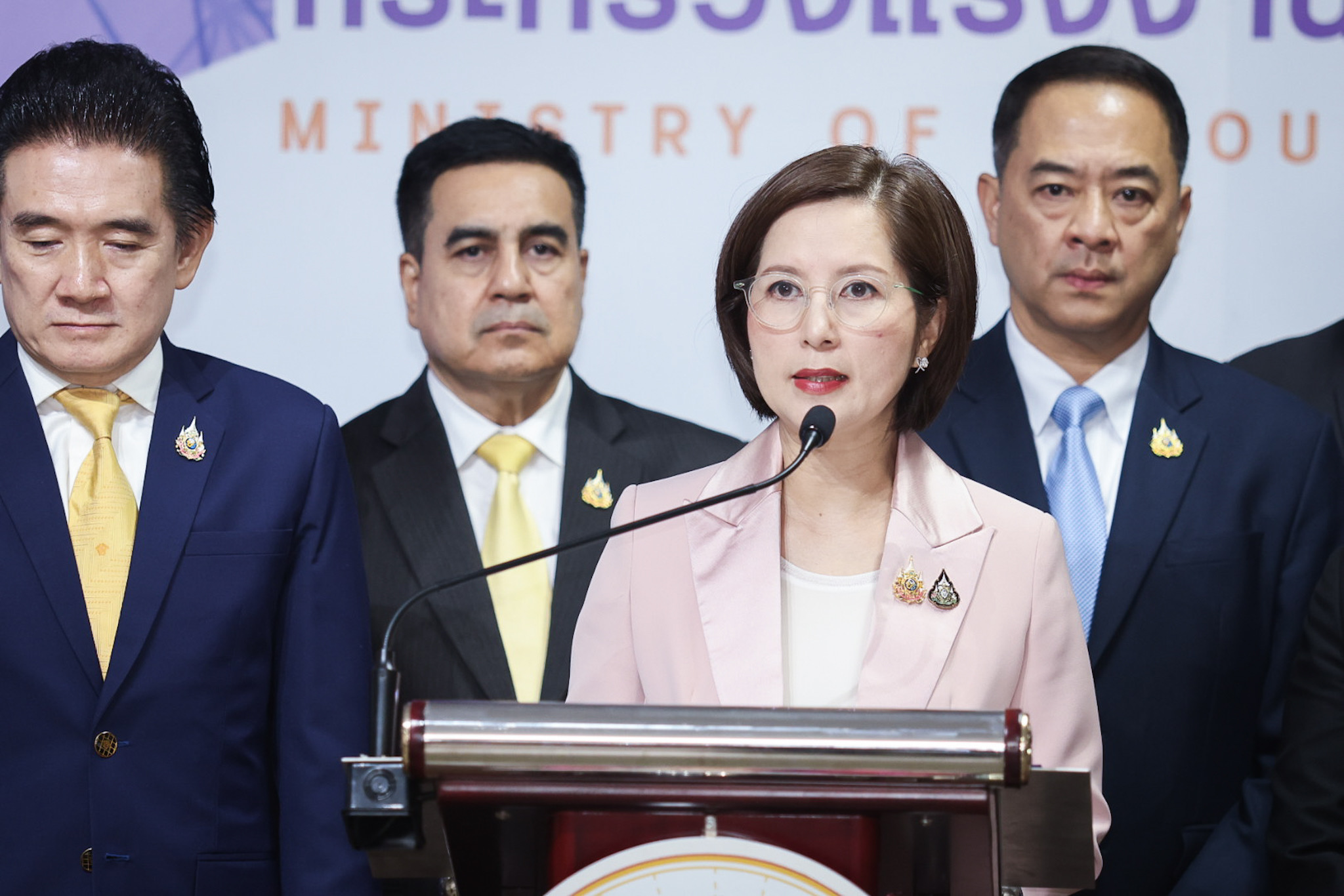
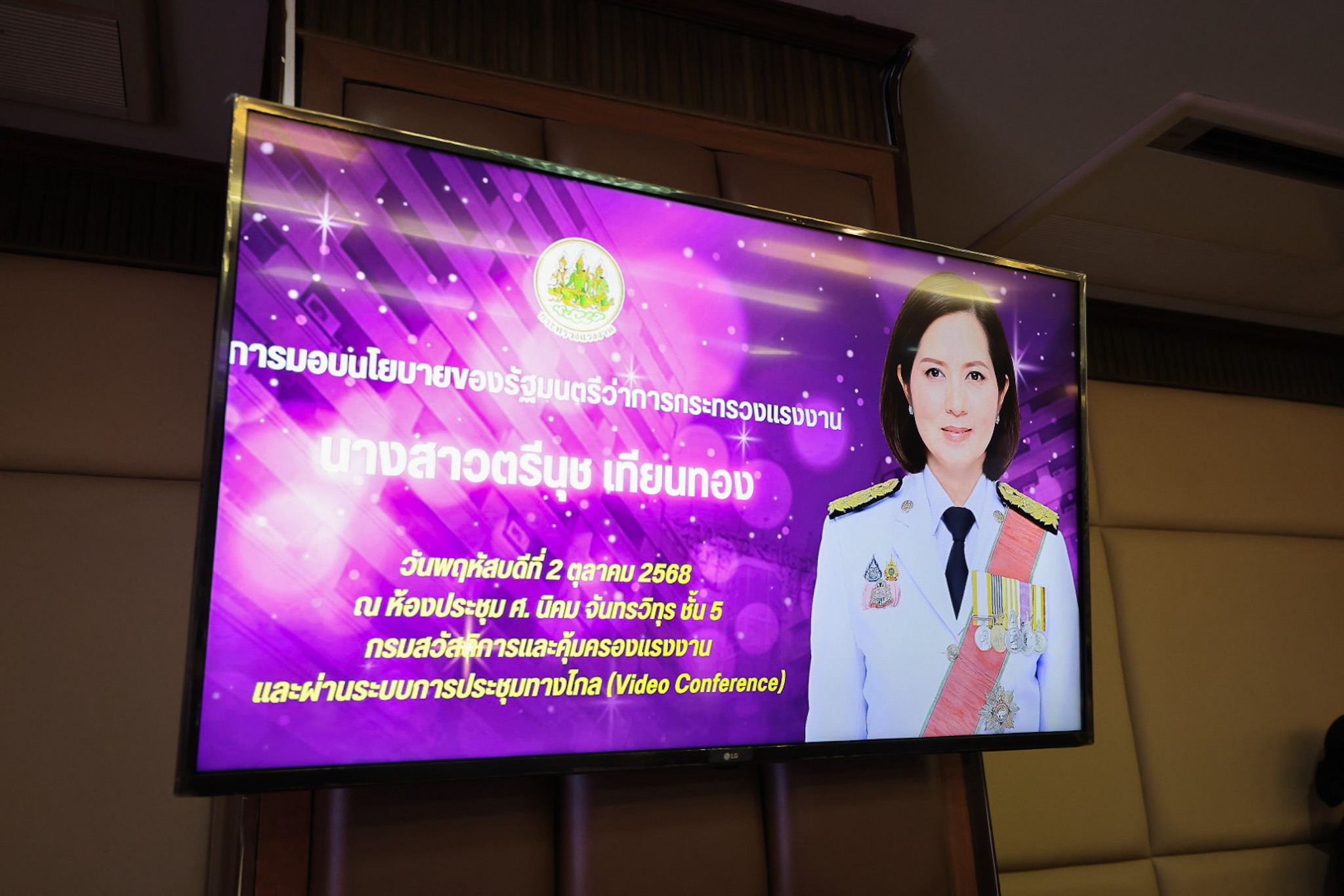
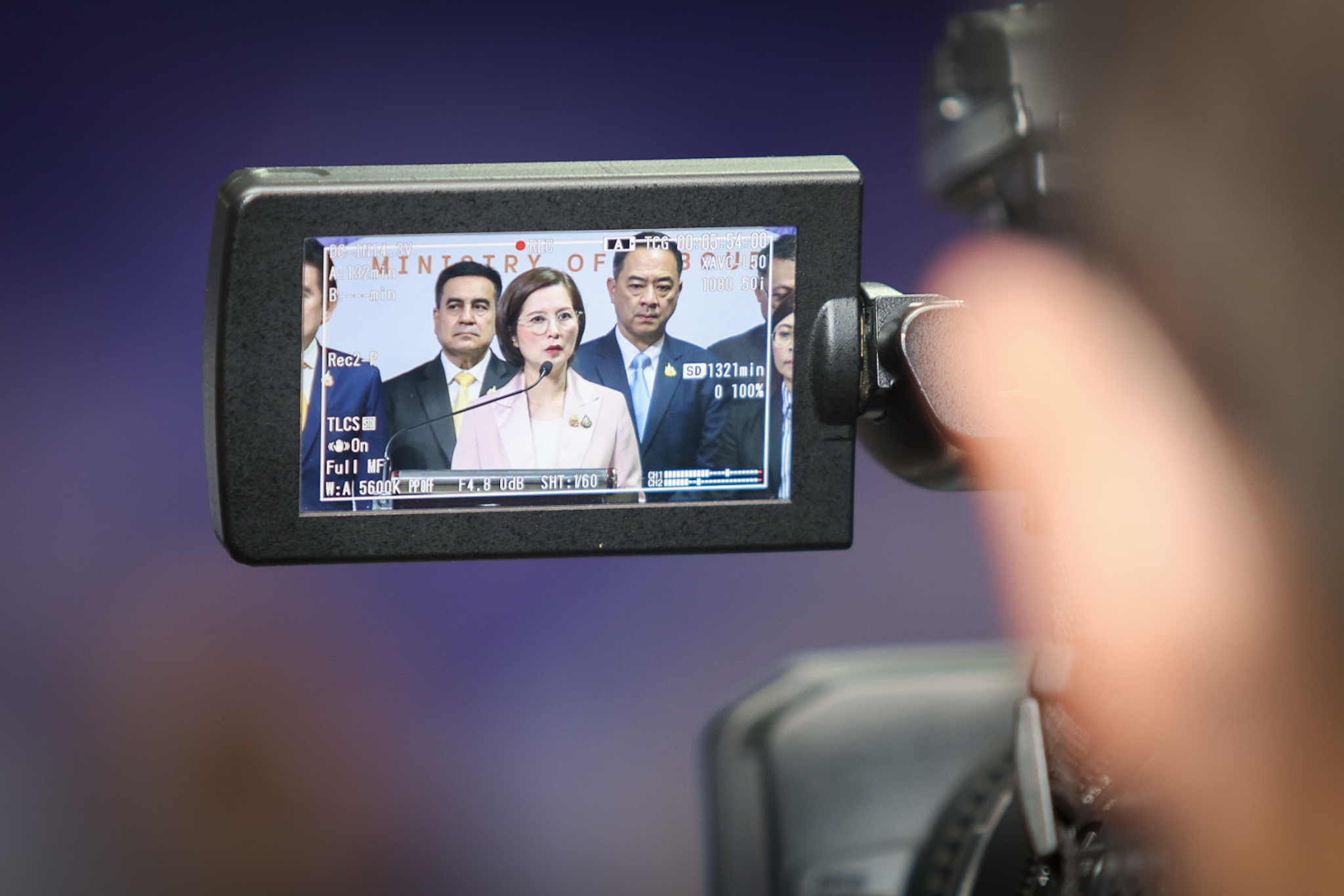
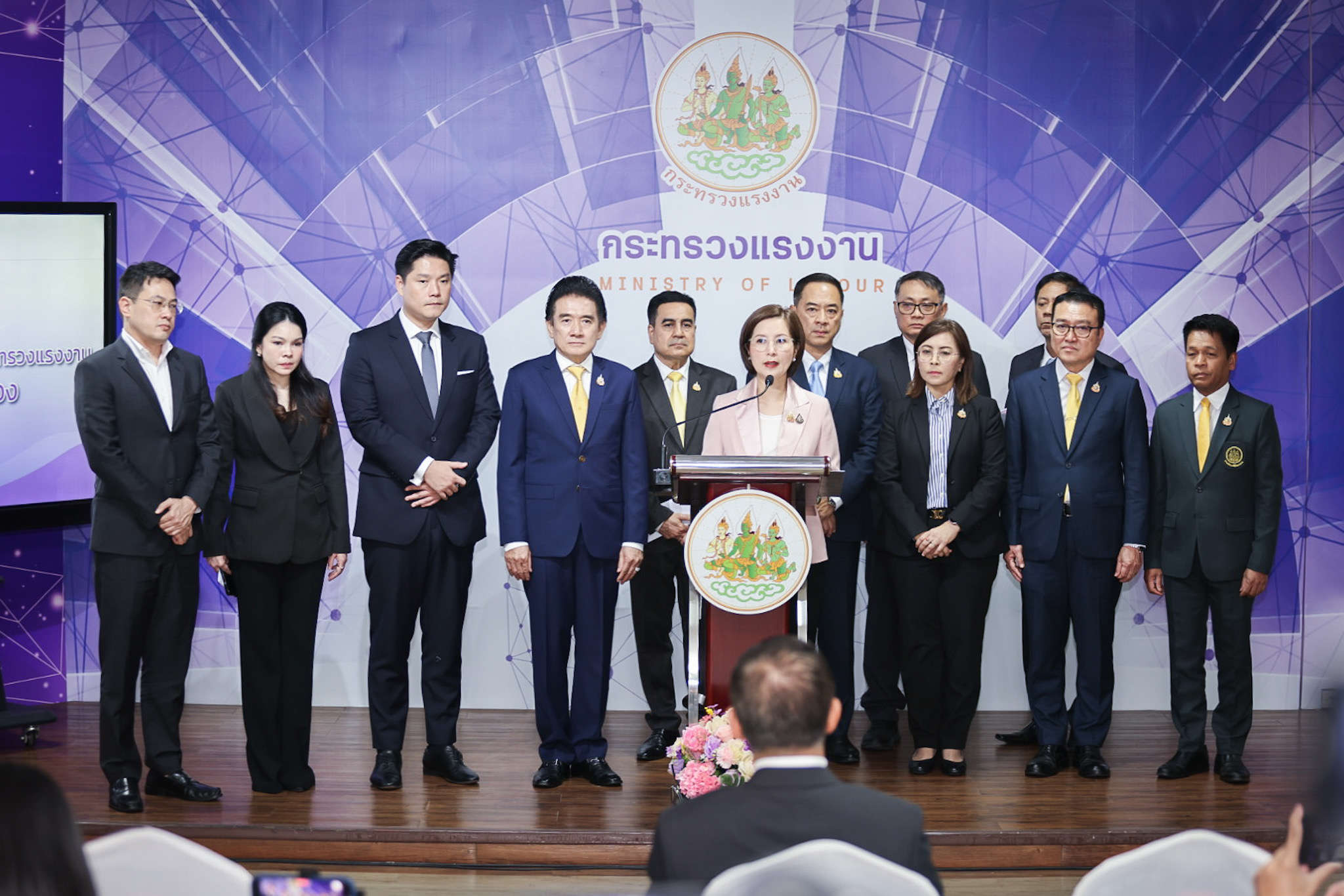
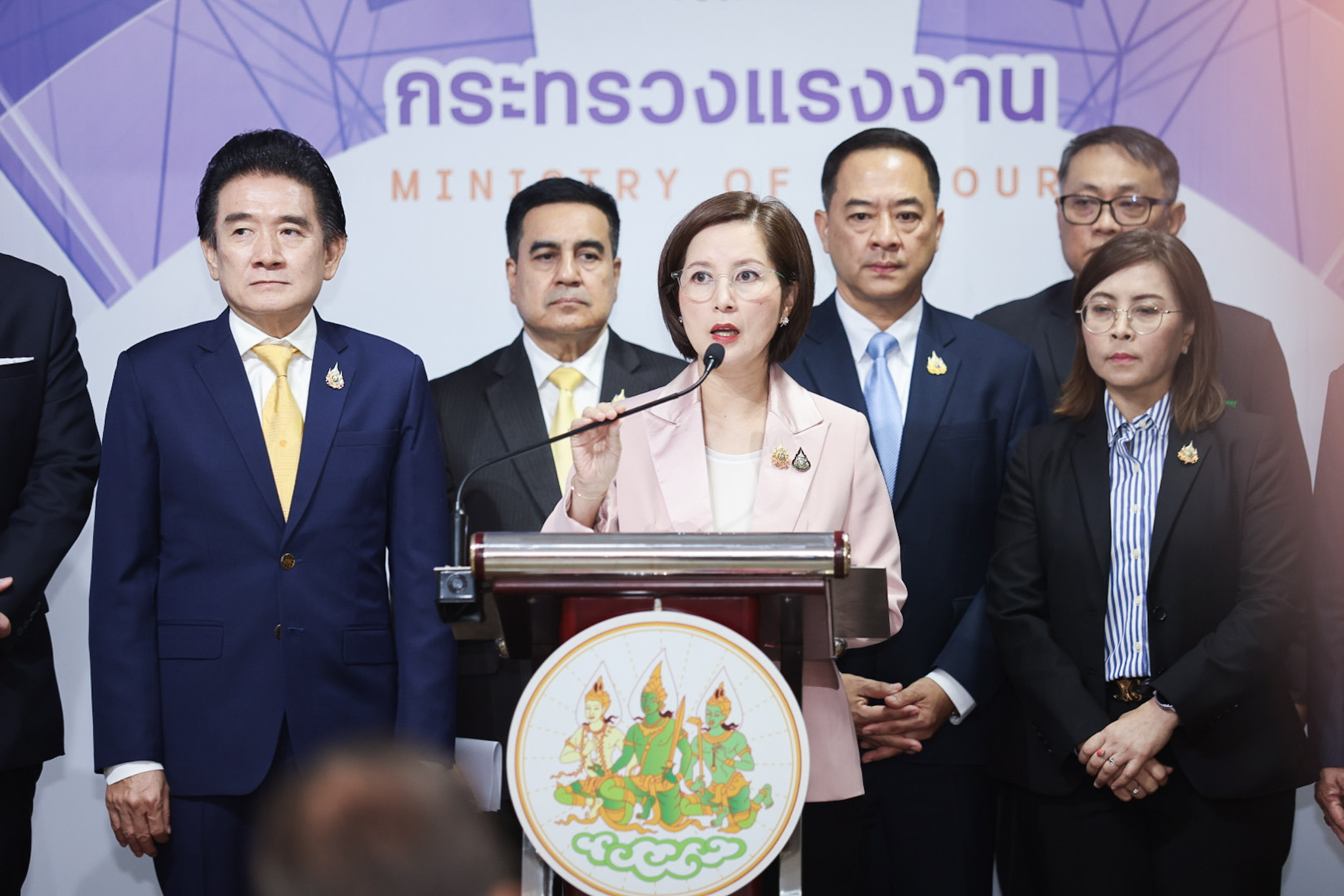

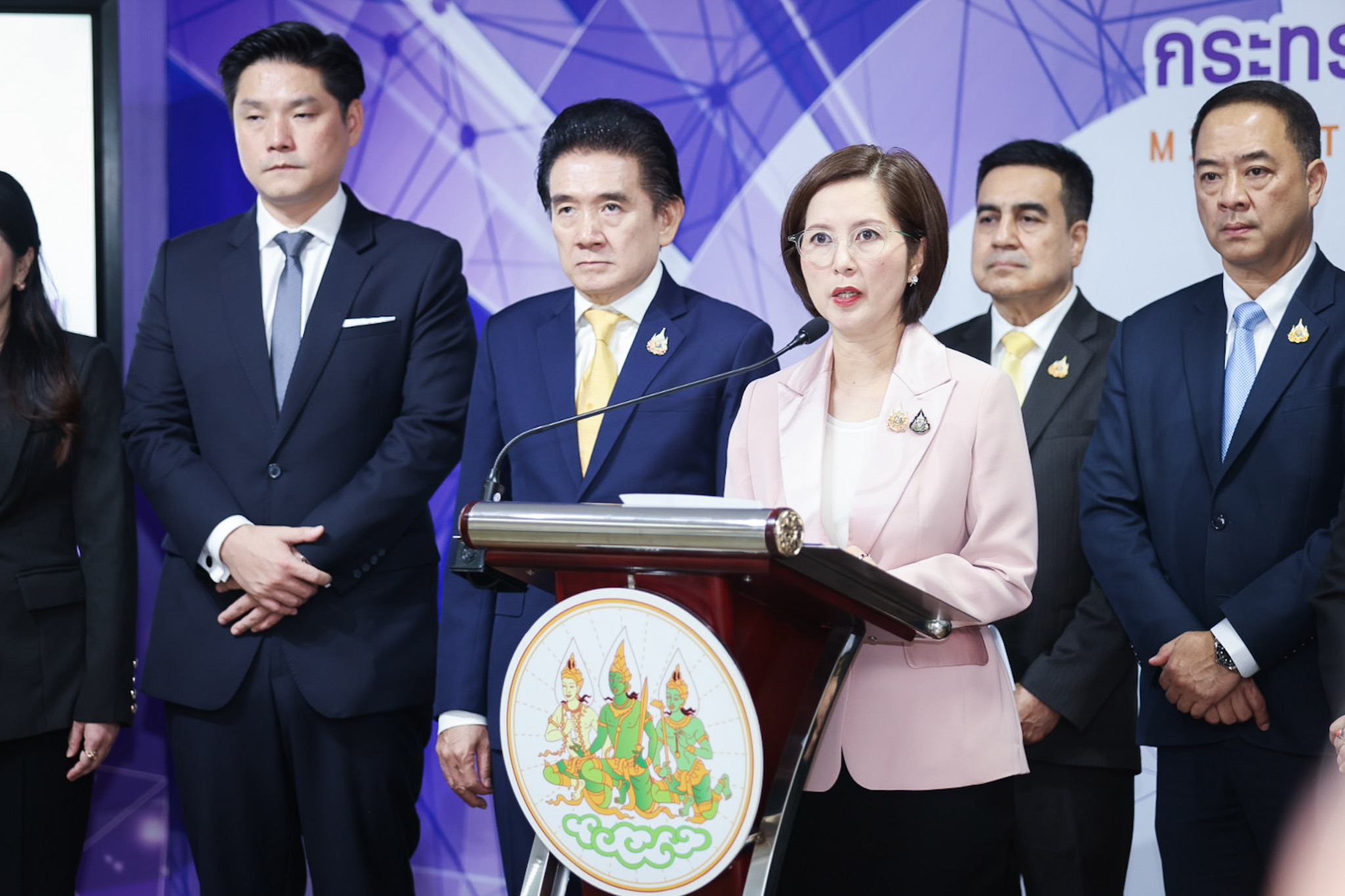
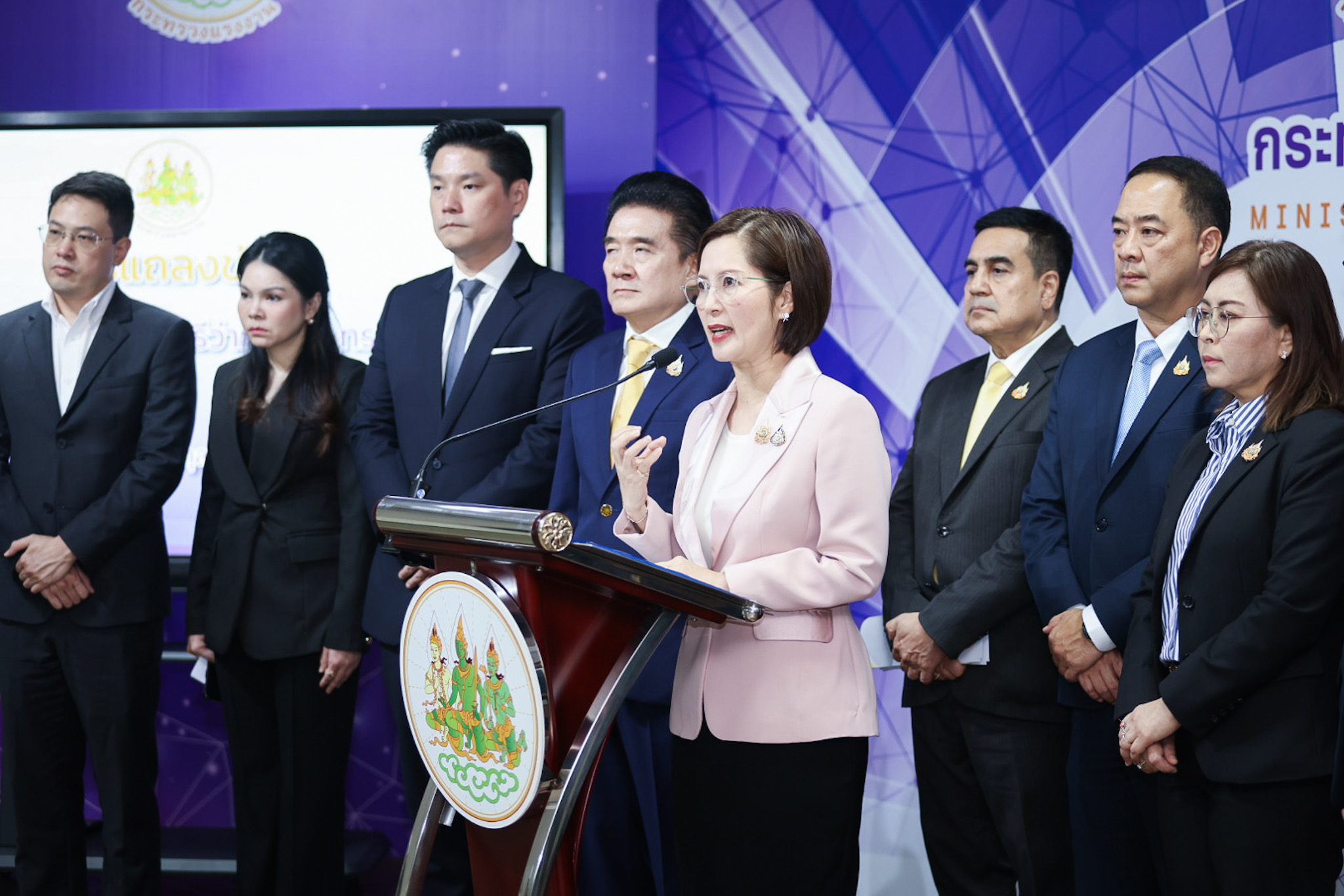

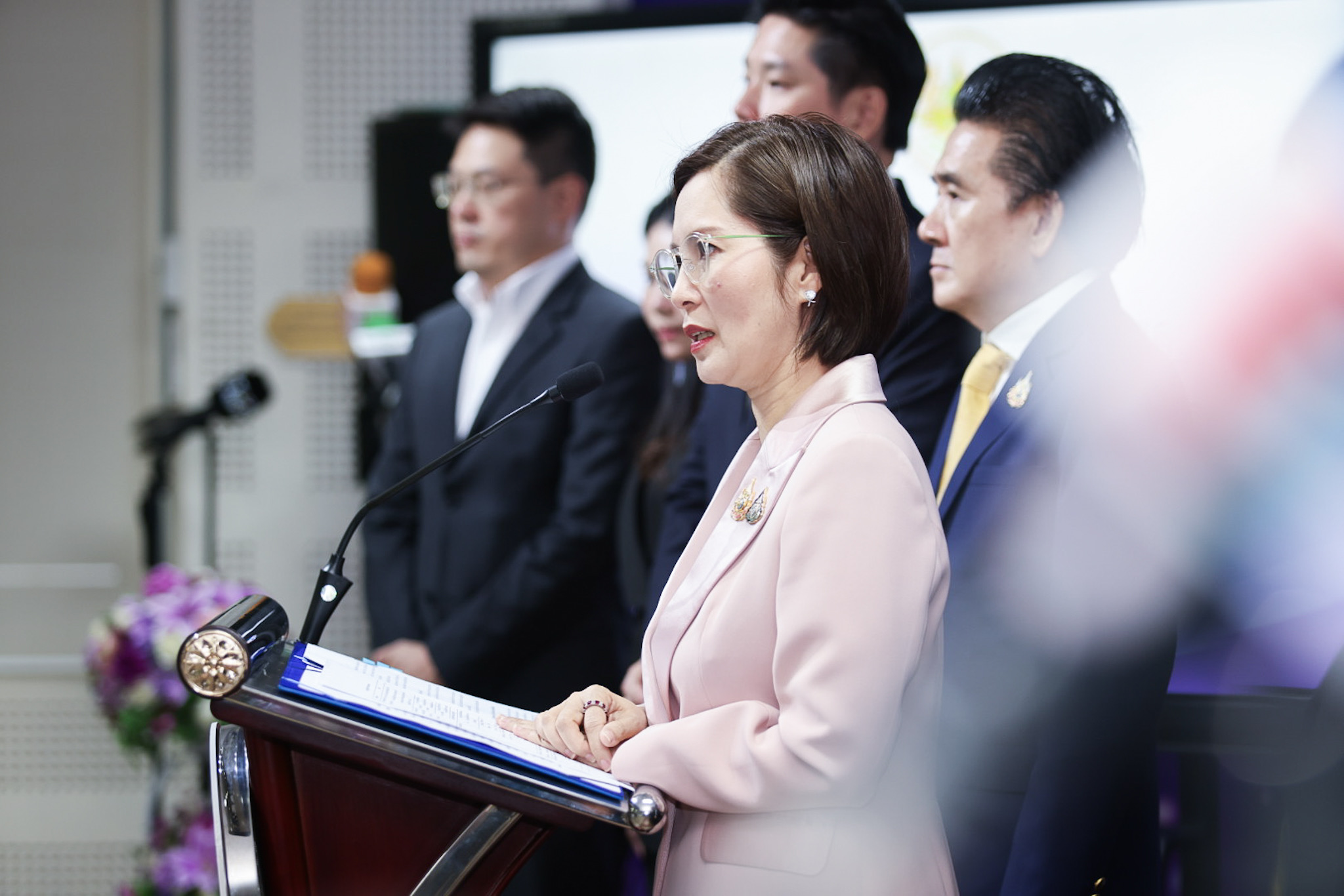


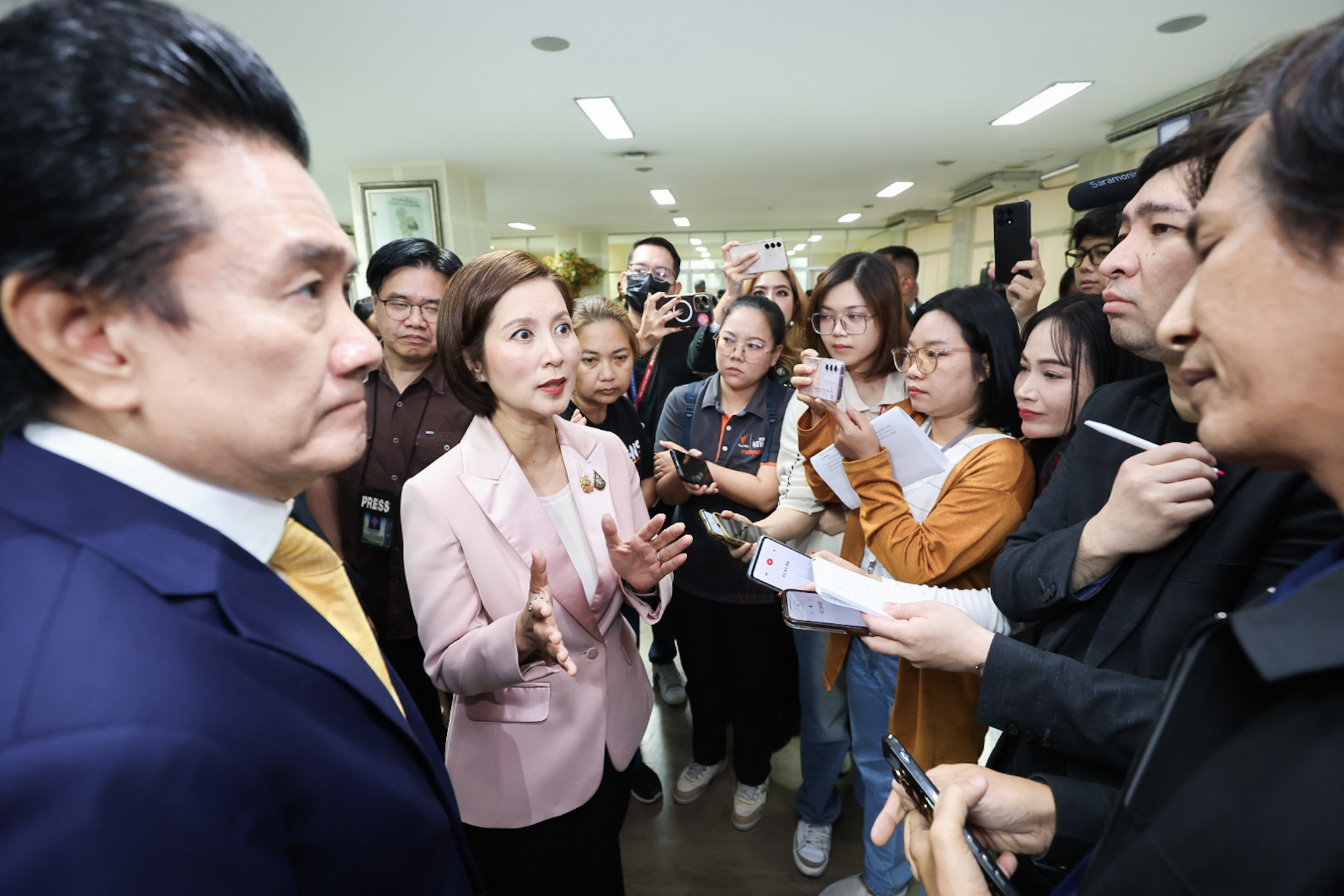
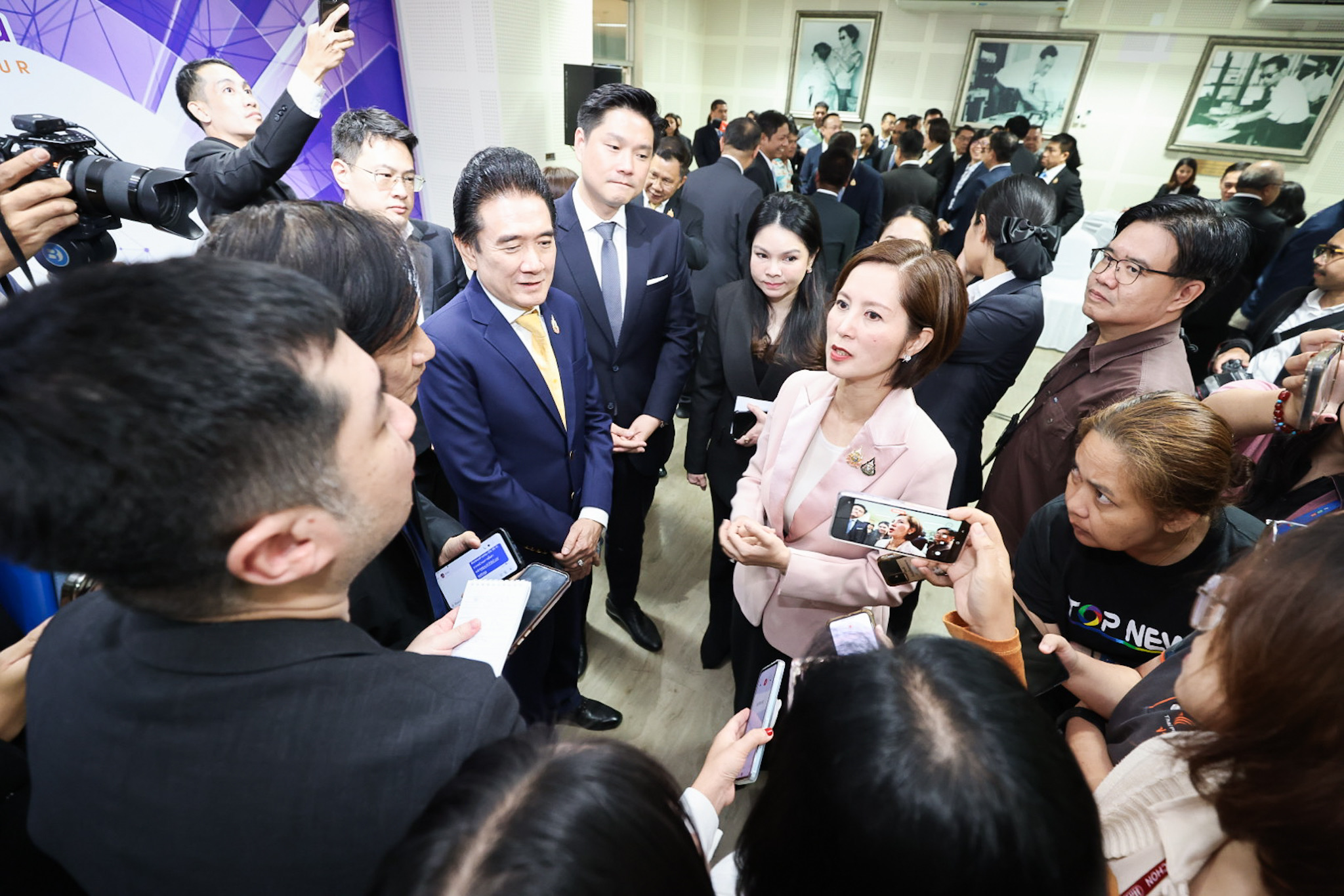
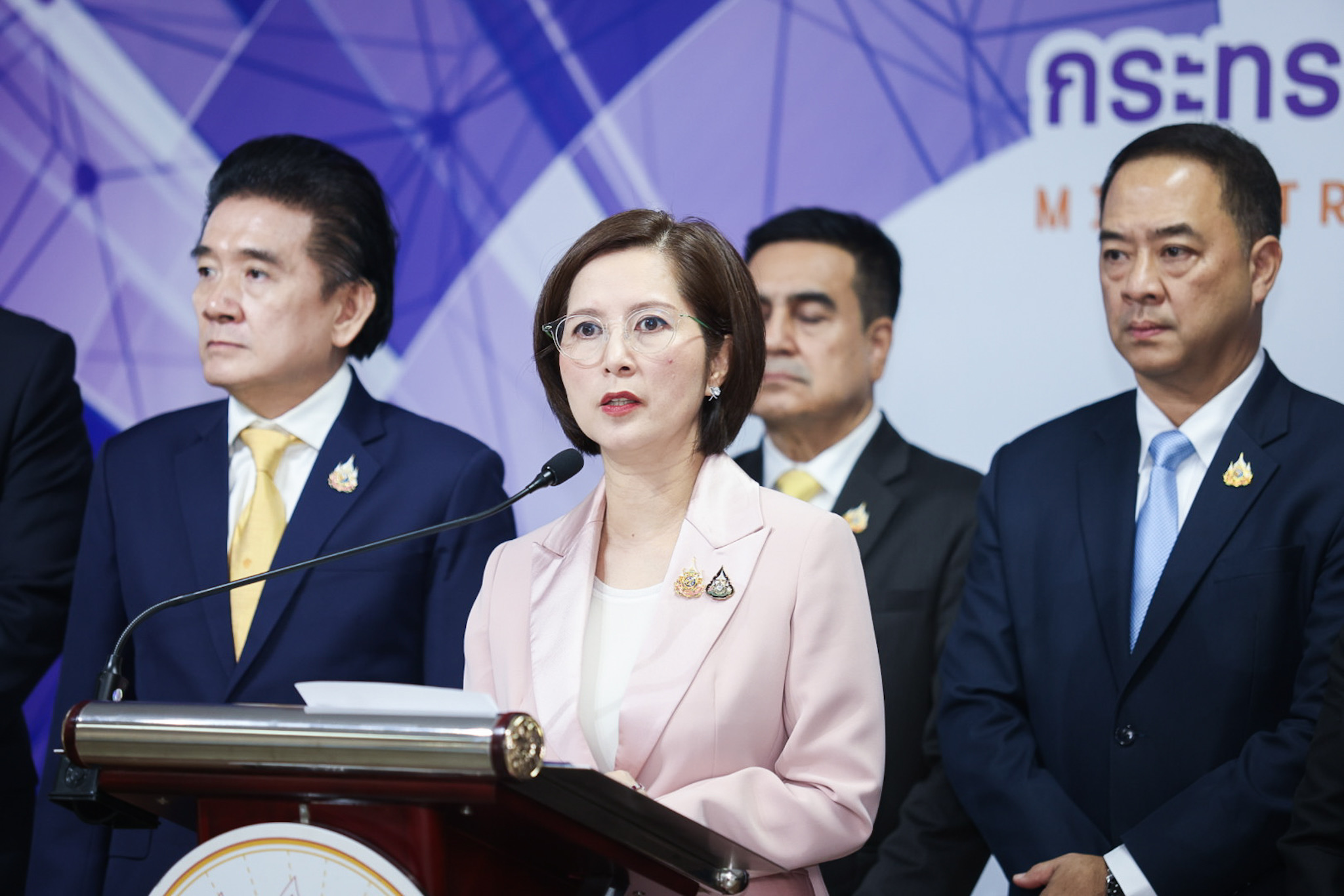
October 2, 2025 – Ms. Trinuch Thienthong, Minister of Labour, delivered key policy directives to executives and officials of the Ministry of Labour, setting clear goals to address urgent and critical workforce challenges. These include tackling labour shortages, accelerating upskilling and reskilling for Thai workers, and enhancing workers’ welfare. The Labour Minister stressed that all initiatives must be implemented with transparency and accountability, with the overarching aim of improving the quality of life for all groups of workers. Present at the meeting were Mr. Samat Pattamasukon, Deputy Permanent Secretary of Labour, Mr. Santi Nantasuwan, Deputy Permanent Secretary of Labour, and senior executives of the Ministry of Labour. The occasion took place at the Ministry of Labour building in Bangkok.
Ms. Trinuch Thienthong stated that one of the Ministry of Labour’s most pressing issues is the labour shortage in key industries, caused by the situation along the Thai–Cambodian border. To address this, the Ministry of Labour will expedite new Memoranda of Understanding (MoUs) for recruiting additional migrant workers from other countries, such as Sri Lanka, and will also allow displaced persons from the conflict in Myanmar to work temporarily in Thailand as substitute workers. This measure, coordinated with the Ministry of Interior, took effect on October 1, 2025. Furthermore, the Ministry of Labour will accelerate the registration of undocumented migrant workers in line with the Cabinet’s resolution to prevent illegal labour problems.
Another key policy priority is to strengthen upskilling and reskilling programmes for Thai workers to keep pace with technological and digital transformation. The Ministry of Labour will collaborate with private sector partners and educational institutions, both domestic and international, to develop new skillsets such as language proficiency and artificial intelligence (AI). The “One Subdistrict, One Multi-skilled Technician” project will continue to be rolled out to promote multi-skilled workers and provide tools and equipment after training to support their livelihoods. Additionally, vocational training programmes will be organised for students during school breaks to support youth employment initiatives.
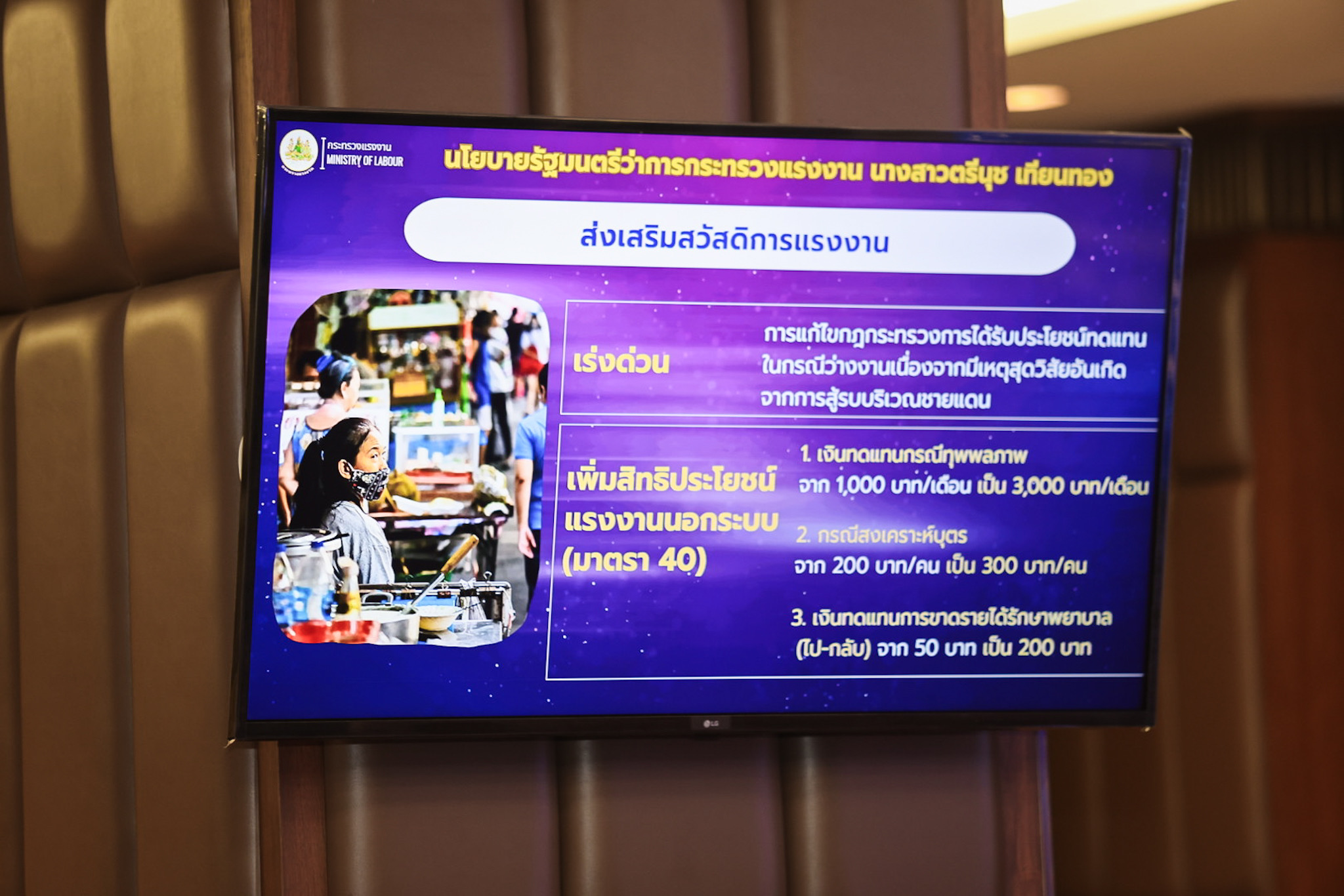
Regarding workers’ welfare, the Labour Minister underscored that the Government views this as a matter of urgency. The Ministry of Labour plans to revise ministerial regulations to ensure that workers are entitled to unemployment benefits in cases of force majeure, such as armed conflict near border areas. Social security benefits under Section 40 for informal workers will also be upgraded, for example, increasing disability compensation from 1,000 to 3,000 Baht per month, child allowance from 200 to 300 Baht per child, and medical treatment compensation from 50 to 200 Baht per visit. These enhancements aim to strengthen social protection and improve the quality of life for informal workers.
The Ministry of Labour also aims to expand overseas employment opportunities for Thai workers by proactively developing new labour markets through labour diplomacy mechanisms in 12 target countries with strong employment potential. This effort will focus on increasing employment, protecting Thai workers’ rights abroad, and ensuring access to fair working conditions. In parallel, the Ministry of Labour will advance the use of technology in labour administration by establishing a National Labour Database and a Thai National Résumé system to integrate workforce data nationwide under the Ministry’s oversight. A Sandbox One Stop Service will also be launched in high-potential areas to streamline access to comprehensive labour services for both workers and employers.
Ms. Trinuch concluded, “These policies aim to address immediate challenges while laying the groundwork for long-term reform, covering migrant labour management, skills development, welfare enhancement, international labour market expansion, and technology-driven labour system modernisation. All initiatives will be carried out transparently and with full accountability, with one clear mission: to elevate the quality of life and security of the Thai workforce.”