
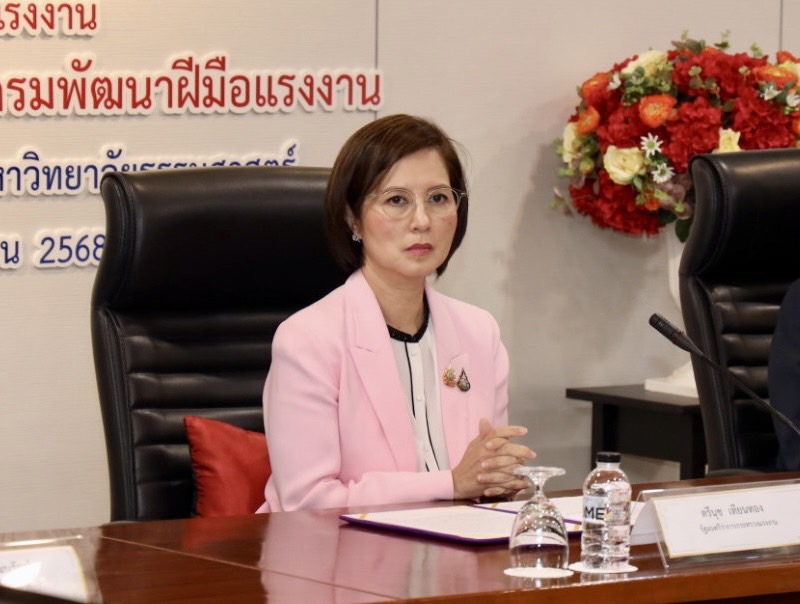
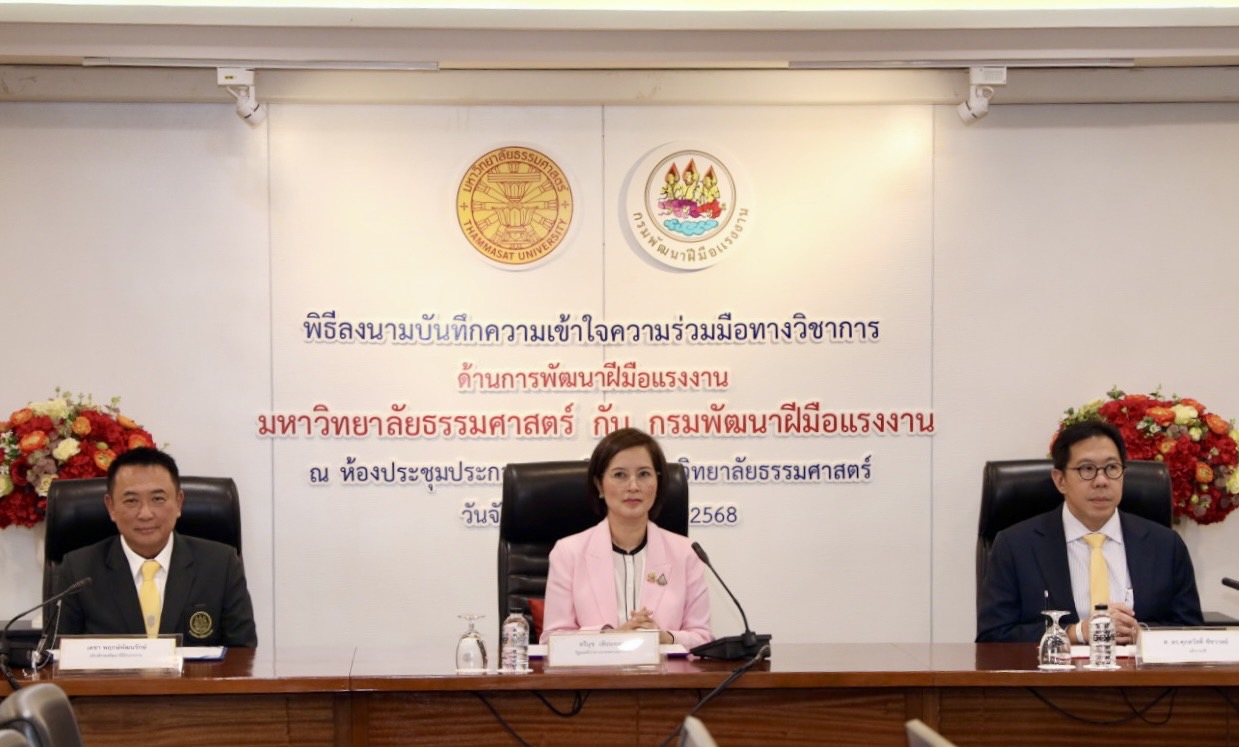
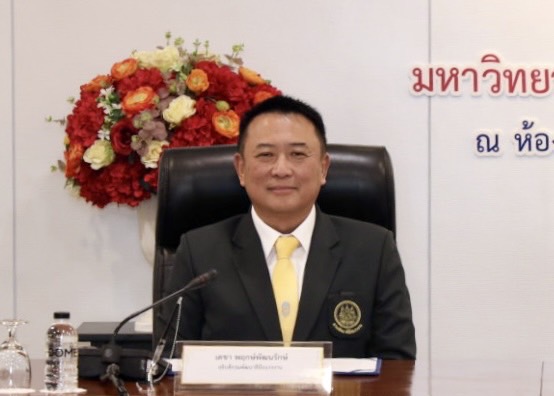
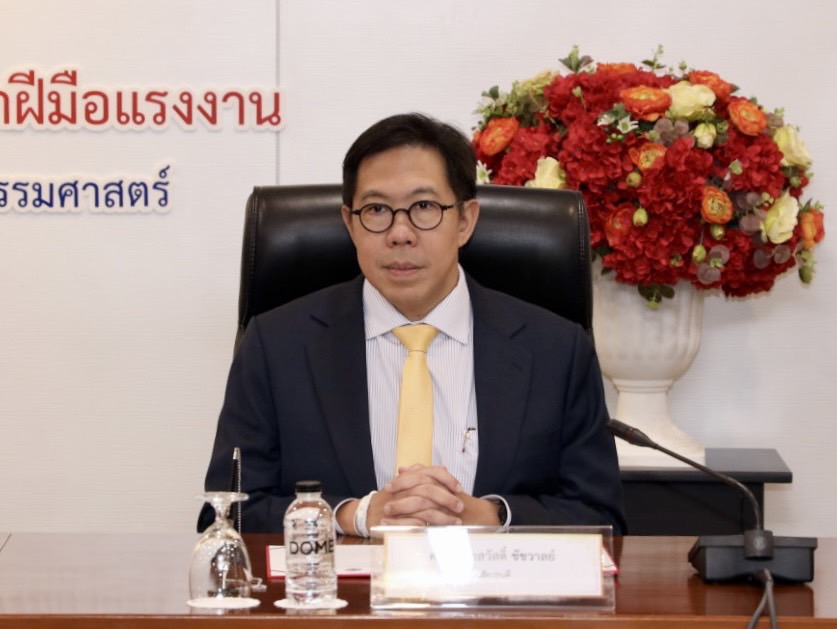
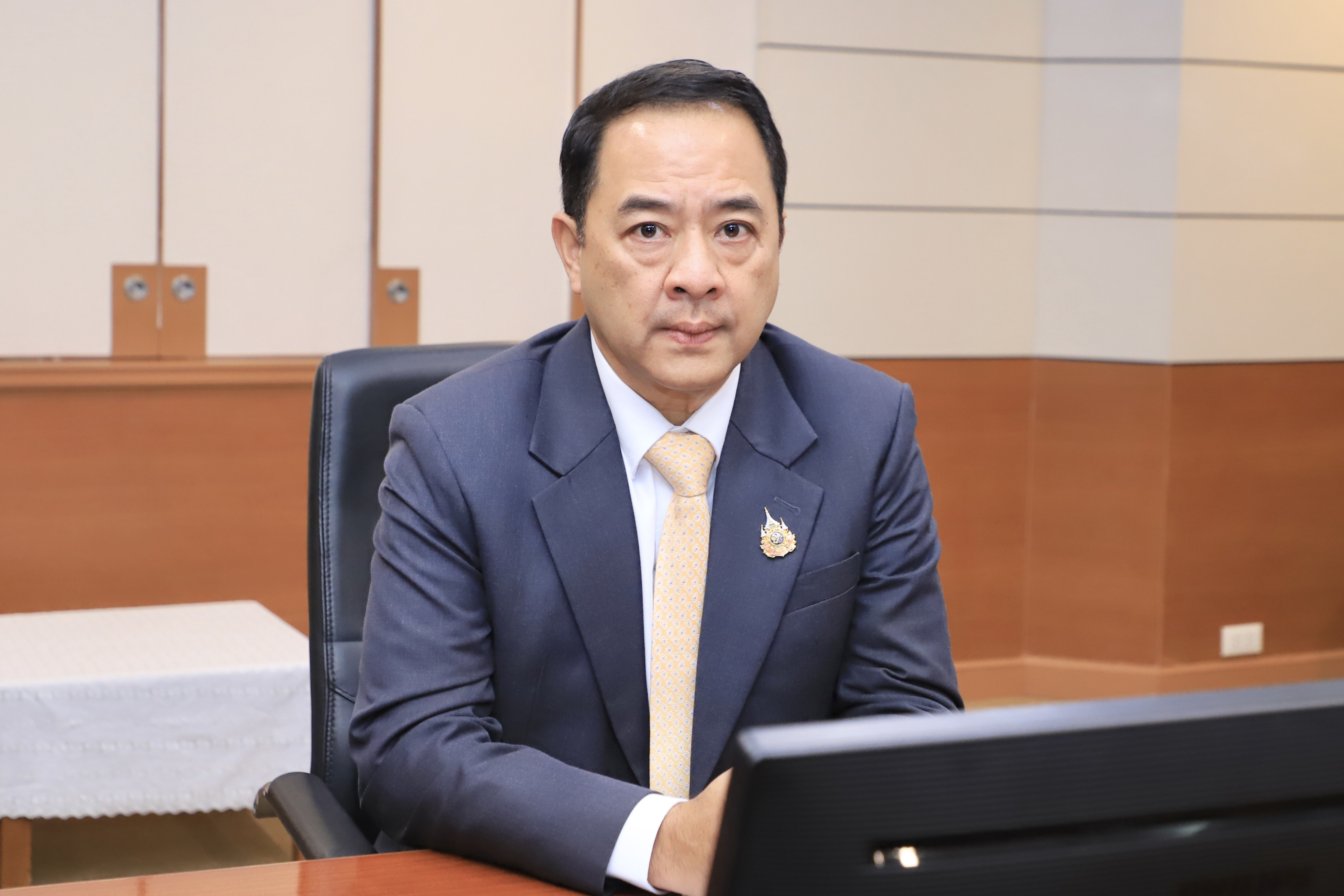
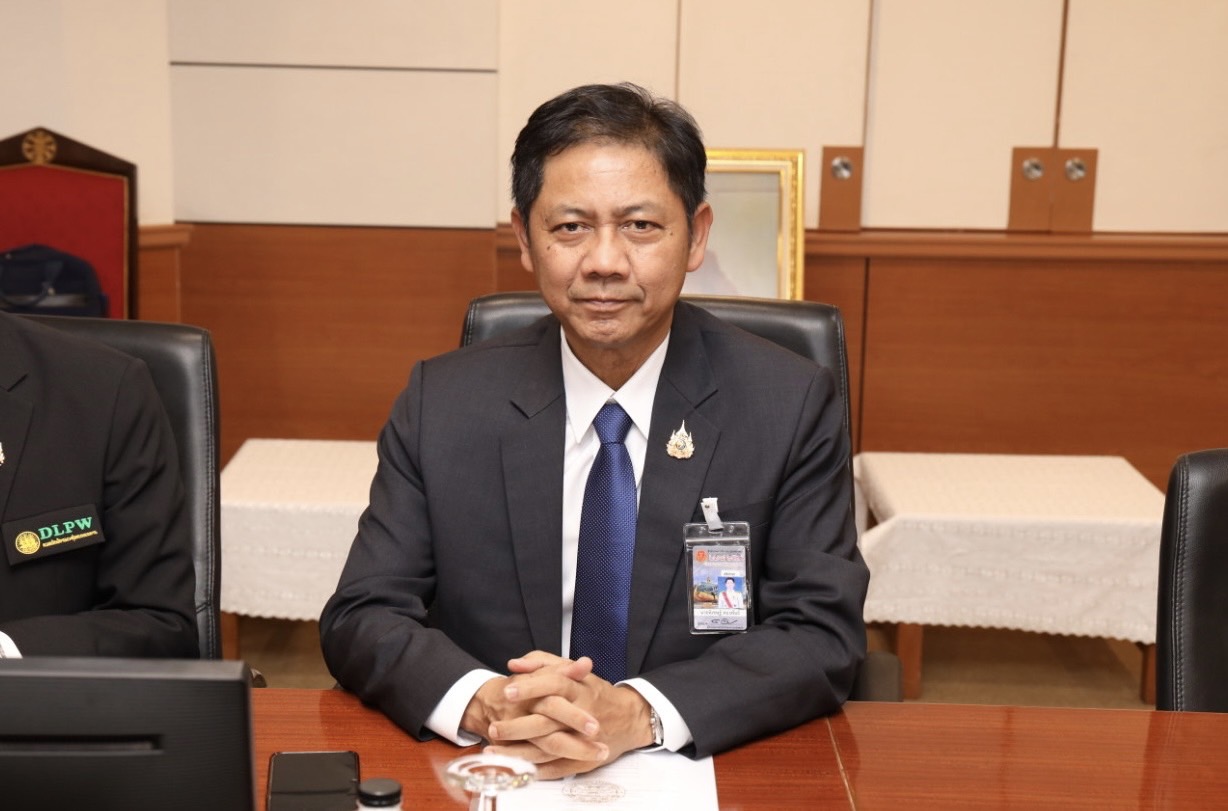
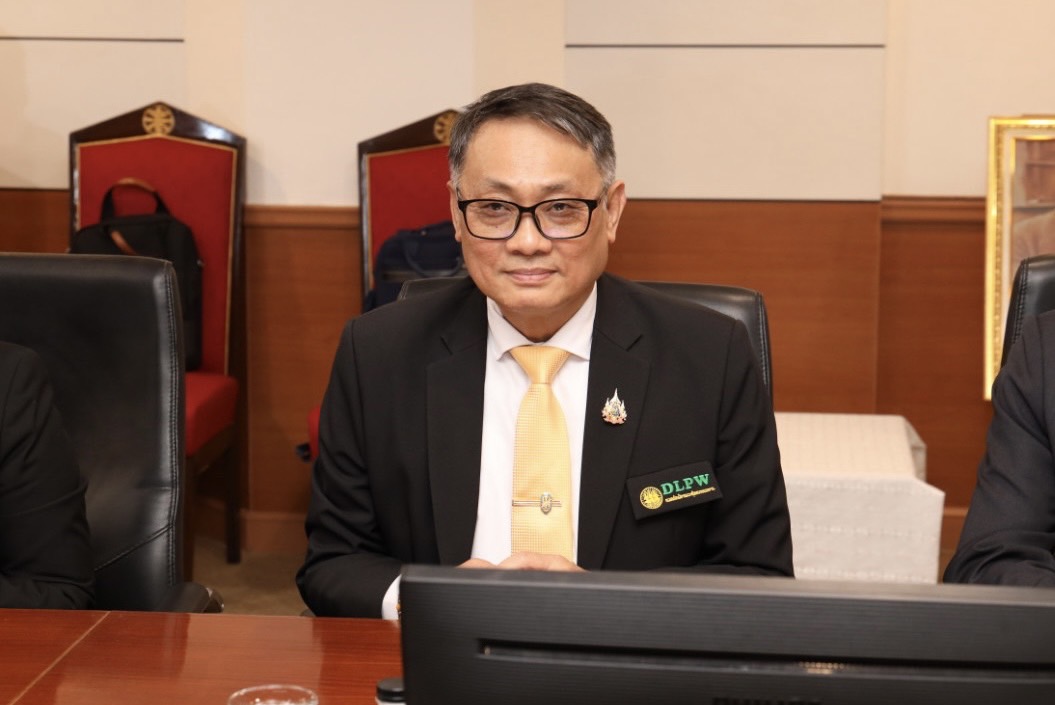
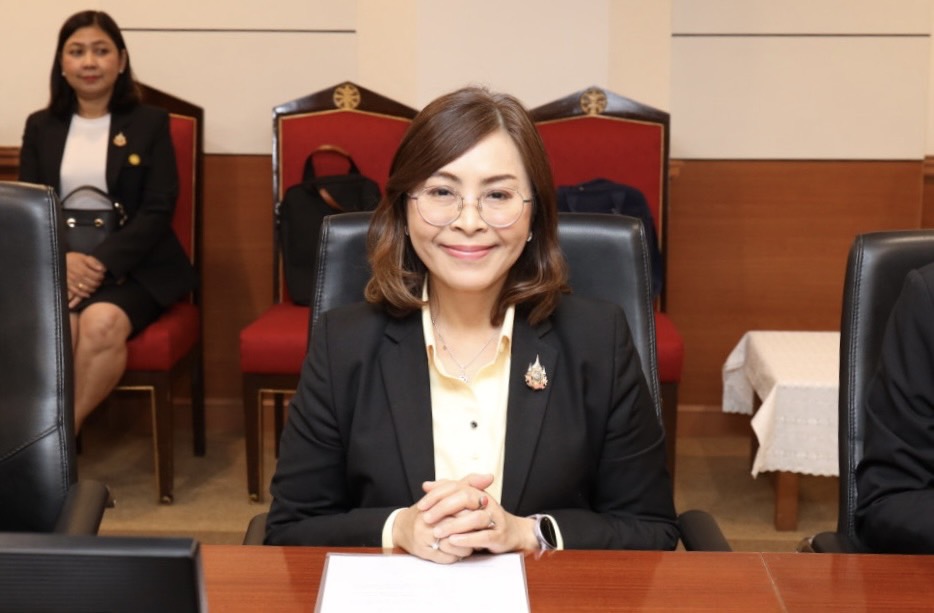
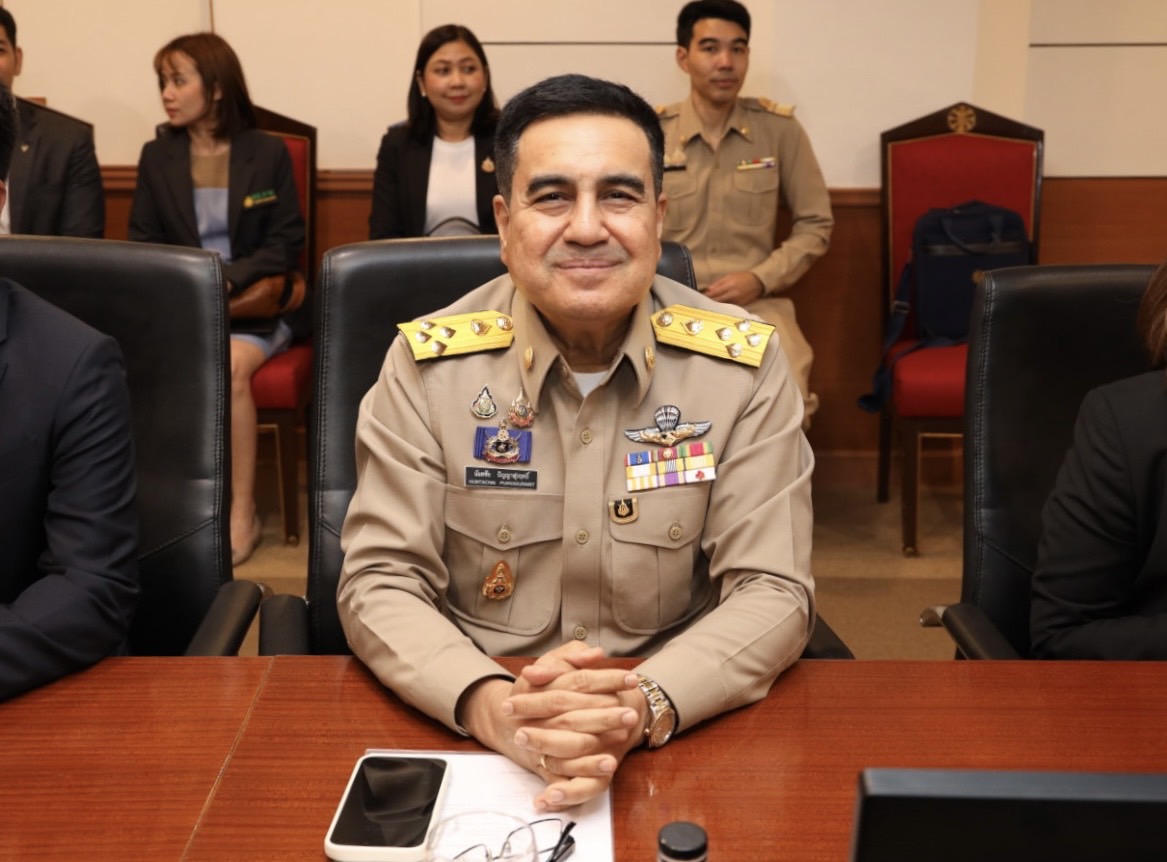
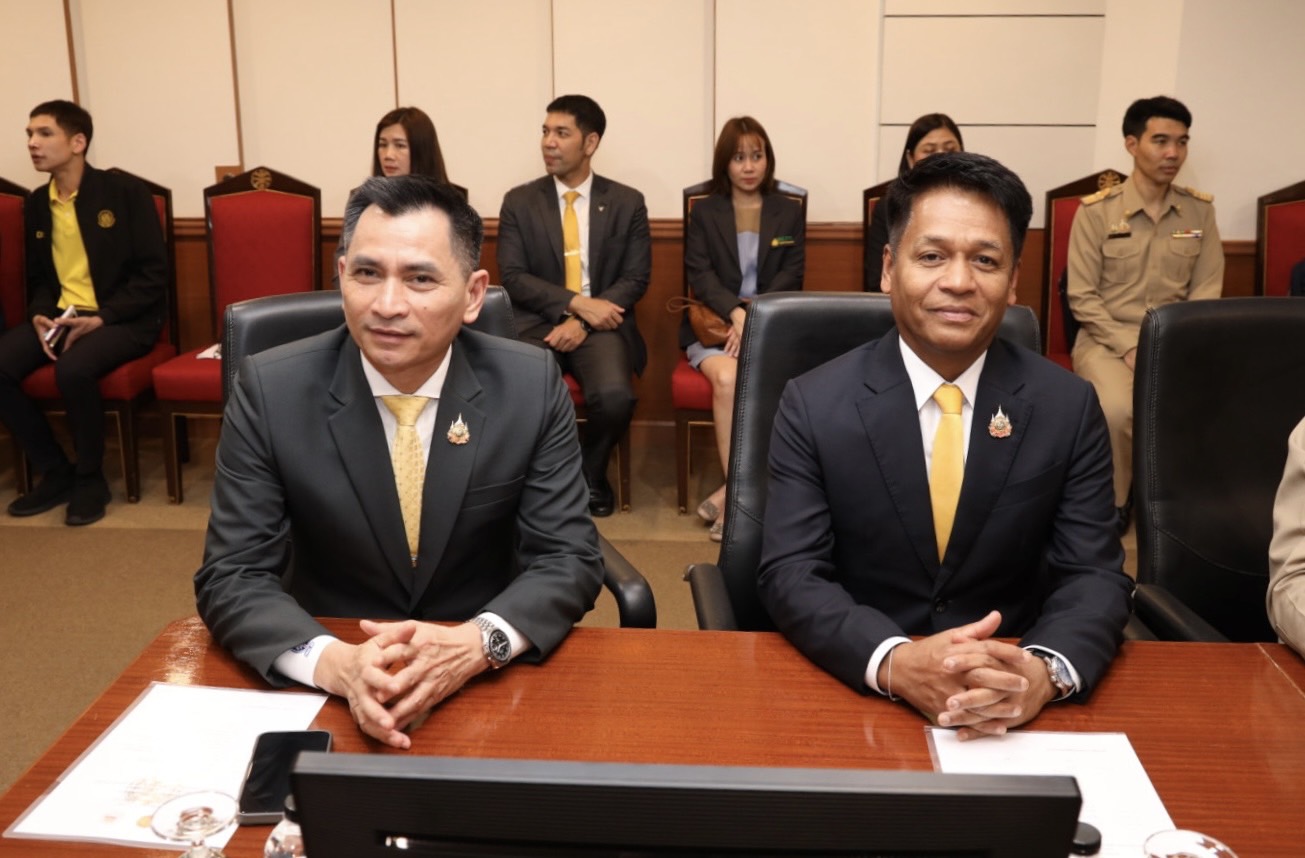
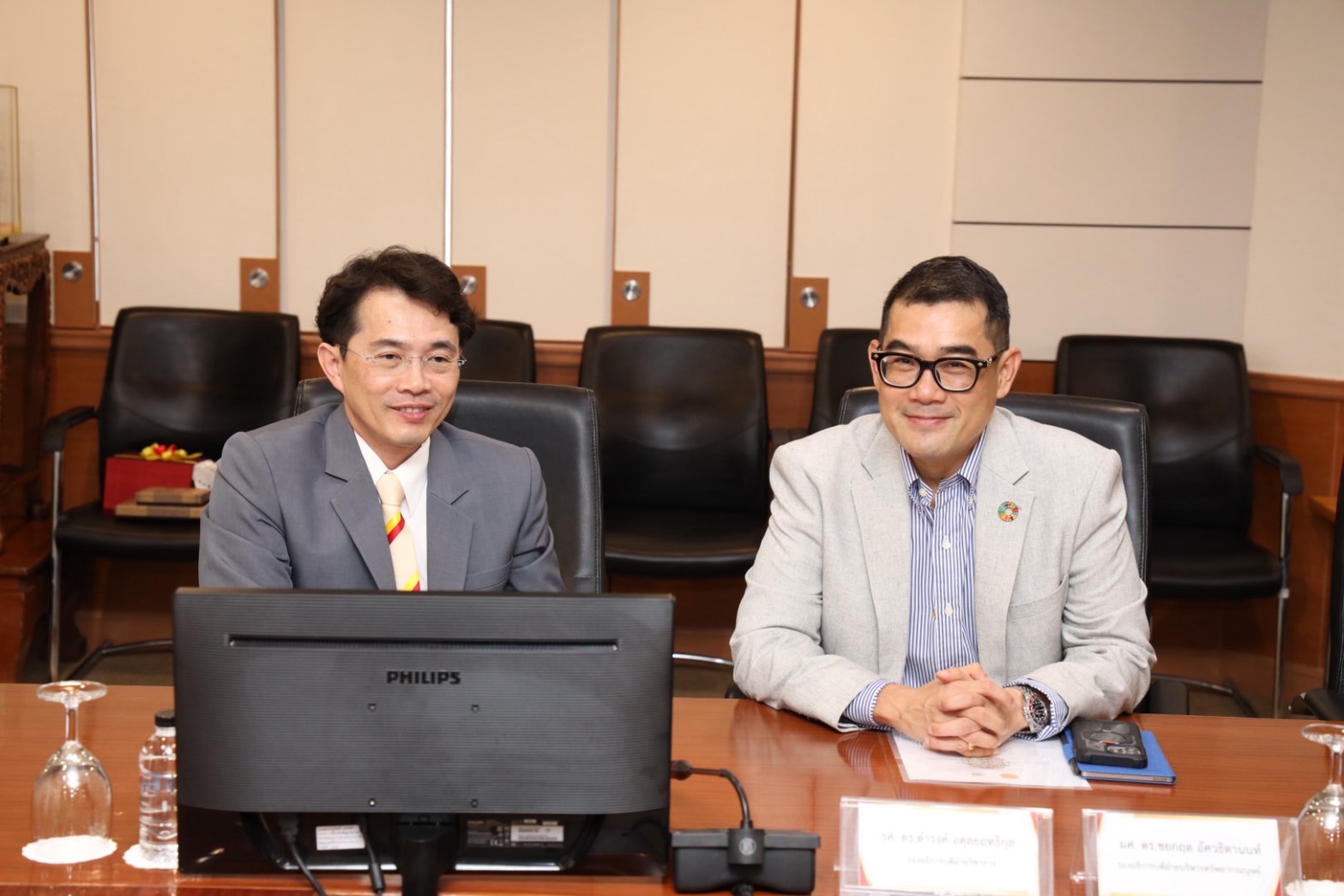
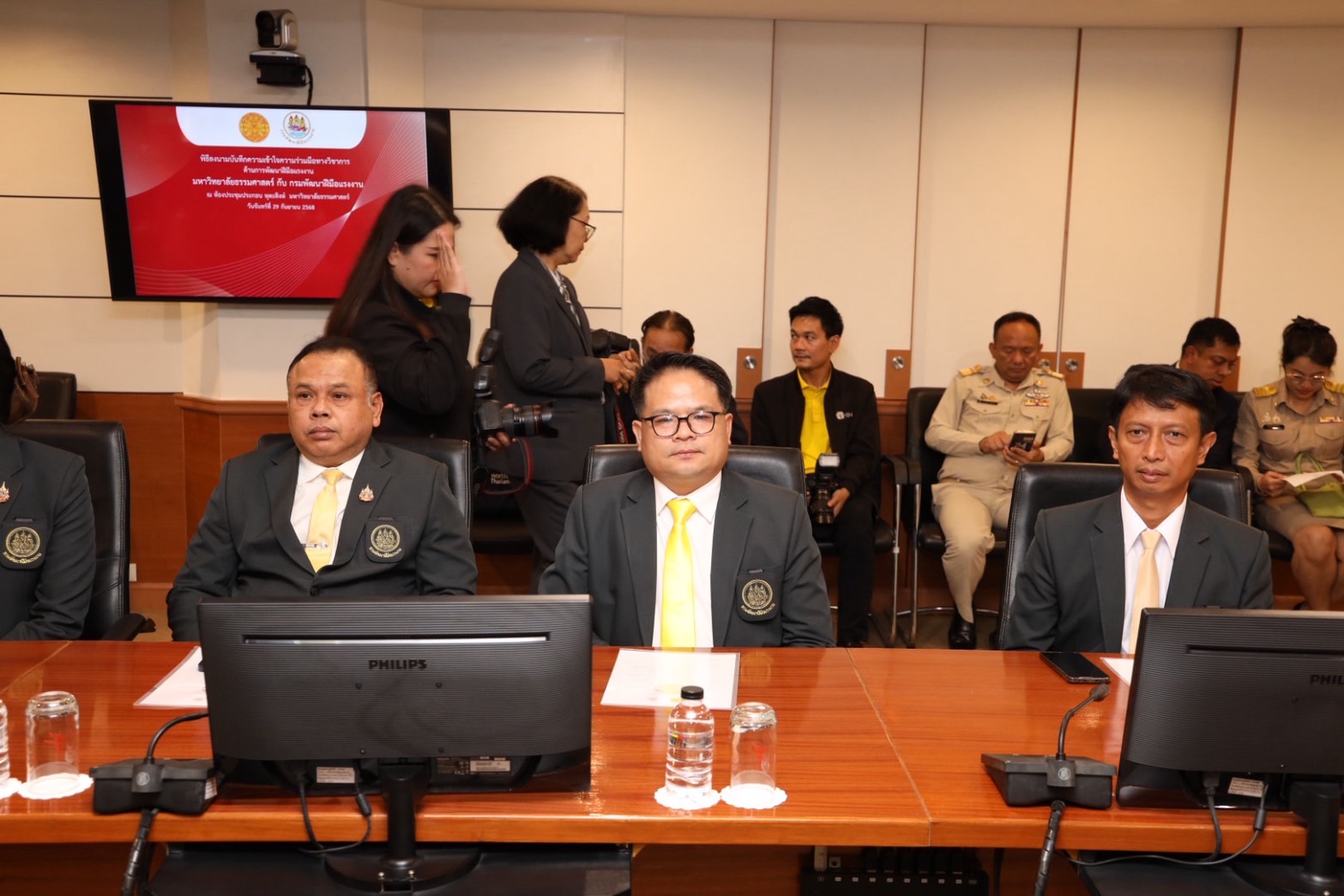
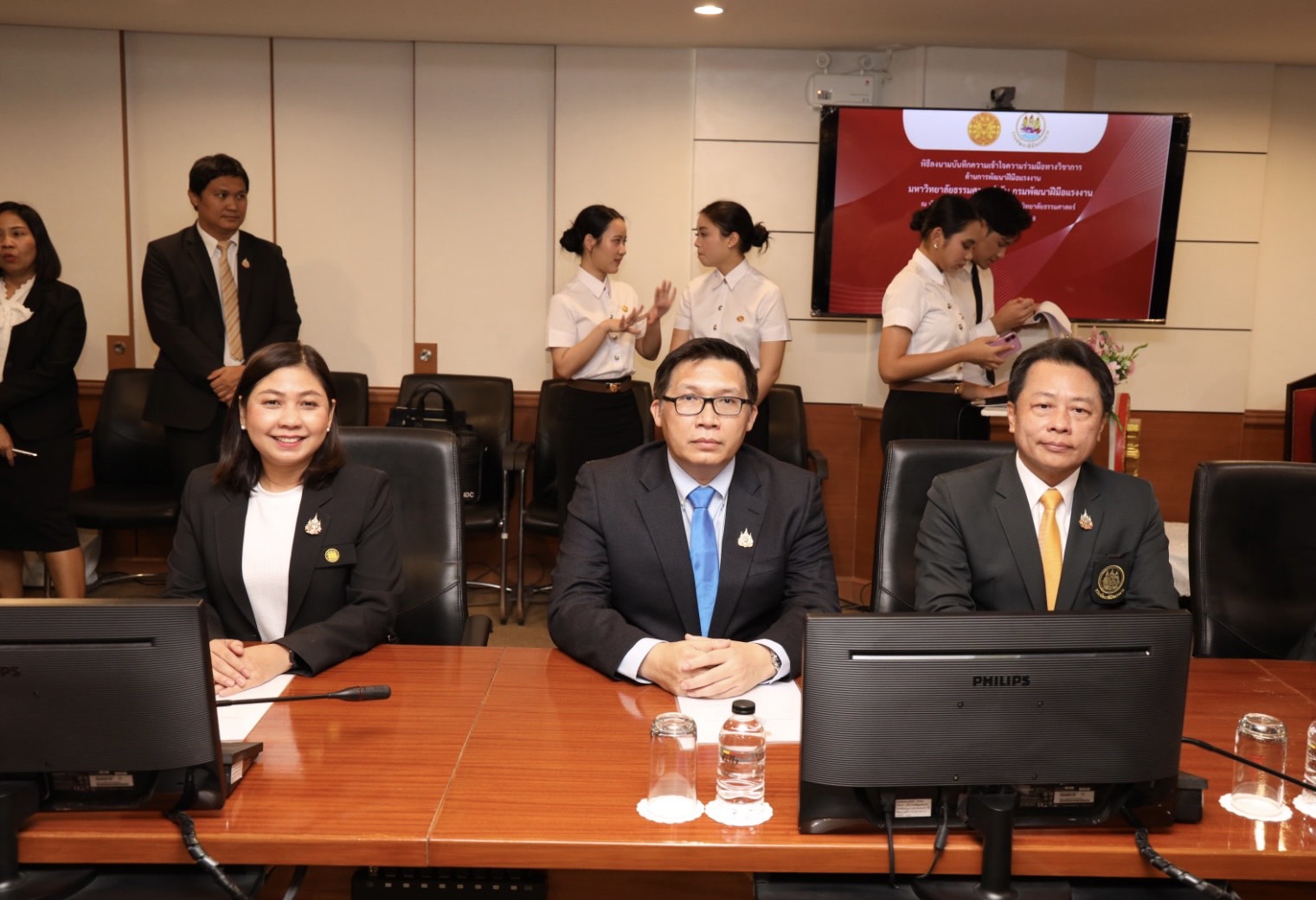
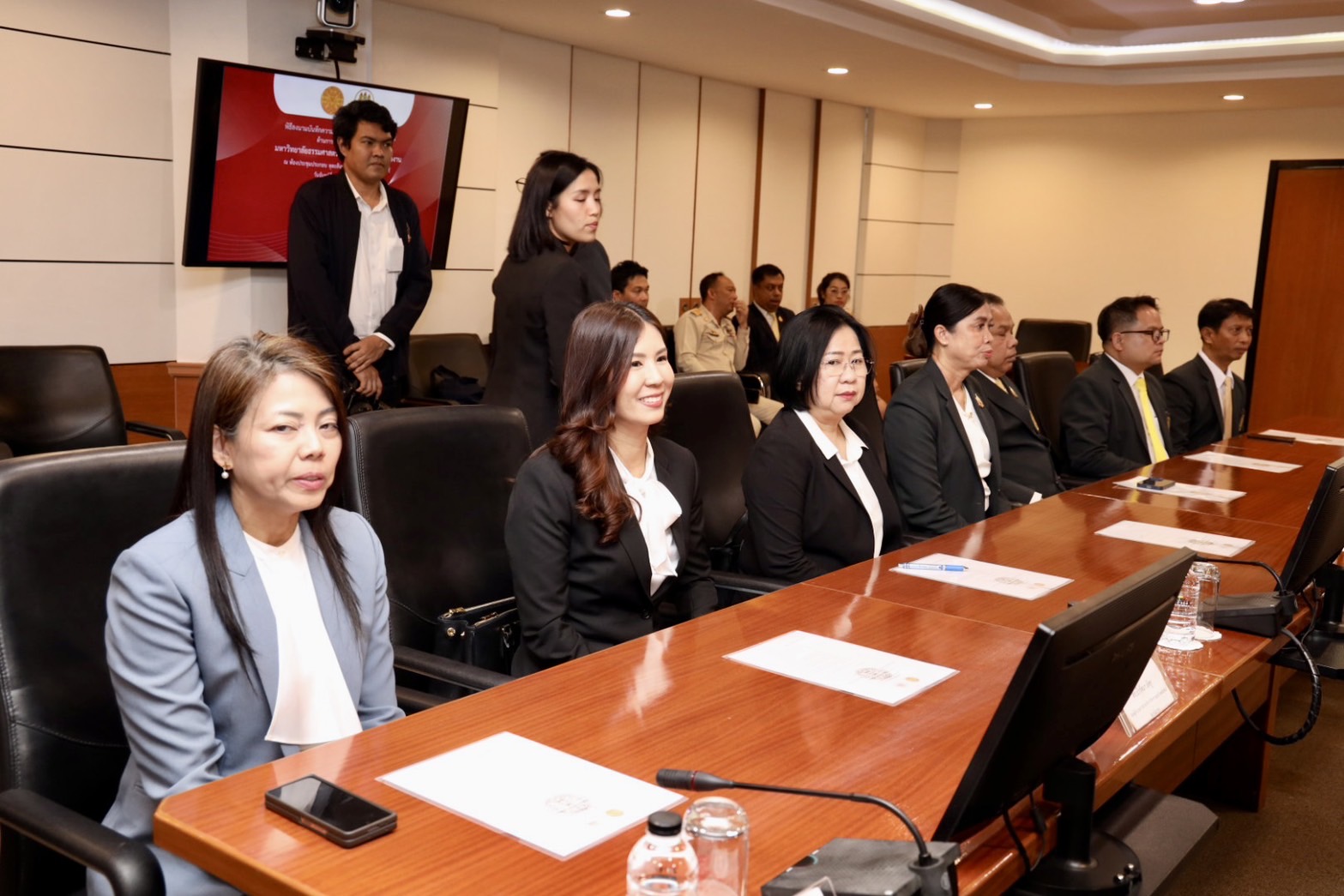
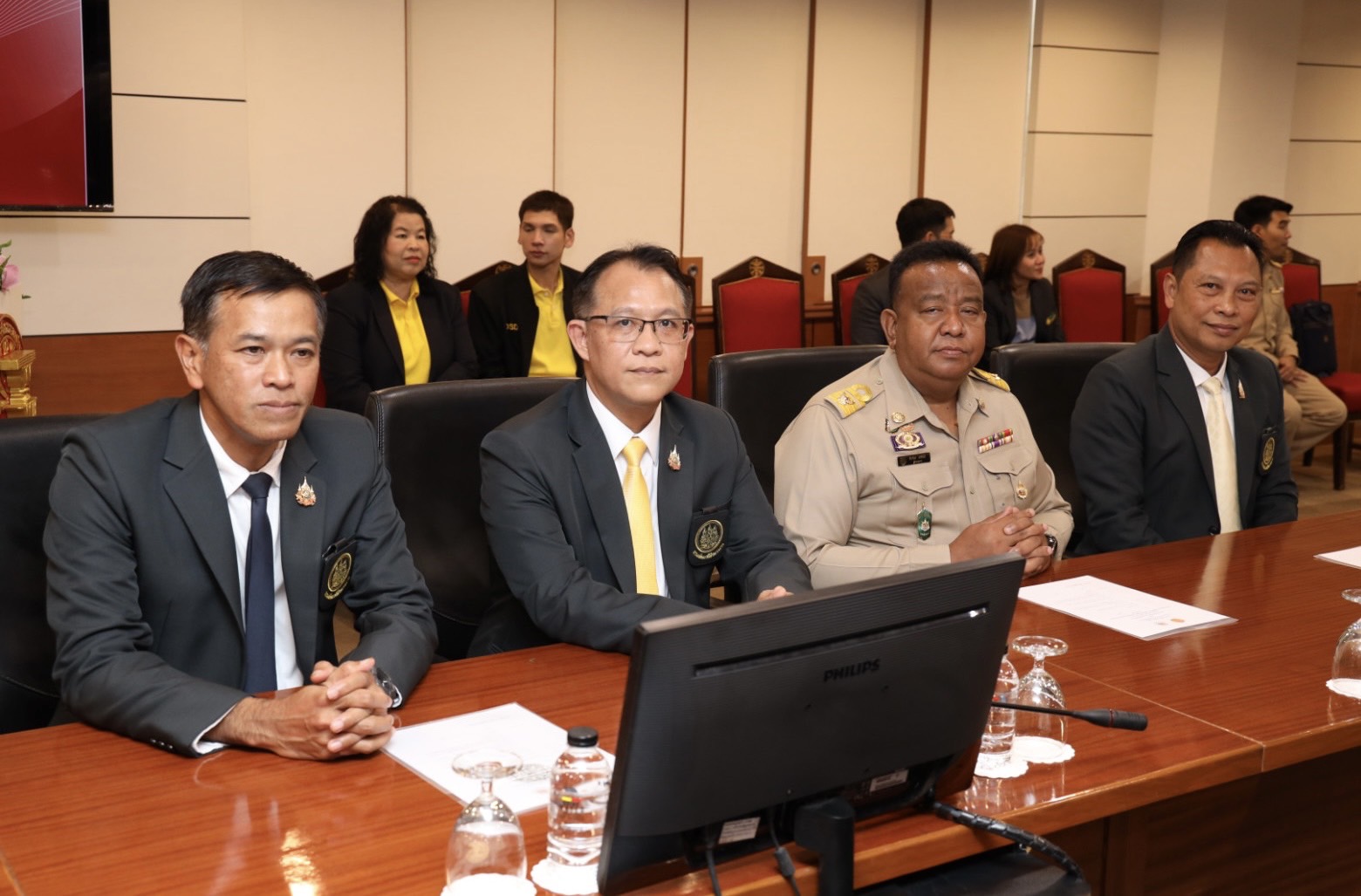
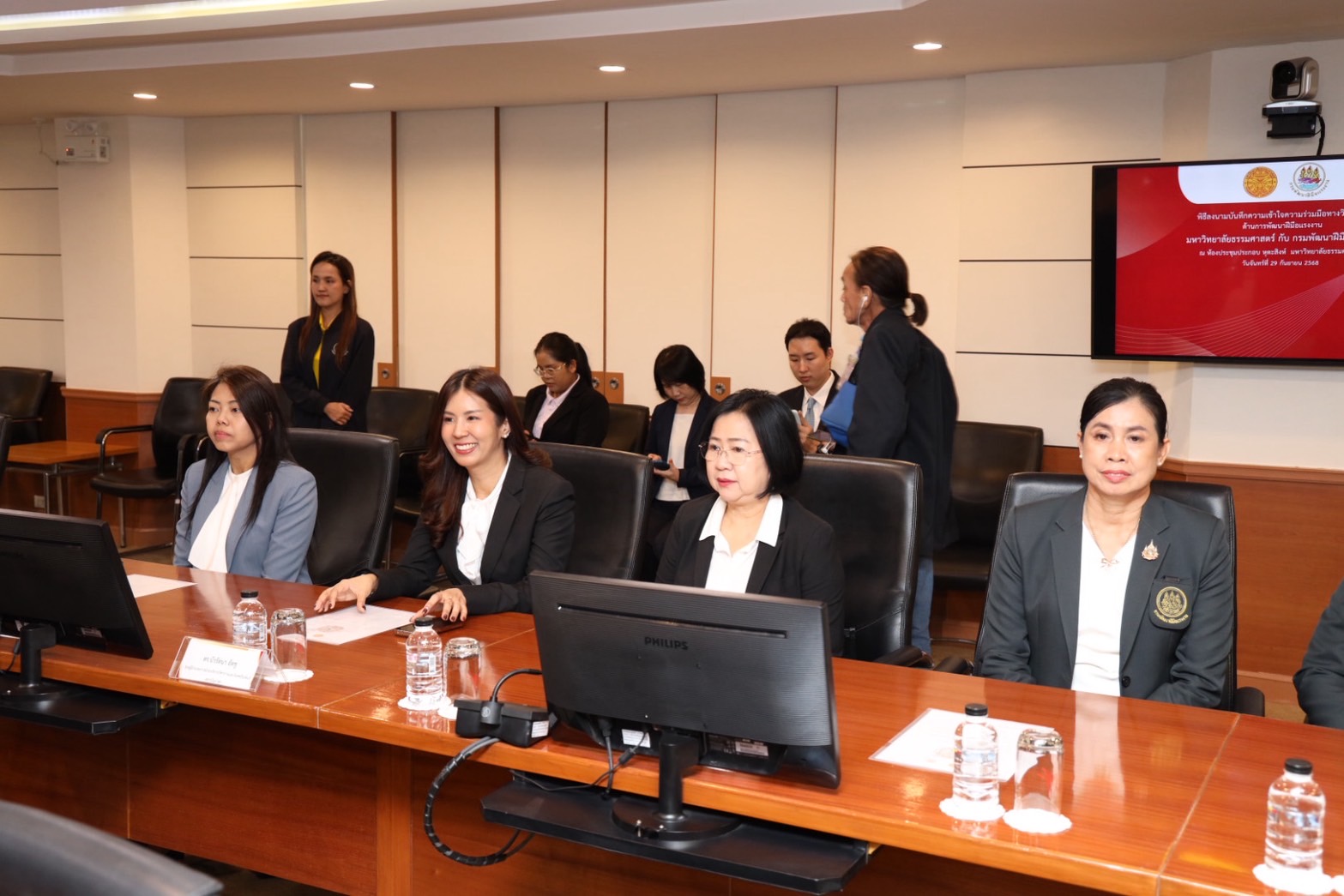
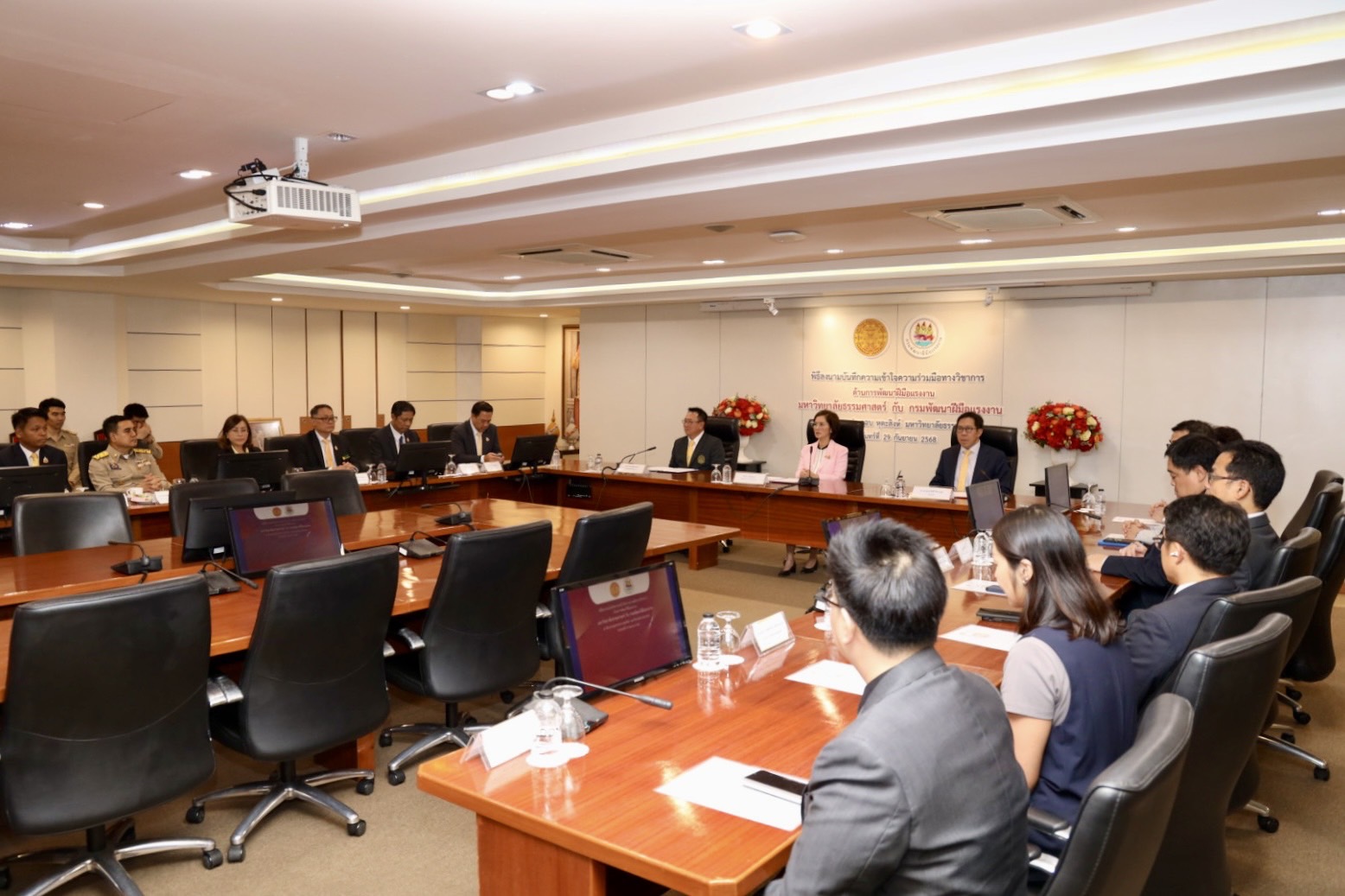
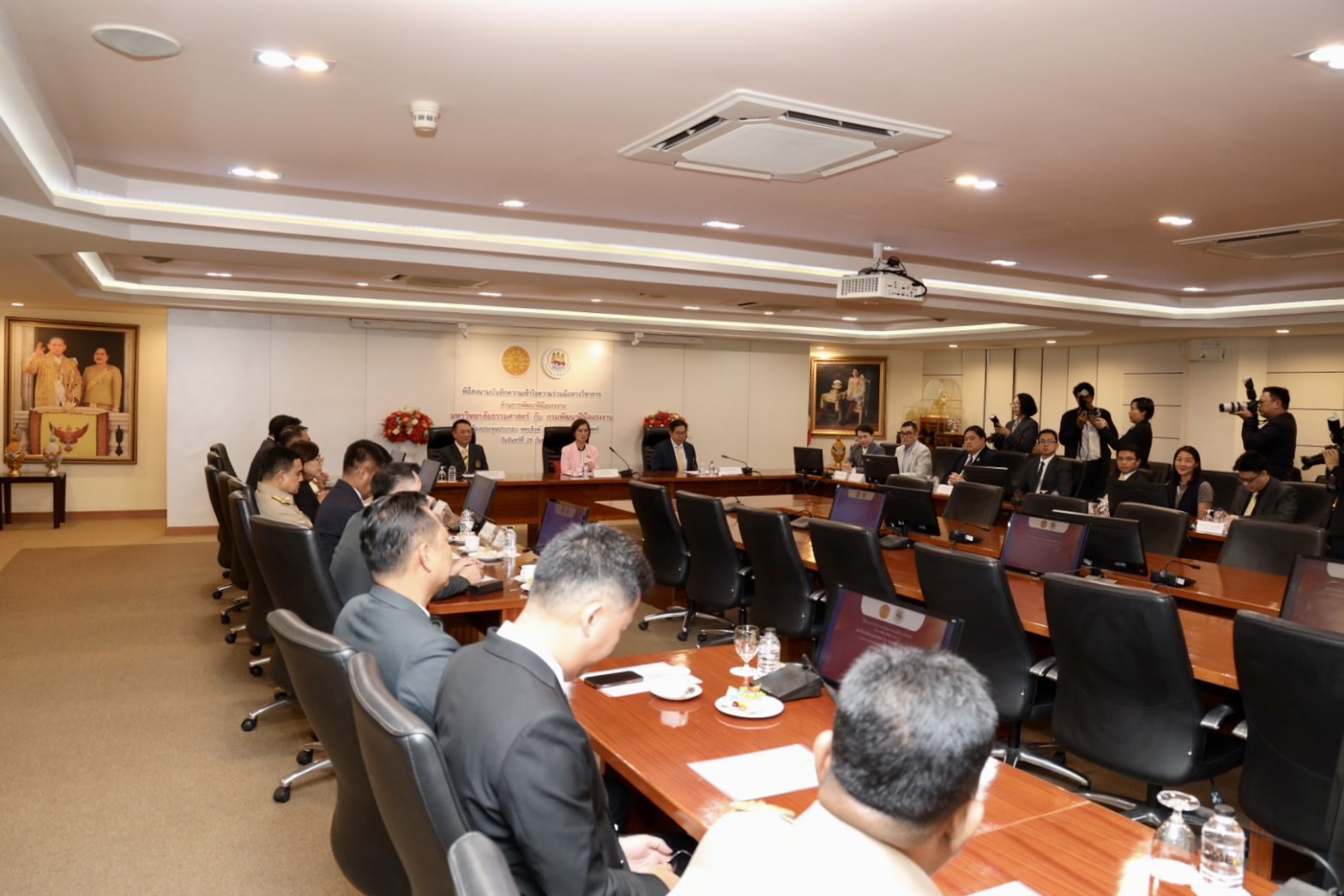
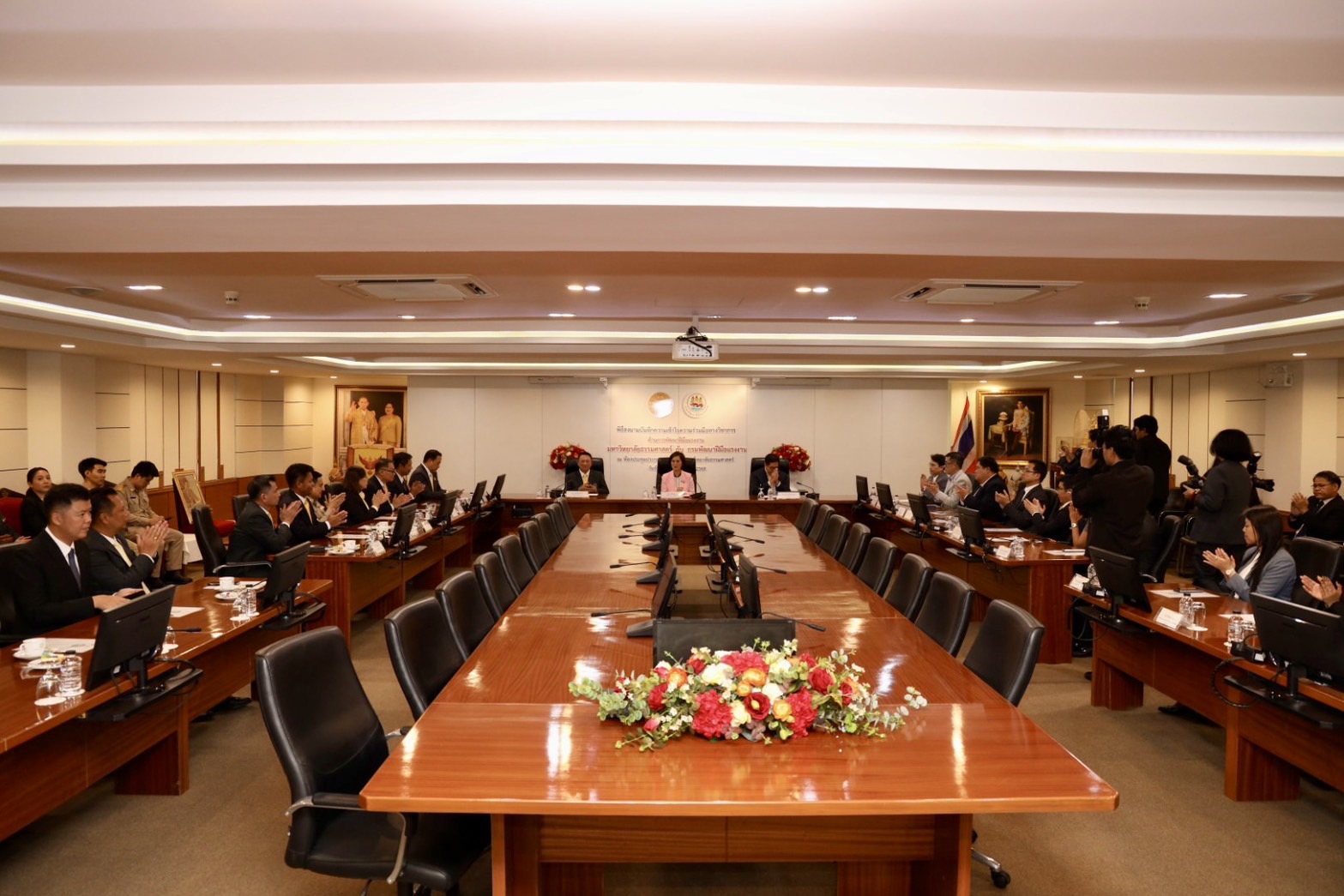
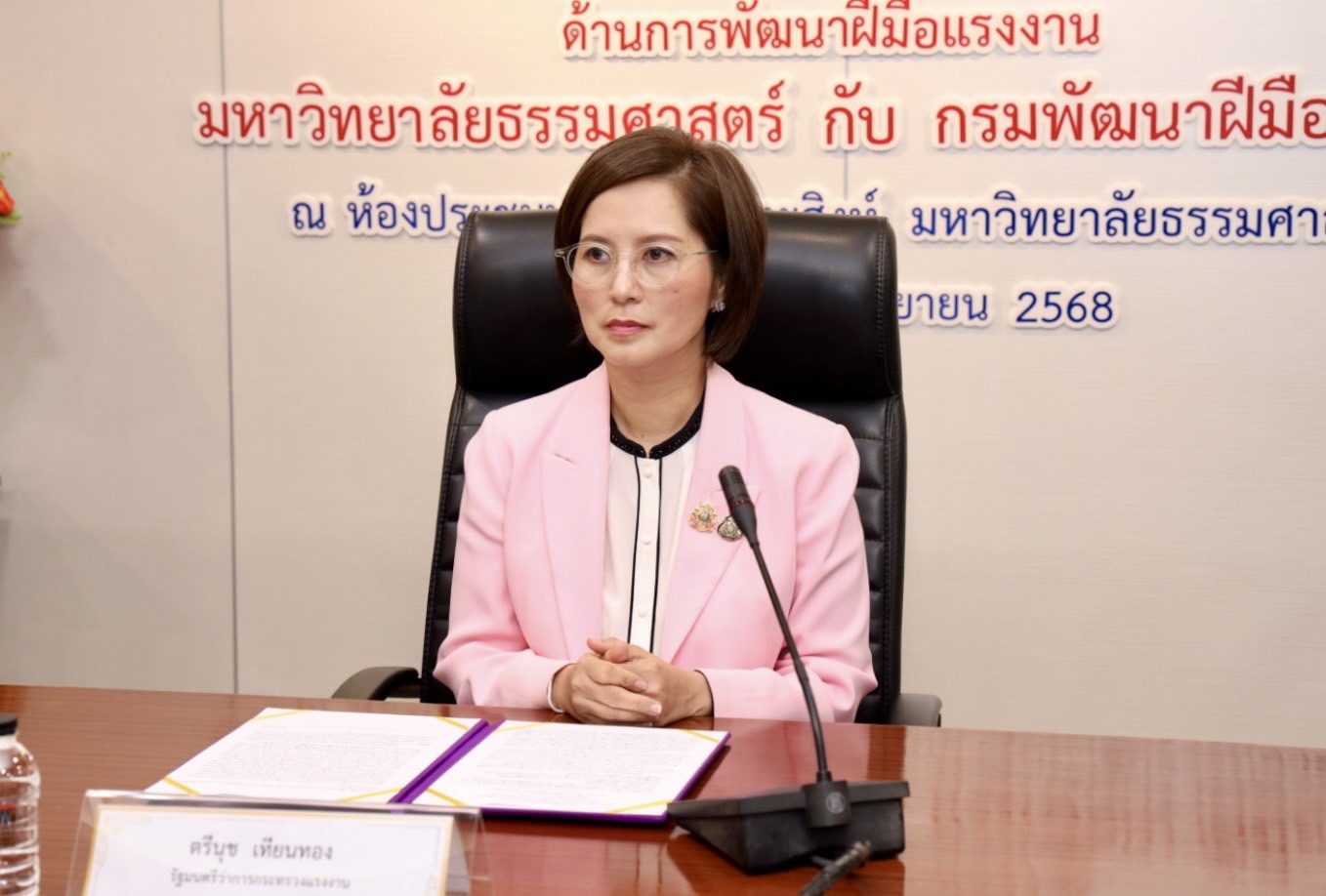
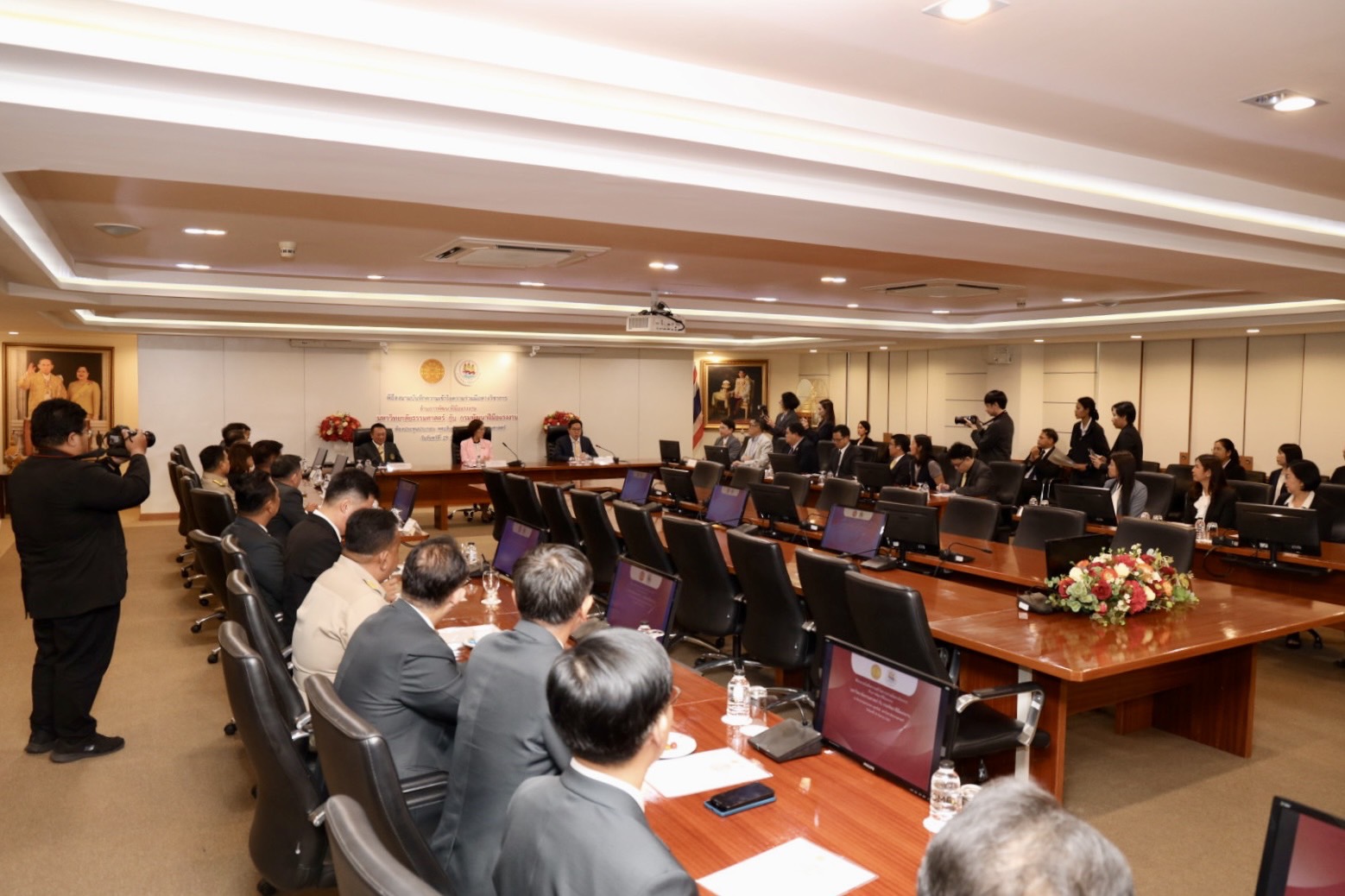
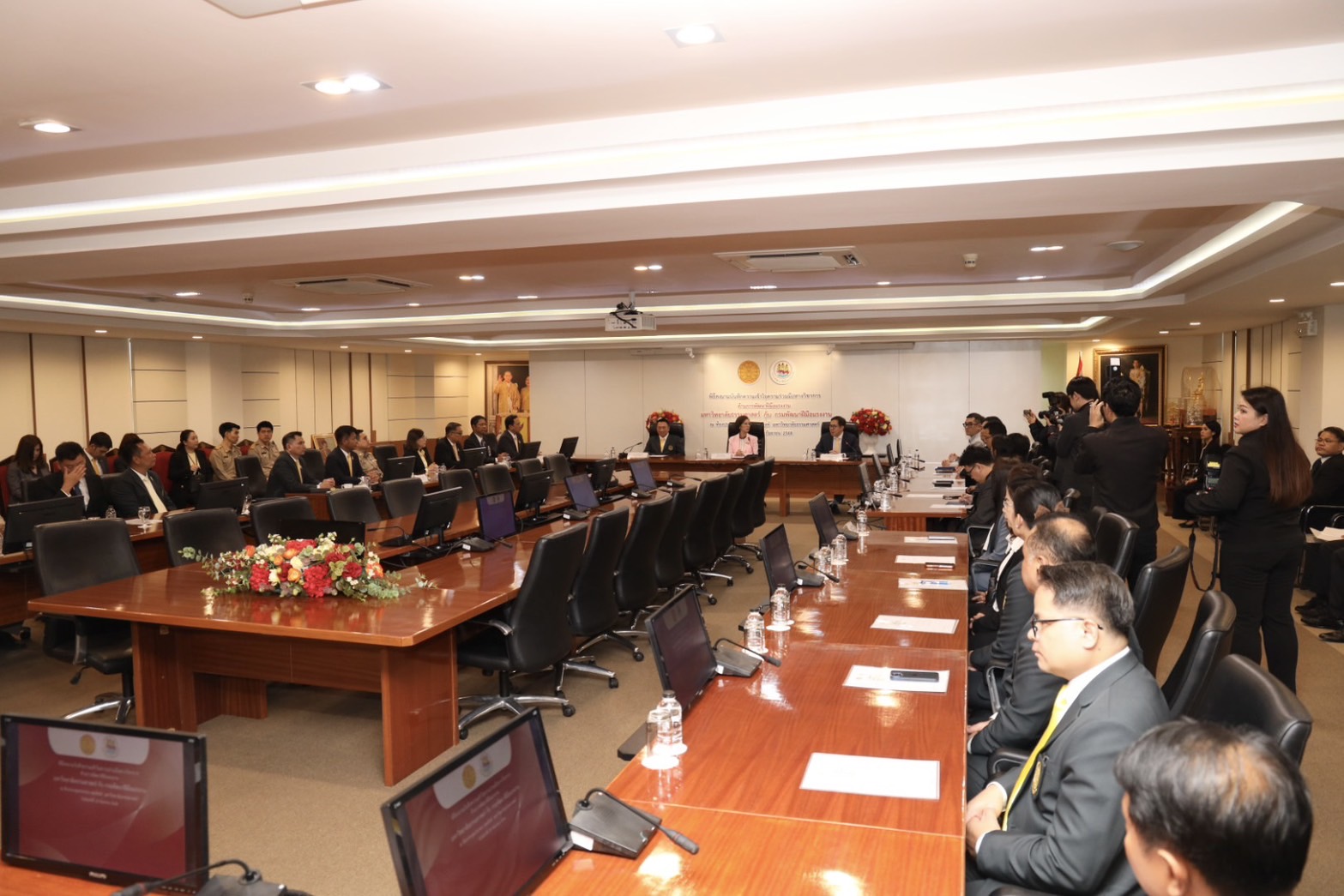
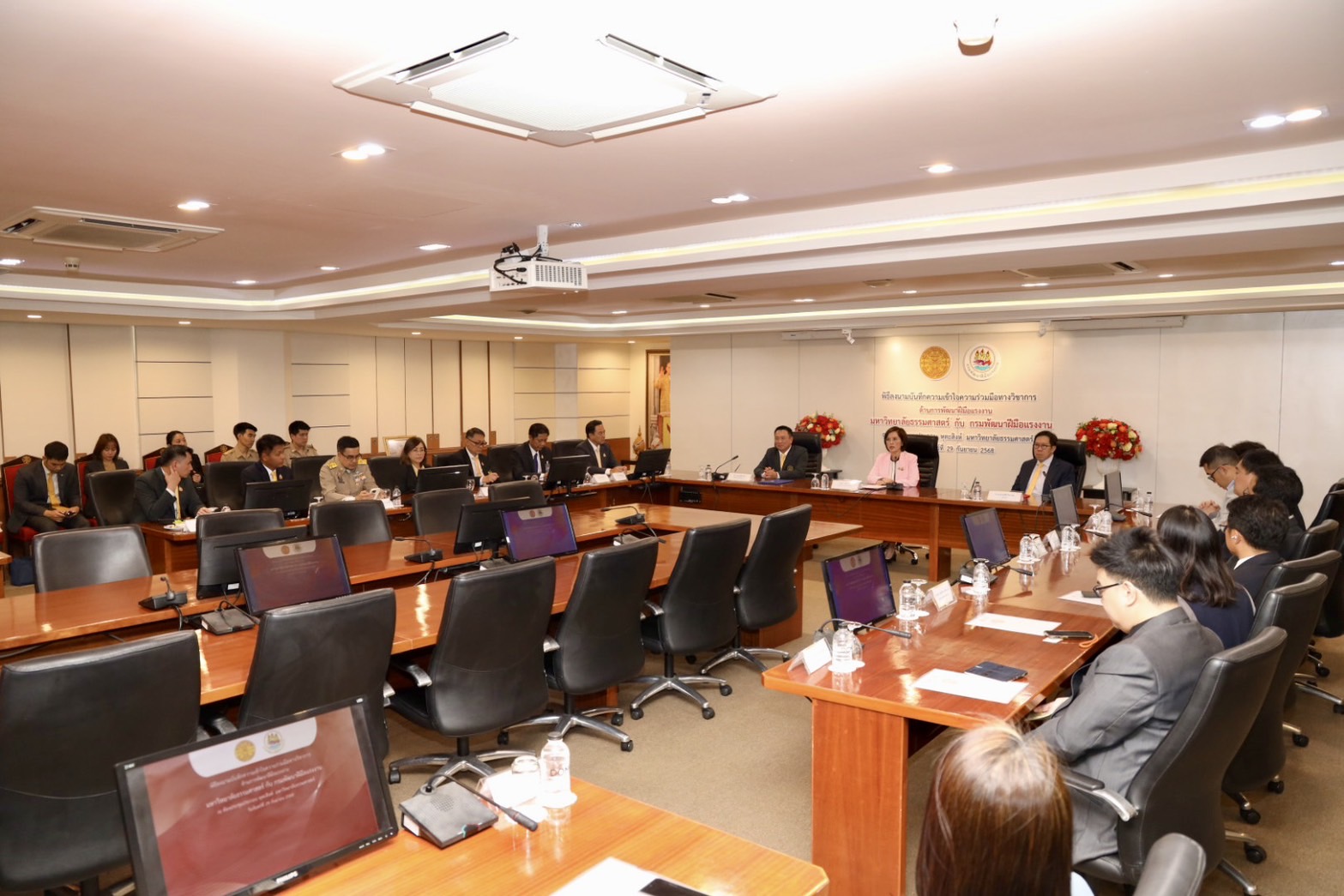
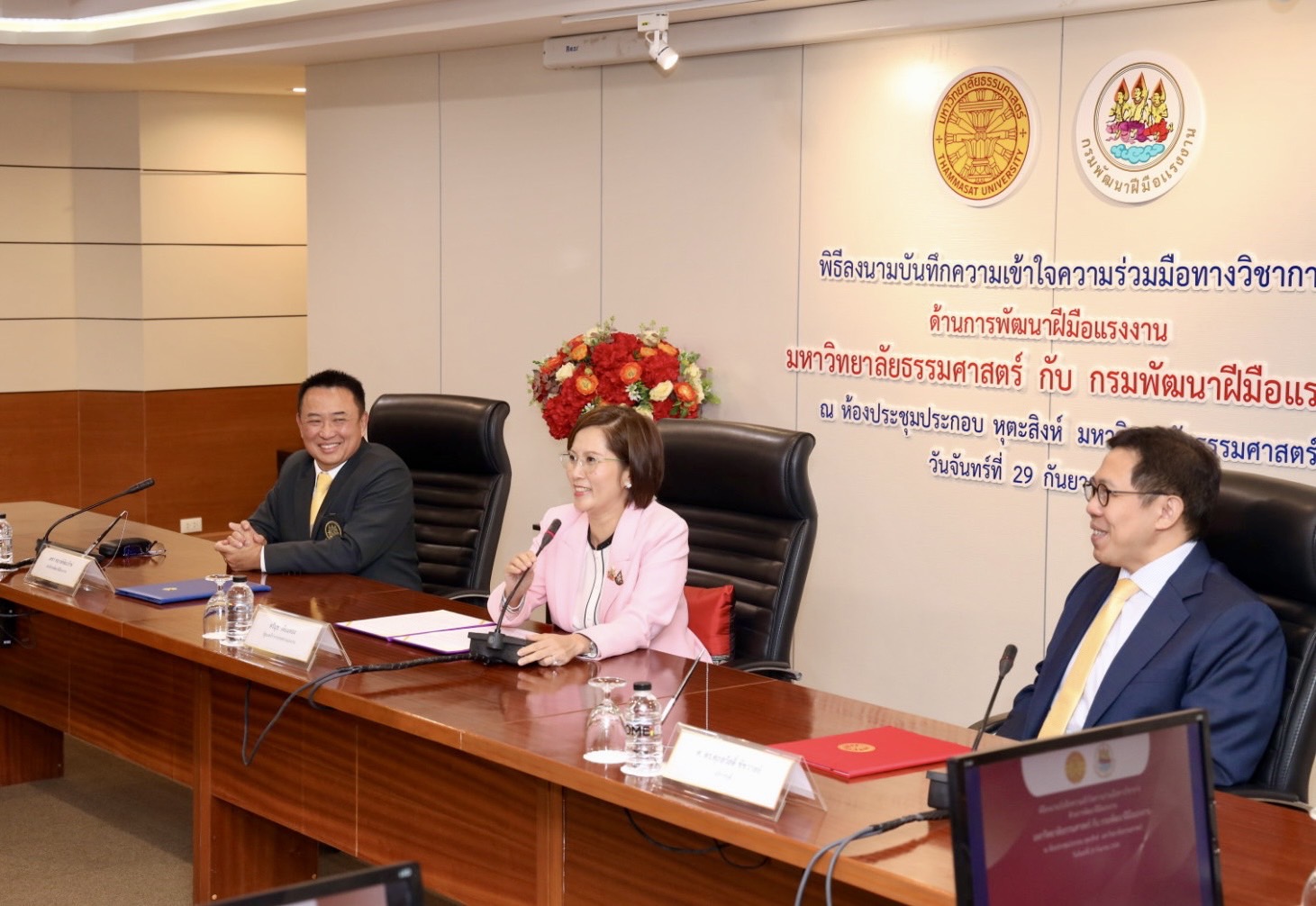
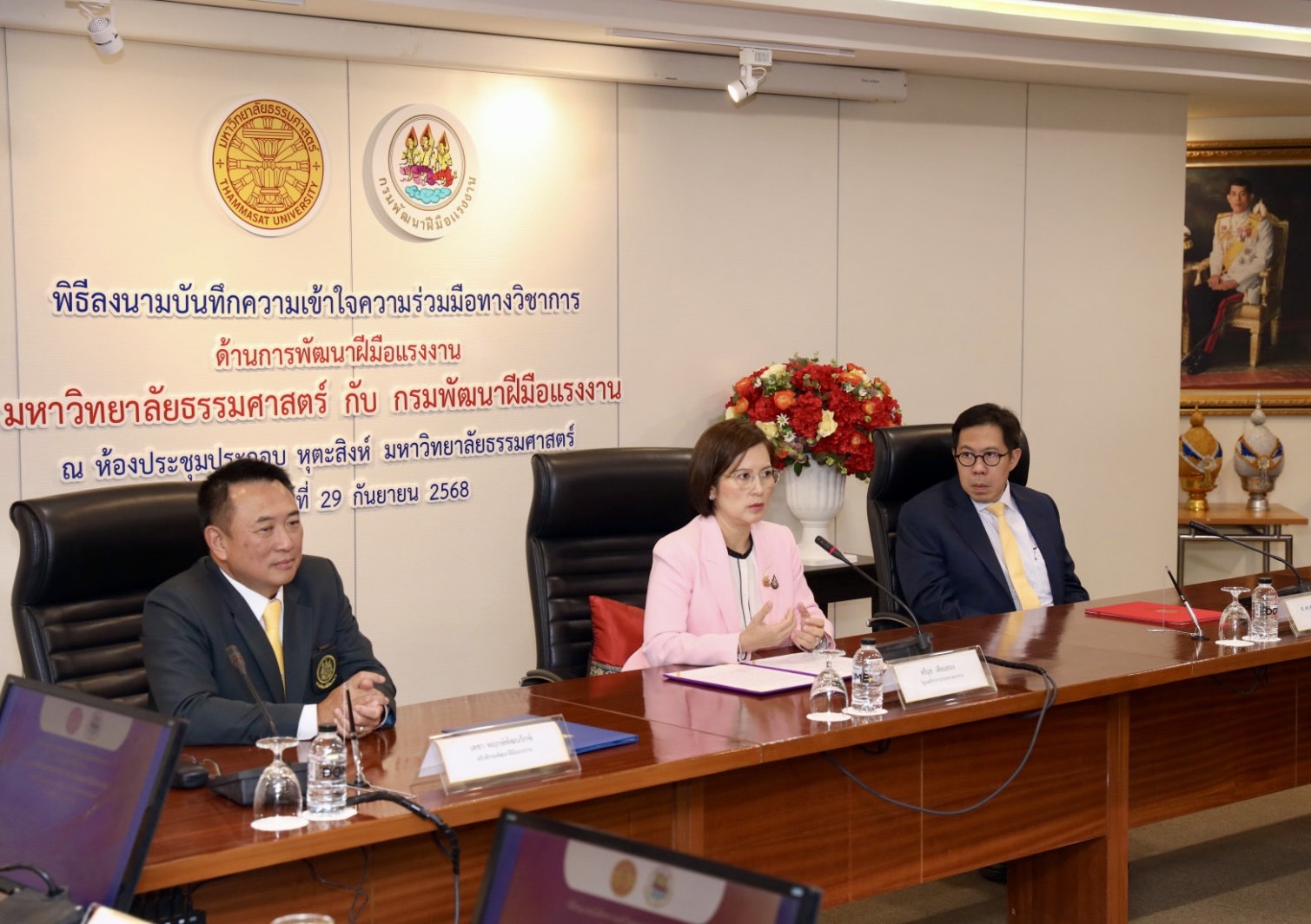
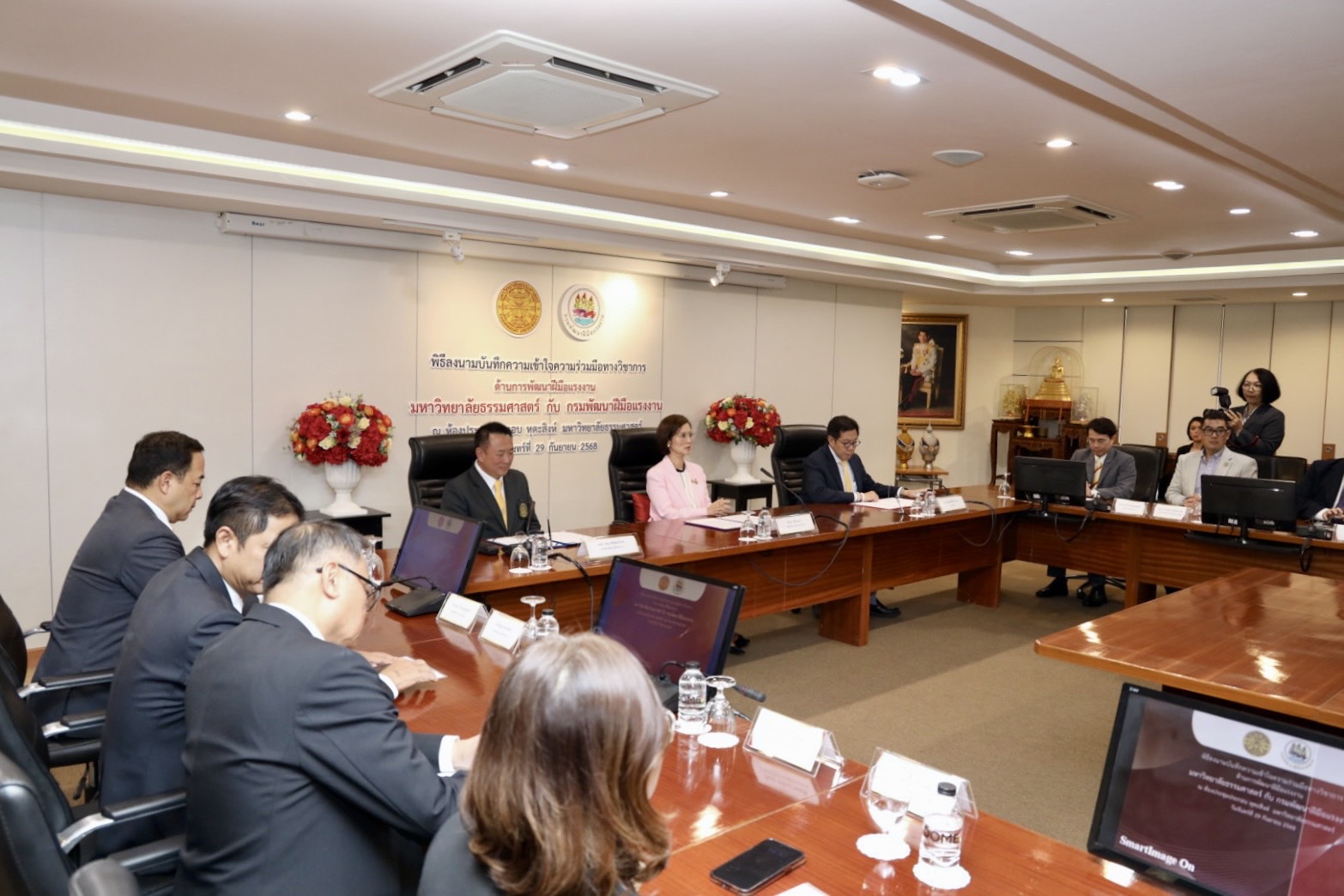
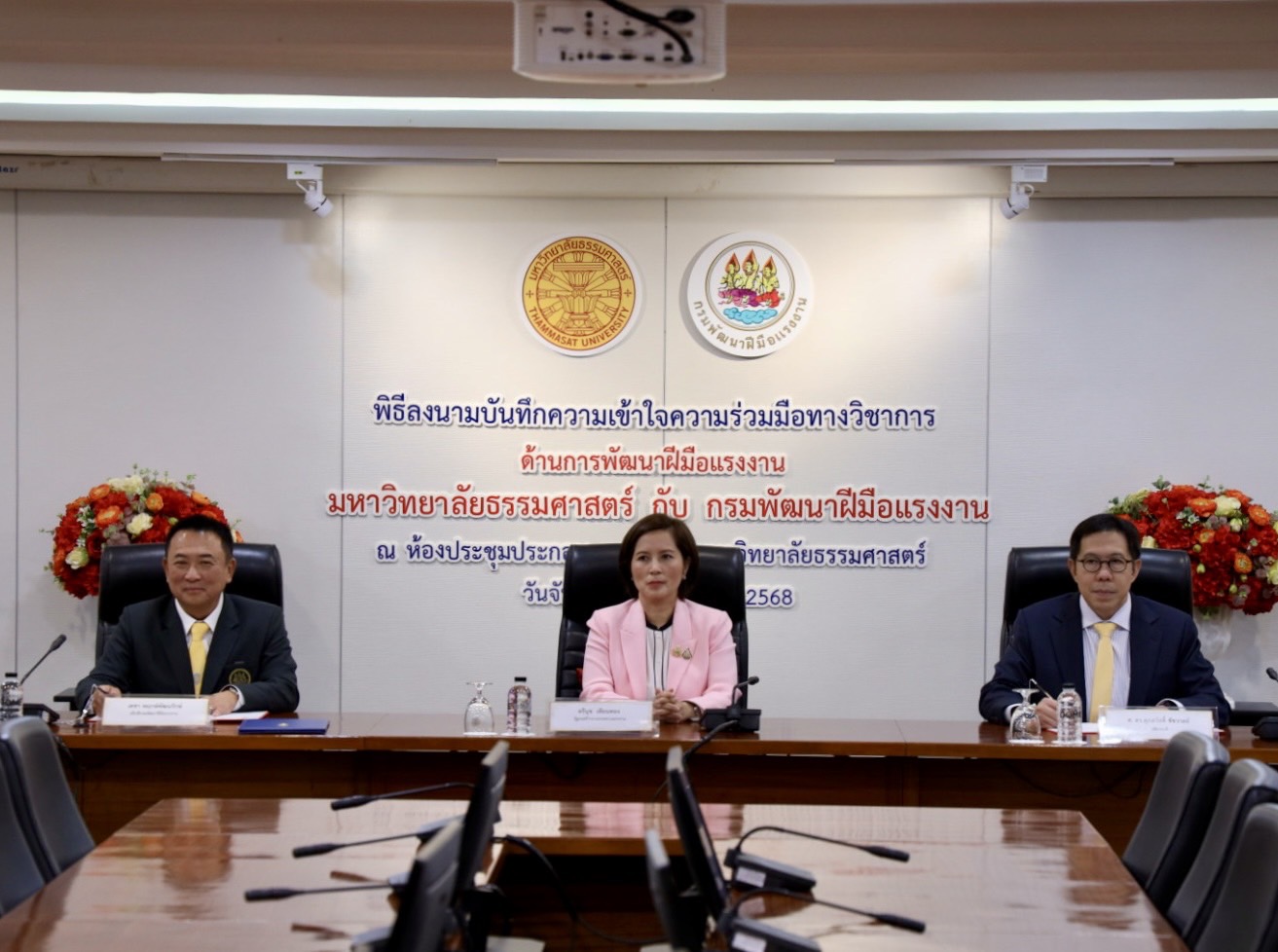
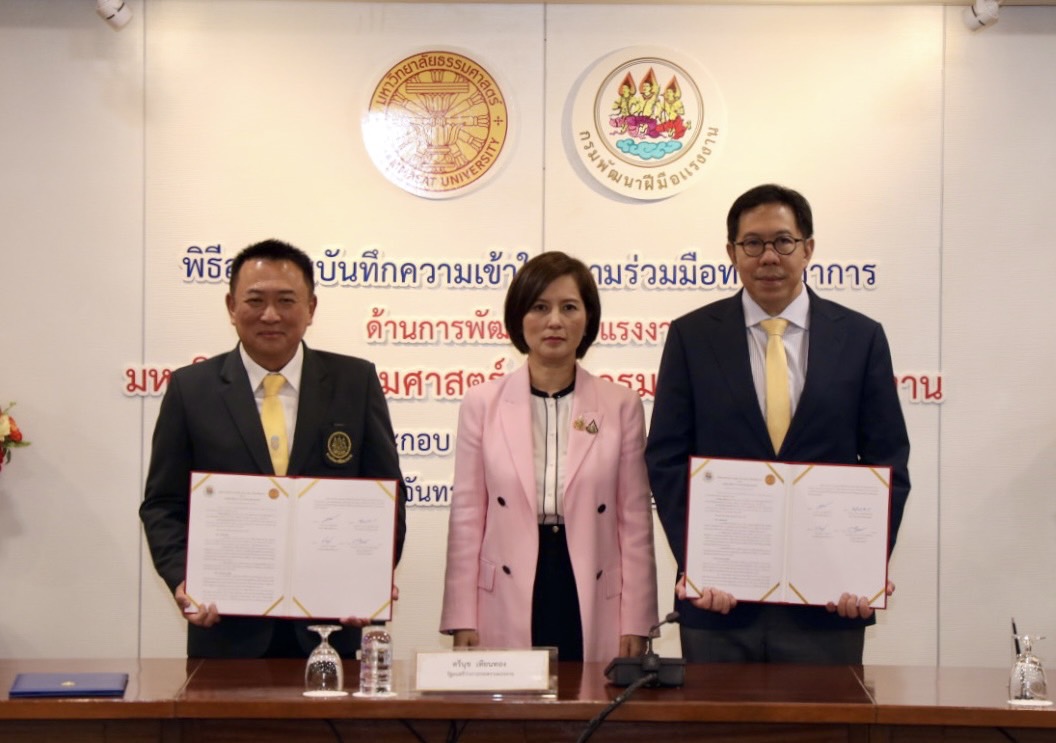
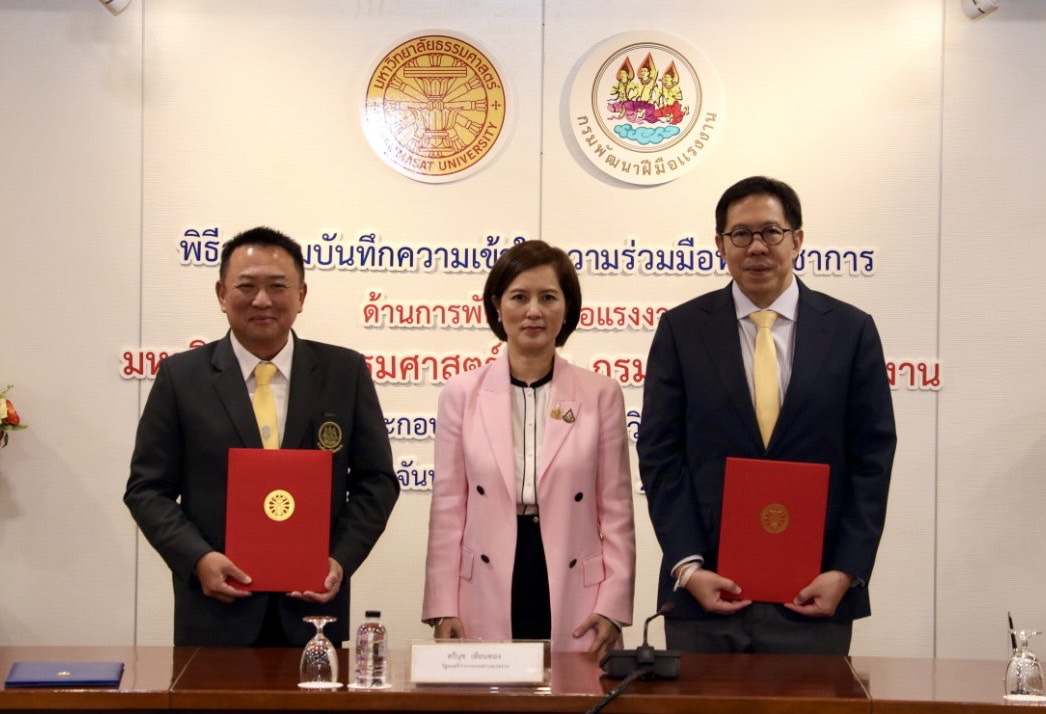
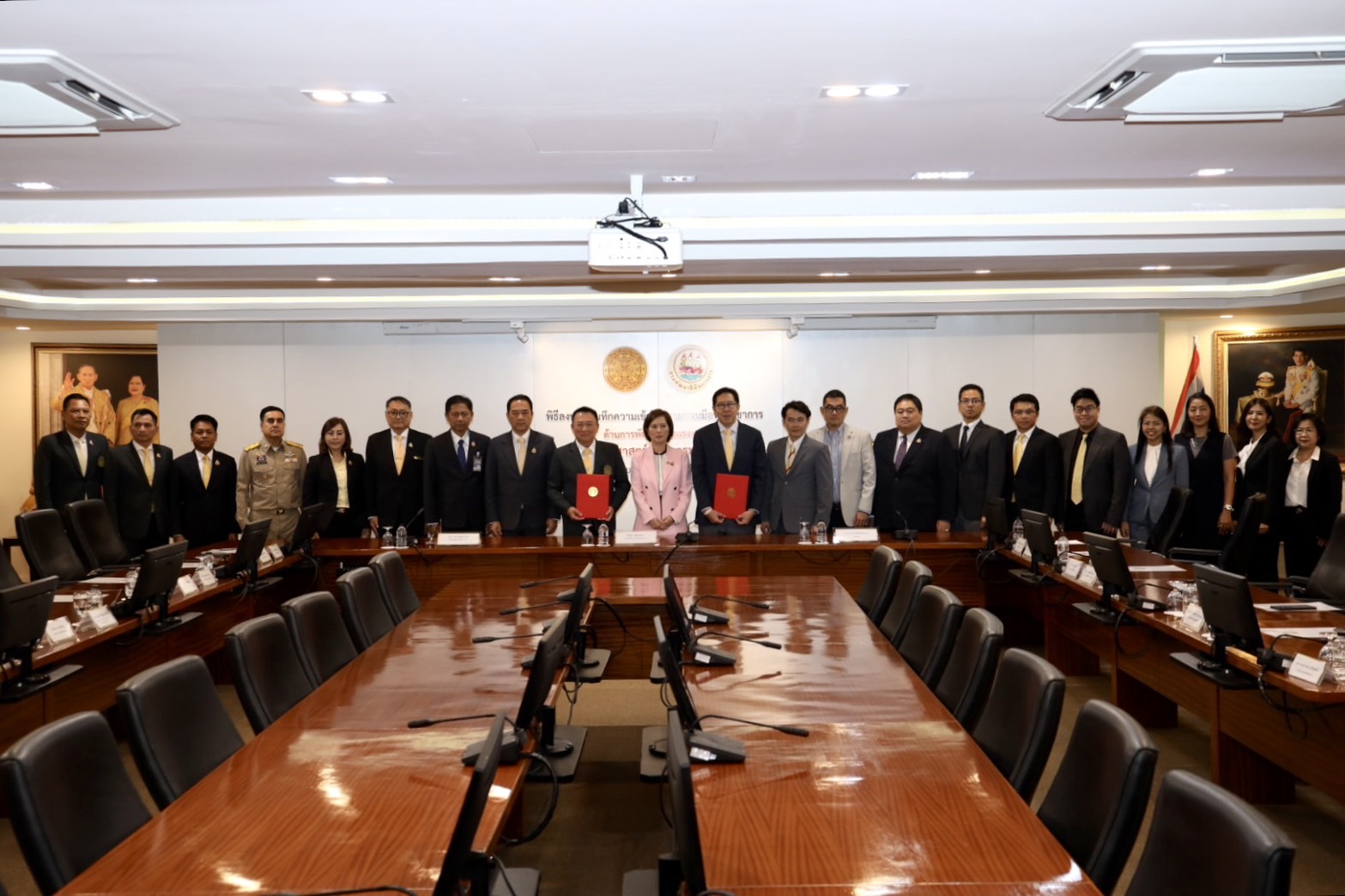
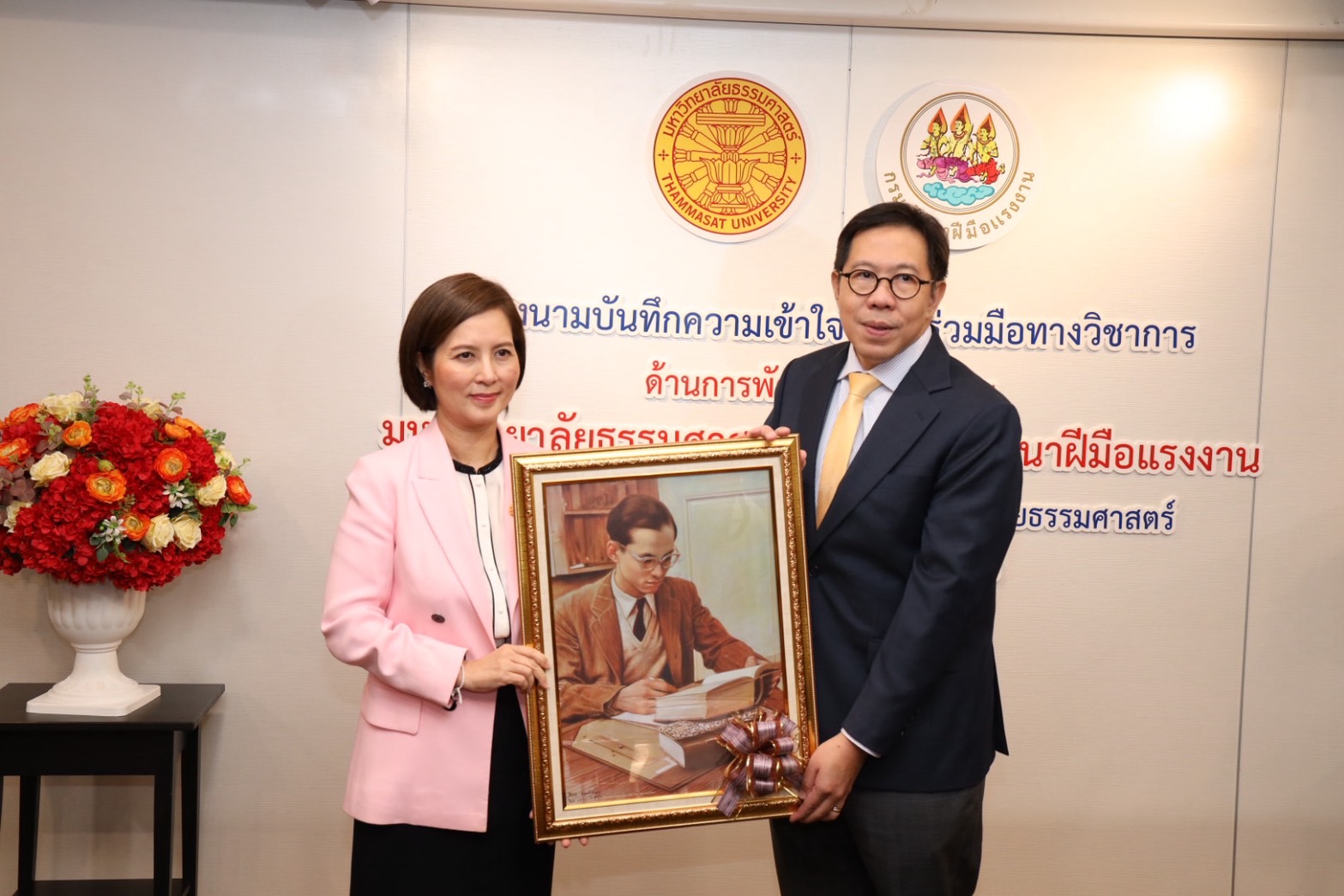
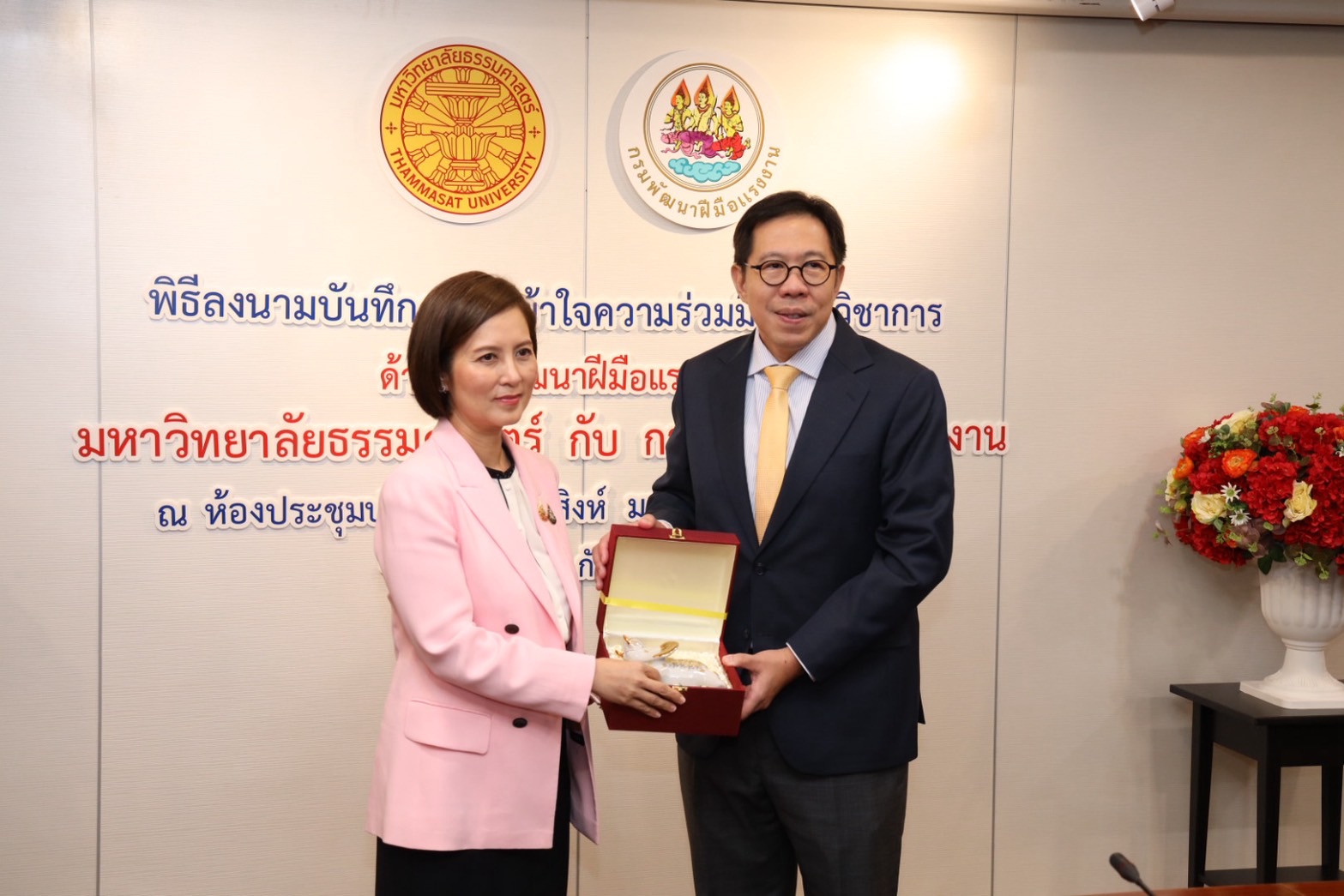
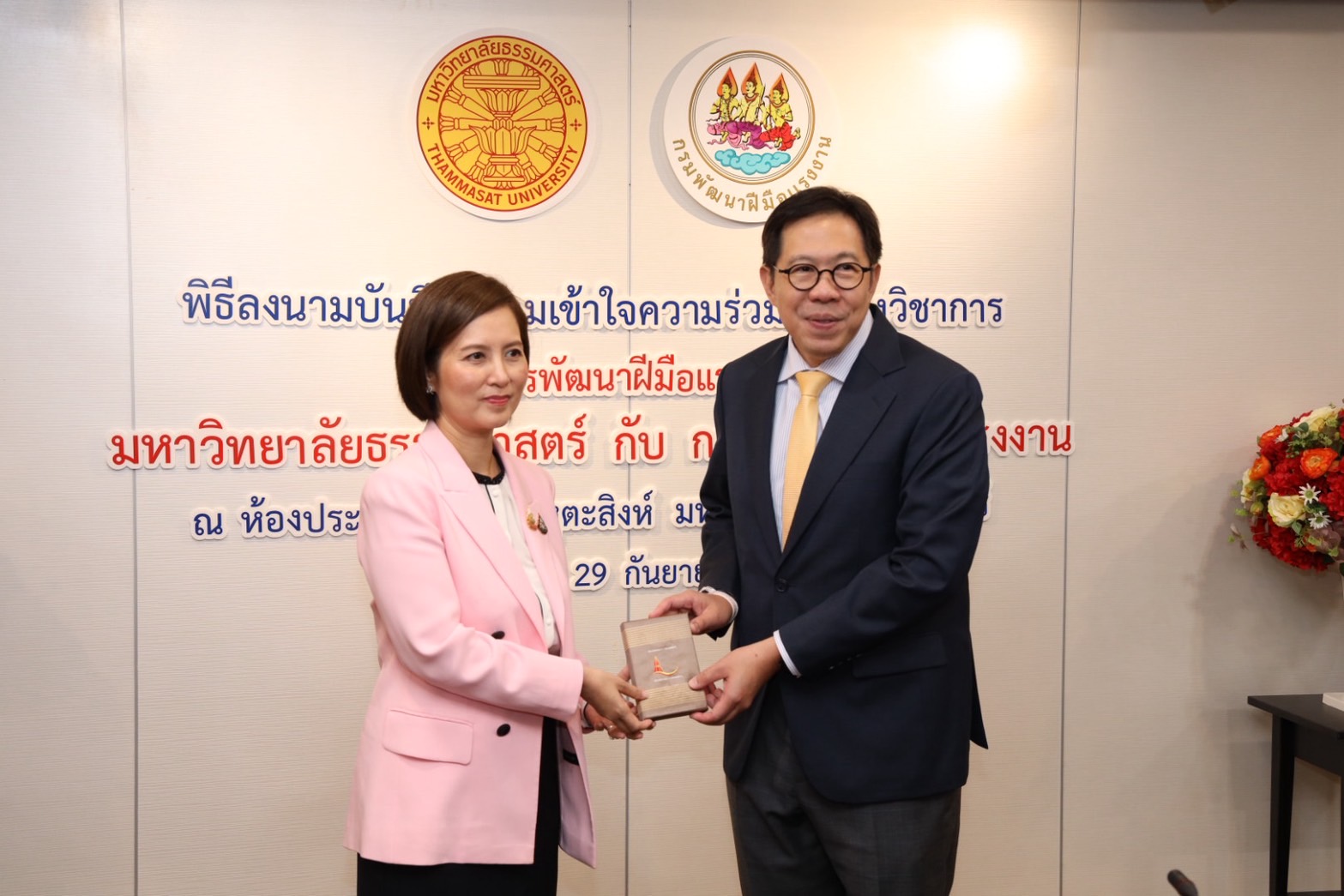
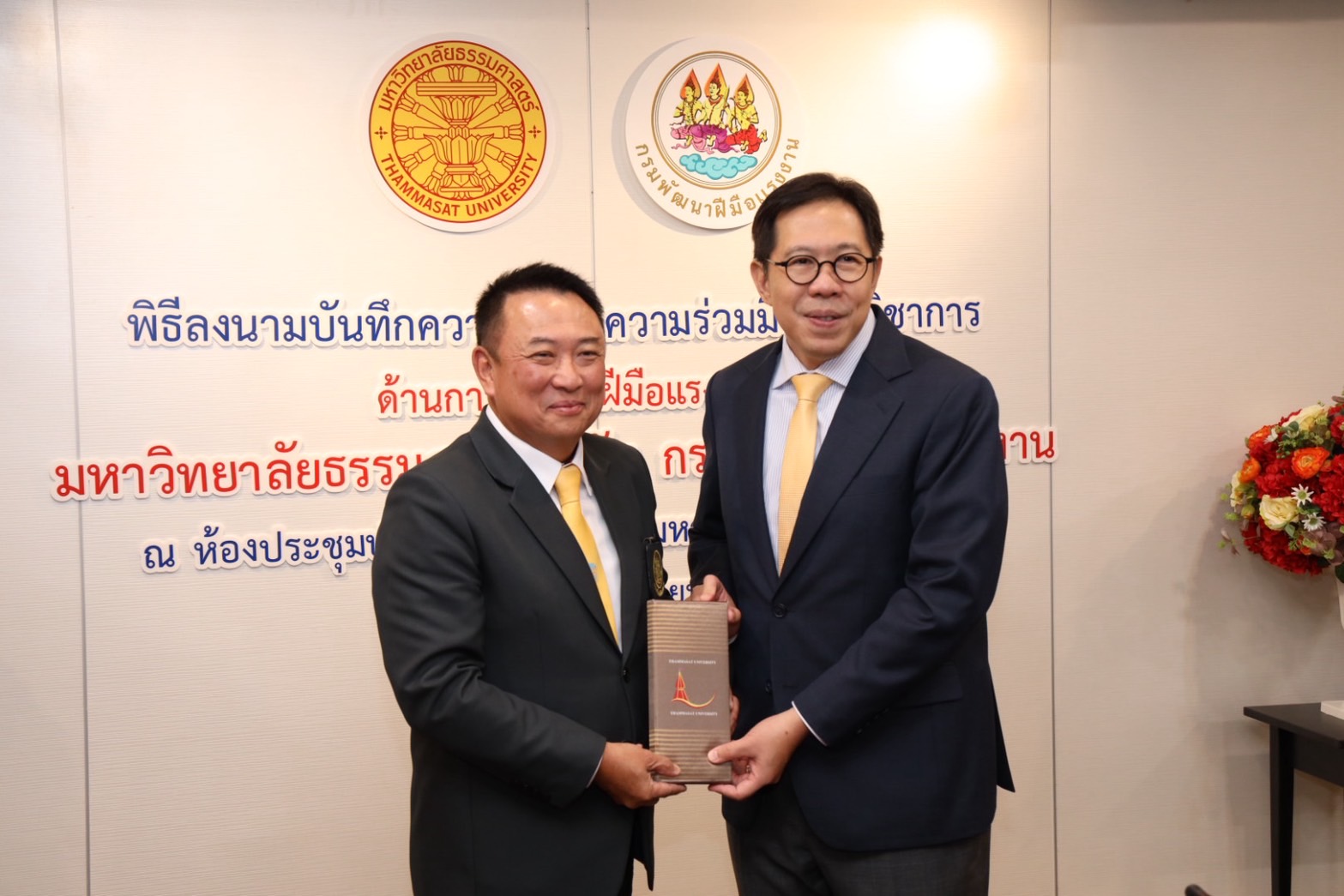
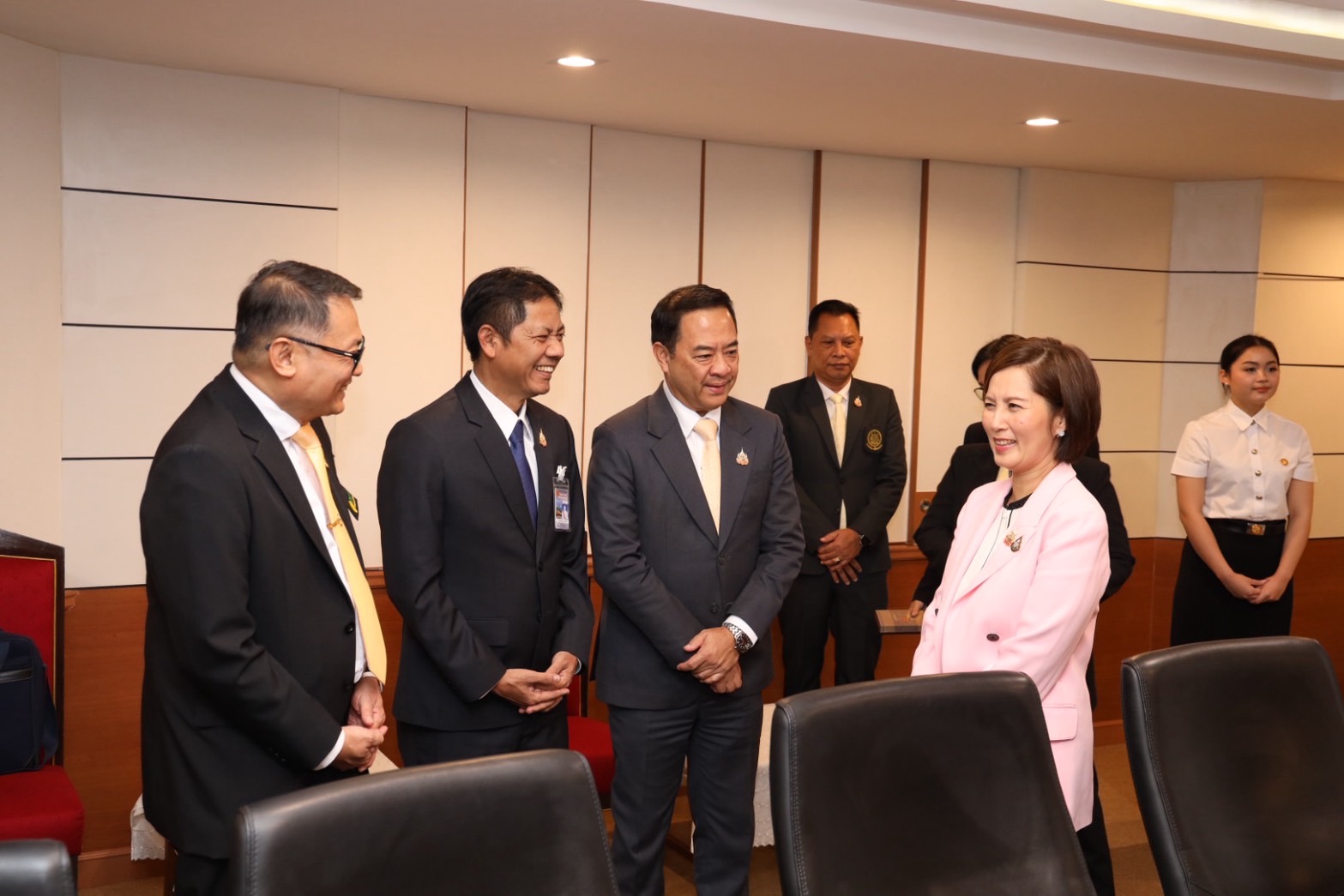
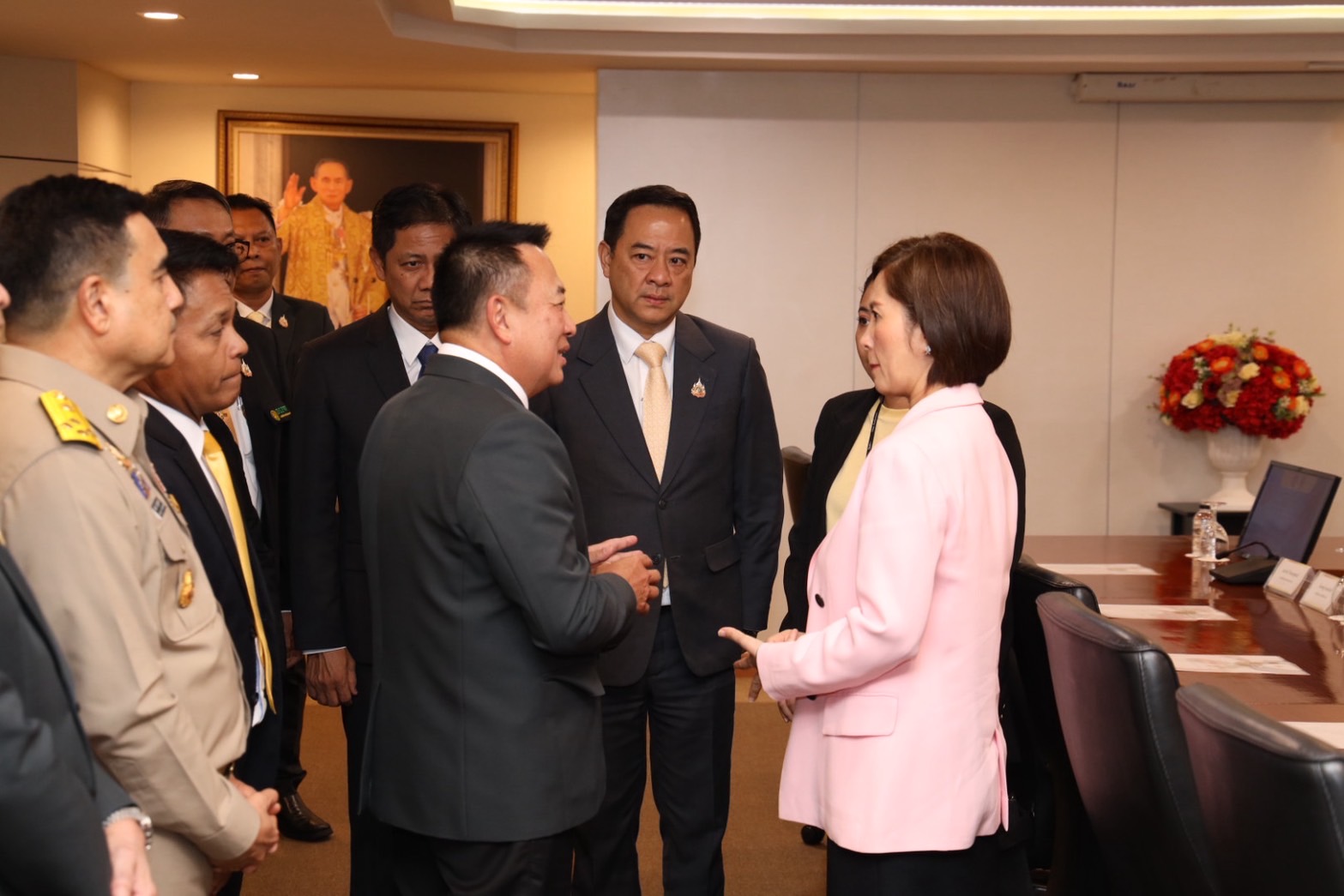
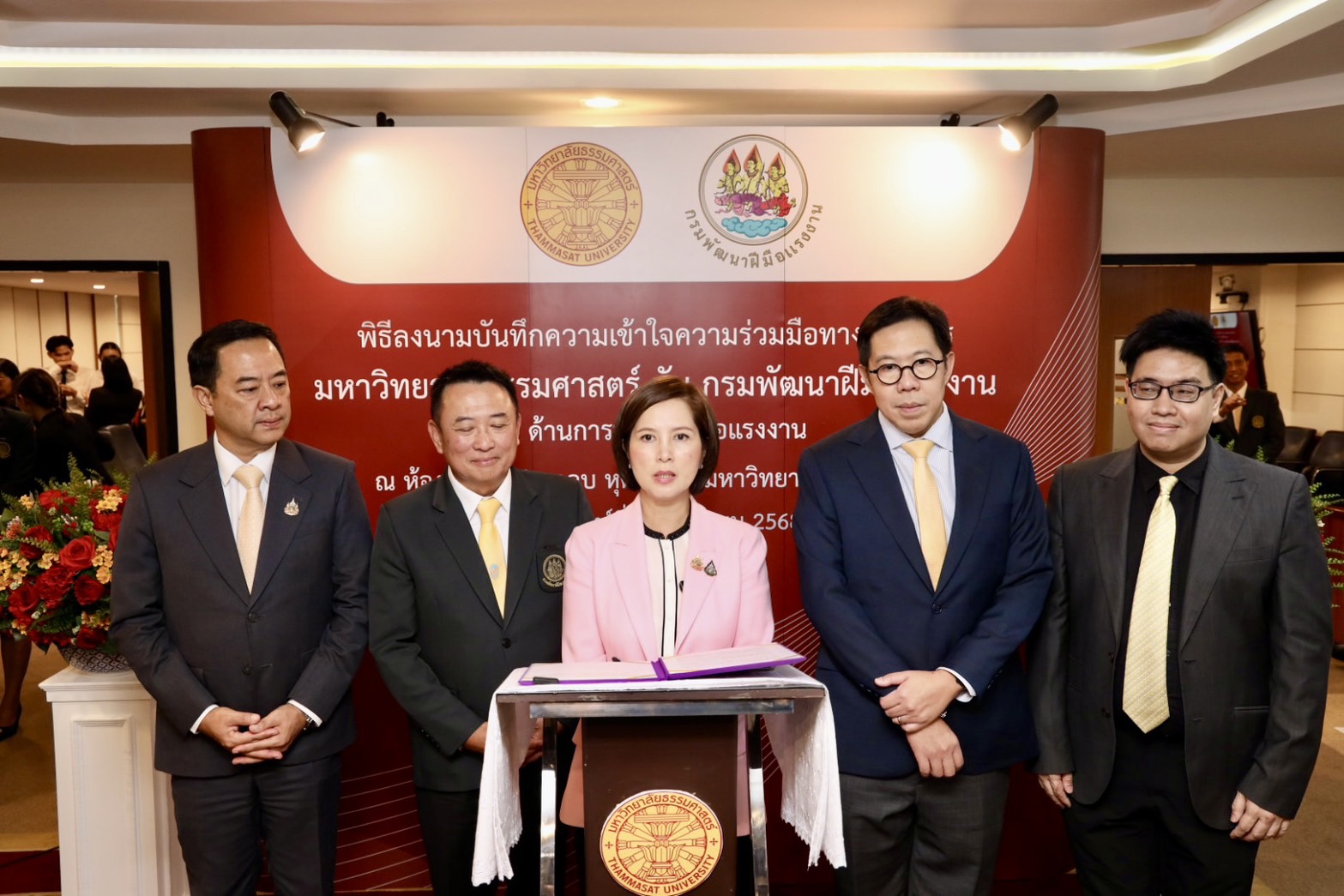
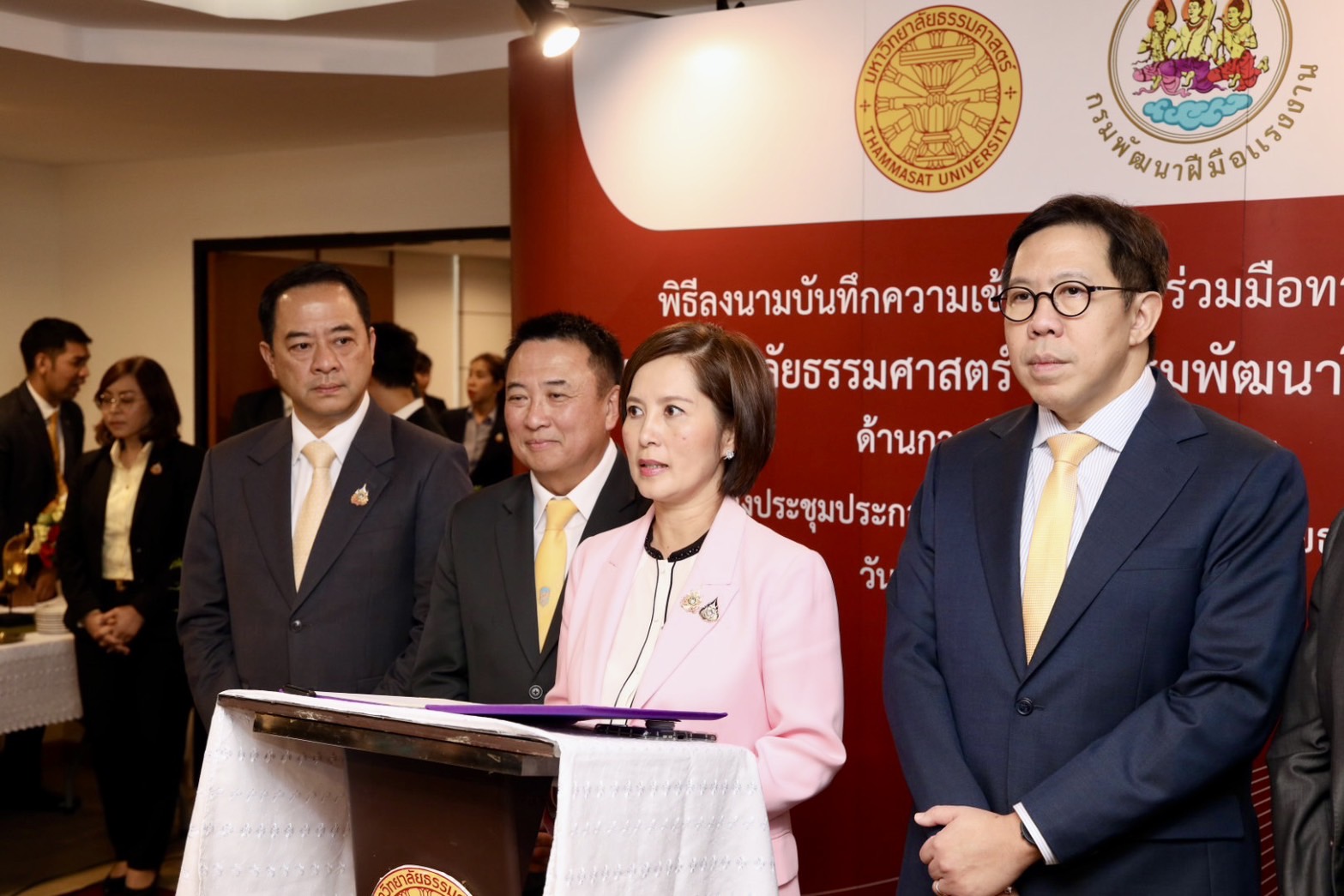
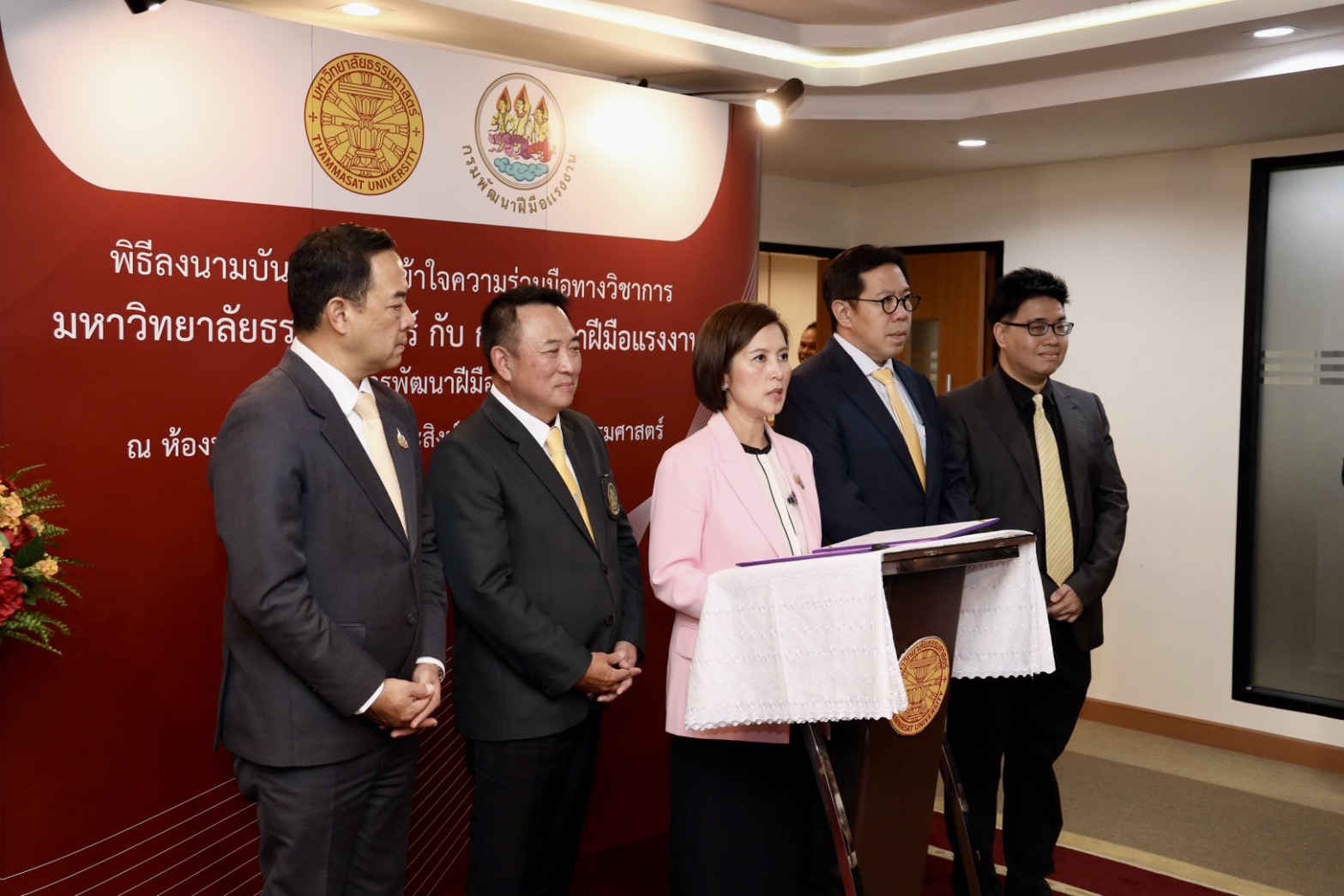
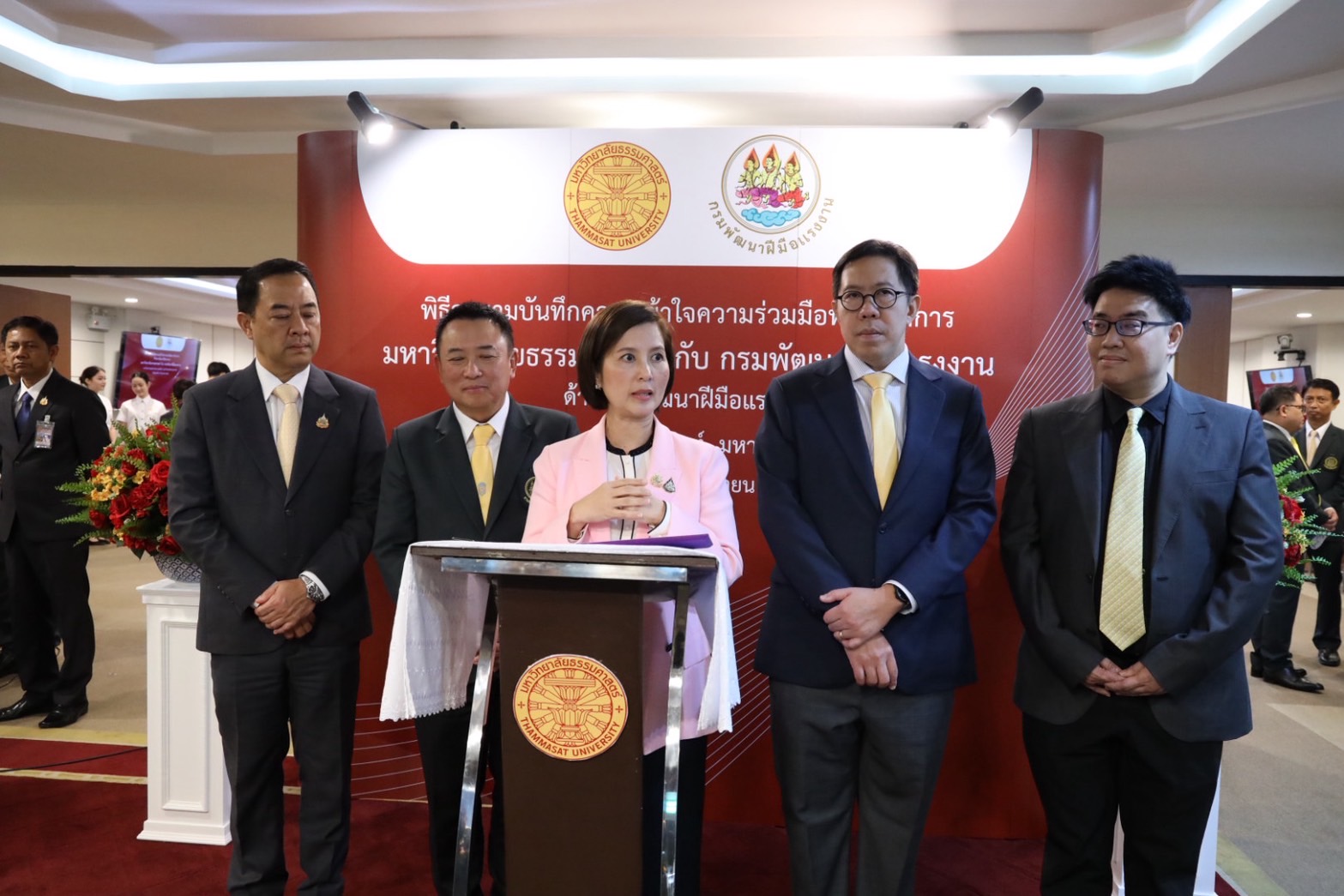
September 29, 2025 – Ms. Trinuch Thienthong, Minister of Labour, presided over the signing ceremony of a Memorandum of Understanding on academic cooperation in skills development between the Department of Skill Development and Thammasat University. The MoU was signed by Mr. Decha Pruksapatnarak, Director-General of the Department of Skill Development, and Professor Dr. Suphasawat Chatchawan, President of Thammasat University, with Mr. Pattharawut Phersalae, Deputy Director-General of the Department of Skill Development, and Associate Professor Dr. M.L. Pinitphan Boripat, Vice President for Research and Innovation at Thammasat University, serving as witnesses. Senior executives from the Ministry of Labour, the Department of Skill Development, and Thammasat University also attended the ceremony, held at Prakob Hutasingh Conference Room, 3rd Floor, Multipurpose Building 1, Thammasat University, Tha Prachan, Bangkok.
Ms. Trinuch Thienthong emphasized that the Government and the Ministry of Labour have a clear policy to strengthen cooperation between the education and labour sectors in producing a workforce aligned with the new economy, ensuring sustainable national development, stability, and an improved quality of life for the Thai people, under the philosophy of a Sufficiency Economy. The focus, she said, is on raising workforce quality by ensuring that workers at all levels can access skills training and lifelong learning, enabling them to gain knowledge, professional skills, employment, income, welfare, and recognition as high-quality human resources that contribute to social and economic development. She further explained that this MoU establishes a joint mechanism between the Department of Skill Development and Thammasat University to design and deliver skills training programmes that meet labour market demands and keep pace with modern technology. A key element is the development of a Credit Bank system, which allows skills acquired through national occupational standards and certified training courses to be transferred into academic credits toward a bachelor’s degree. This will open pathways for individuals outside the formal education system, such as those with work experience, training, testing, or other informal learning, to gain professional qualifications, improve their quality of life, secure employment, and increase their income.
Mr. Decha Pruksapatnarak, Director-General of the Department of Skill Development, added that the Department’s core mission is to develop skills both for new entrants to the labour market and for upskilling existing workers, while supporting the implementation of the national Credit Bank system. This, he said, will increase the number of qualified workers with the competencies needed in key economic sectors, thereby enhancing both national development and the livelihoods of workers. He outlined three main areas of cooperation under this MoU: 1) Developing and providing training courses in foreign languages for workers and the general public, tailored to labour market needs. 2) Establishing national occupational skill standards in English and promoting the creation of accredited testing centres, as well as encouraging student internships under cooperative education programmes that provide tax benefits in line with the Skill Development Promotion Act B.E. 2545, and 3) Promoting training and testing under national occupational skill standards, enabling workers to accumulate credits in the Credit Bank and transfer them to formal educational institutions in accordance with university regulations.
“In the name of the Department of Skill Development, I would like to thank Thammasat University for its cooperation in this initiative. This partnership will be a vital force in upgrading the quality of Thai labour, enhancing national competitiveness, and fostering a secure and sustainable Thai society,” Mr. Decha concluded.
—————————————
Division of Public Relations