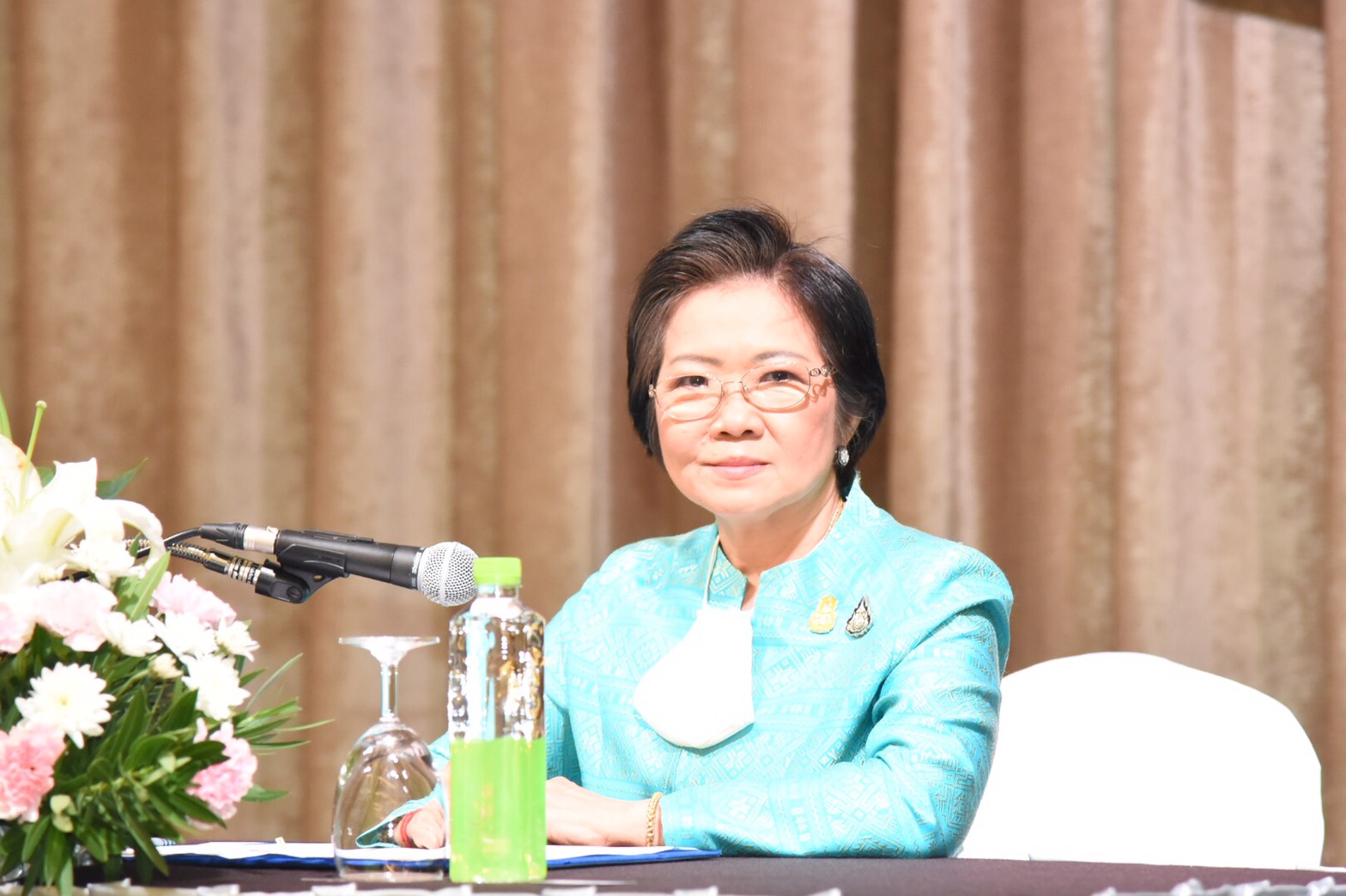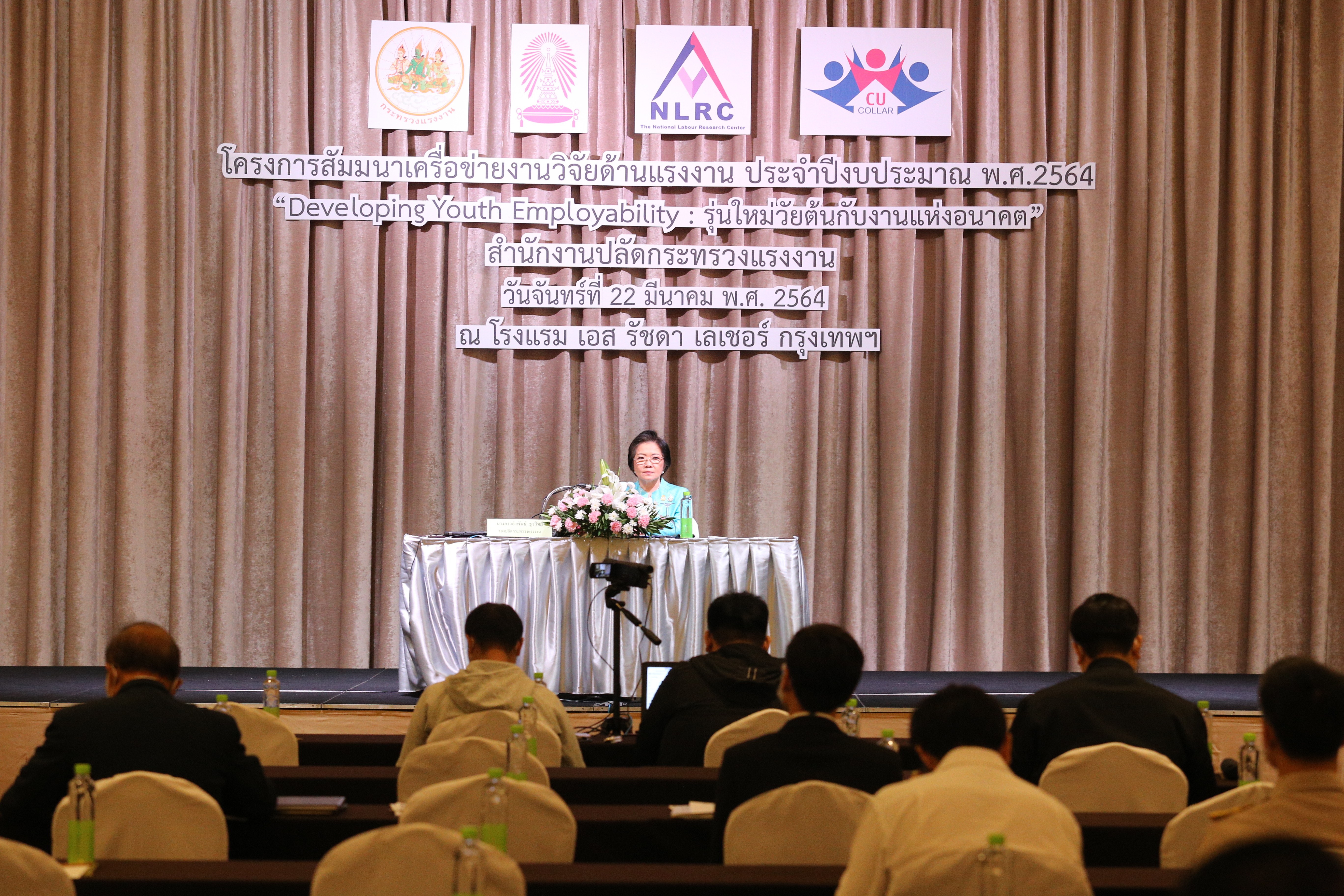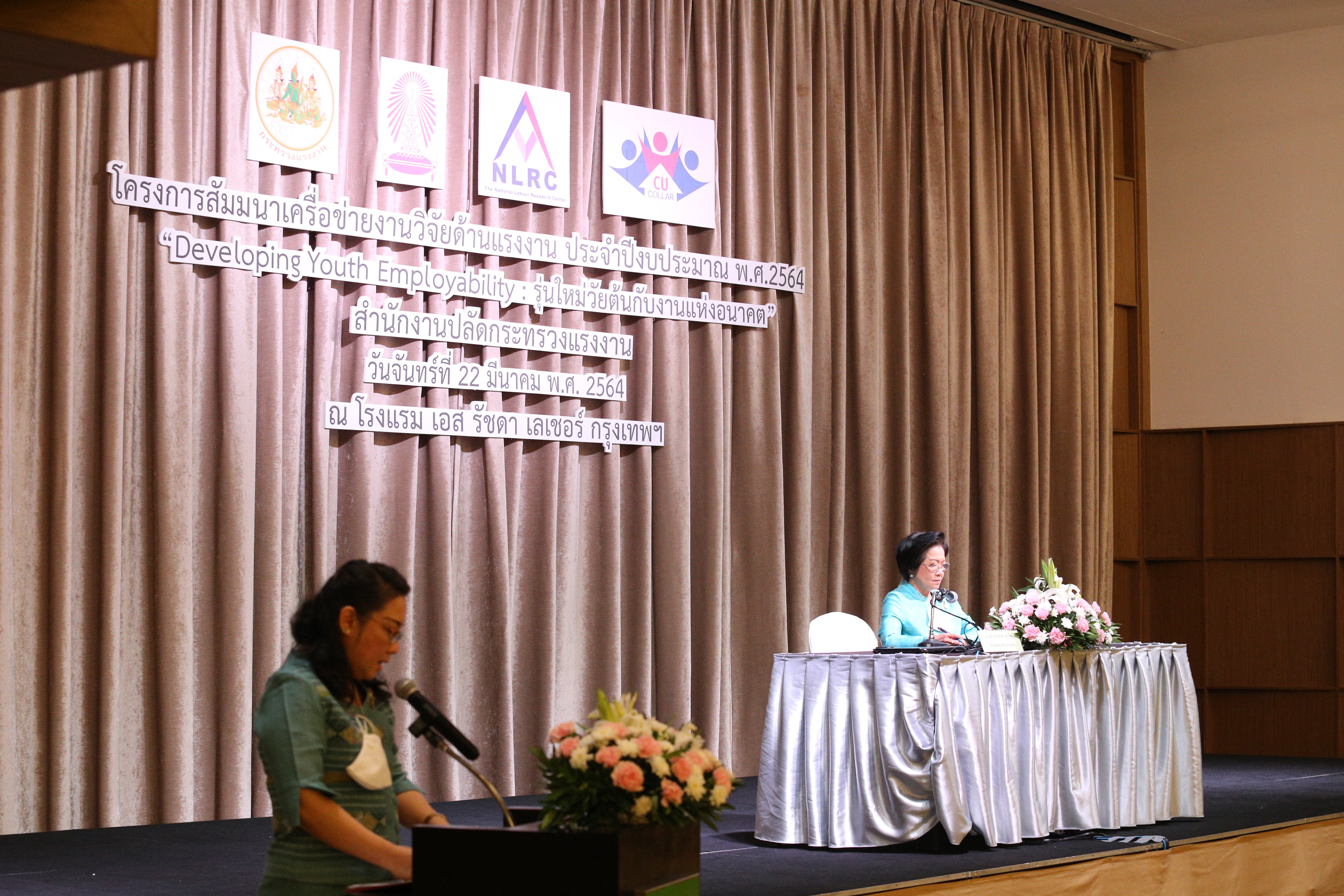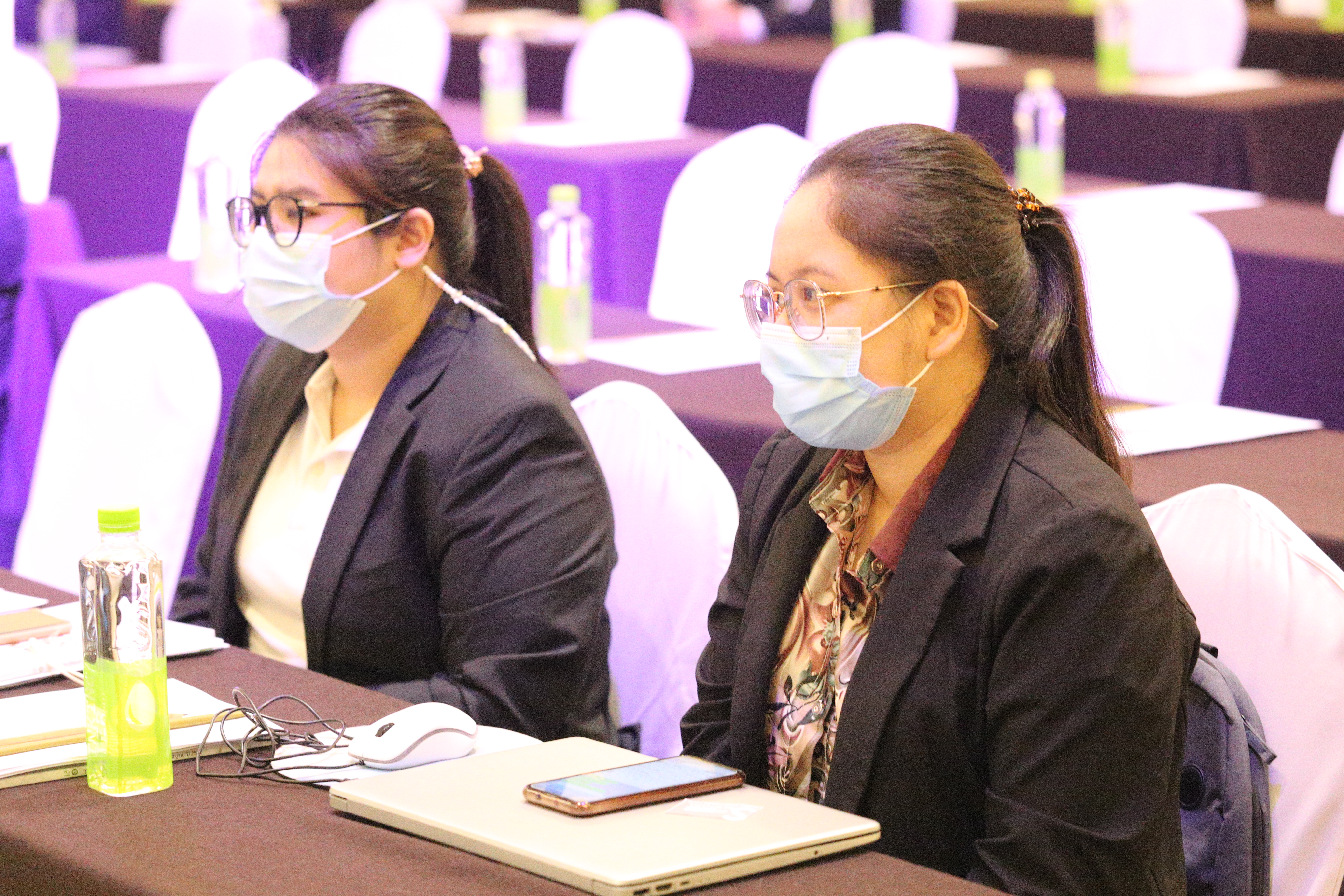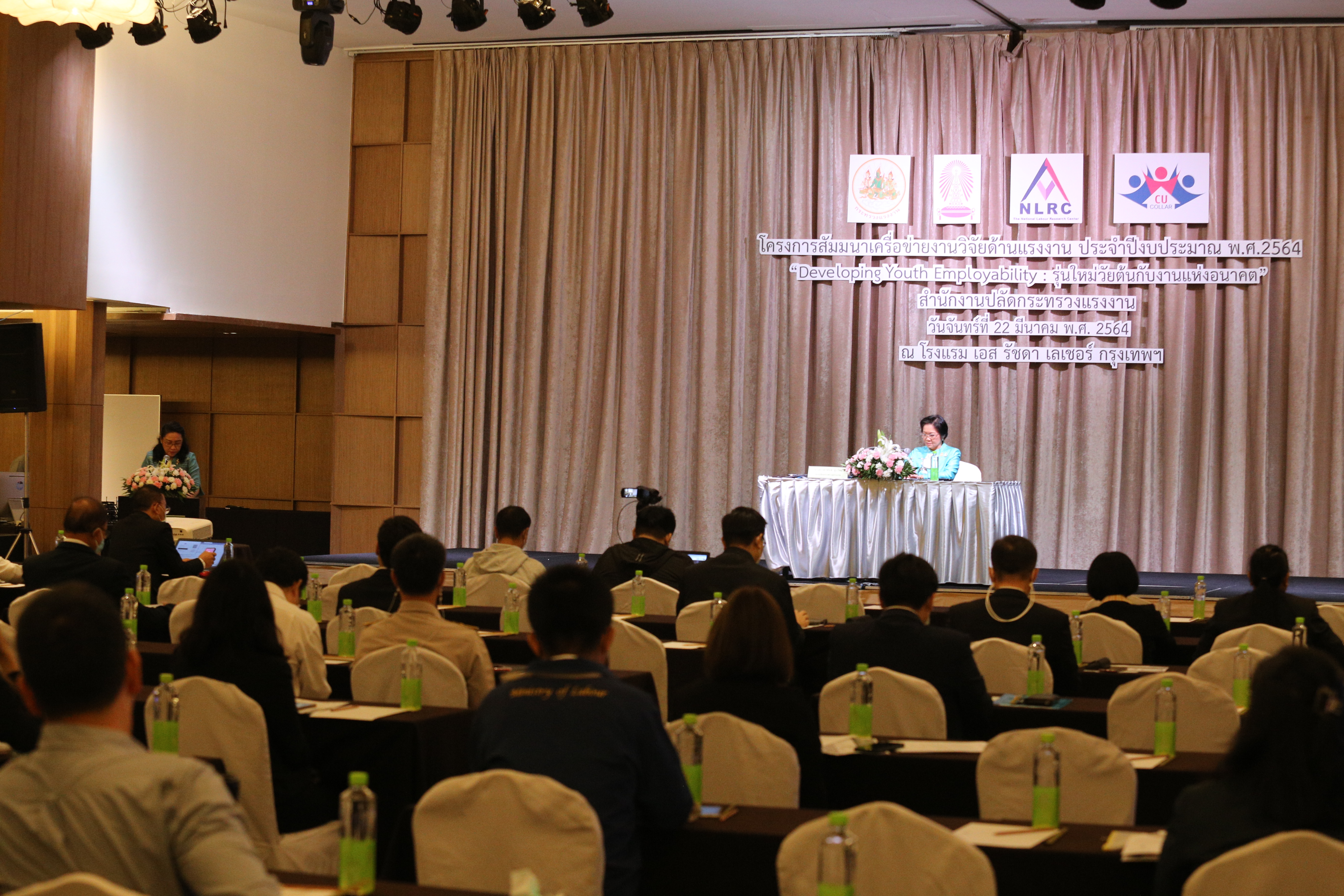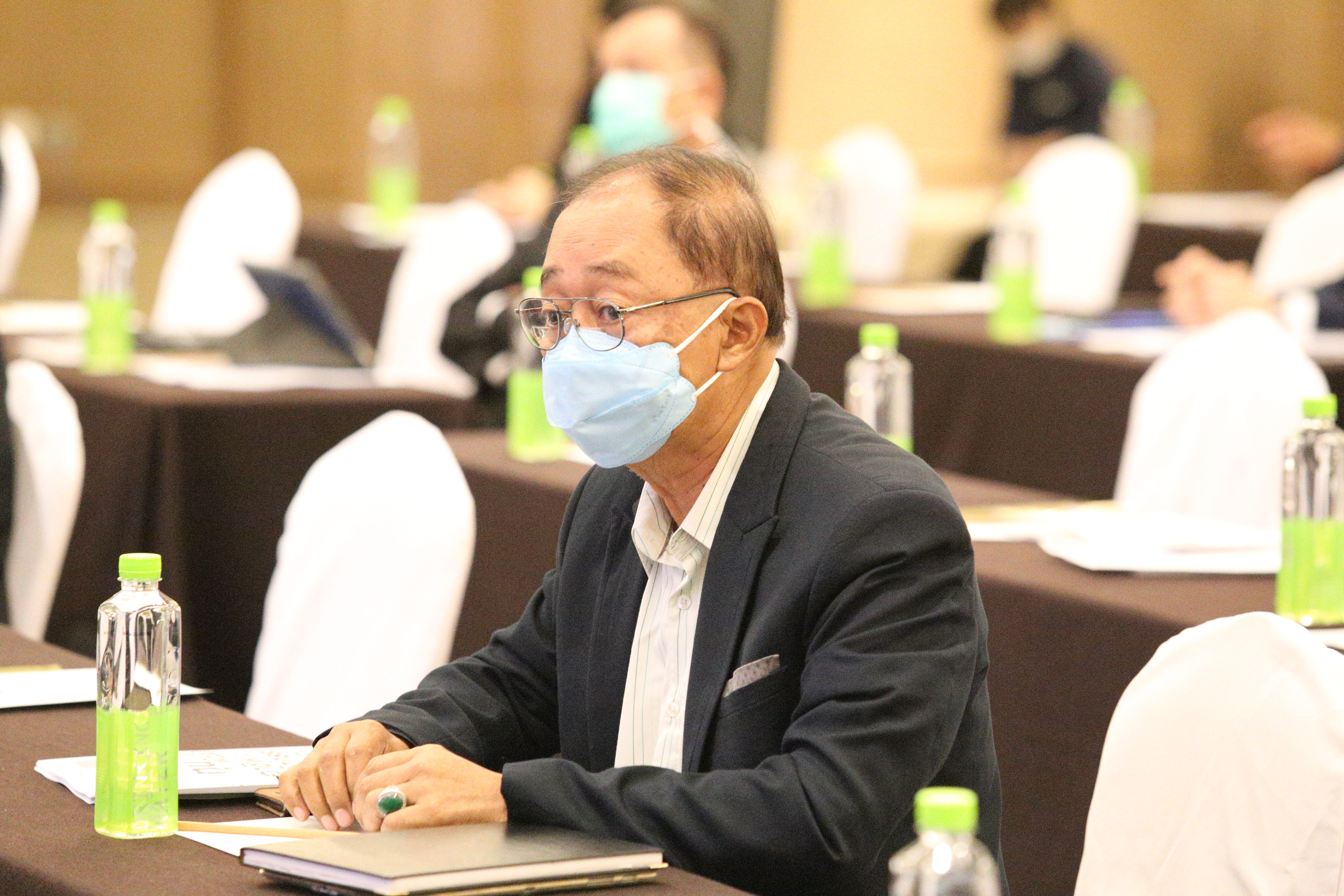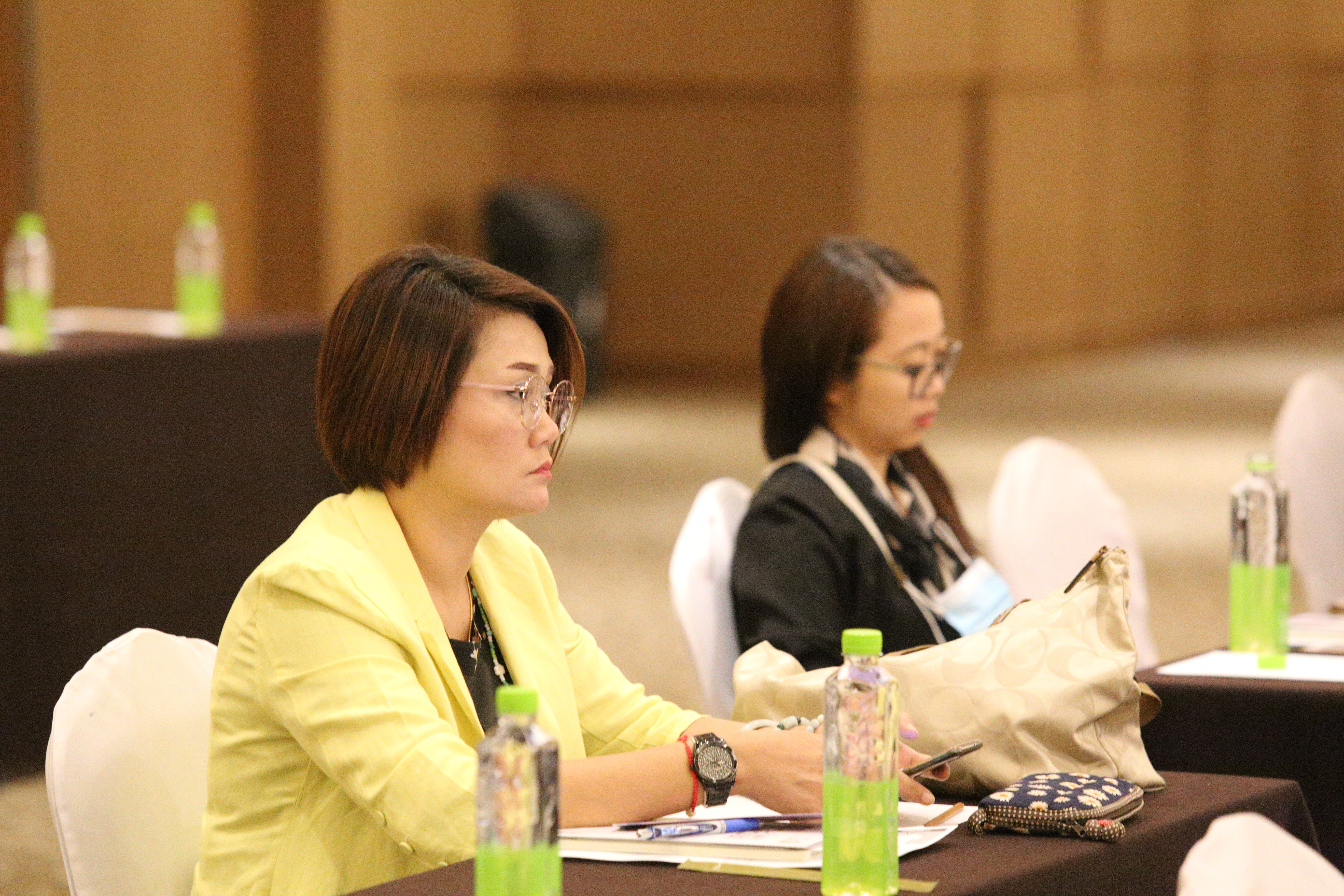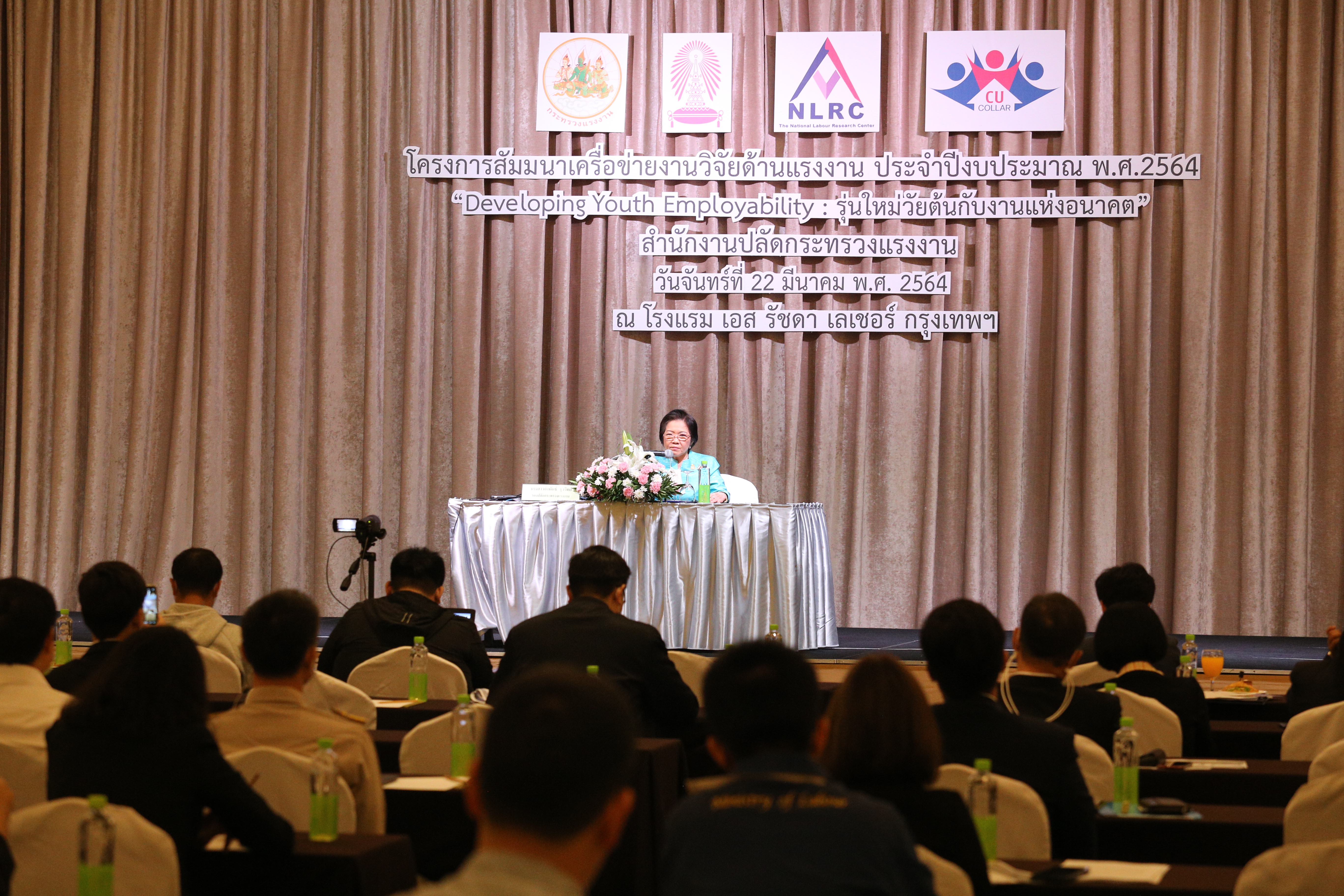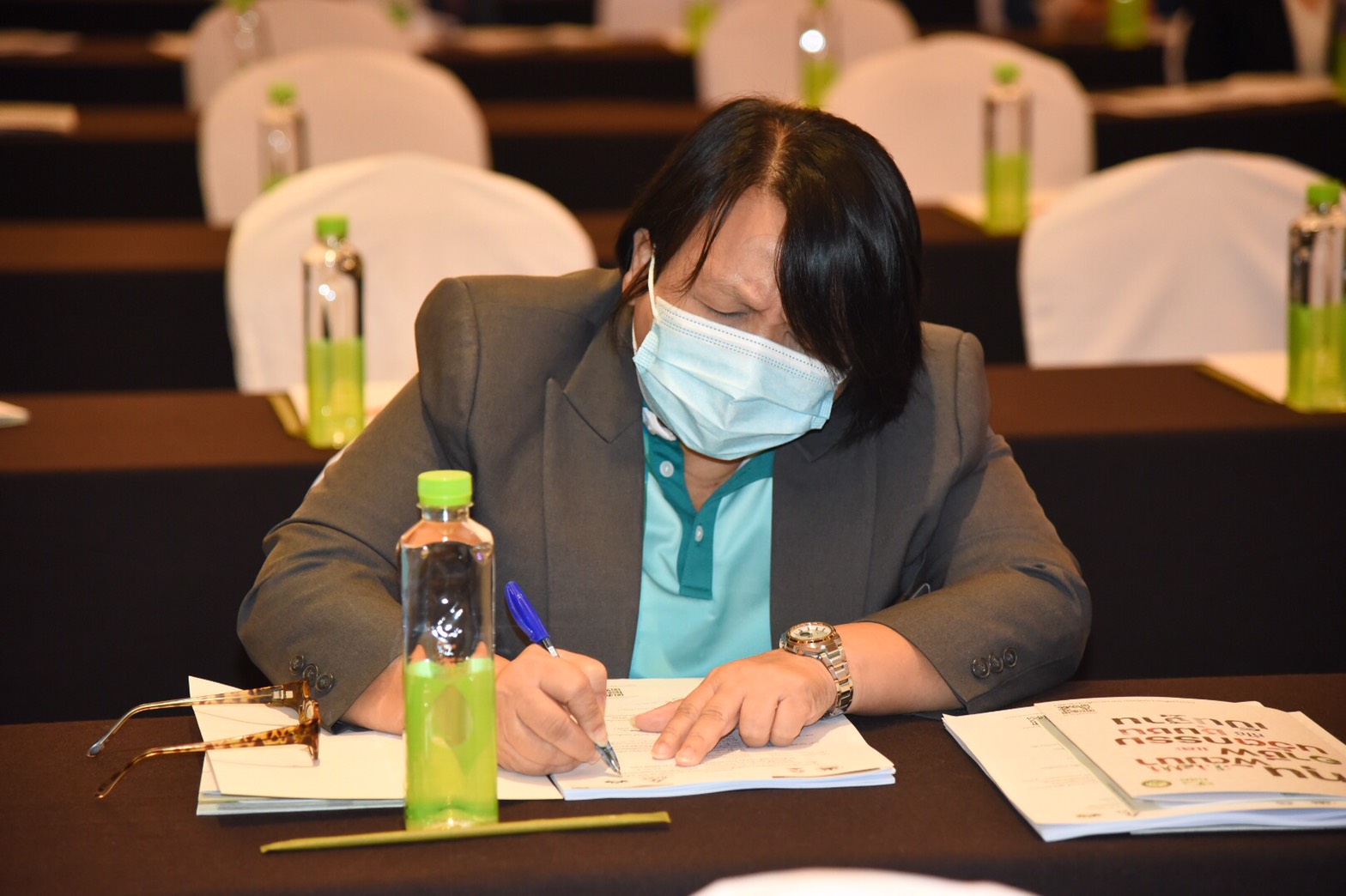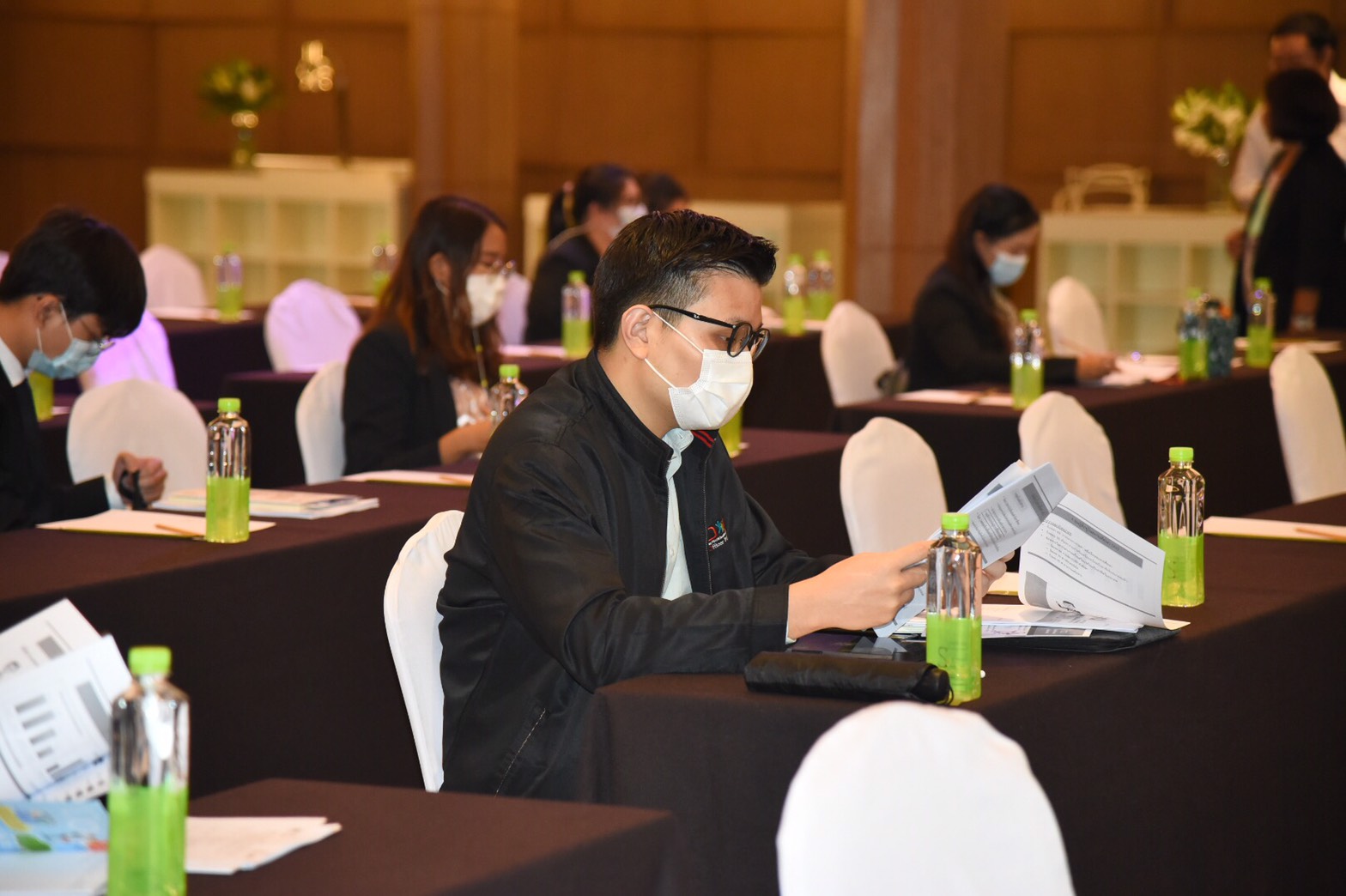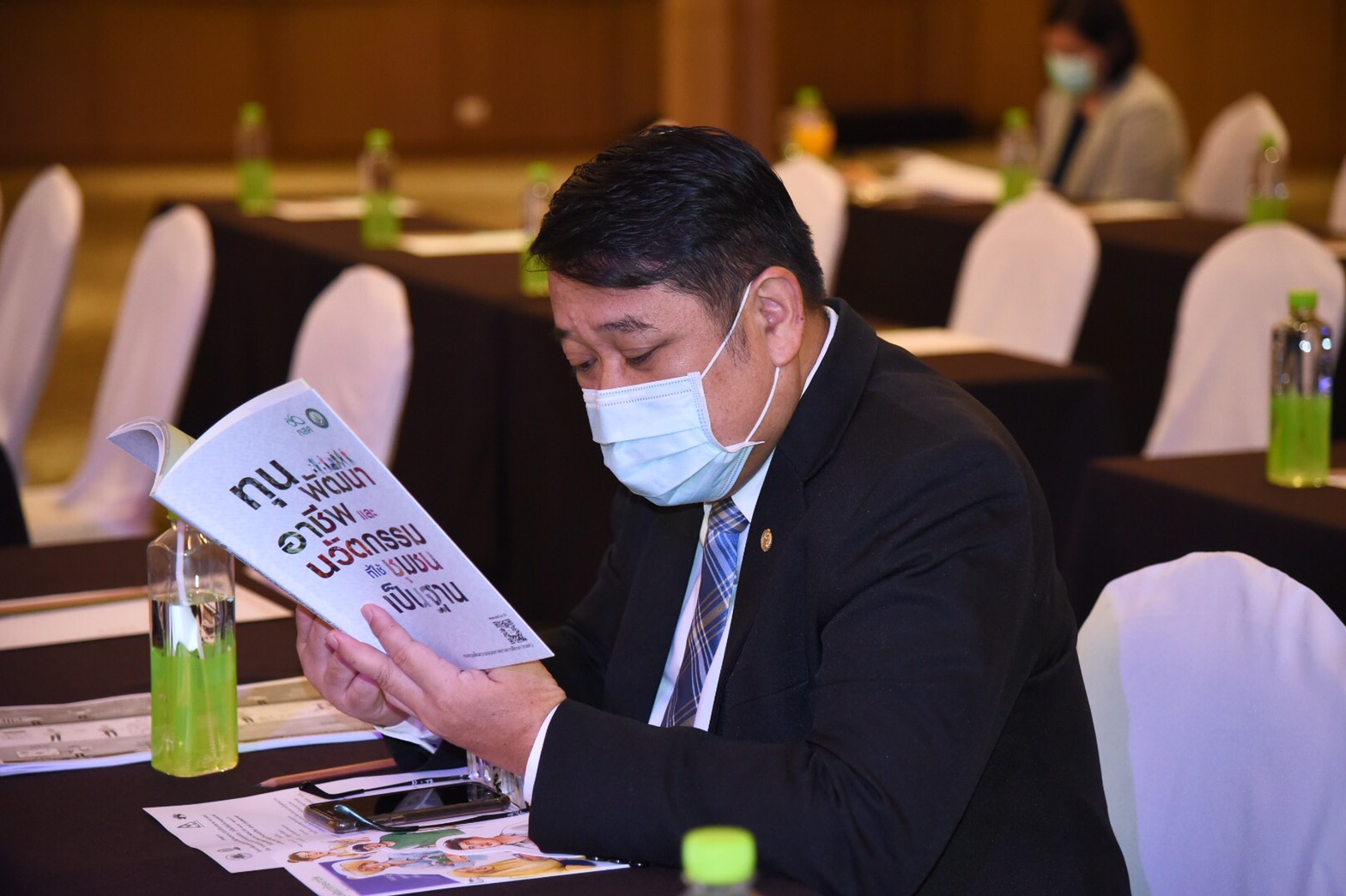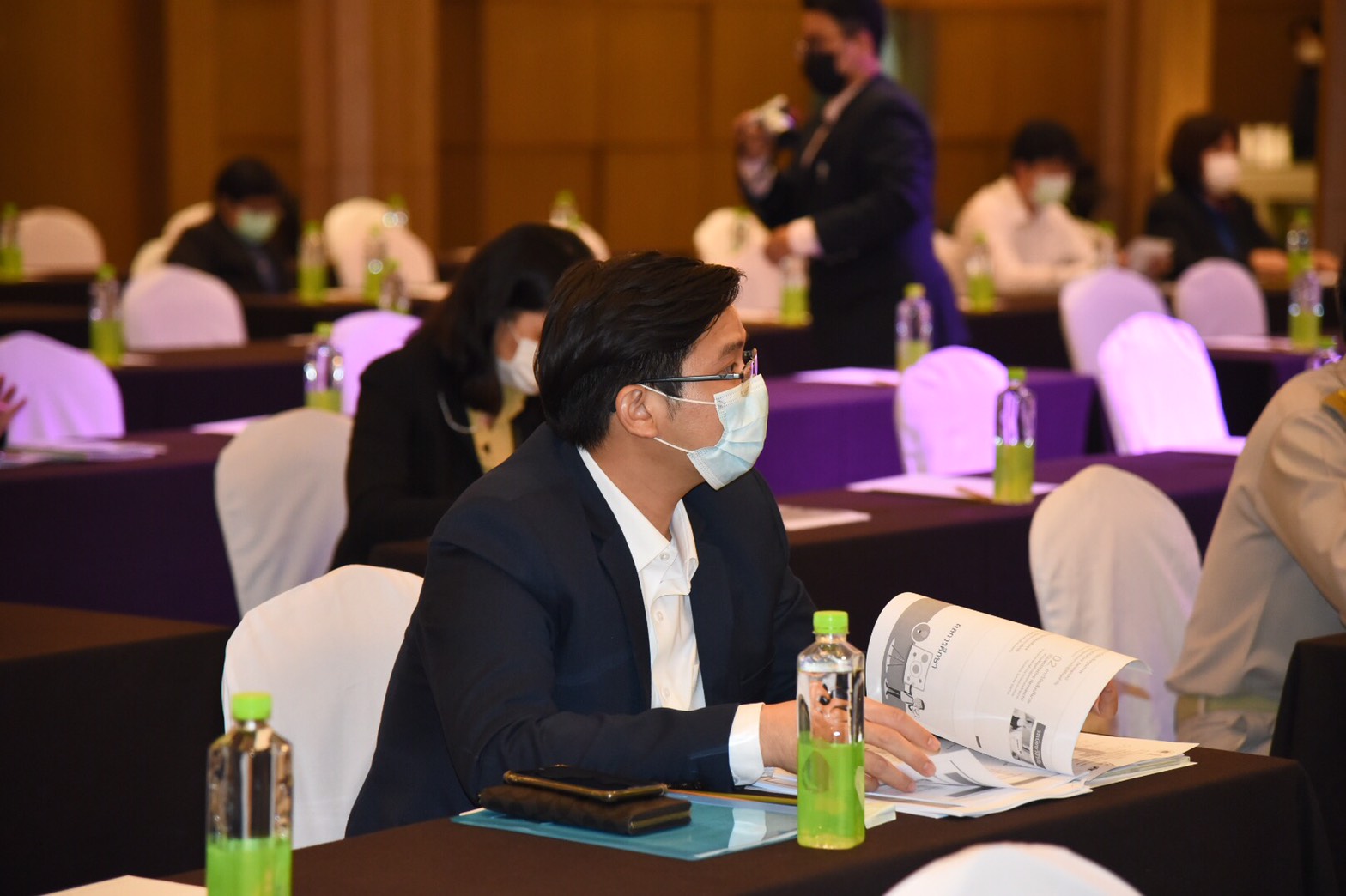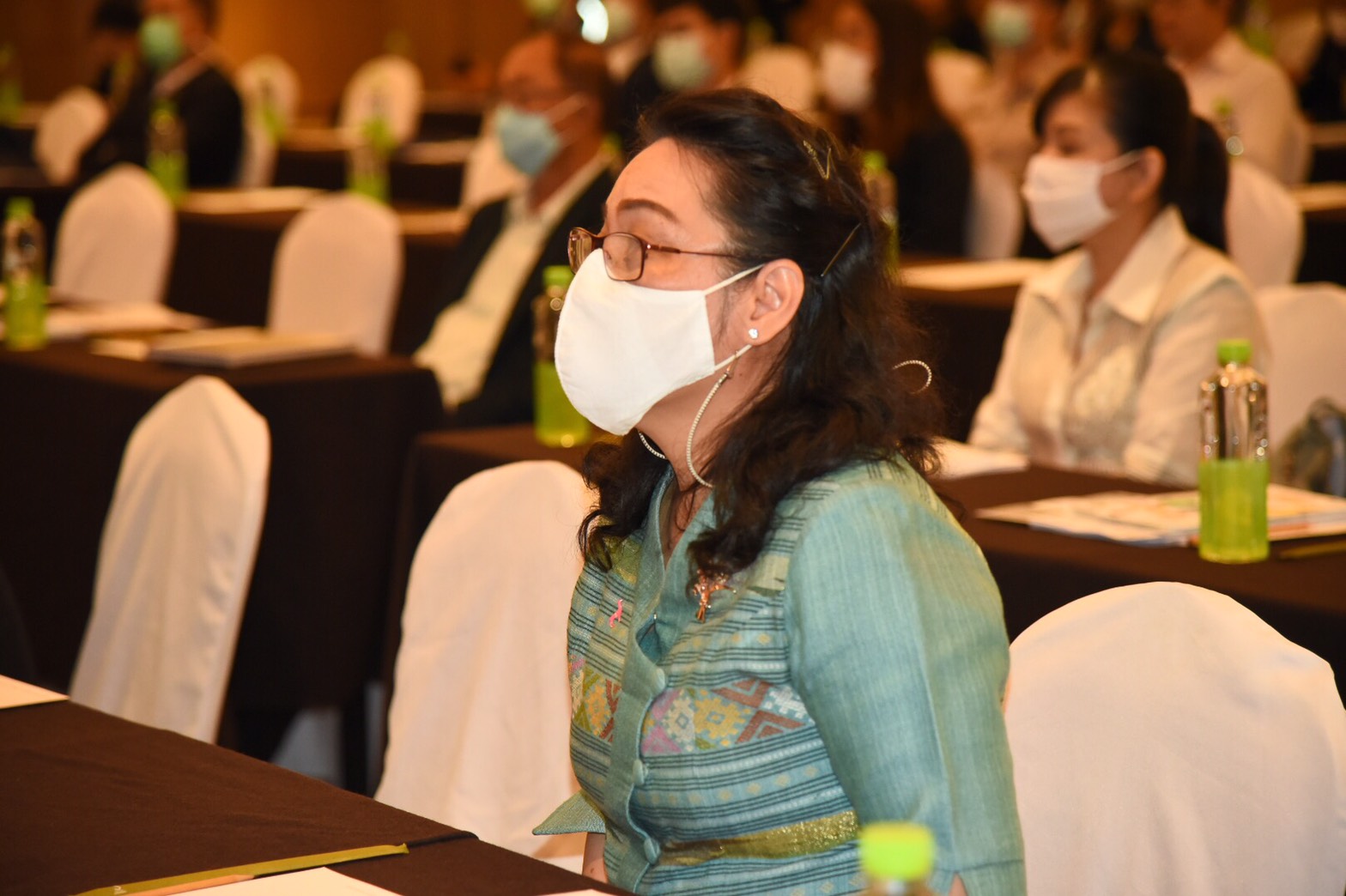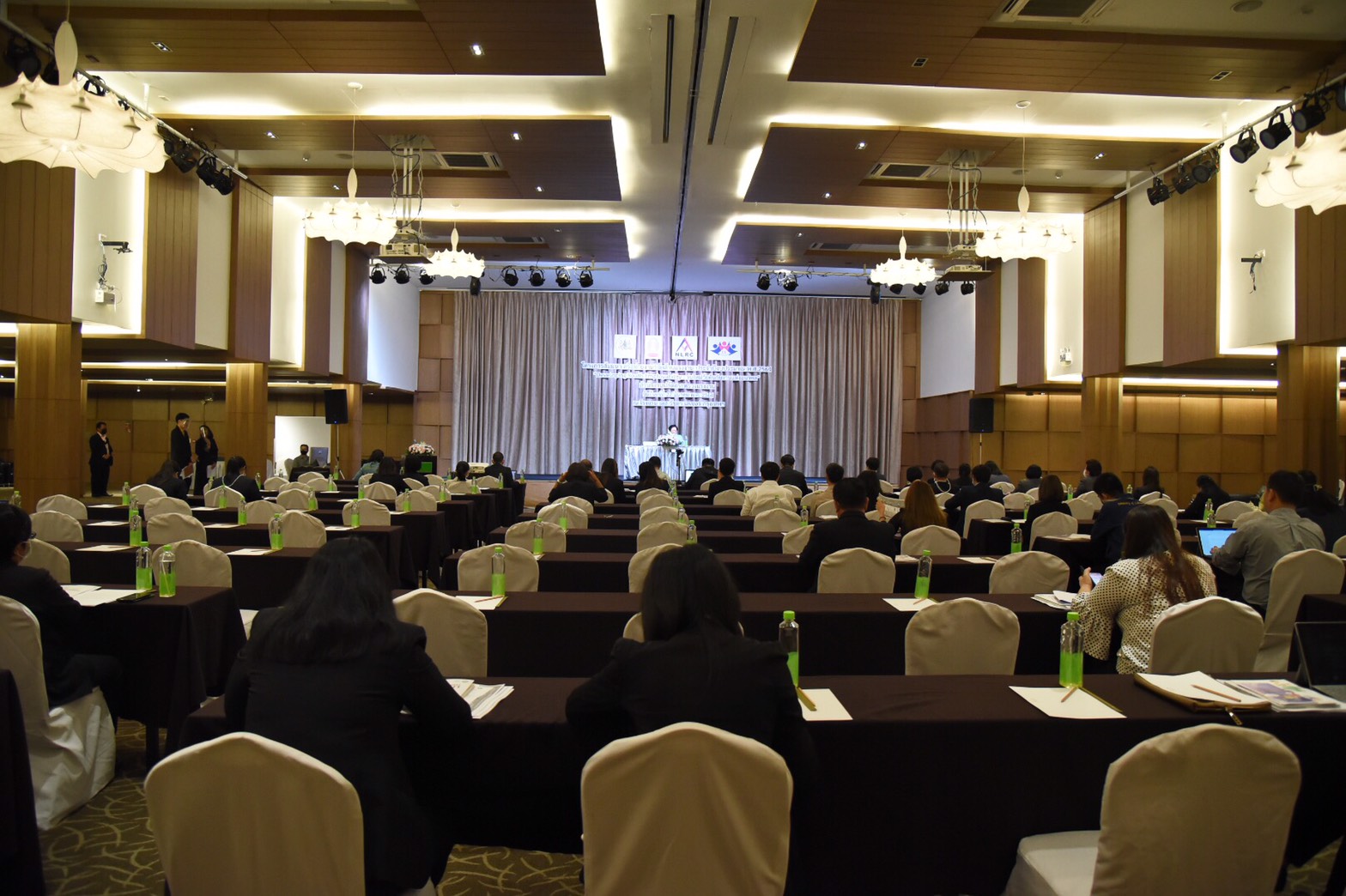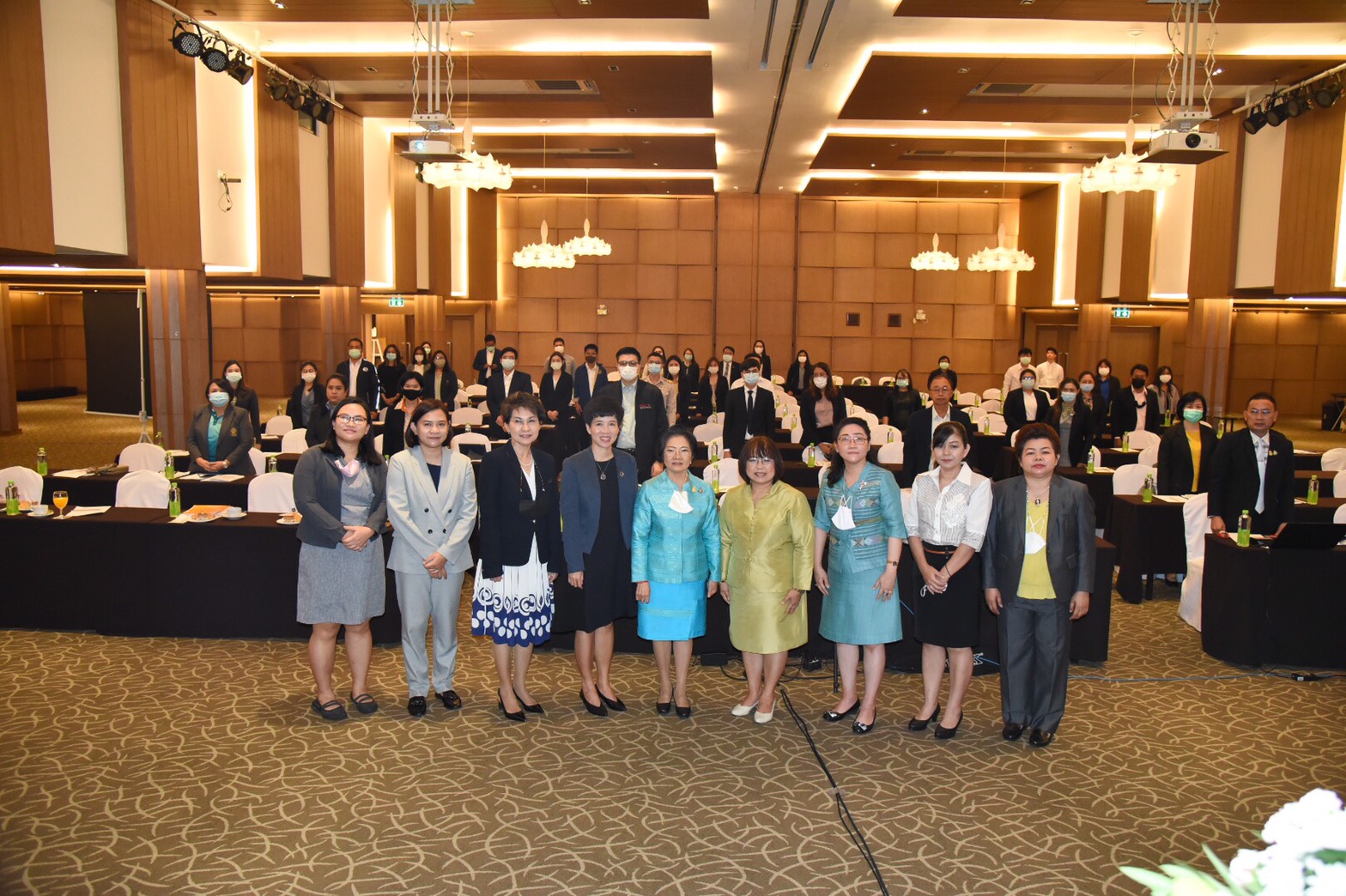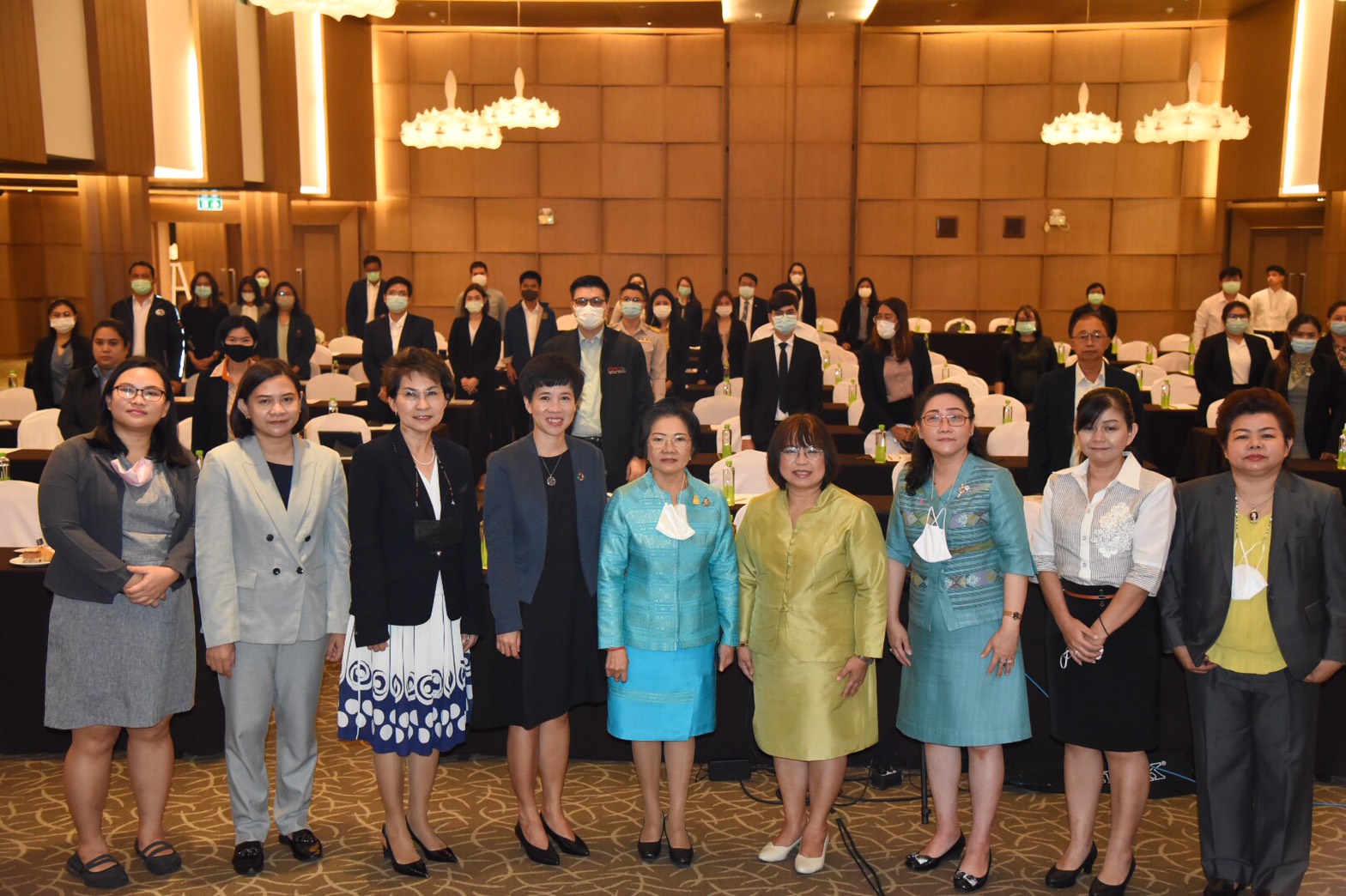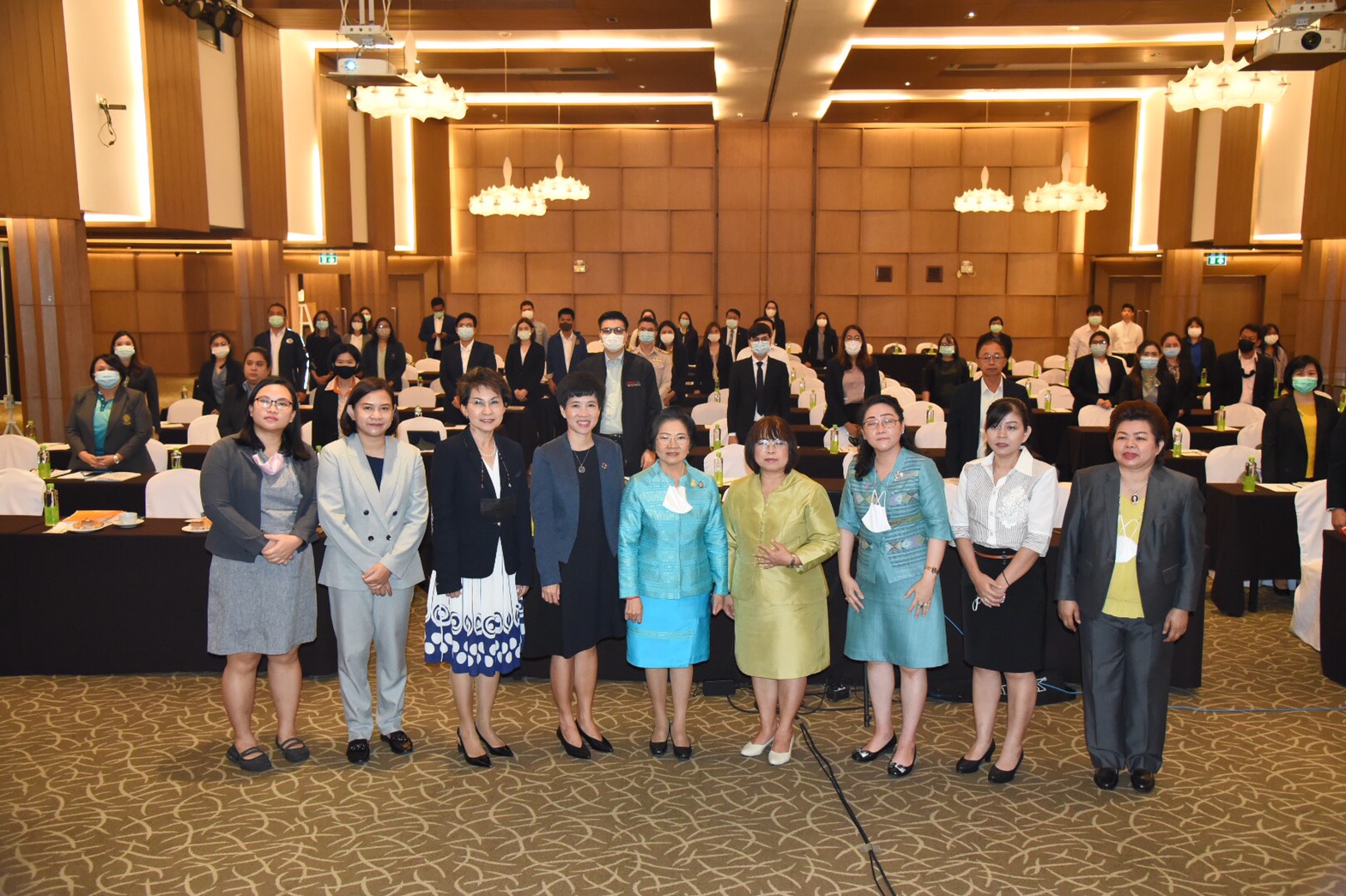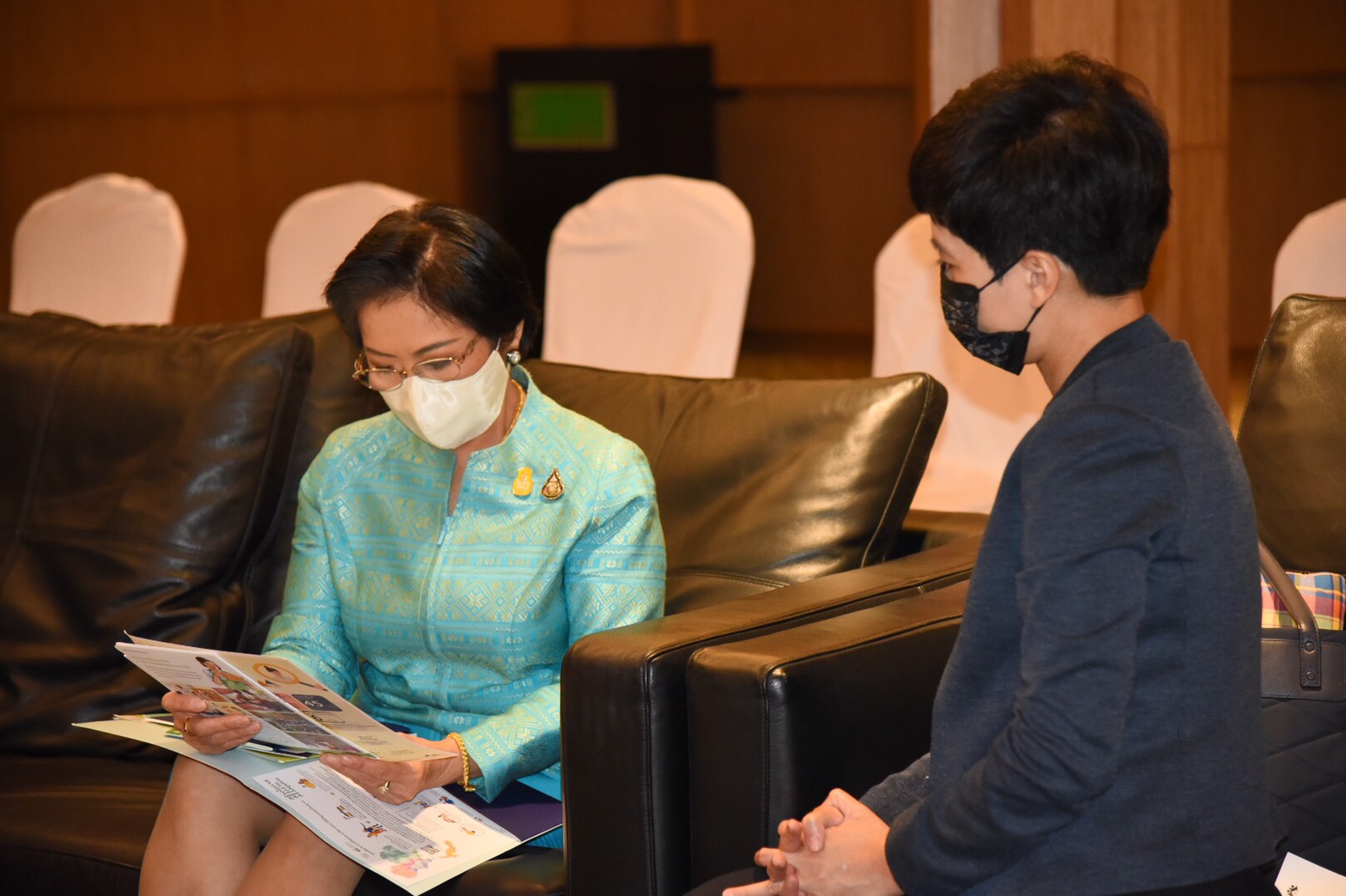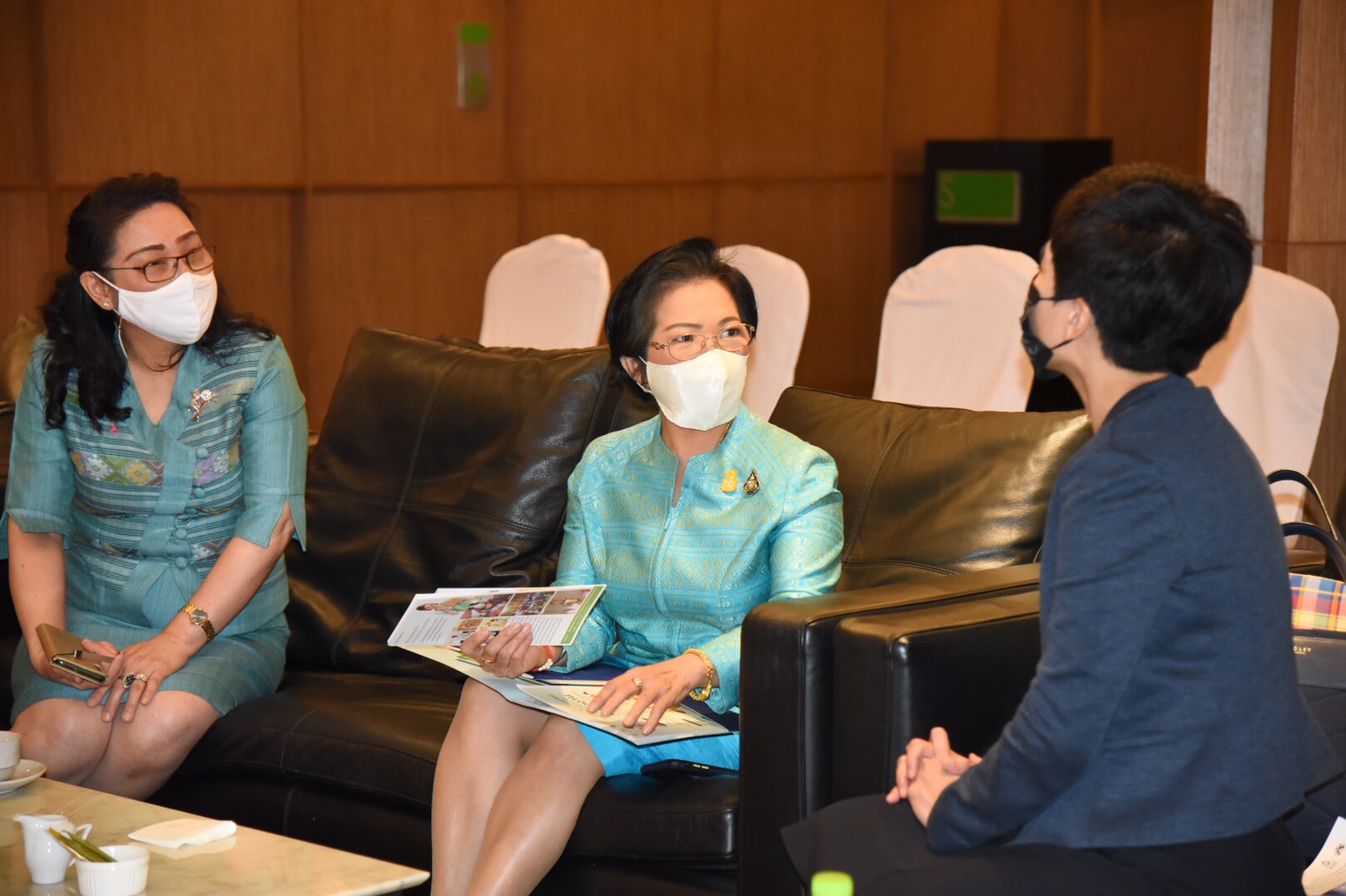

On March 22, 2021, at 09.00 hours, Deputy Permanent Secretary of Labour Ms. Aumpun Thuvavit presided over the Labour Research Network Seminar for 2021 at the Grand Ballroom, S Ratchada Leisure Hotel, Bangkok. She stated that the current world situation had changed rapidly and unexpectedly, such as the ongoing Covid-19 situation. Although it is a health and public health problem, it affected the country in many ways, causing the global economic slowdown, people losing their jobs, and many businesses to shut down. A new way of life was born, known as the New Normal. People started to work at home, purchase and sell more online, communicate through teleconference, and some activities have been reduced or disappeared. There are also issues arising from disruptive technology or where technology has changed dramatically, affecting the lifestyle and rapid economic changes. Newer technologies and innovations replace businesses using traditional technology. Job positions have started to change with the invention of robots and smart machinery. This point also reflects a large issue which is a matter of labour skills and education, which is inconsistent with the demands of the booming technology and rapidly changing labour market, fluctuating with unprecedented global situation and crisis. In addition to the changing labour market, the working trend of the new generation has also changed. Research by Manpower Group, a leading organization in recruitment and workforce consultancy, found that the new generation of workers requires more flexibility at work. Therefore, the Future of Work is a challenge for the Ministry of Labour and the supply side network partners in institutions producing labour. Both the public and private sectors must adjust key strategies for enhancing and developing human resource potential. Addressing these issues requires the nation’s knowledge and ability to adapt promptly. Countries with the availability of resources and knowledge and that support research and innovation produce effective policies. For example, we can see the adoption of a Flattening the Curve model or trying to reduce the number of infected people into the management of the Covid-19 situation. The better we manage Covid-19, the faster the economy will recover, and the people can return to a more normal life. Therefore, problem-solving requires knowledge and support for research and innovation. The Ministry of Labour has continued to focus on this area, adapting technology to develop labour research databases, which is a very gratifying outcome. This seminar was organized to serve as a means for further development of labour research.
The Deputy Permanent Secretary of Labour added that it is hoped that today’s Labour Research Network Seminar would benefit all attendees in one way or another, especially the new generation of workers in adapting and developing skills to meet the needs of the labour market that changes with the world situation. The education sector must aim to create workers in line with the needs of the labour market. Entrepreneurs must support the workforce in skills development. The government must continue to support all sectors to lead to the development of Thai workers, the Thai economy, and Thailand to sustainably prepare for all challenges.
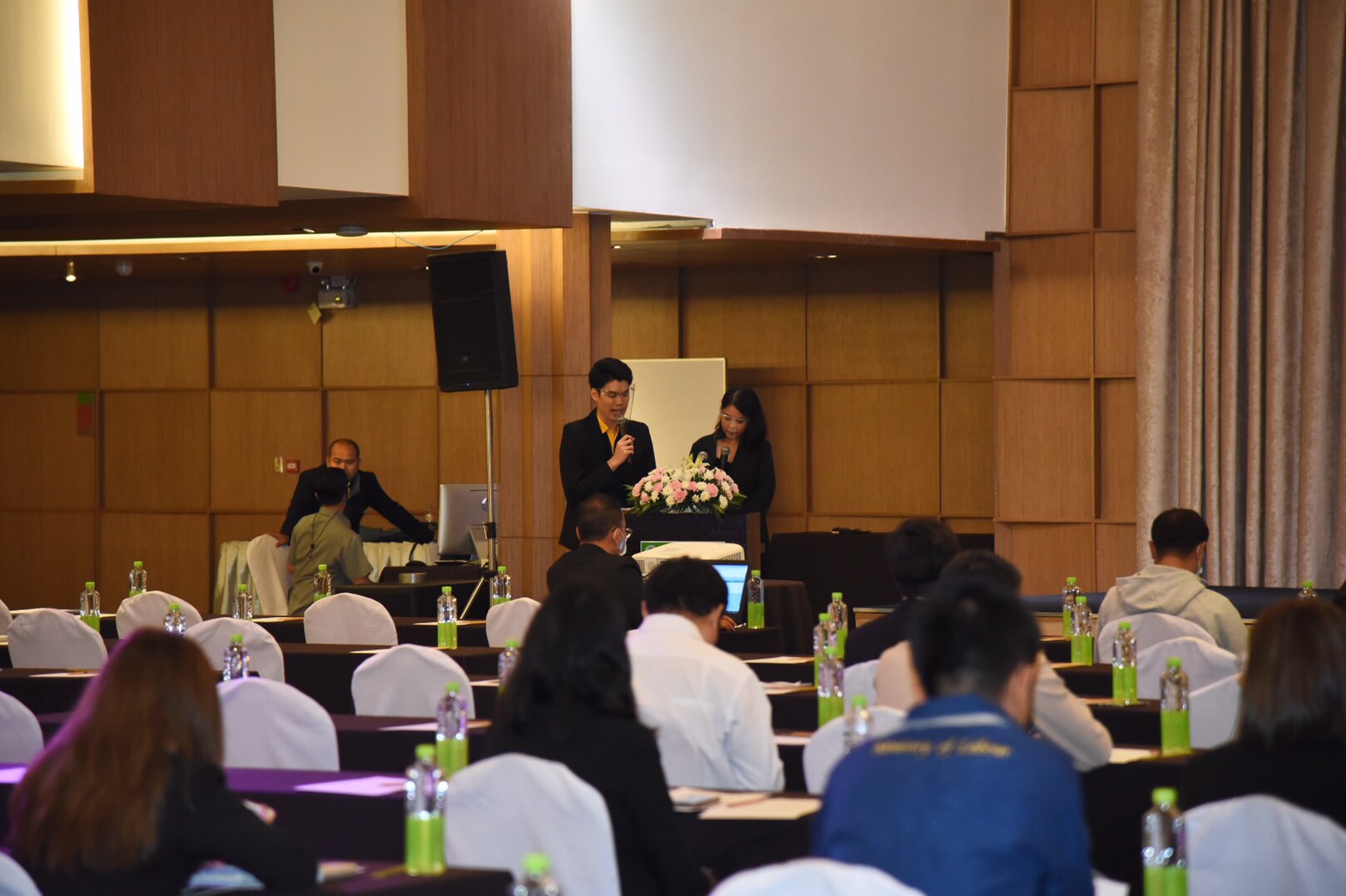
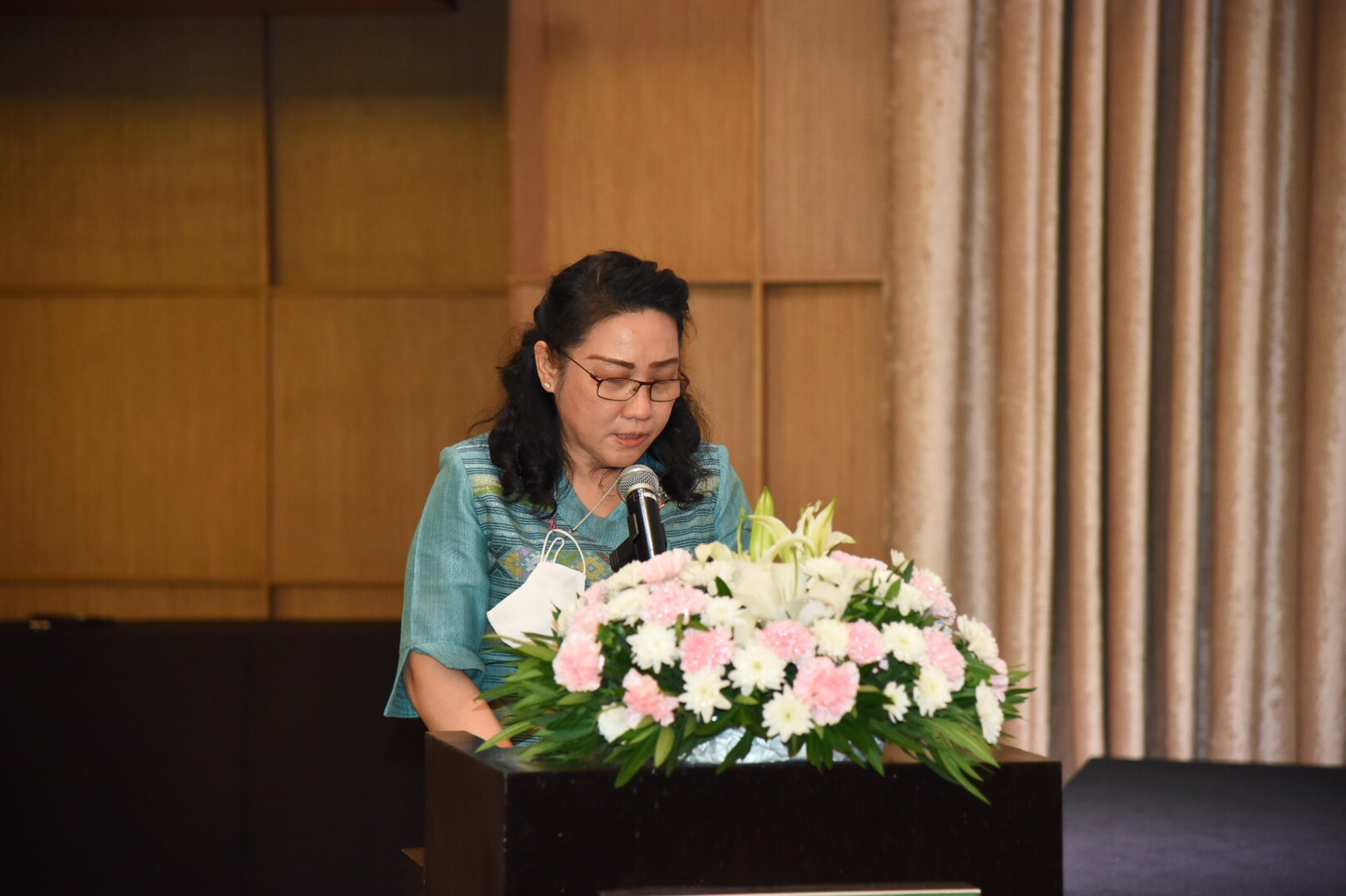
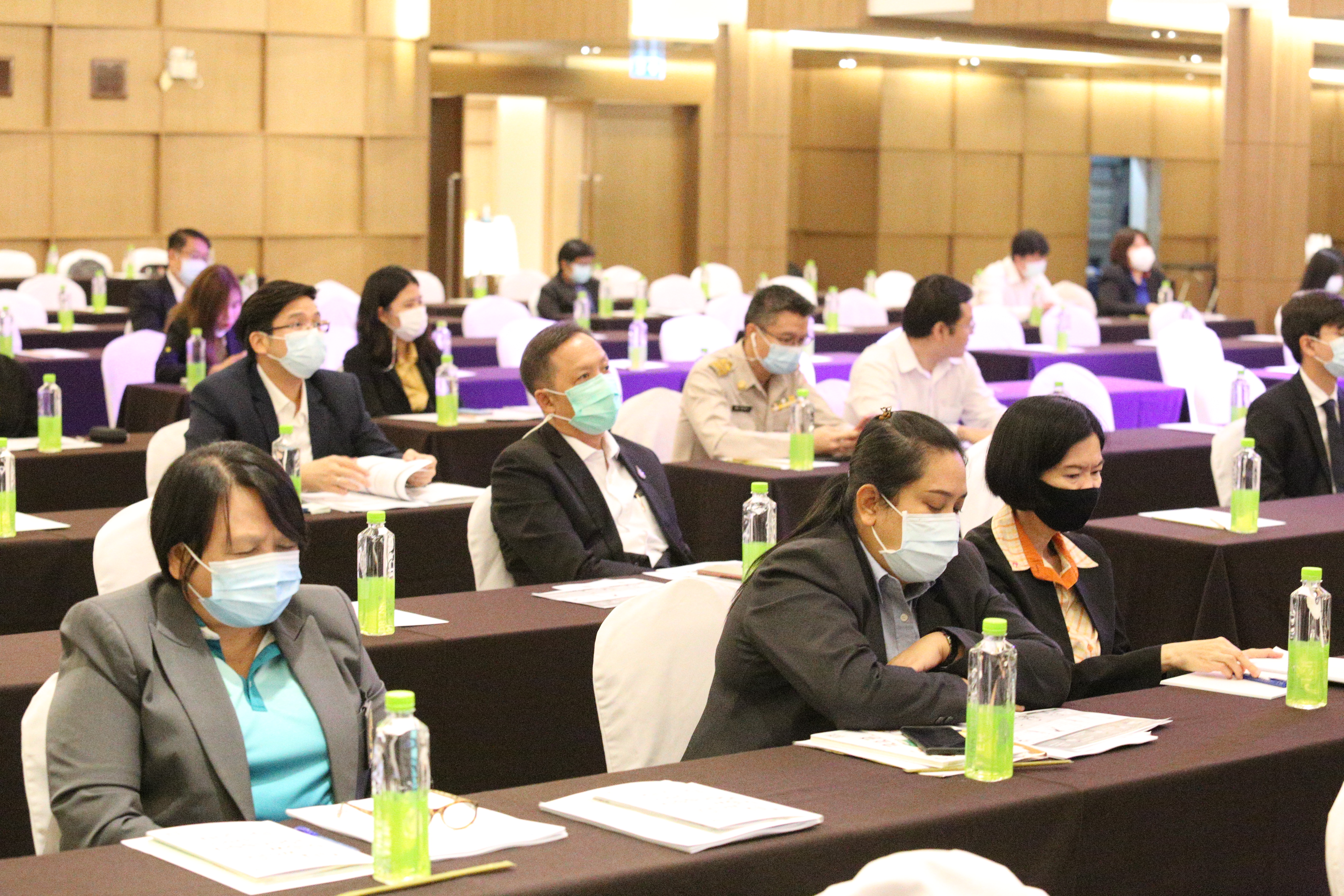
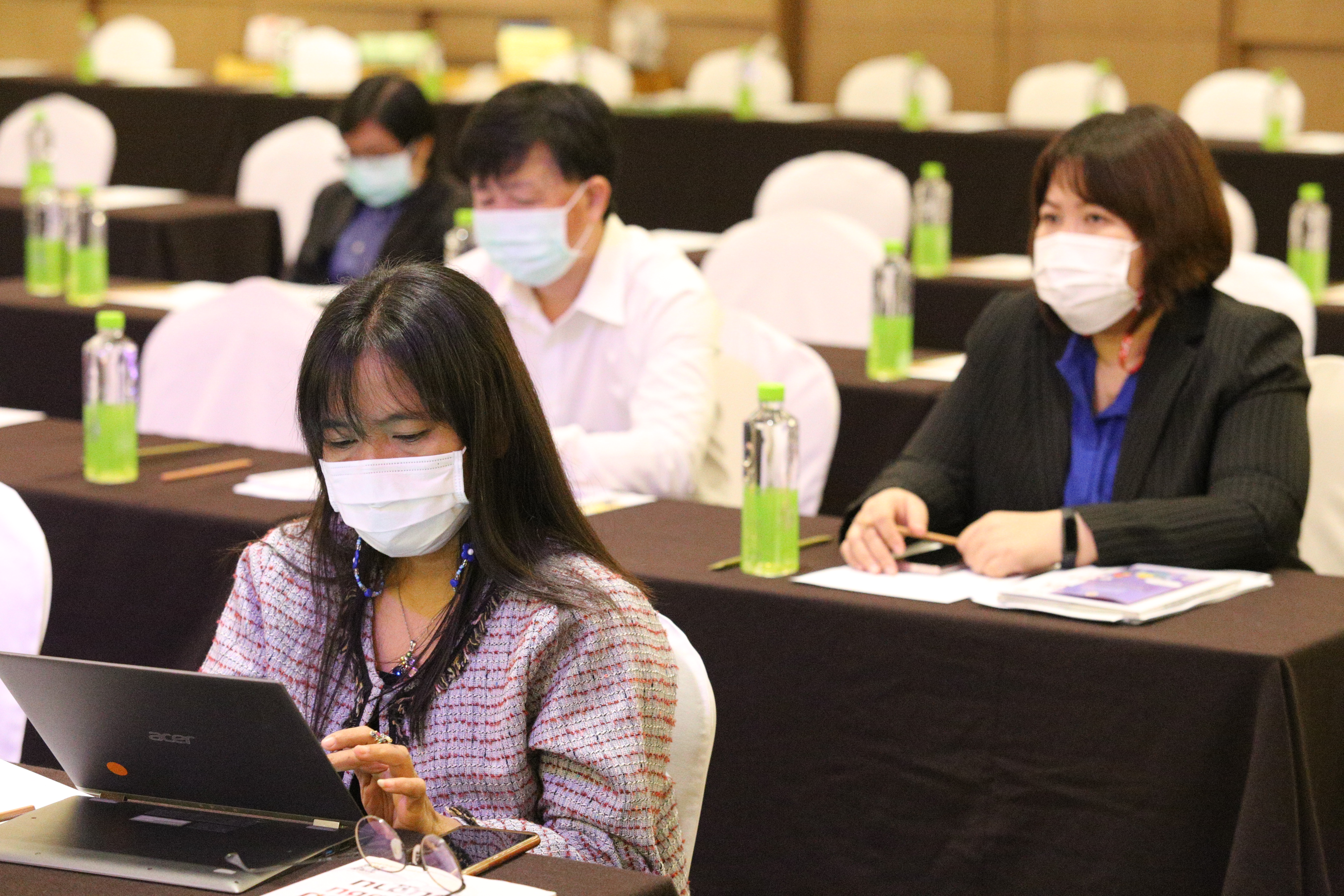
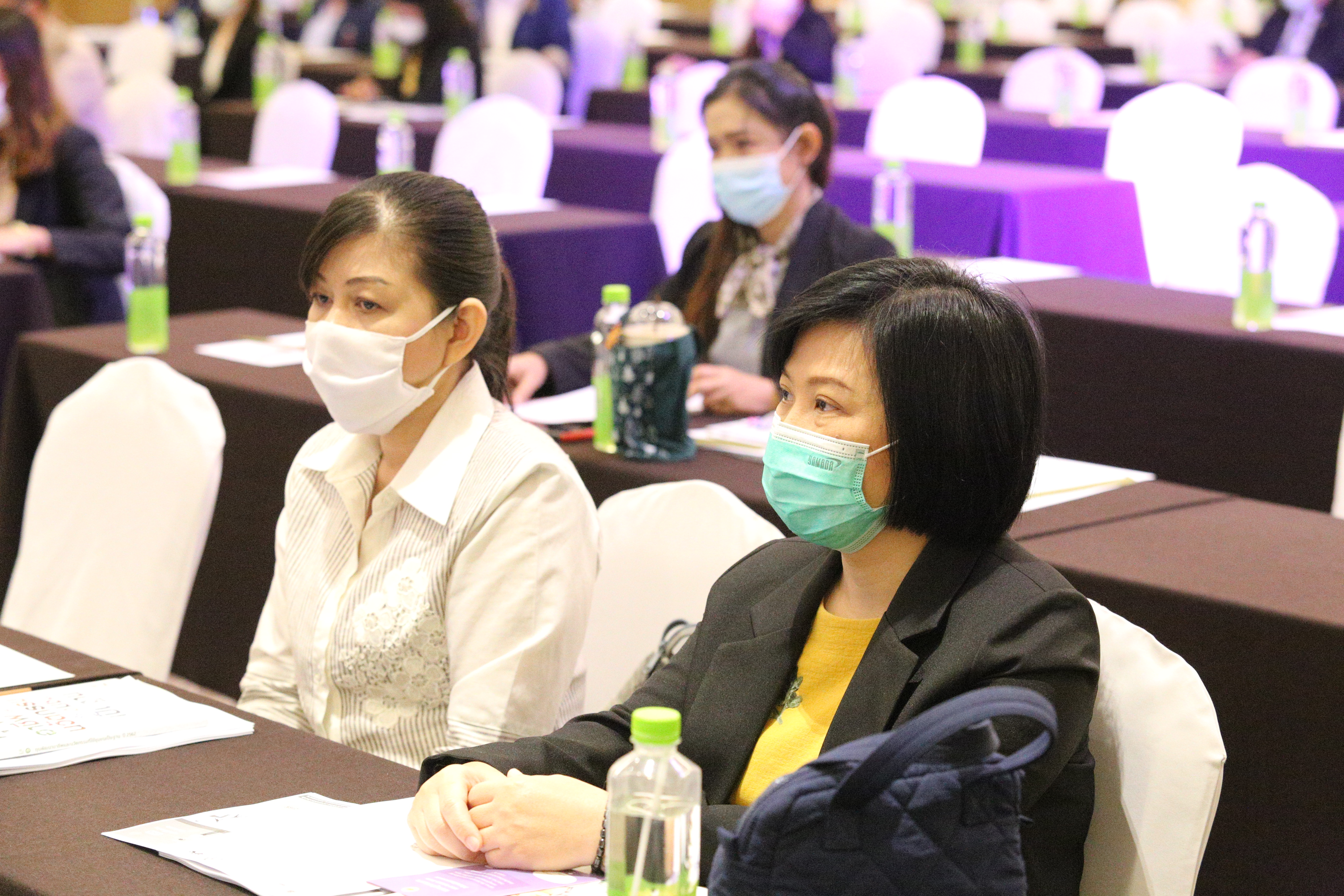
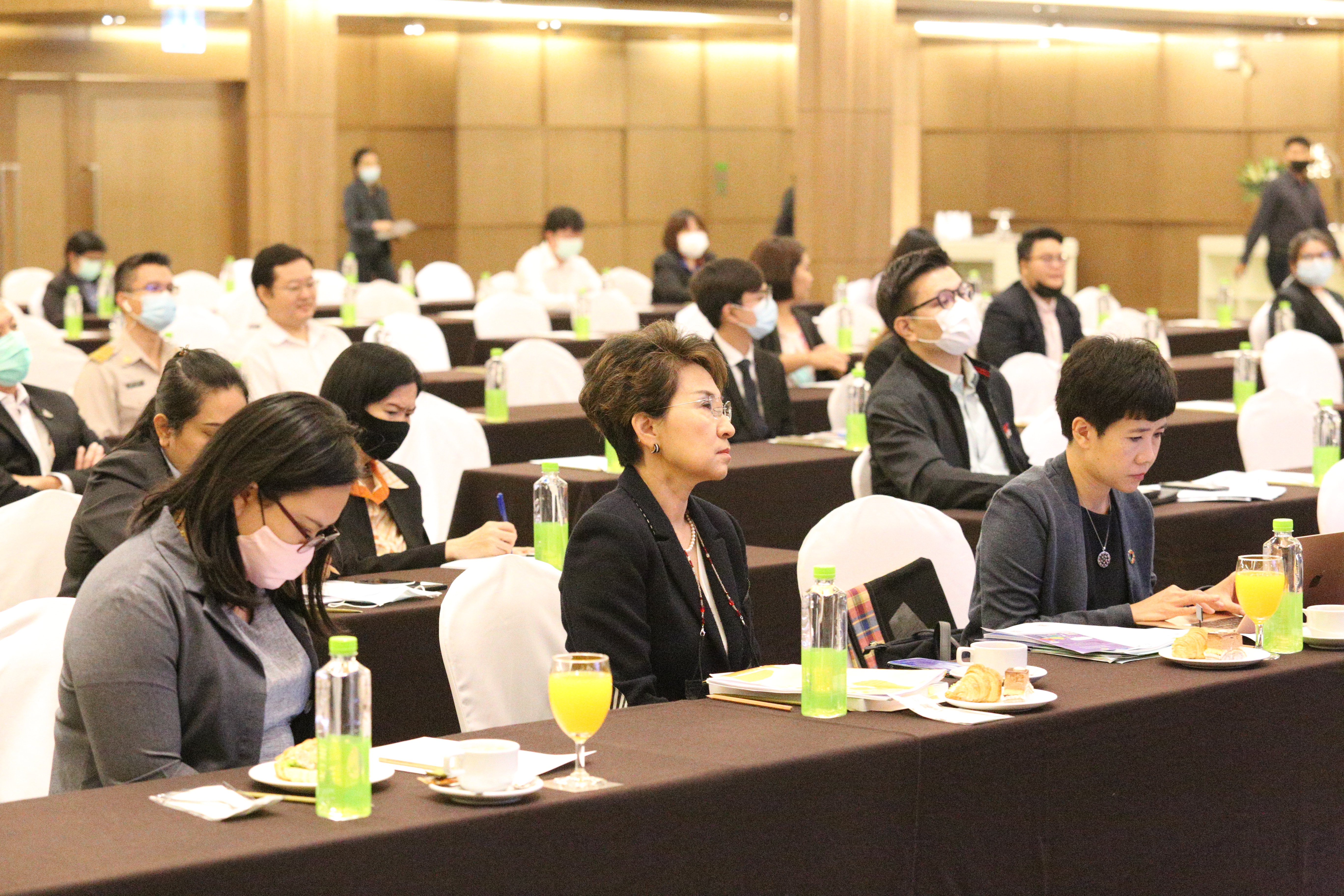
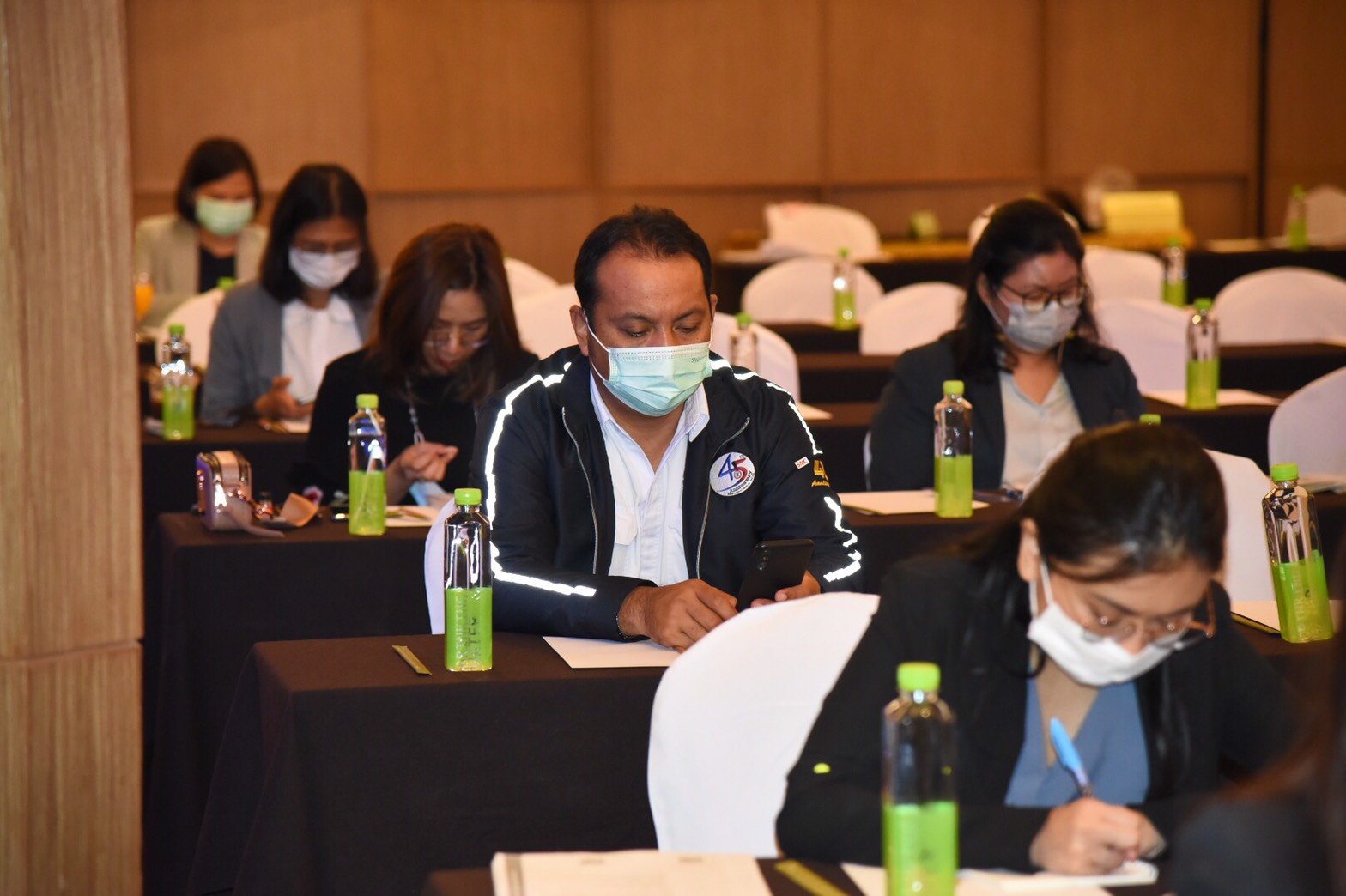
The seminar today presented the research study results on “Studying and Analysis of Entry into the Labour Market and Early Workers in Thailand with a Future Forward.” It also hosted a discussion on “Developing Youth Employability: Young Adults and the Job of the Future.” Participants in the seminar included representatives from agencies under the Ministry of Labour, representatives from external agencies, including the public sector, private sectors, educational institutions, qualified academics, employer representatives, employee representatives, and related persons, amounting to 100 people.
————————————————
Division of Public Relations
22 March 2021