

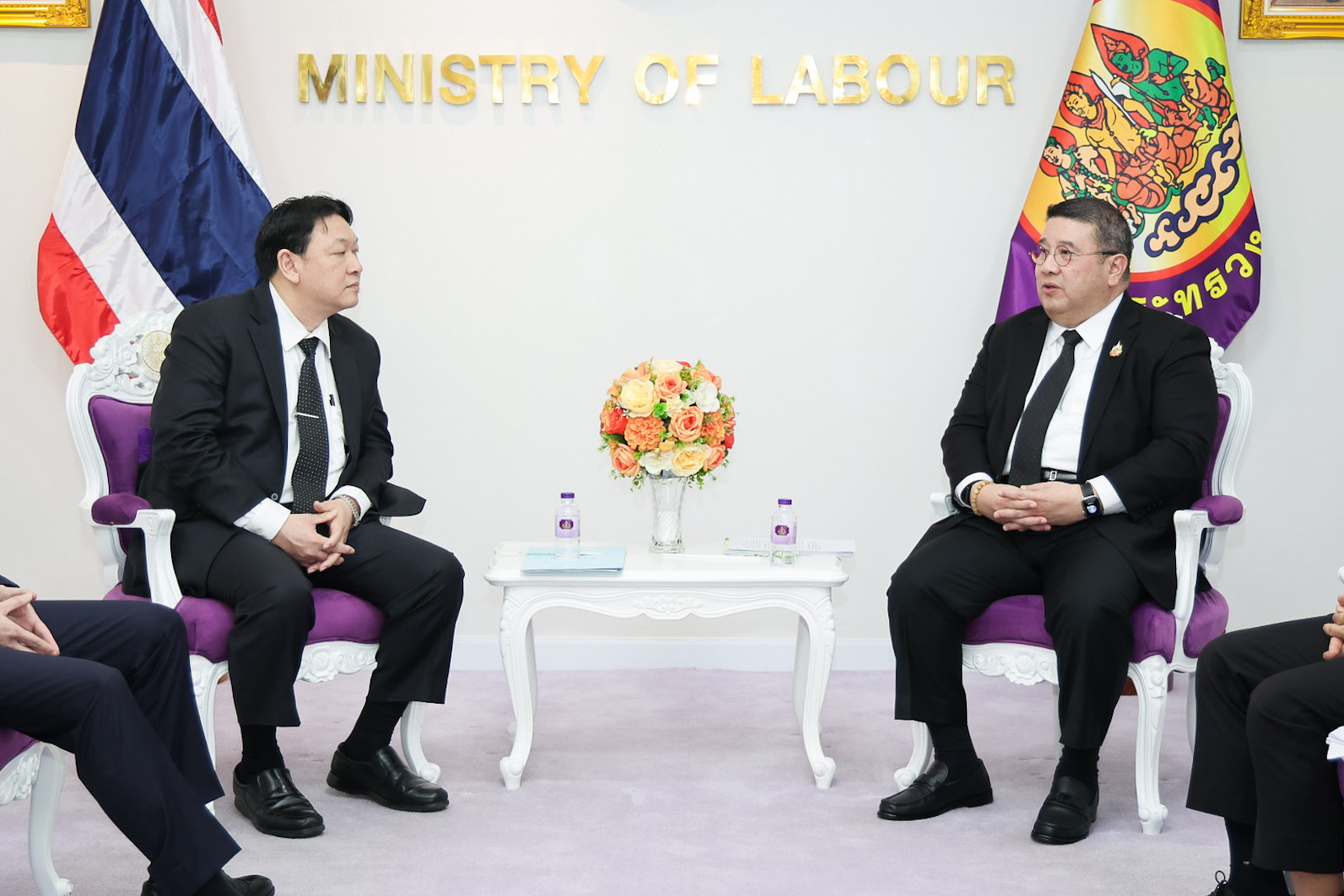
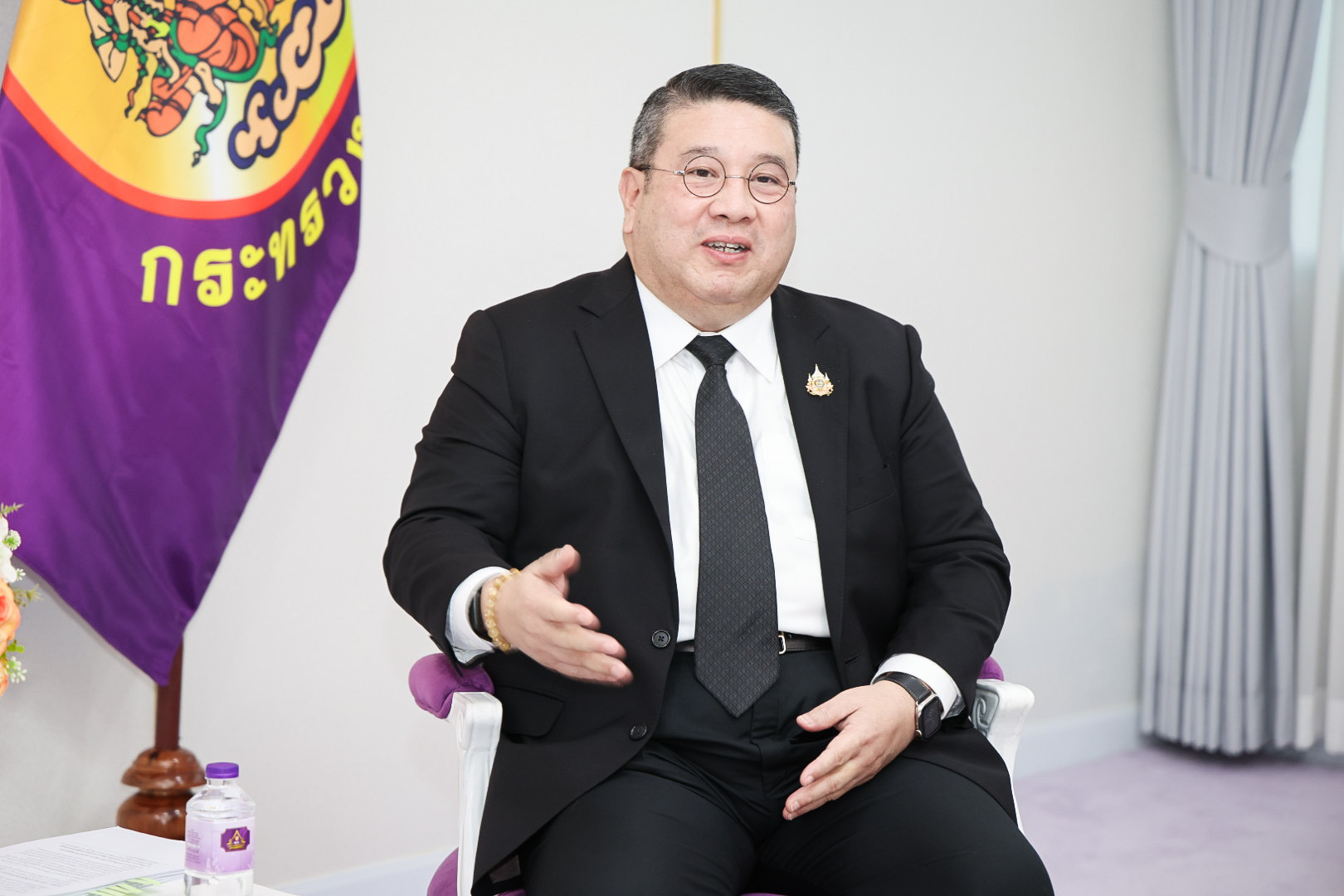
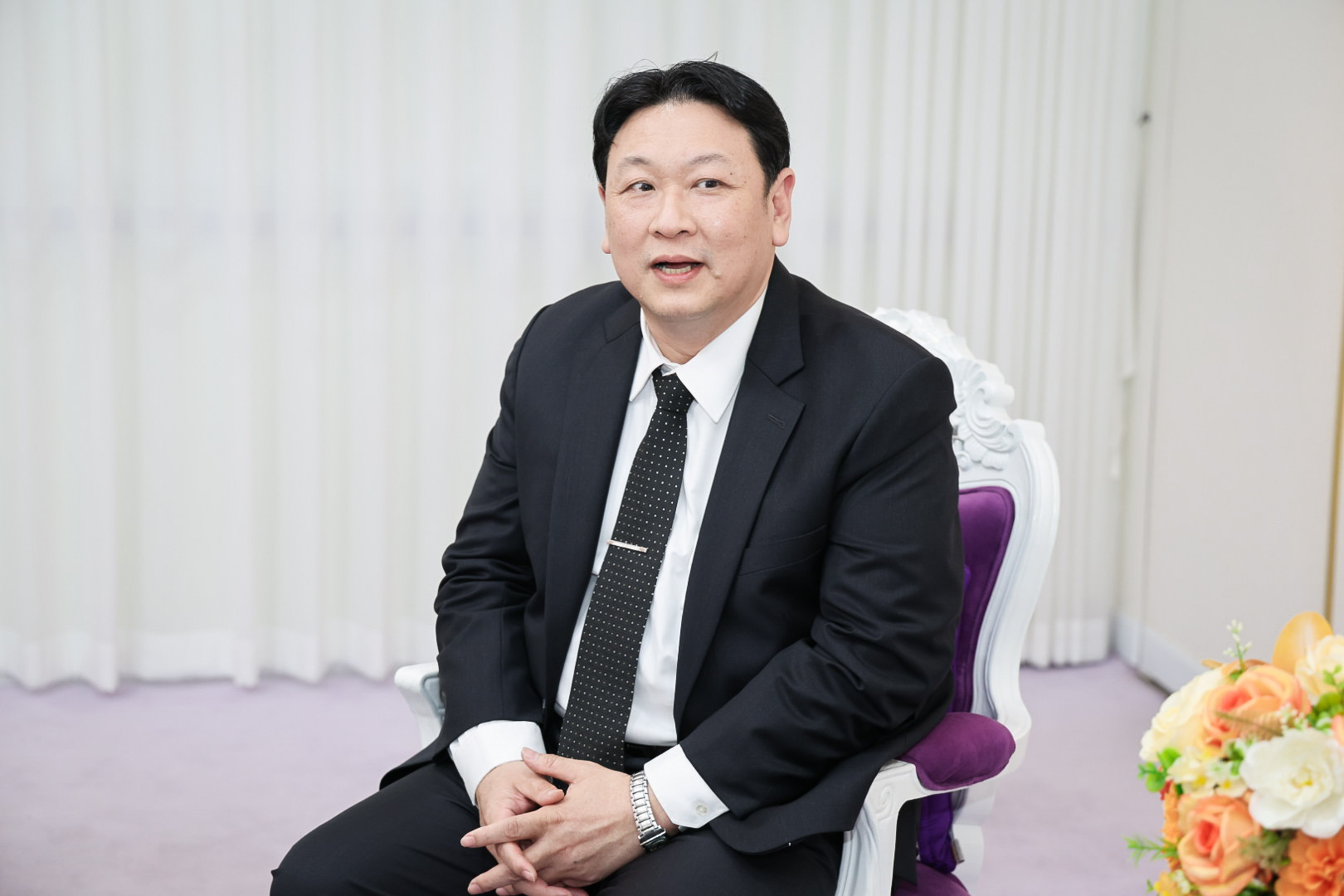
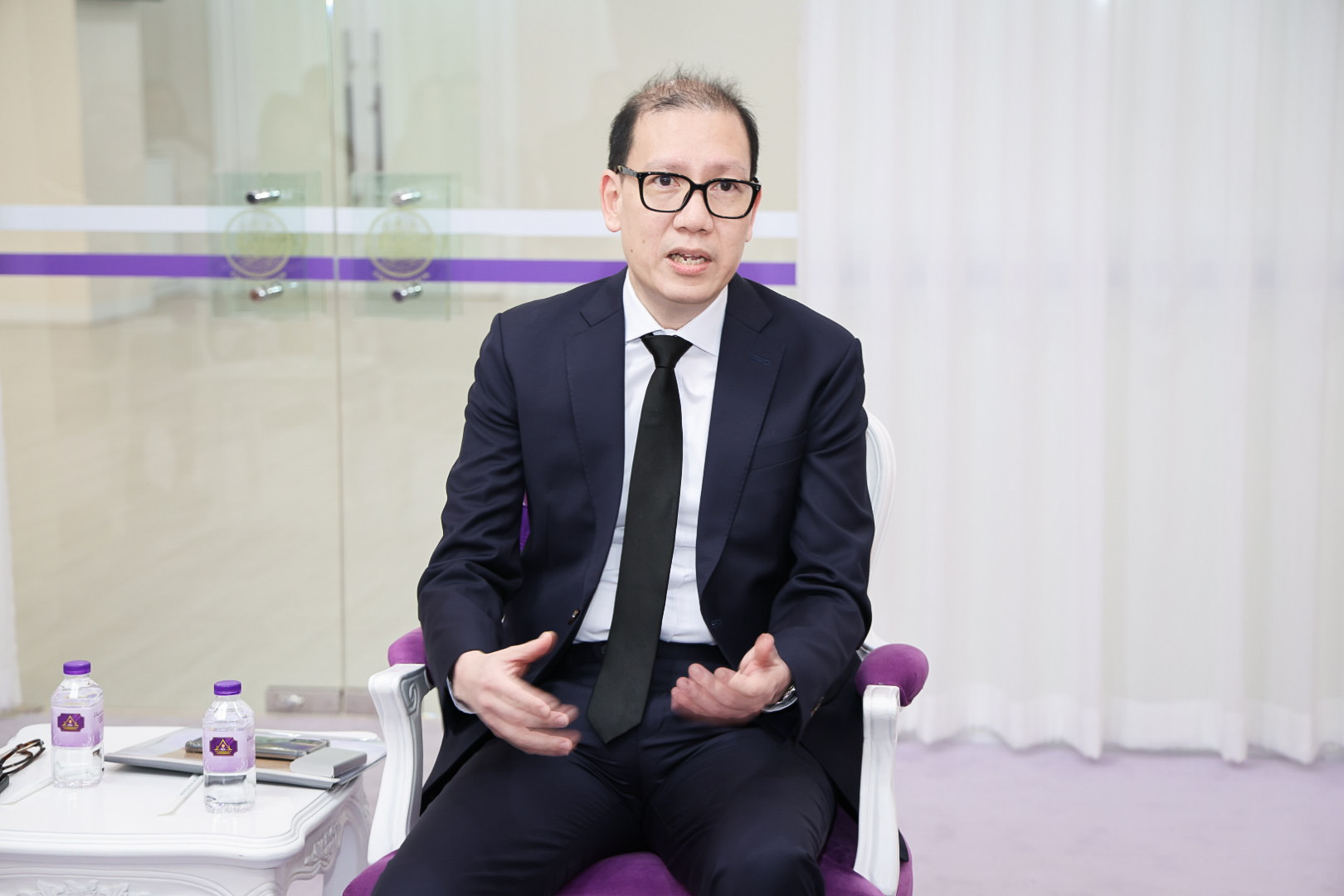
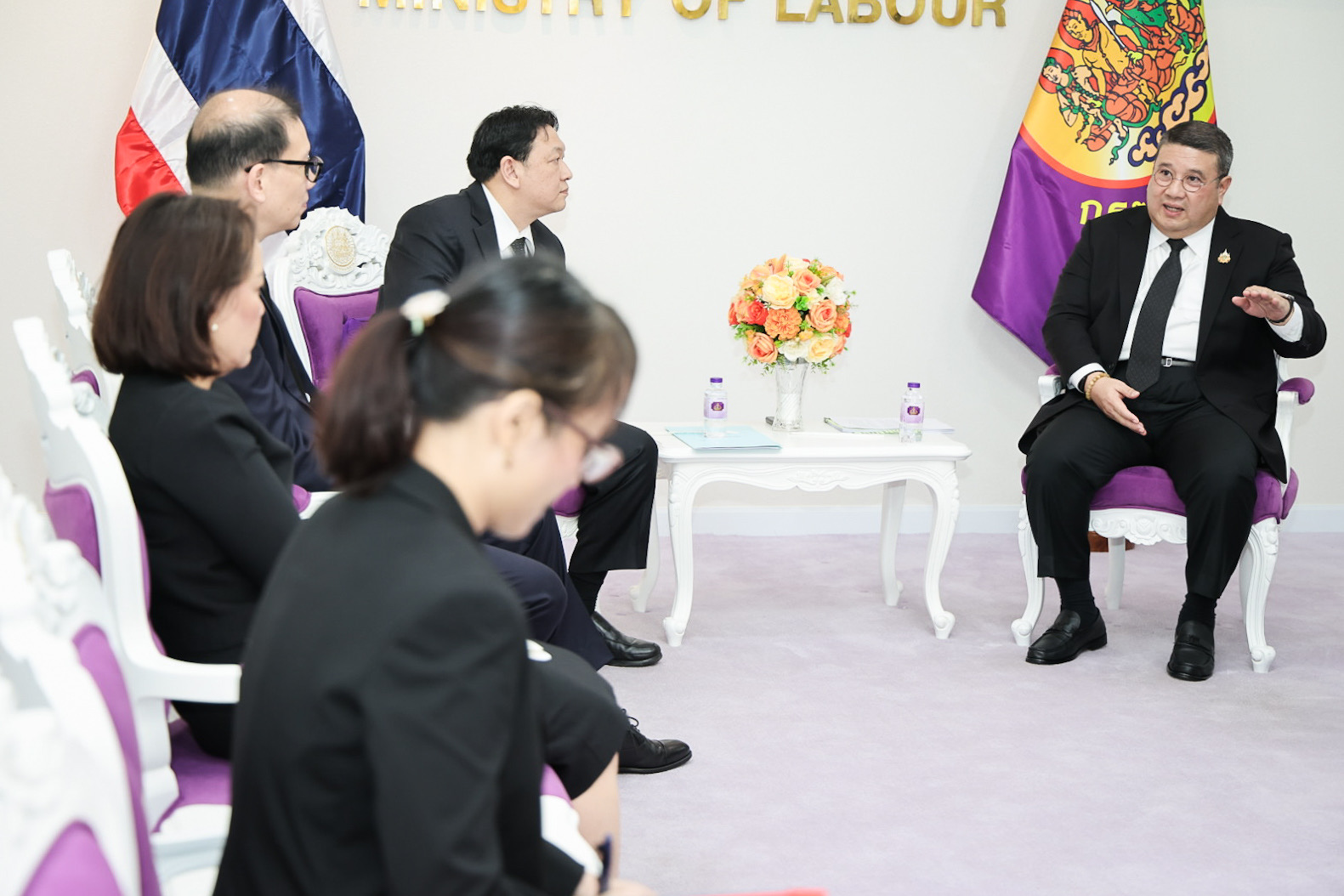
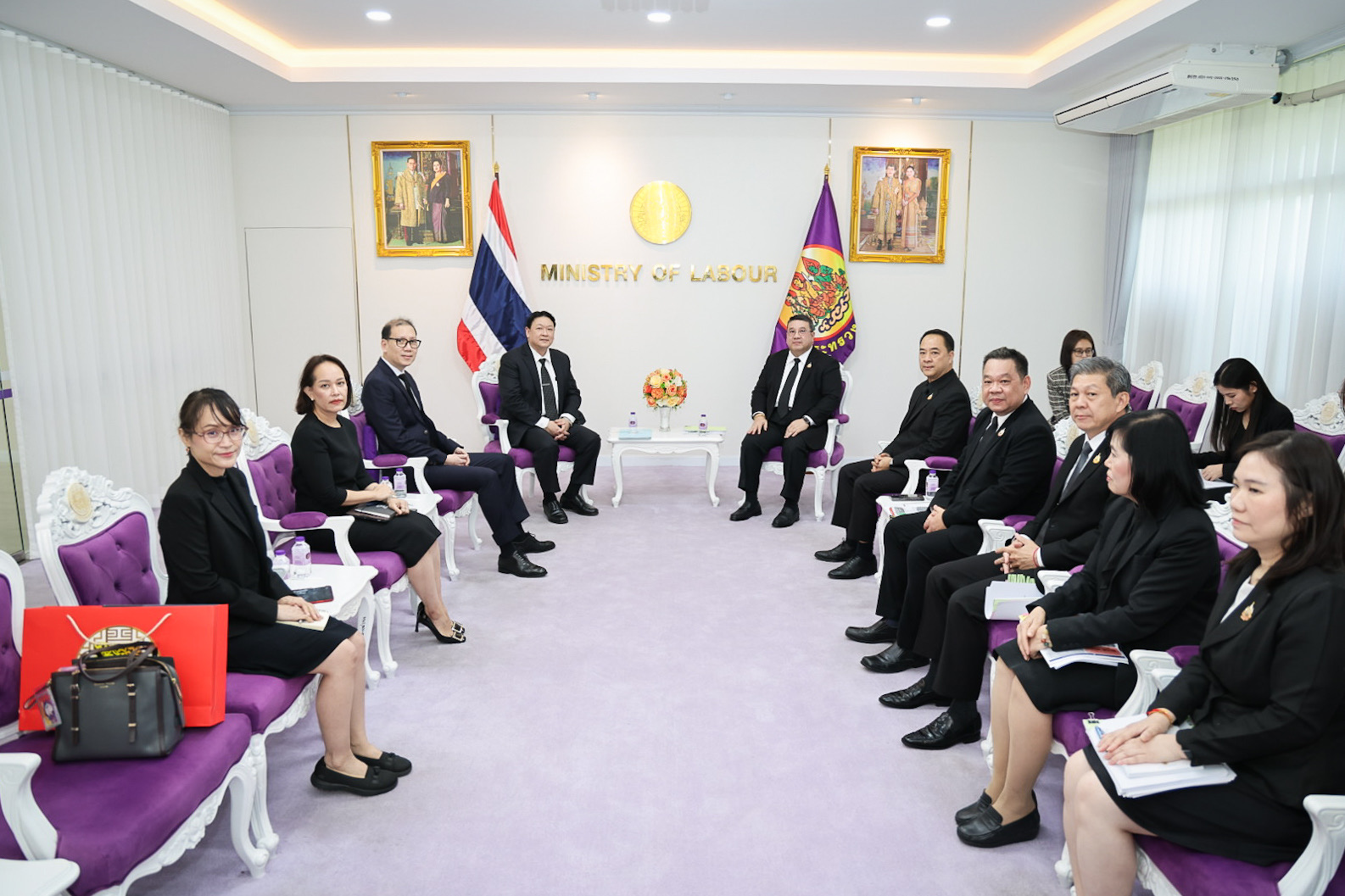
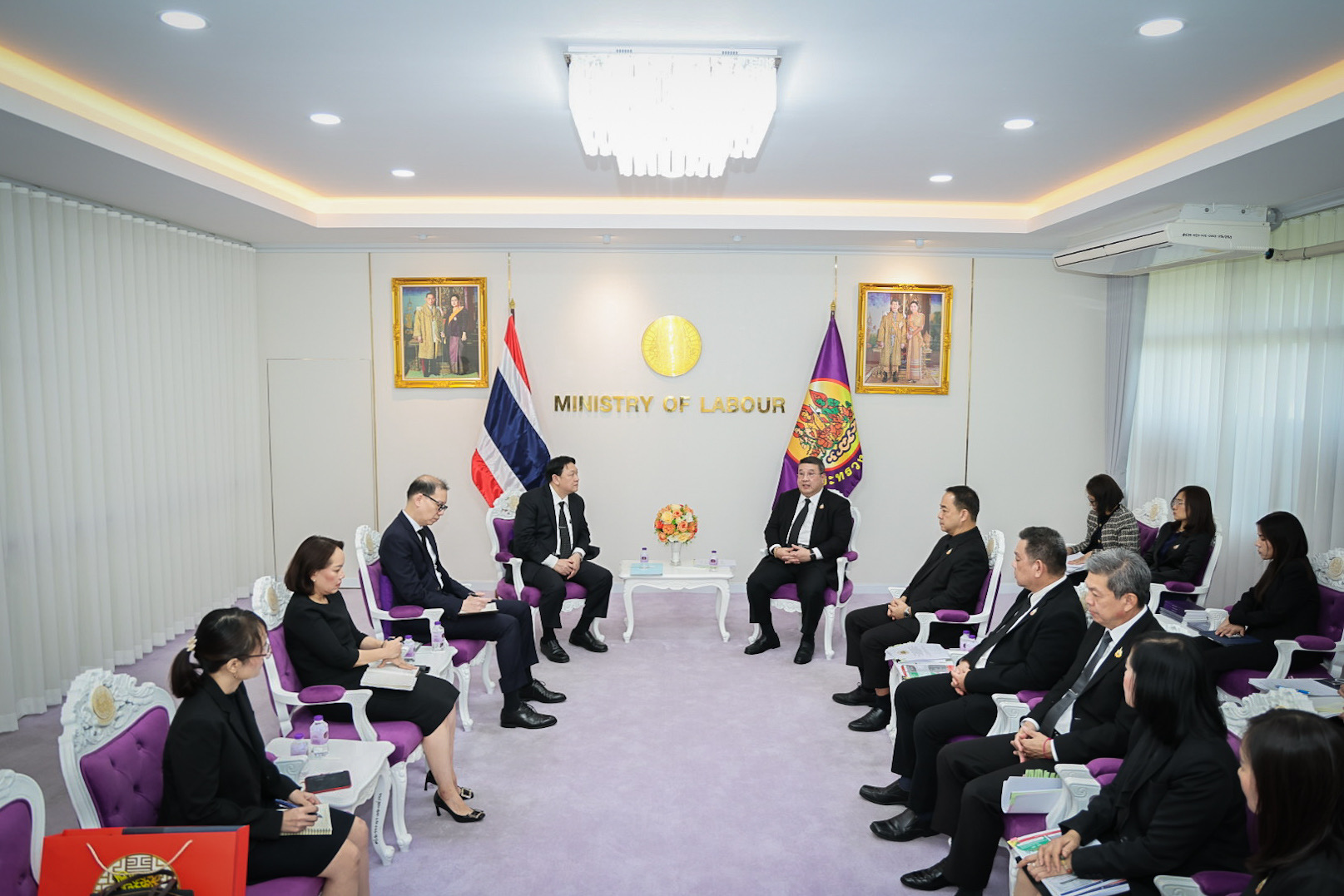
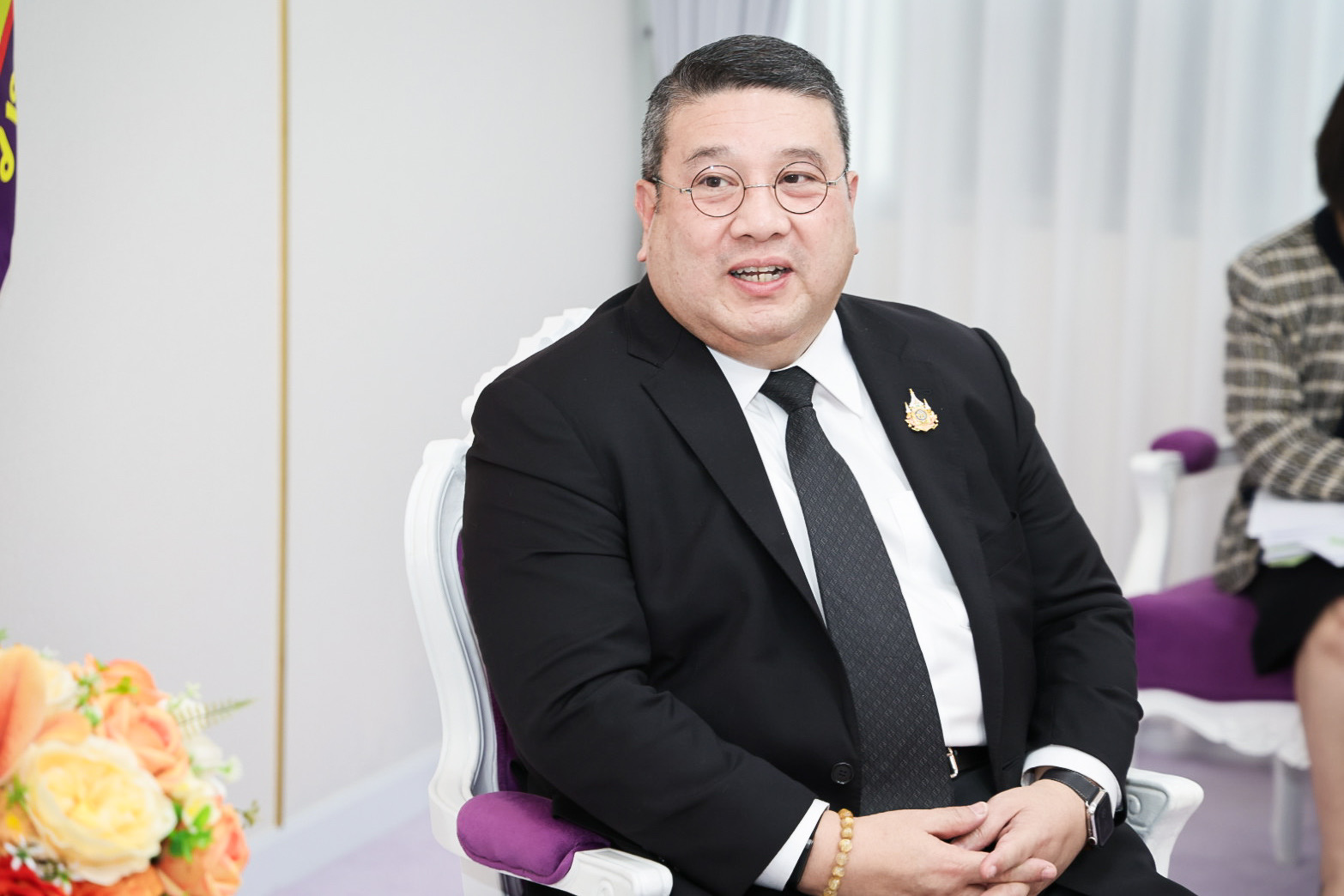
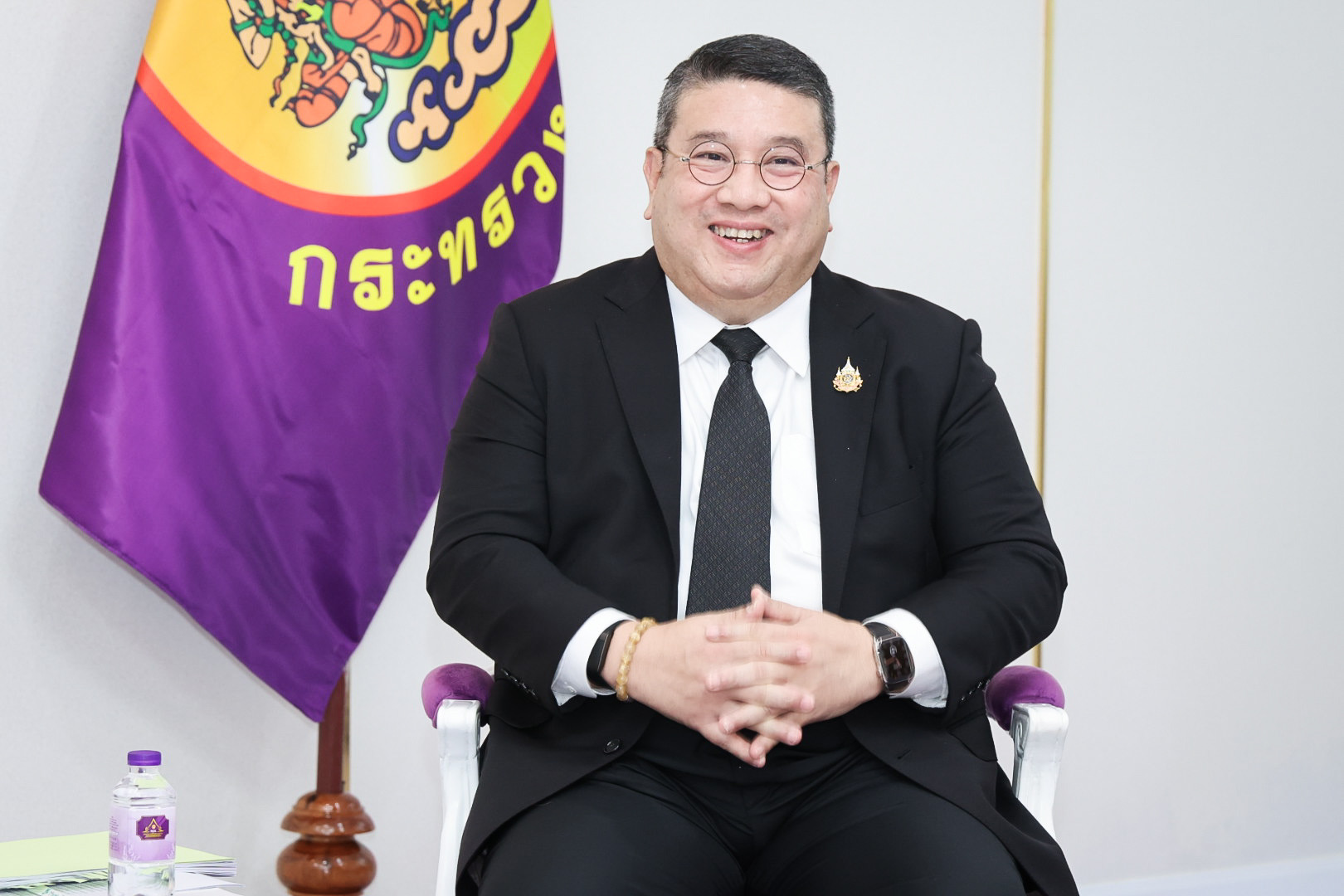
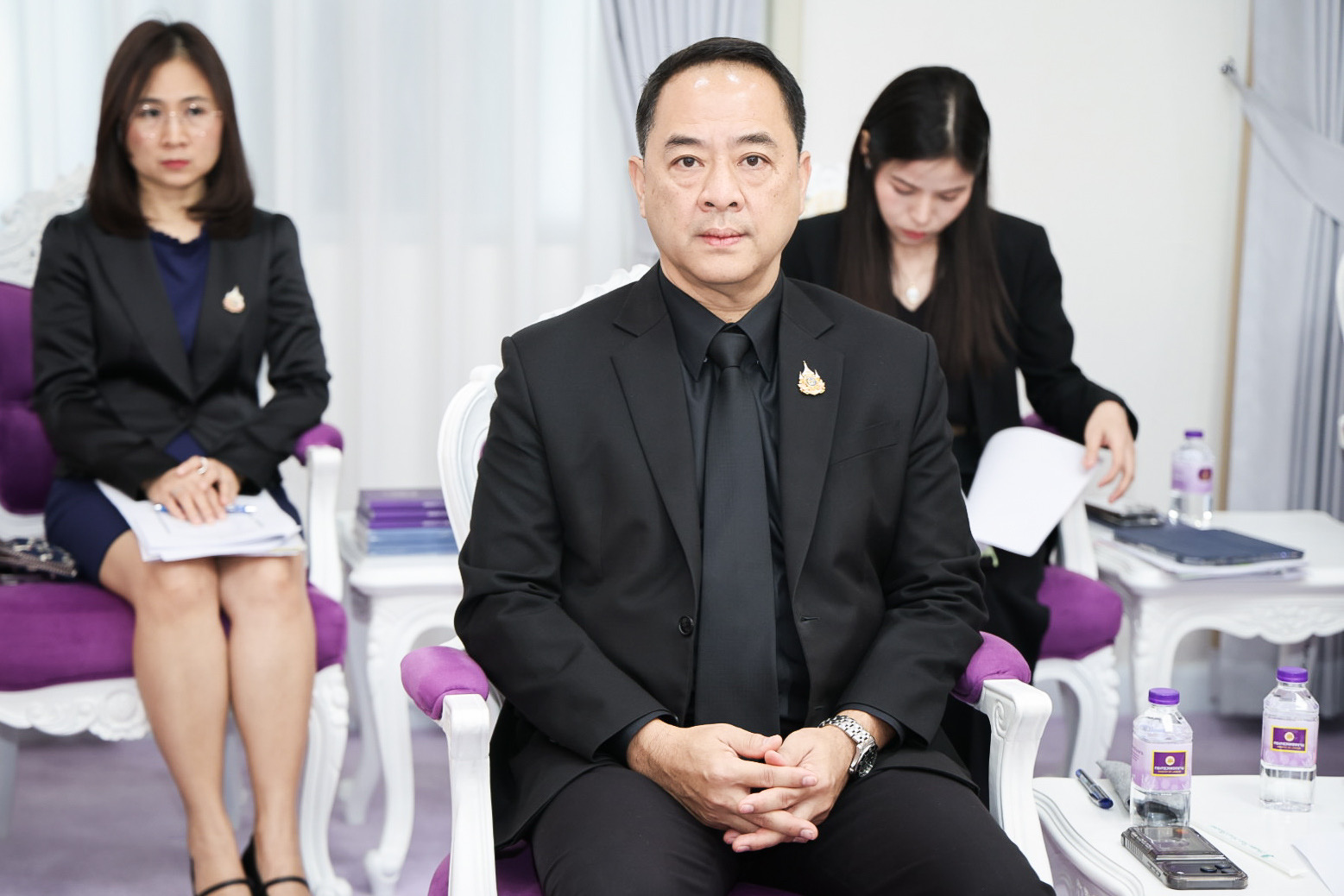

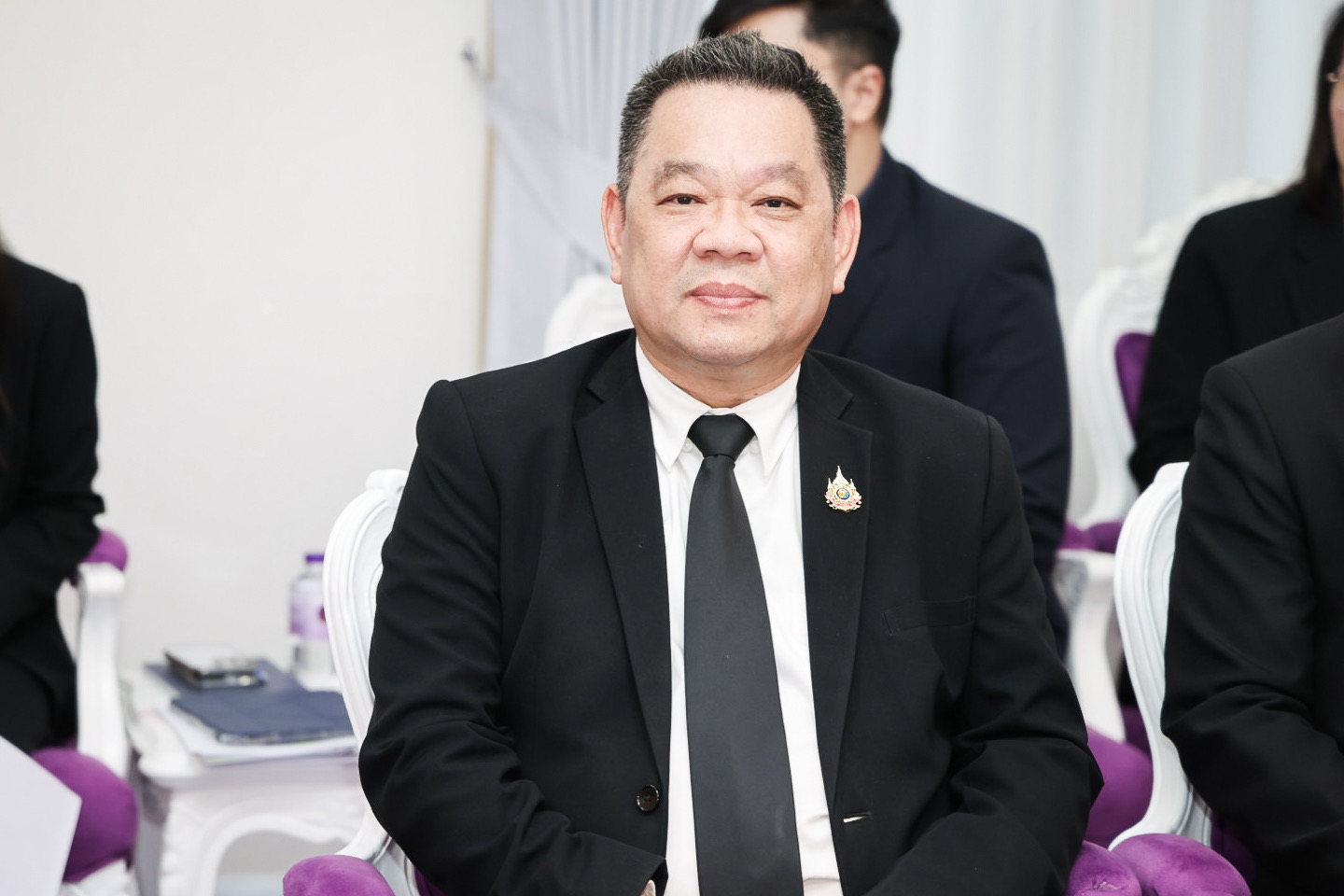
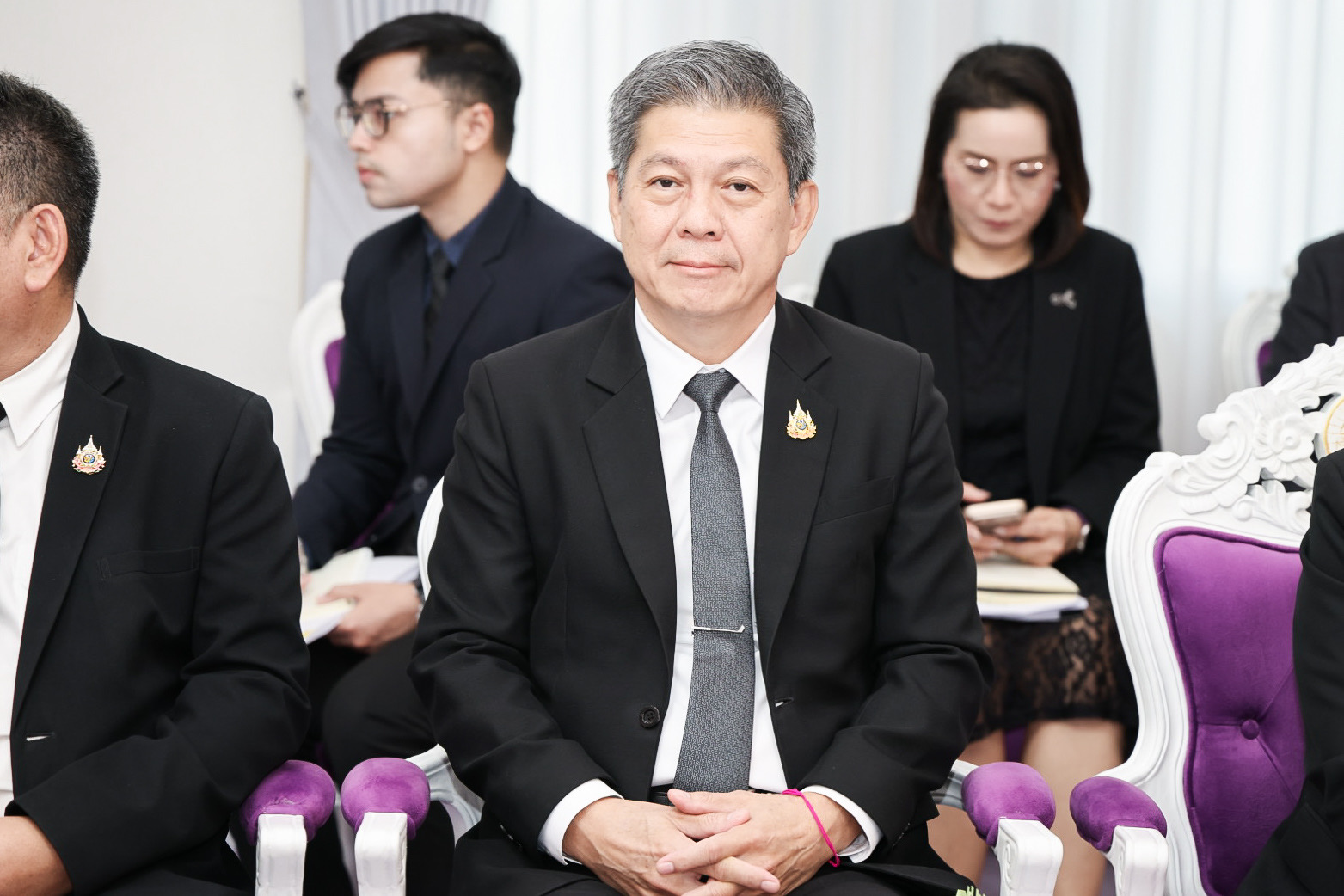
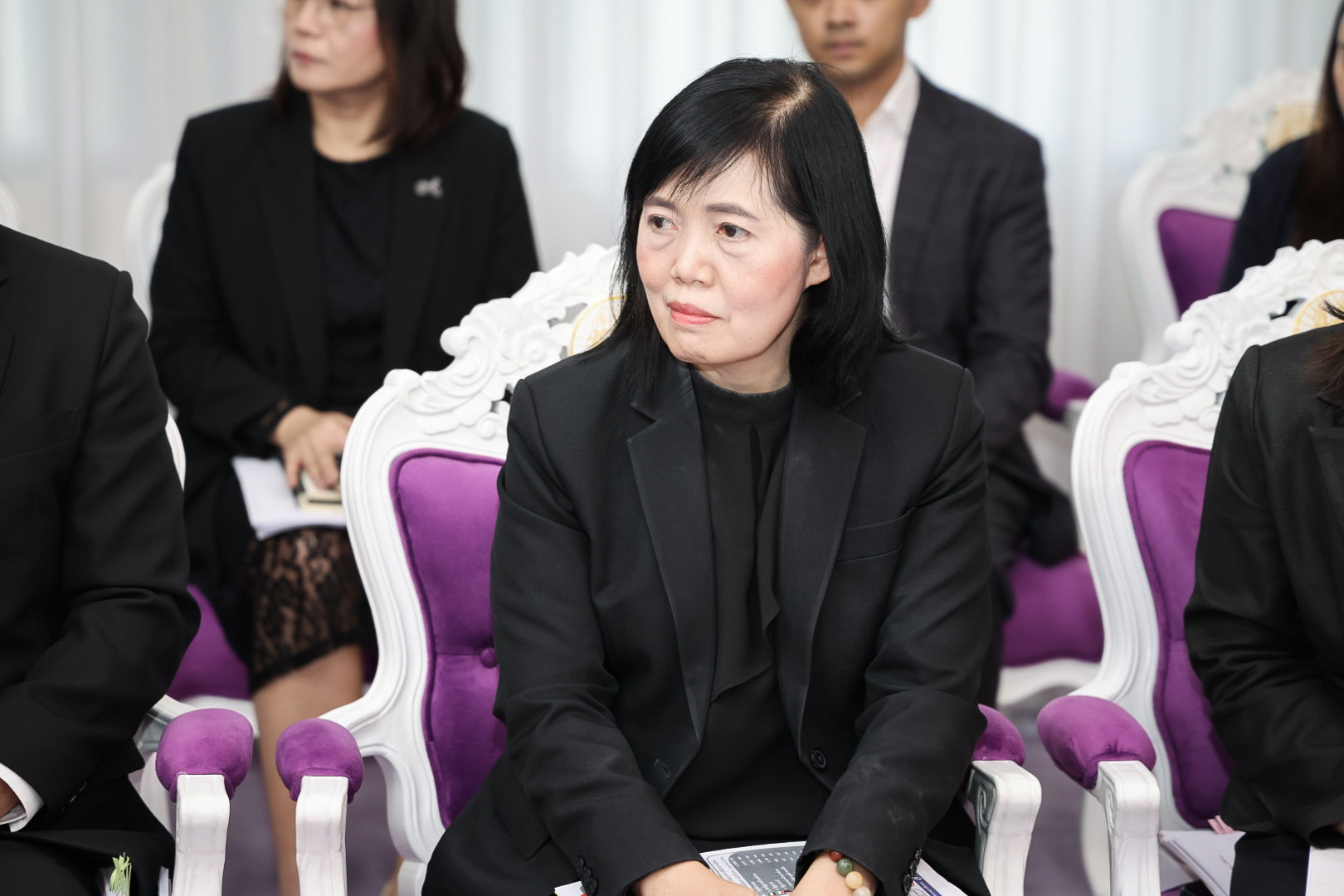

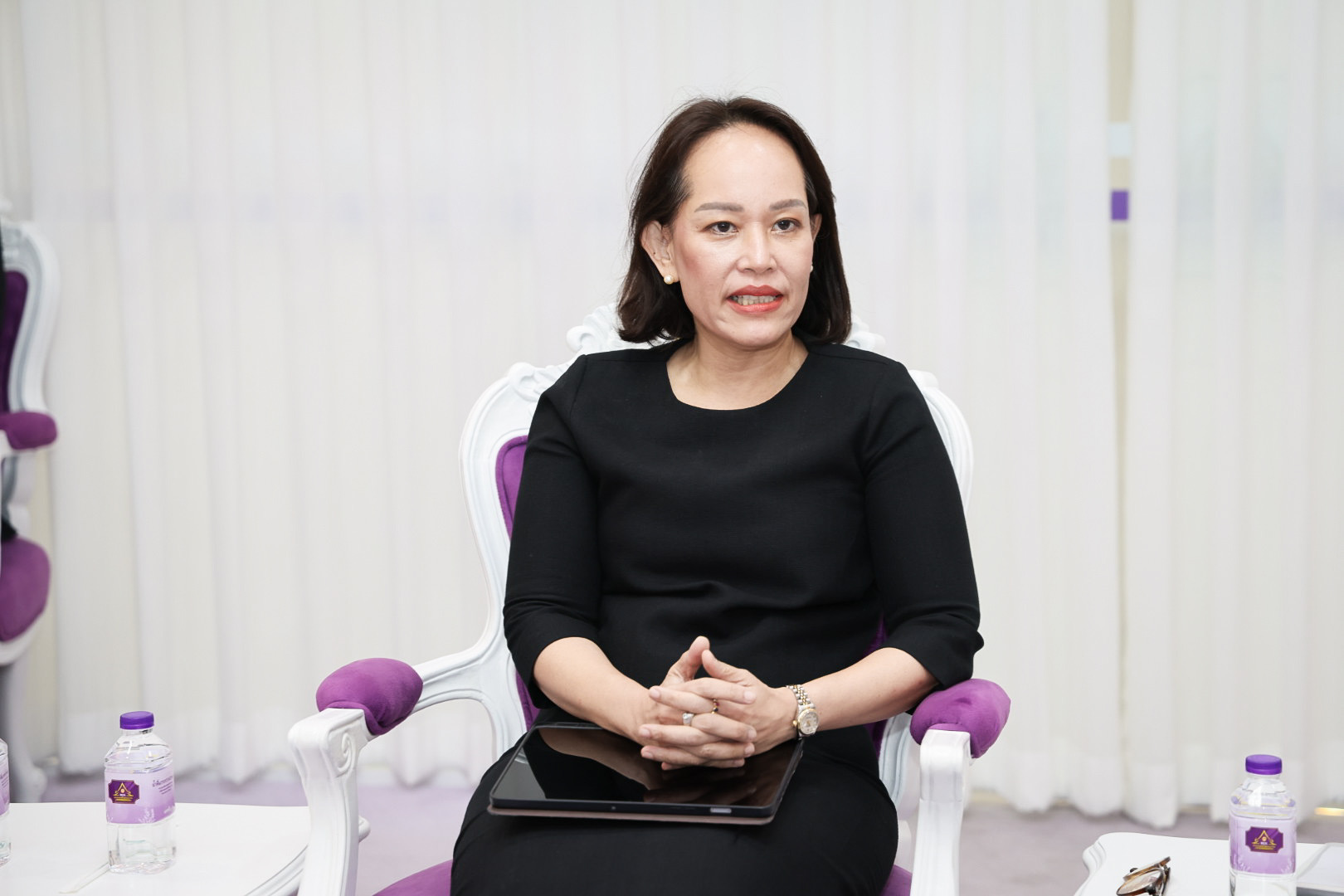
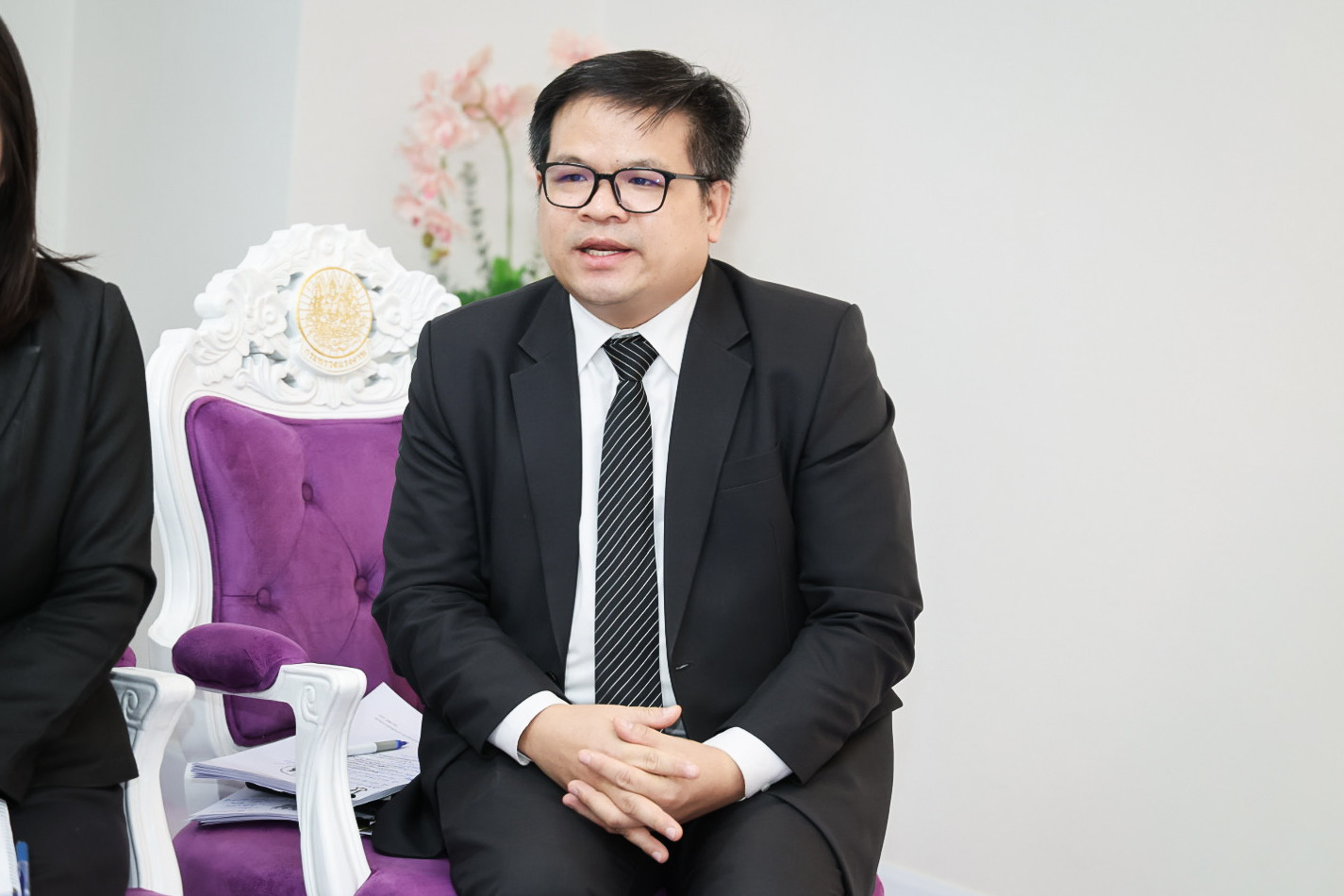
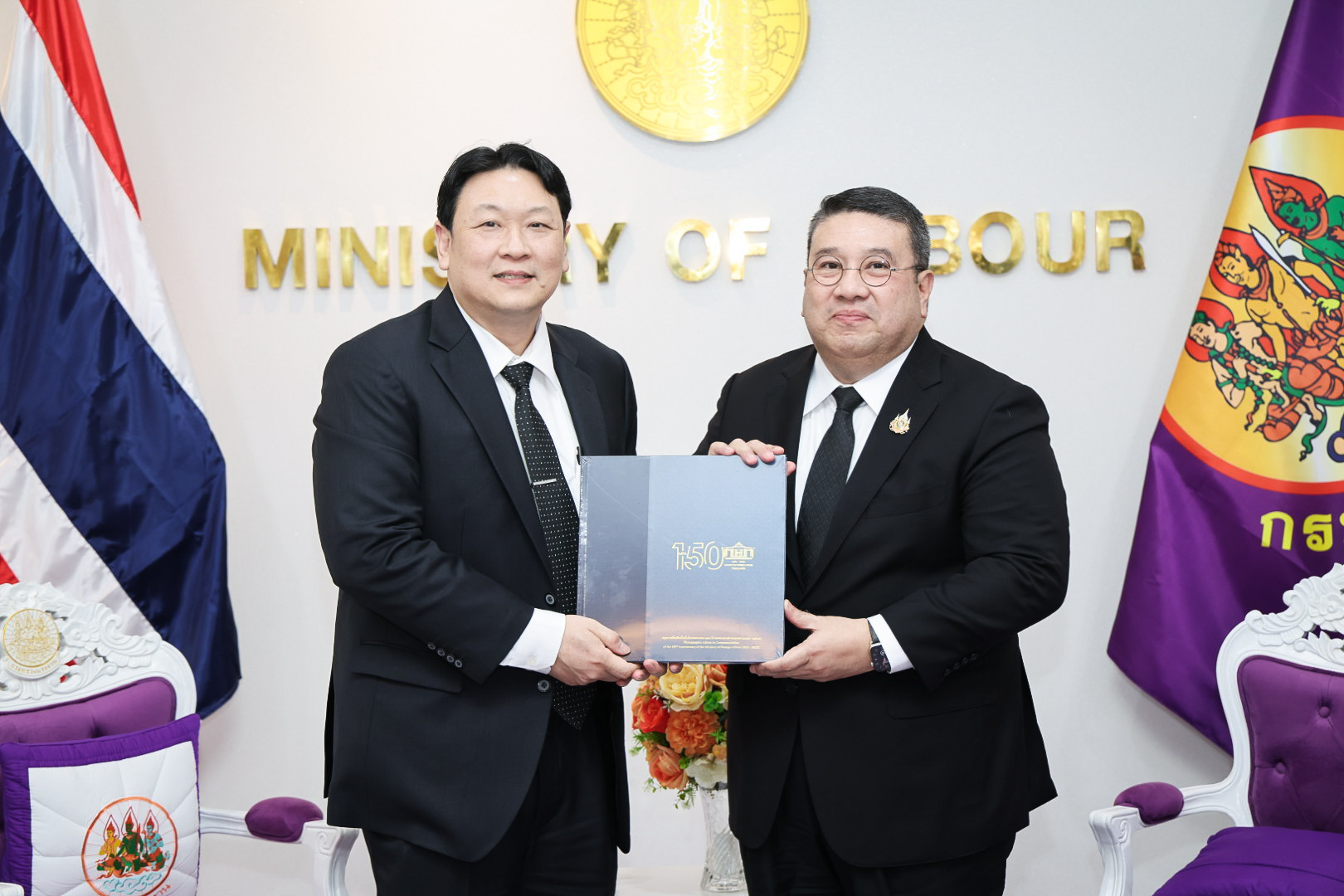
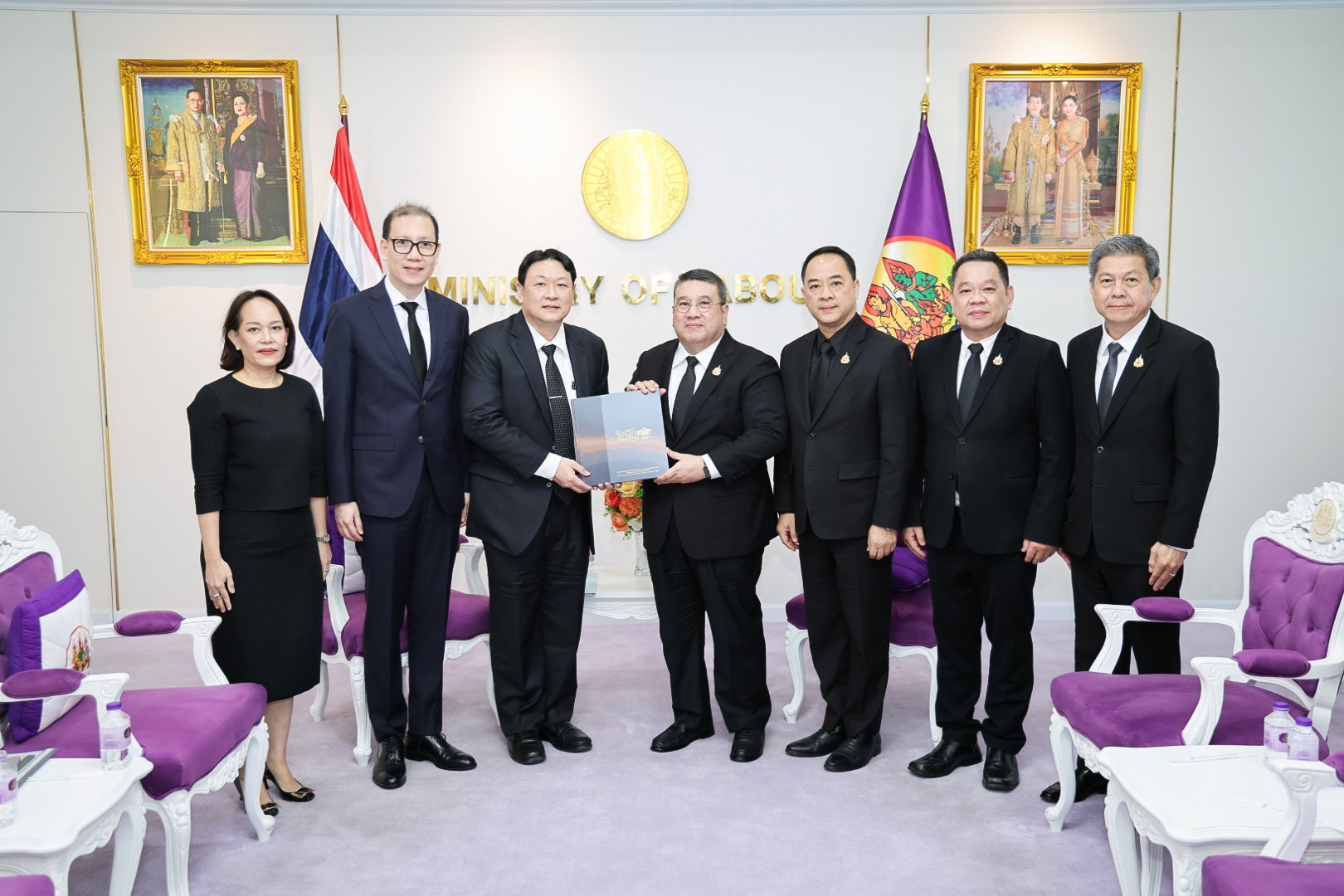
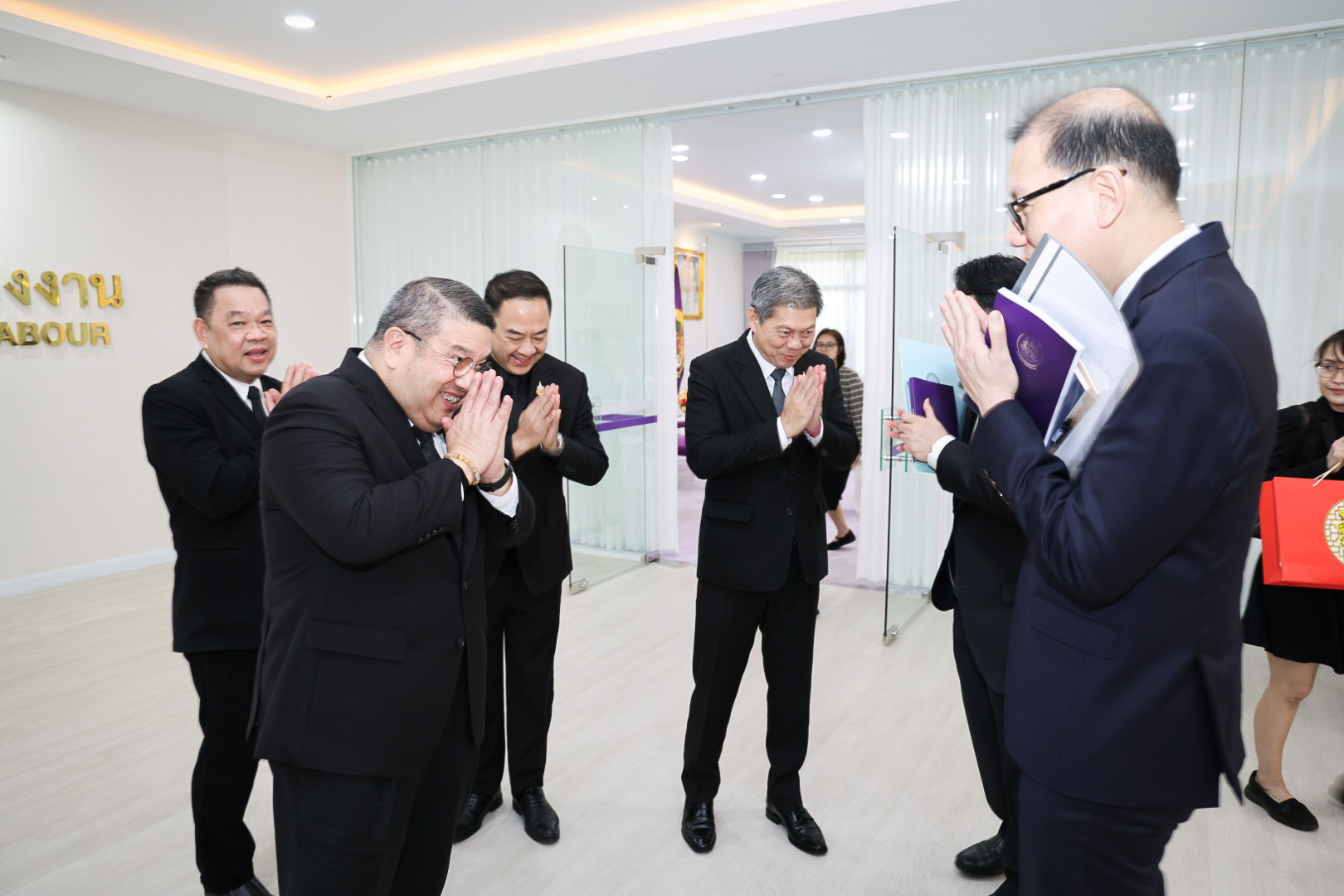
February 19, 2026 – Pol. Lt. Col. Wannapong Kotcharak, Permanent Secretary of Labour, welcomed Mr. Pongprat Makjaeng, Ambassador Extraordinary and Plenipotentiary of Thailand to the Kingdom of Saudi Arabia, together with Mr. Songchai Chaipatthiyut, Ambassador Extraordinary and Plenipotentiary of Thailand to the State of Kuwait, and their delegation. The visit was made to pay a courtesy call and hold discussions on labour-related matters, including cooperation to promote Thai workers in the Middle Eastern labour market. Also present at the meeting were Mr. Samat Pattamasukon, Director-General of the Department of Skills Development, Mr. Mongkol Songkhram, the Department of Employment’s Deputy Director-General, Mr. Sakdinart Sontisakyothin, Assistant to the Permanent Secretary of Labour, and the Director of the Bureau of International Cooperation, Office of the Permanent Secretary of Labour. The meeting took place in the Permanent Secretary’s Reception Room, on the 7th Floor of the Ministry of Labour Building.
Pol. Lt. Col. Wannapong Kotcharak, Permanent Secretary of Labour, stated that the Ministry of Labour places great importance on promoting overseas employment opportunities for Thai nationals to demonstrate the capability and potential of Thai workers on the global stage. Sending Thai workers abroad also helps improve labour quality and highlights Thai workers’ strong reputation. Many countries now prefer skilled labour rather than low-skilled workers. At present, language remains a major limitation, while wage levels are also a key factor influencing Thai workers’ decisions to work abroad.
The Permanent Secretary of Labour further proposed that Thai restaurants and Thai spa and massage businesses abroad could serve as channels for connecting qualified Thai workers with overseas employment opportunities, as these environments provide greater security and support within Thai communities. At the same time, attention should be given to Thai workers returning to Thailand, many of whom possess strong Arabic and English language skills but face difficulties entering the Thai labour market due to language barriers and issues related to qualification recognition. Therefore, labour policy should place importance on both outbound and returning workers.
Mr. Pongprat Makjaeng, Ambassador to the Kingdom of Saudi Arabia, provided information on the labour market in Saudi Arabia following the restoration of diplomatic relations. Thai workers in Saudi Arabia differ from those in other countries, as diplomatic relations have been suspended for more than 30 years, leaving a largely older, long-term workforce. Although younger Thai workers have begun entering the market, their numbers remain limited. However, there is strong demand in the industrial sector, particularly for skilled technicians, welders, and technical personnel, to support the expansion of Jeddah Port. Saudi Arabia is currently undergoing rapid urban development, requiring a large workforce, especially in the service sector, where Thai workers have strong potential. The Ambassador proposed that Thai entrepreneurs who require employees with Arabic and English language skills could help enhance the skills of Thai nationals already residing in Saudi Arabia, while also conducting interviews and recruiting Thai students graduating in Saudi Arabia or elsewhere in the Middle East to join the workforce immediately. This would help address challenges faced by returning Thai nationals seeking employment in Thailand.
Mr. Samat Pattamasukon, Director-General of the Department of Skills Development, added that the Department is ready to support online training courses in various fields, such as culinary arts and beauty services, and can issue certificates to Thai nationals living abroad. The Department can also develop specialised training programmes tailored to employers’ needs, for example, courses in marine welding or other technical trades, as required by the market. In addition, the Department of Skills Development is prepared to conduct skills standard testing for Thai workers already working overseas to provide official certification.
During the discussion, both parties emphasised the importance of jointly developing workforce skills aligned with modern labour market demands, particularly in technical professions and high-level service occupations, while also recognising the challenges posed by language barriers. The two ambassadors also proposed measures to support long-term Thai residents and Thai students abroad, enabling them to utilise their language skills to benefit Thailand’s labour market. Both embassies expressed their willingness to serve as coordination hubs to help create quality employment opportunities and sustainable income for Thai nationals in the future.