

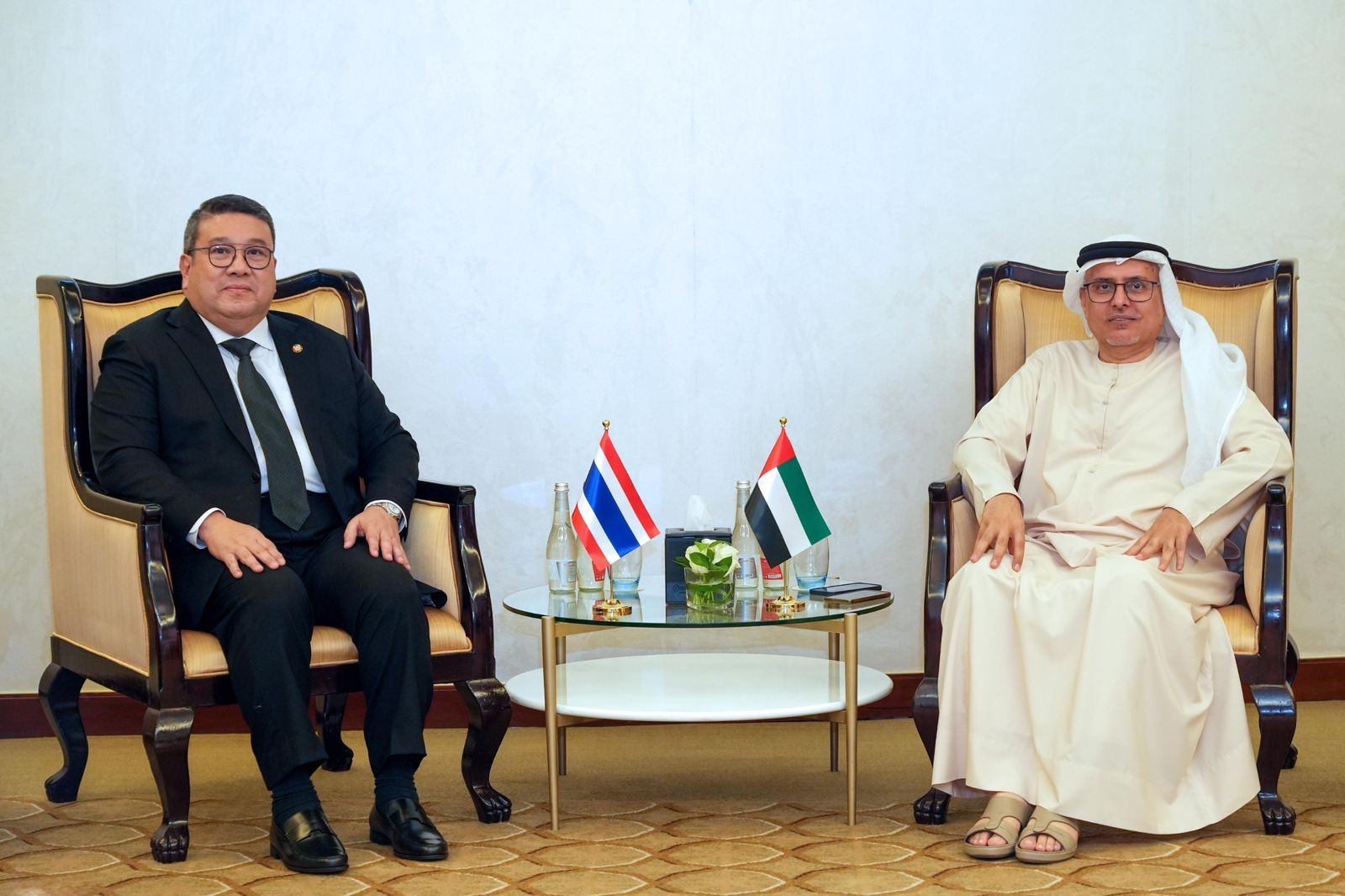
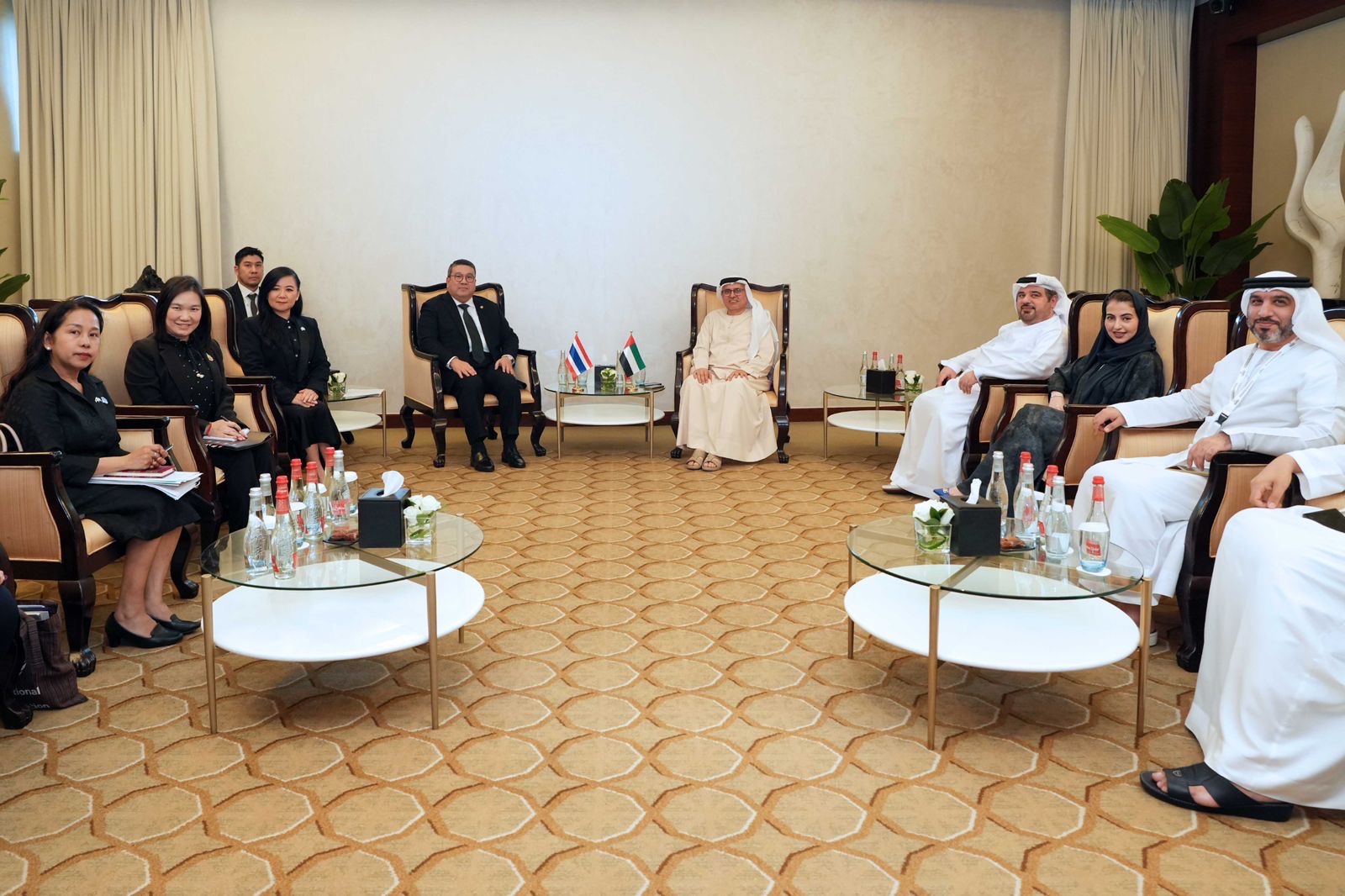
February 1, 2026, local time in Dubai – Pol. Lt. Col. Wannapong Kotcharak, Permanent Secretary of Labour, together with Ms. Nipa Nirandernut, Consul-General in Dubai, Ms. Sadudee Kittisuwann, Director of the Bureau of International Cooperation Coordination, Ms. Alisa Supap, Minister-Counsellor (Labour) at the Royal Thai Embassy in Abu Dhabi, United Arab Emirates, and the accompanying delegation, held a bilateral meeting with Dr. Abdulrahman Al Awar, Minister of Human Resources and Emiratisation of the United Arab Emirates and Acting Minister of Higher Education and Scientific Research of the United Arab Emirates.
During the meeting, the Permanent Secretary of Labour discussed approaches to jointly consider renewing the bilateral labour Memorandum of Understanding (MOU) between the two countries, which has expired. The Thai delegation proposed reserving consideration of the protocol on domestic workers for separate discussion, to allow the MOU to proceed without delay. The UAE delegation raised no objections and additionally proposed implementing other forms of cooperation in parallel.
Pol. Lt. Col. Wannapong Kotcharak, Permanent Secretary of Labour, further stated that the UAE’s demand for foreign labour is 50,000 workers per year. In comparison, approximately 12,000 Thai workers are currently in the UAE. Thailand, therefore, seeks to increase the number of Thai workers employed in the UAE, particularly in the service and hospitality sector, where Thai workers are well recognised for their service quality, the healthcare sector, which is experiencing rapid growth and requires additional personnel, as well as construction and unskilled labour, including security personnel and various infrastructure-related occupations.
Regarding employment contracts, the UAE confirmed that Thai will be added as an additional language for Thai workers, who currently receive contracts only in English and Arabic. Furthermore, the UAE utilises AI and QR code systems in employment contracts, allowing workers to verify their validity, thereby helping reduce fraud and travel-related issues.
Pol. Lt. Col. Wannapong added that, following these discussions, the UAE also proposed improving and expediting the labour recruitment process between the two countries through online systems, enabling UAE companies to select workers from a pre-screened or trained “talent pool”. Training or skills certification would be conducted in Thailand in advance, in line with the needs of UAE businesses. In this regard, Thailand already conducts national labour skills assessments and issues certificates to certify occupational skill standards for Thai workers prior to overseas employment.
In terms of labour protection, Thai workers in the UAE will receive welfare benefits as stipulated under UAE law, including health insurance, unemployment insurance, and wage protection, ensuring confidence in safety, security, and working conditions.
“I would like to thank the UAE for taking good care of Thai workers, allowing them to work with dignity and to receive full benefits in accordance with UAE labour law. Today’s bilateral discussions are a positive sign that both sides will continue to work closely together,” the Permanent Secretary of the Ministry of Labour concluded.
+++++++++++++++++++
Department of Public Relations