

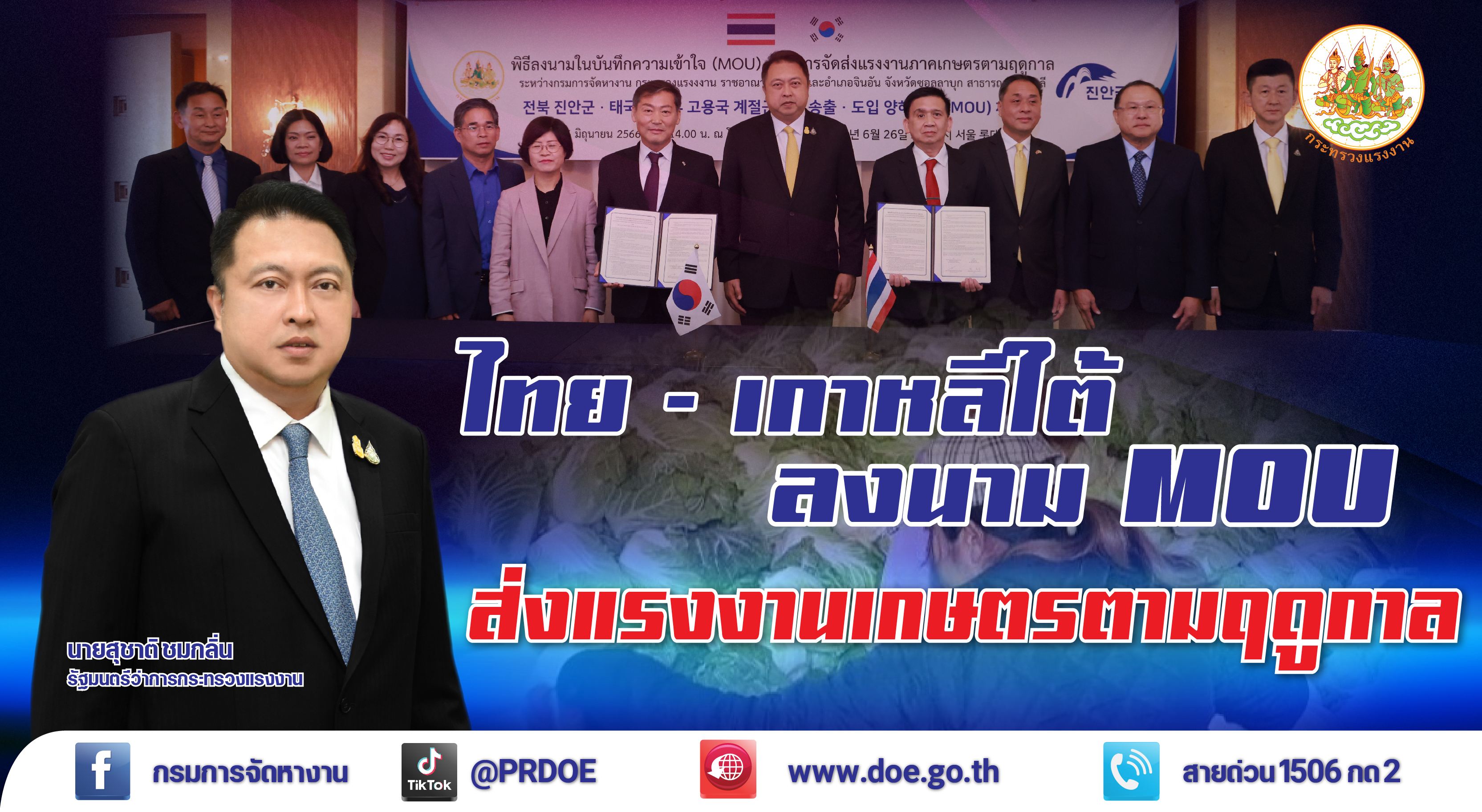
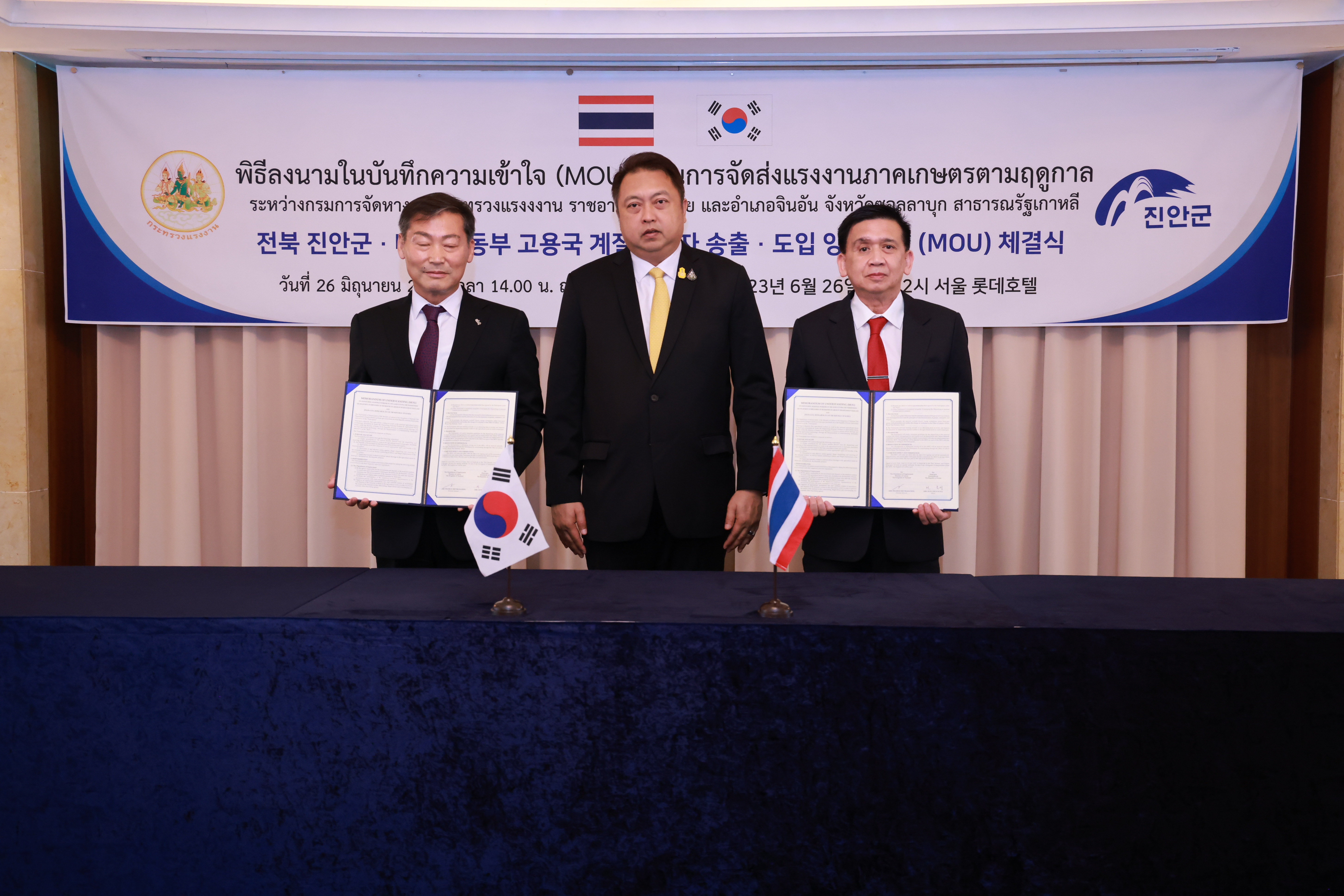
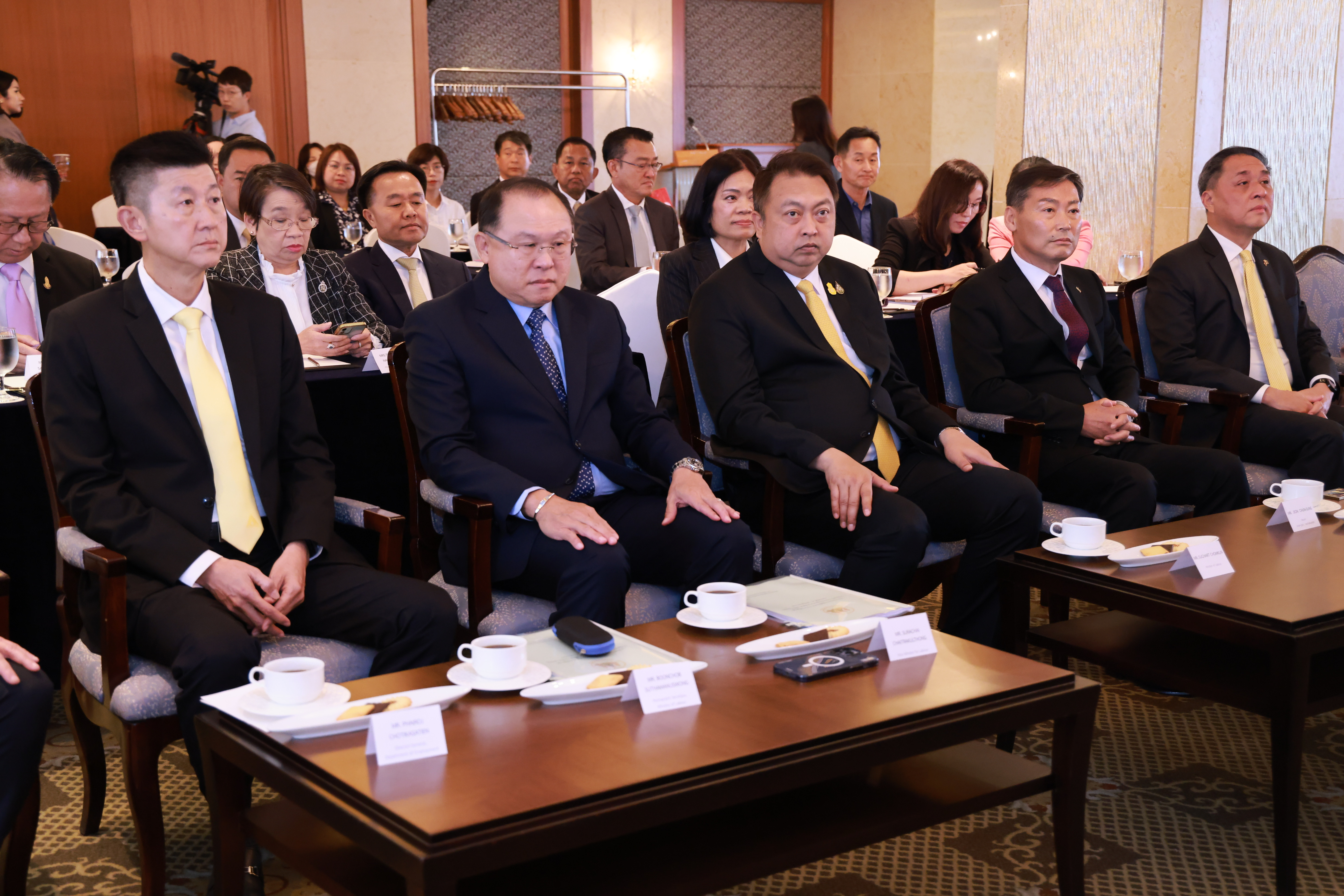
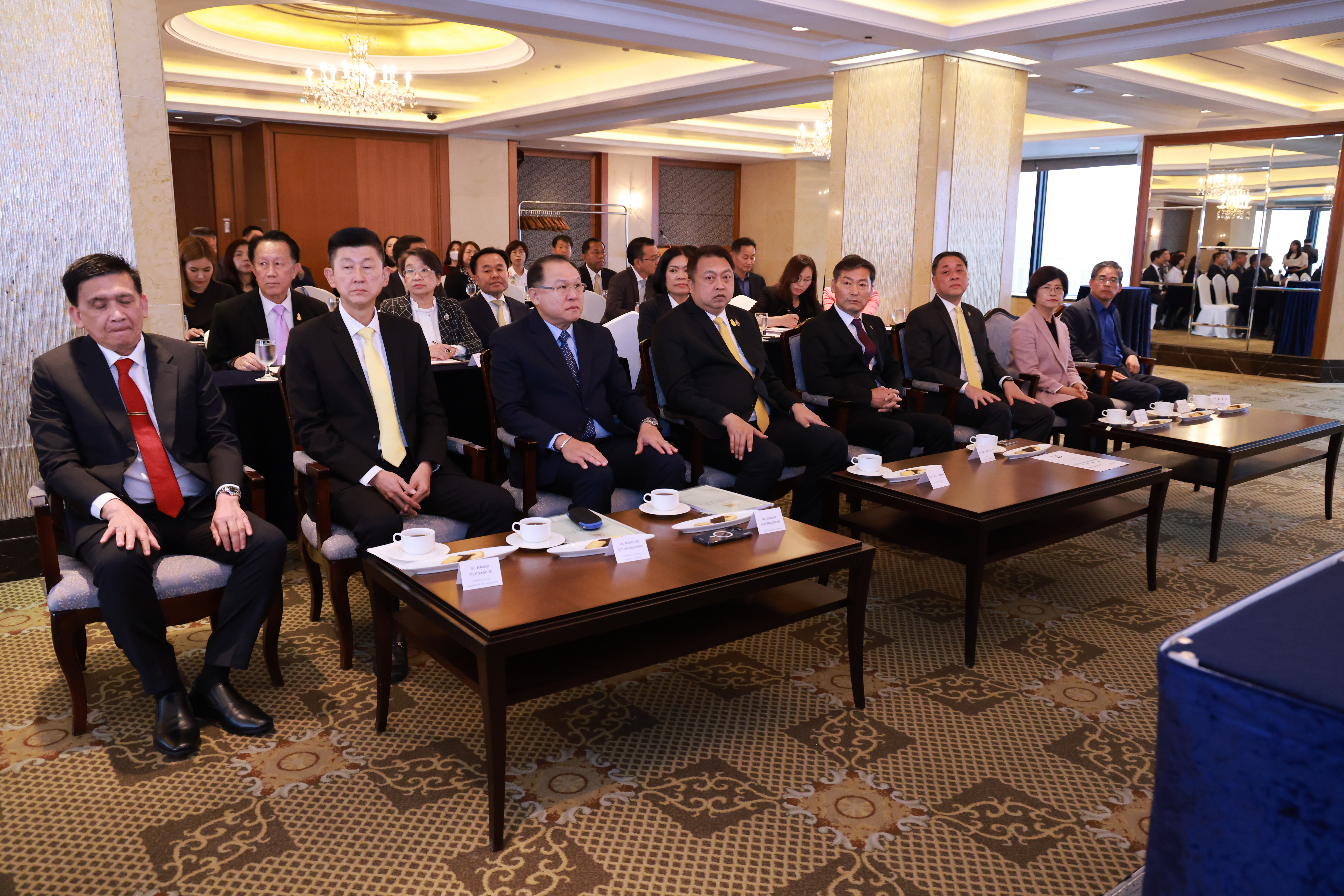
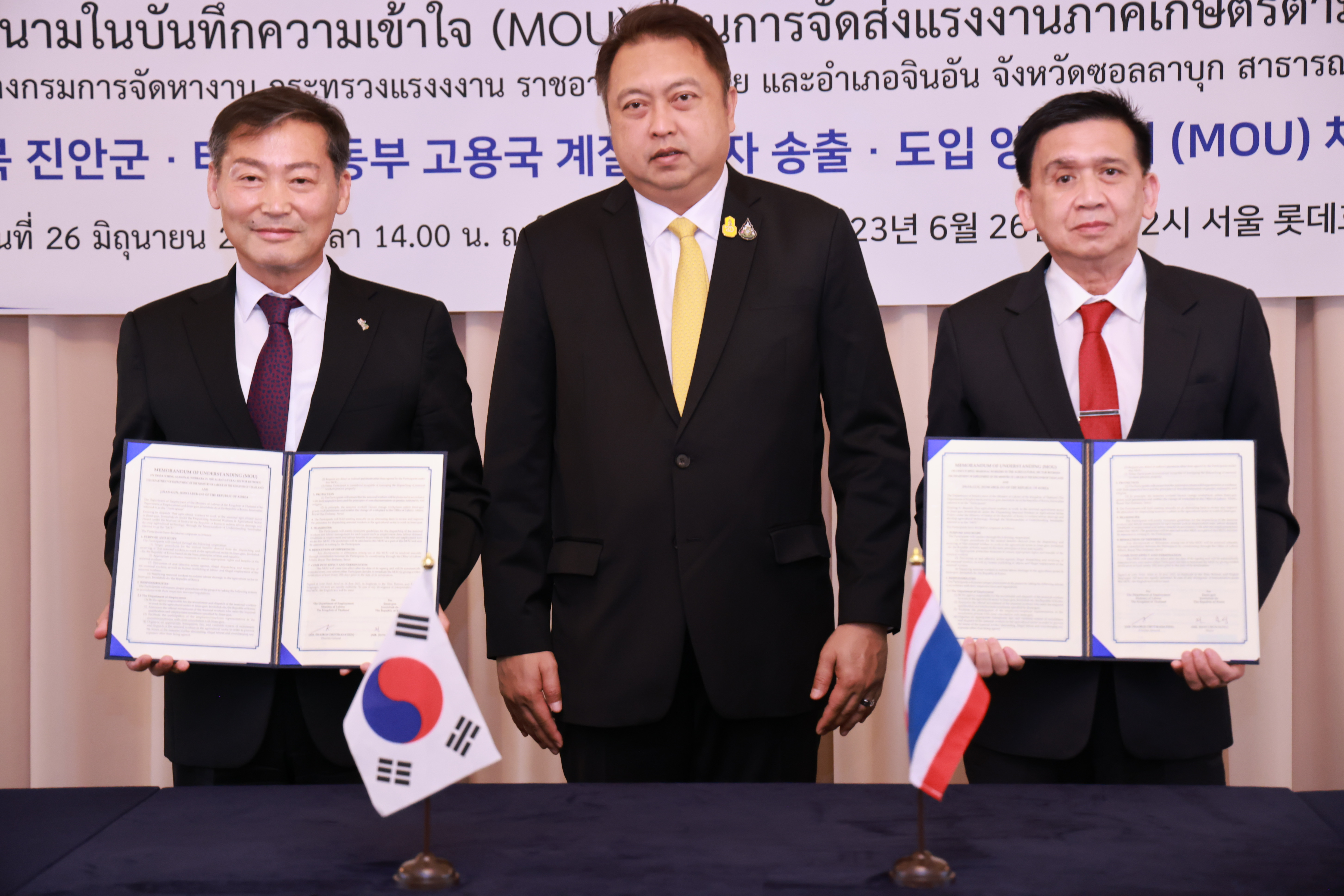
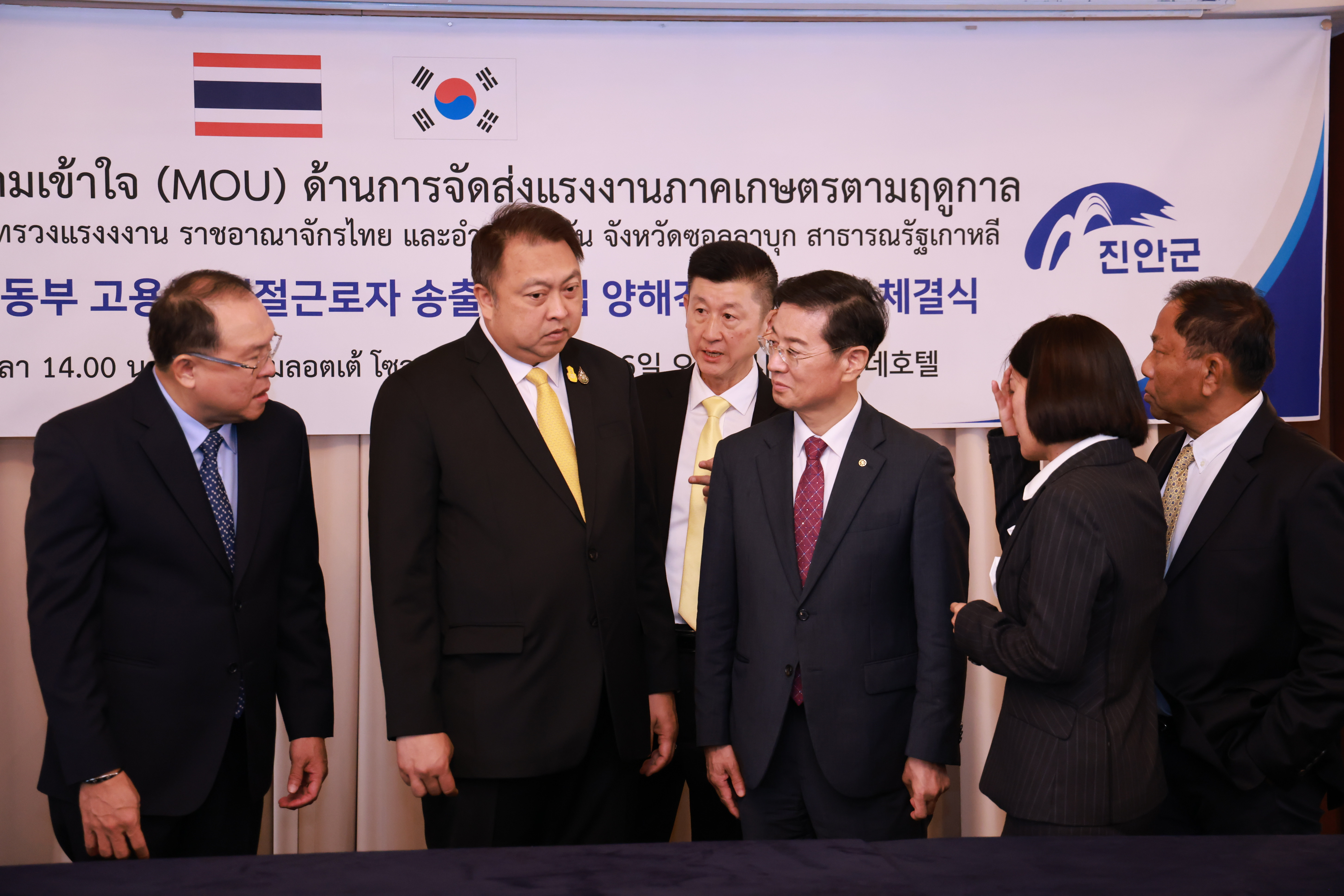
วันที่ 26 มิถุนายน 2566 นายสุชาติ ชมกลิ่น รัฐมนตรีว่าการกระทรวงแรงงาน นายสุรชัย ชัยตระกูลทอง ผู้ช่วยรัฐมนตรีประจำกระทรวงแรงงาน นายบุญชอบ สุทธมนัสวงษ์ ปลัดกระทรวงแรงงาน นายวิชชุ เวชชาชีวะ เอกอัครราชทูต ณ กรุงโซล และผู้บริหารระดับสูงกระทรวงแรงงาน ร่วมเป็นสักขีพยานการลงนามบันทึกความเข้าใจด้านการจัดส่งแรงงานภาคเกษตรตามฤดูกาล ระหว่างกรมการจัดหางาน กระทรวงแรงงาน ราชอาณาจักรไทย และอำเภอจินอัน จังหวัดซอลลาบุก สาธารณรัฐเกาหลี (MEMORANDUM OF UNDERSTANDING (MOU) ) ณ โรงแรม LOTTE Seoul สาธารณรัฐเกาหลี โดยมีนายไพโรจน์ โชติกเสถียร อธิบดีกรมการจัดหางาน และนายชุนซอง จอน นายอําเภอจินอัน ตัวแทนองค์กรปกครองส่วนท้องถิ่นของสาธารณรัฐเกาหลี เป็นผู้จรดปากกาลงนาม ท่ามกลางสักขีพยานทั้งสองฝ่าย
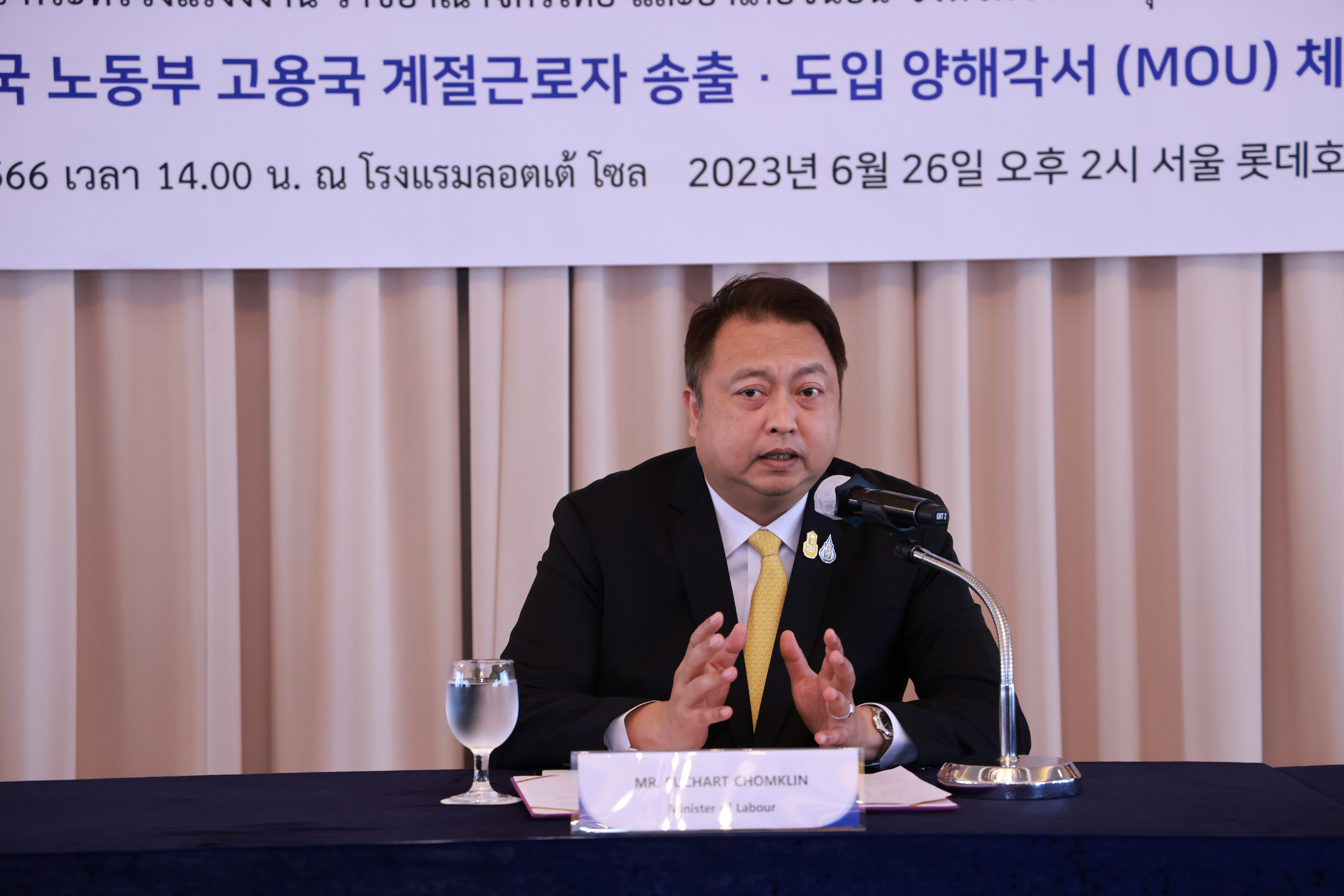
นายสุชาติ กล่าวว่า การลงนามความร่วมมือกับอำเภอจินอันในครั้งนี้ เป็นการเปิดตลาดอีกประเภทให้กับแรงงานไทย โดยนำร่องจัดส่งแรงงานภาคเกษตรของไทยเข้ามาทำงานภาคเกษตรและประมงตามฤดูกาล (วีซ่า E-8) ตามโครงการจัดส่งแรงงานเกษตรตามฤดูกาลซึ่งดำเนินการภายใต้กระทรวงยุติธรรมแห่งสาธารณรัฐเกาหลี เพื่อแก้ไขปัญหาการขาดแคลนแรงงานและพัฒนาเทคโนโลยีการเกษตร ซึ่งสืบเนื่องจากช่วงเดือนมิถุนายน ปี 2565 ที่ตนได้นำคณะผู้บริหารกระทรวงแรงงานเยือนสาธารณรัฐเกาหลีเพื่อเจรจาขยายตลาดแรงงานไทย ซึ่งบรรยากาศระหว่างกันเต็มไปด้วยไมตรีจิต ทางการเกาหลีตอบรับเป็นอย่างดี จึงหารือร่วมกันมาโดยตลอด เพื่อขจัดปัญหาและอุปสรรคจนนำมาสู่ความสำเร็จในการบรรลุข้อตกร่วมกันในวันนี้
สำหรับสาระสำคัญของการลงนาม MOU ทั้ง 2 ฝ่ายจะร่วมกันขับเคลื่อนกระบวนการจัดส่ง-รับแรงงานไทย เพื่อไปทำงานภาคเกษตรตามฤดูกาล ณ อำเภอจินอัน จังหวัดซอลลาบุก สาธารณรัฐเกาหลี ให้เกิดประโยชน์ บนหลักการพื้นฐานของความไว้วางใจและความเท่าเทียม และกำหนดมาตรการคุ้มครองแรงงานที่เหมาะสม เพื่อให้เกิดความมั่นใจว่าแรงงานตามฤดูกาลได้รับสิทธิและผลประโยชน์ตามความเหมาะสม สร้างการป้องกัน และดำเนินการอย่างมีประสิทธิภาพเพื่อต่อต้านการจัดส่งและรับแรงงานตามฤดูกาลโดยมิชอบด้วยกฎหมาย รวมถึงการค้ามนุษย์ด้านแรงงานและการจ้างแรงงานตามฤดูกาลอย่างผิดกฎหมาย สุดท้ายจัดหาแรงงานตามฤดูกาลเพื่อแก้ไขปัญหาการขาดแคลนแรงงานในภาคเกษตร ในอำเภอจินอัน จังหวัดซอลลาบุก สาธารณรัฐเกาหลี
“ความร่วมมือครั้งนี้จะช่วยให้เกาหลีใต้แก้ปัญหาการขาดแคลนแรงงานภาคเกษตรในช่วงฤดูกาลเก็บเกี่ยวได้ ส่วนฝ่ายไทยแรงงานเกษตรที่ว่างเว้นจากฤดูกาล หรือว่างงานในระหว่างรอถึงฤดูกาลเก็บเกี่ยวในแต่ละปี จะสามารถเคลื่อนย้ายไปประกอบอาชีพอื่น ๆ ชั่วคราว ช่วยให้เกษตรกรไทยมีรายได้เพิ่มขึ้น ซึ่งถือว่าเกิดประโยชน์แก่ทั้ง 2 ฝ่าย” รมว.แรงงาน กล่าว
ด้านนายไพโรจน์ โชติกเสถียร อธิบดีกรมการจัดหางาน กล่าวว่า ข้อดีของแรงงานไทยที่เดินทางไปทำงานด้วยวีซ่า E – 8 คือไม่ต้องทดสอบทักษะภาษาเกาหลีซึ่งเป็นปัญหาสำคัญของแรงงานไทย และผู้ที่เคยเดินทางไปทำงานแล้วยังสามารถไปซ้ำได้ในปีถัดไป โดยหลังจากนี้อำเภอจินอันจะรวบรวมความต้องการจ้างแรงงานจากนายจ้าง ตรวจสอบเอกสาร เพื่ออนุญาตการจ้างแรงงานไทย ก่อนส่งหนังสือแจ้งความต้องการแรงงาน (Demand letter)และสัญญาจ้าง (Employment contract) ให้กรมการจัดหางาน (ฝ่ายไทย) เพื่อประกาศรับสมัครคนหางานต่อไป เบื้องต้นทางการเกาหลีมีความต้องการจ้างแรงงาน ปีละไม่น้อยกว่า 5,000 คน เพื่อทำงานเพาะปลูก ปศุสัตว์ และประมง มีสัญญาจ้างไม่เกิน 5 เดือน รายได้มากกว่า 50,000 บาทต่อเดือน ซึ่งคาดว่าแรงงานไทยชุดแรกจะสามารถเดินทางไปทำงานได้ ภายใน 1 เดือน สำหรับคุณสมบัติเบื้องต้น ต้องอายุ 25 – 45 ปี มีการขึ้นทะเบียนเป็นเกษตรกรหรือมีประสบการณ์งานเกษตร 1 ปีขึ้นไป ไม่มีประวัติอาชญากรรม หรือประวัติพำนักผิดกฎหมายในสาธารณรัฐเกาหลี หรือถูกห้ามเดินทางเข้าสาธารณรัฐเกาหลี ไม่เป็นโรคติดต่อรวมไปถึงวัณโรค ไม่ติดยาเสพติด ไม่อยู่ระหว่างการตั้งครรภ์ หรือให้กำเนิดบุตรไม่เกินหนึ่งปีนับจากวันสมัคร
นายชุนซอง จอน นายอําเภอจินอัน กล่าวว่า ขอขอบคุณฝ่ายไทย โดยกระทรวงแรงงาน ที่มาลงนาม MOU กันในวันนี้ เพื่อช่วยแก้ไขปัญหาขาดแคลนแรงงานในเมืองจินอัน ทางเกาหลีใต้จะดูแลและให้ความคุ้มครองแรงงานไทยเป็นอย่างดี หากแรงงานคนใดอยู่ในระบบ “แรงงานซื่อสัตย์” จะให้เดินทางเข้ามาทำงาน แบบ Re-entry ได้
On June 26, 2023, the Labour Minister, Mr. Suchart Chomklin, the Assistant to the Labour Minister, Mr. Surachai Chaitrakulthong, the Permanent Secretary of Labour, Mr. Boonchob Suttamanaswong, Ambassador of Thailand to Seoul, Mr. Witchu Vejjajiva, and the Ministry of Labour’s senior executives, to witness the signing of the Memorandum of Understanding on the delivery of seasonal agricultural workers between the Ministry of Labour’s Department of Employment in Thailand and Jinan District, Jeollabuk-Do Province, of South Korea. The occasion took place at Lotte Seoul Hotel, South Korea. The Department of Employment’s Director-General, Mr. Pairoj Chotiksetian, and Jinan District Chief, Mr. Chun Song Jeon, a representative of the local government of South Korea, were the signatories among witnesses from both parties.
Mr. Suchart said that signing the MOU with Jinan District opens up another market for Thai workers. It pilots the delivery of Thai agricultural workers to work in the agriculture and fishery sectors (E-8 visa) under the seasonal agricultural worker delivery program operated by the Ministry of Justice of South Korea. The initiative aims to solve labour shortages and develop agricultural technology. This follows his visit to South Korea in June 2022, where he led the Ministry of Labour’s executives to negotiate the expansion of the Thai labour market. The atmosphere between the two parties was full of goodwill, and the Korean authorities responded well. Therefore, they discussed ways to eliminate problems and obstacles to lead to success in reaching a mutual agreement today.
The essence of the MOU signed today included both parties jointly driving the process of sending-receiving Thai workers to work in the agricultural sector in season at Jinan District, Jeollabuk-Do Province, South Korea. The agreement is based on the basic principles of trust and equality, determining appropriate labour protection measures to ensure that seasonal workers receive appropriate rights and benefits, building defenses, and taking effective action against the illegal delivery and acceptance of seasonal workers. It is also a safeguard against human trafficking and illegal seasonal workers. Finally, it aims to recruit seasonal workers to address labour shortages in agriculture in Jinan District, Jeollabuk-Do Province, South Korea.
“This cooperation will help South Korea solve agricultural worker shortages during harvest. As for the Thai agricultural workers who are free from the season or are unemployed while waiting for the harvest season each year, they will be able to temporarily move to other occupations and help Thai farmers earn more income which is considered beneficial to both parties,” said the Labour Minister.
The Department of Employment’s Director-General, Mr. Phairoj Chotikasatien, said that the advantage of Thai workers traveling to work with E-8 visas is that they do not have to test their Korean language skills, which is a major problem for Thai workers. Those who have already traveled for work can go again next year. After this, Jinan District will collect demands from employers to hire workers and check documents to allow the employment of Thai workers before submitting a demand letter and an employment contract to the Department of Employment (Thai side) to recruit job seekers. Initially, the Korean authorities wanted to hire at least 5,000 workers per year to work in farming, livestock, and fishery, with contracts of no more than five months, earning more than 50,000 Baht per month. The first Thai workers are expected to travel to work within one month. For initial qualifications, workers must be between 25 to 45 years old, registered as a farmer, or have experience working in agriculture for at least one year without a criminal record, history of illegal residence in South Korea, or banned from traveling to South Korea. They must be free of contagious diseases, including tuberculosis, not addicted to drugs, not be pregnant, or give birth to a child within one year from the date of application.
Jinan District Chief, Mr. Chun Song Jeon, said he would like to thank the Thai party represented by the Ministry of Labour for signing the MOU today to help resolve labour shortages in Jinan, South Korea. They will take good care of and protect Thai workers. If any workers are in the system and are “honest workers,” they can travel to work in the form of re-entry.
+++++++++++++++++++++++
กองเผยแพร่และประชาสัมพันธ์/Division of Public Relations