

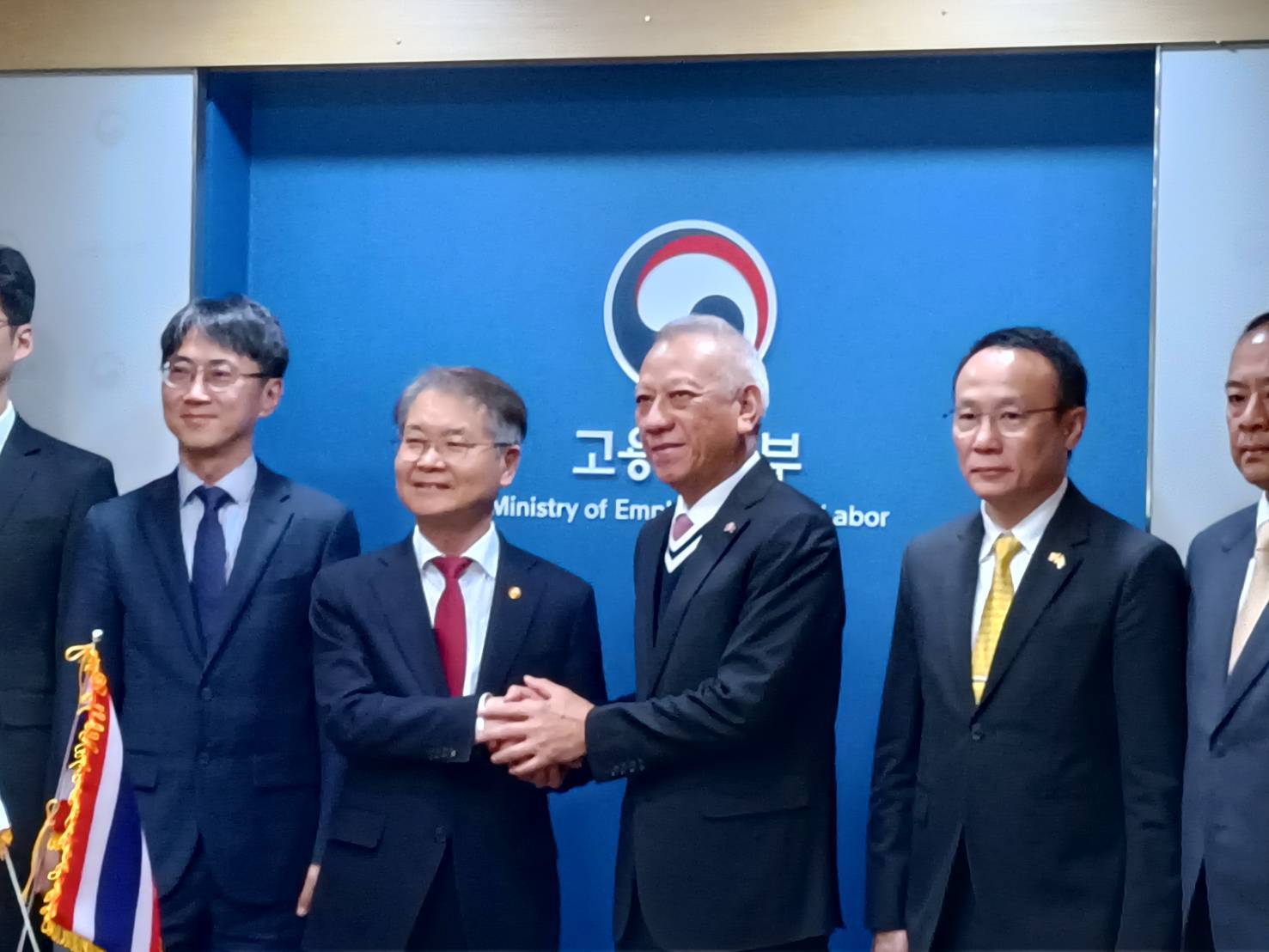
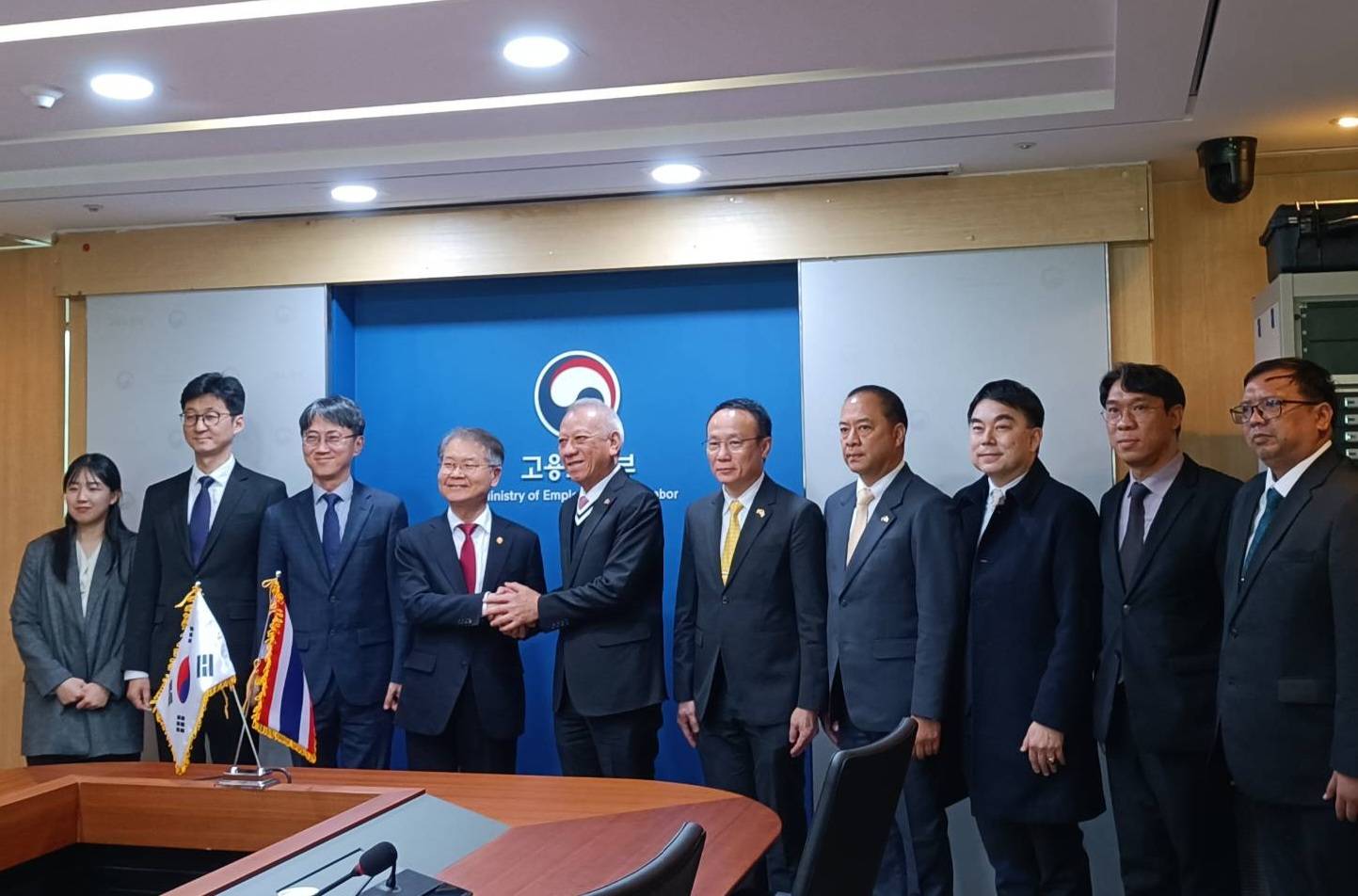
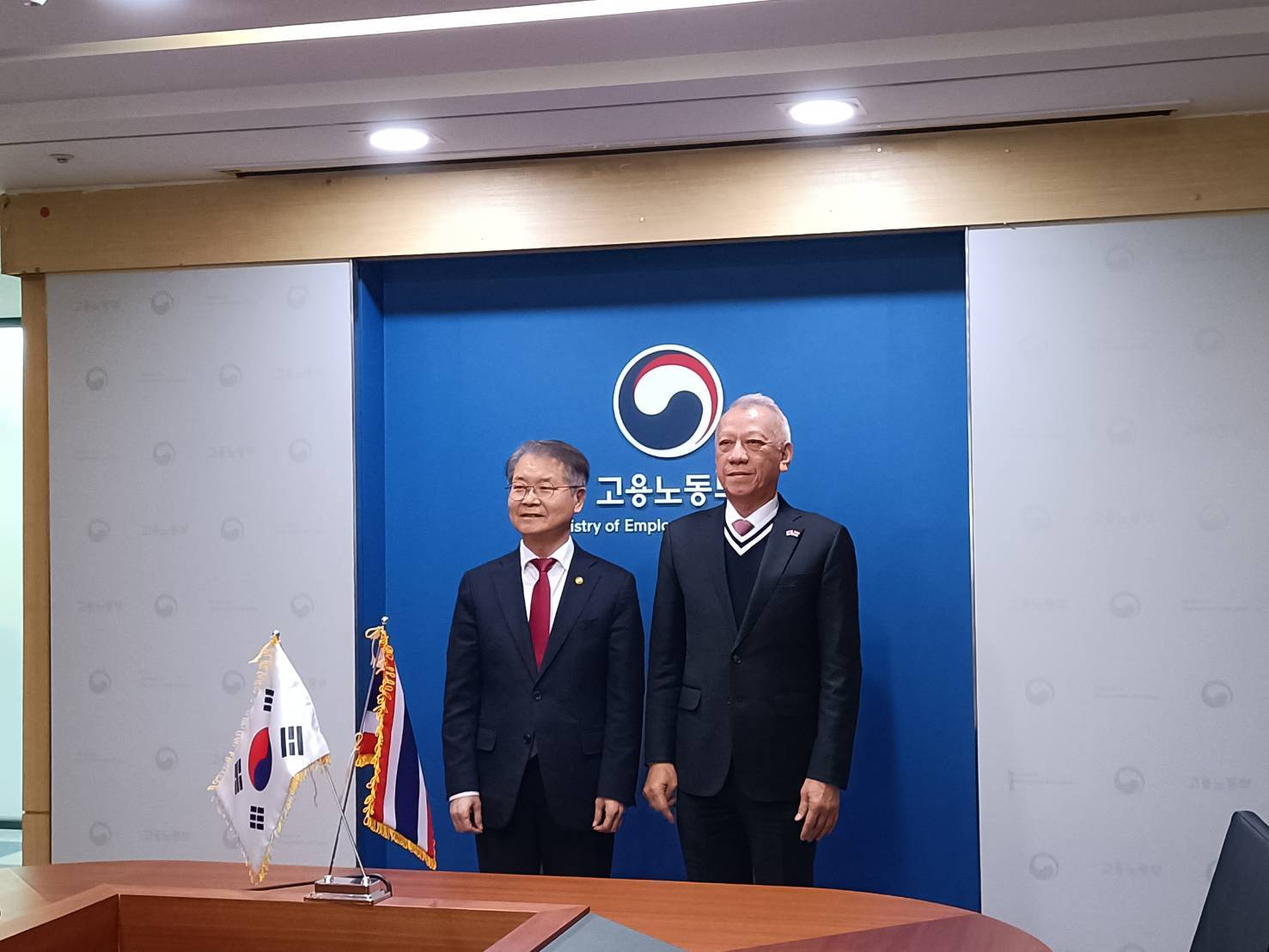
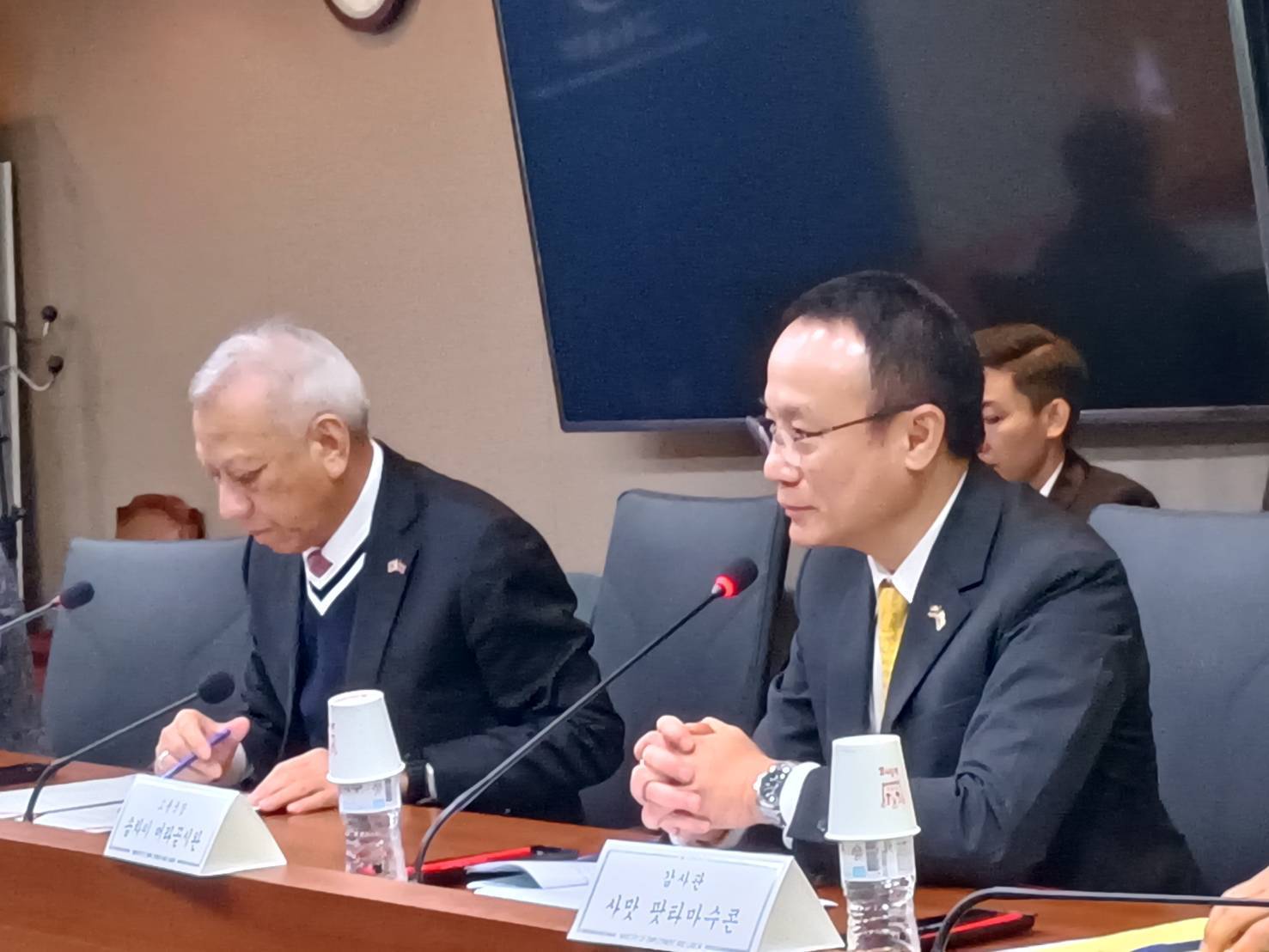
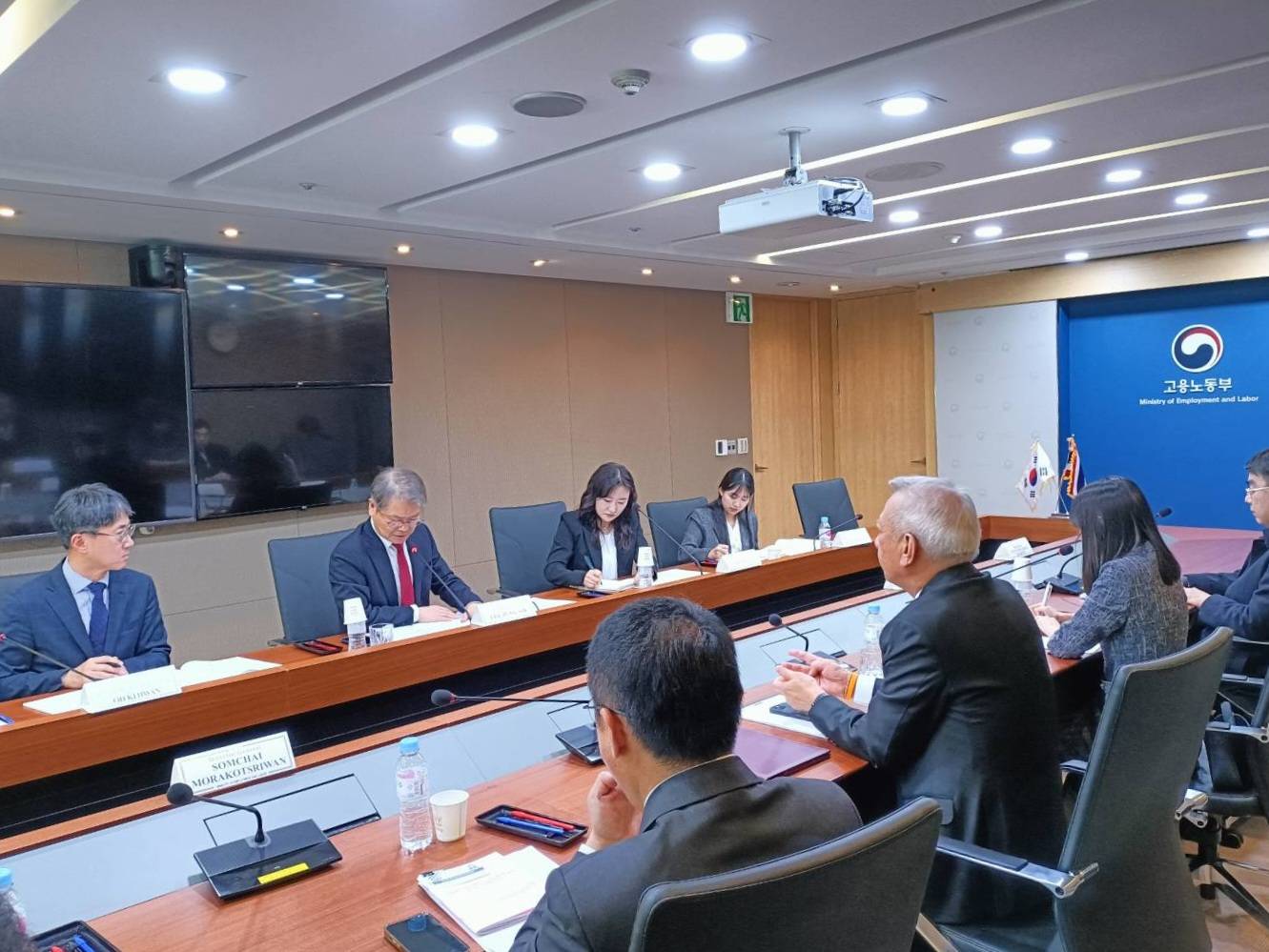
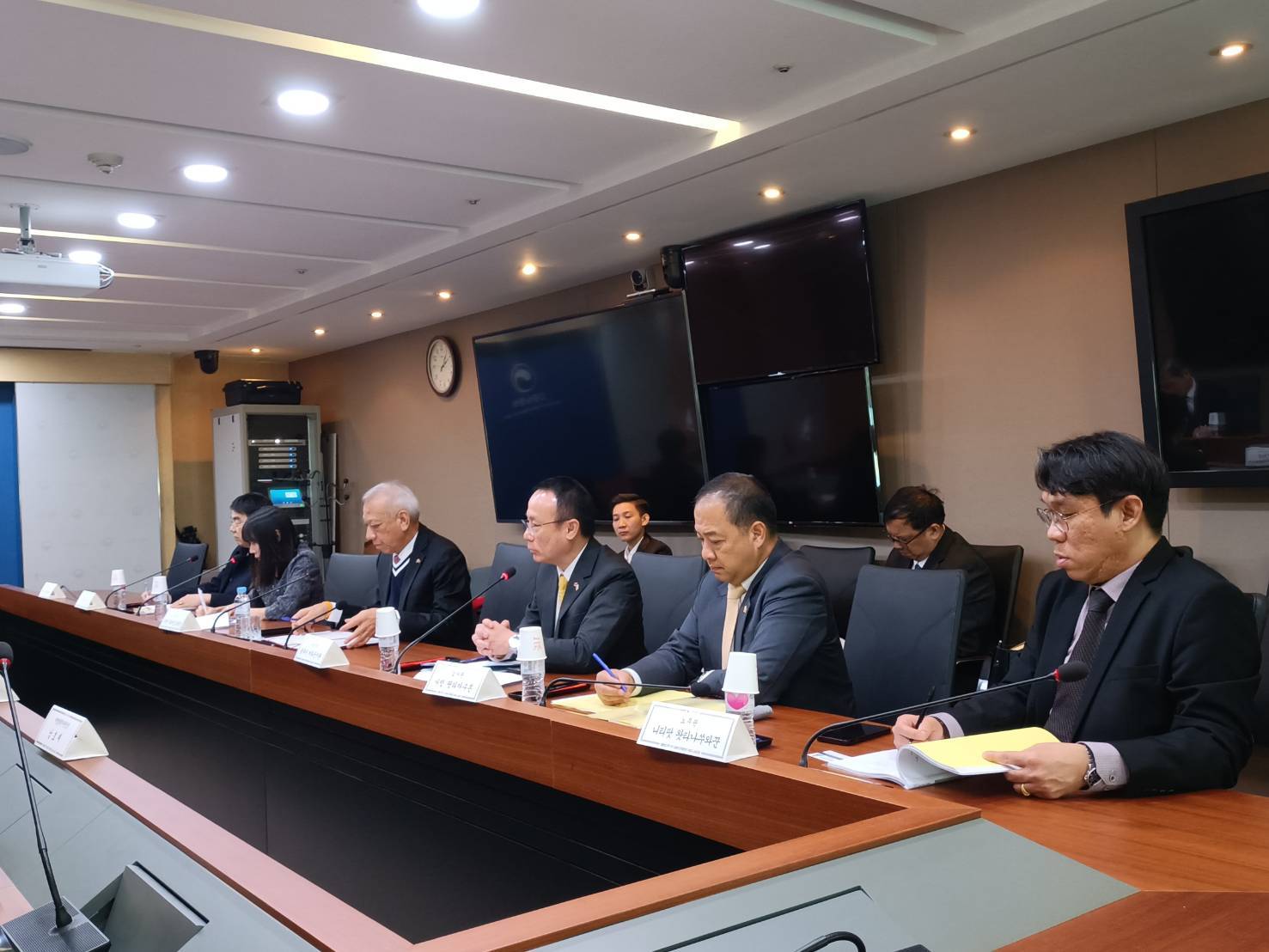
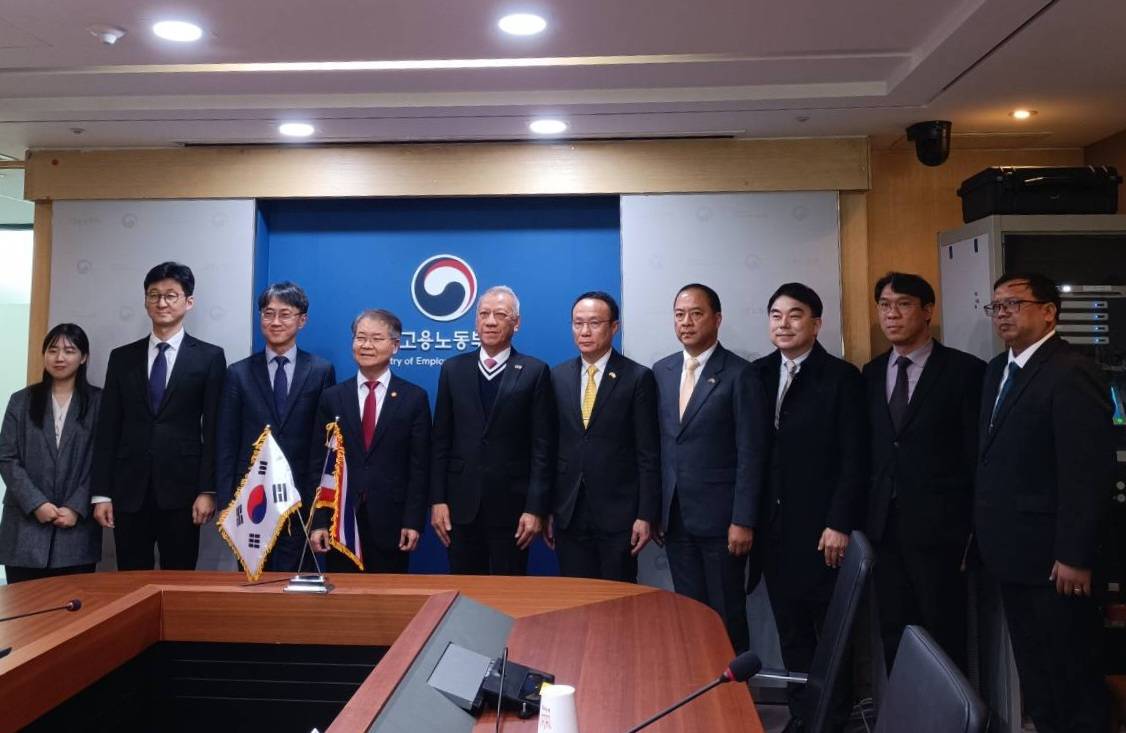
วันที่ 14 มีนาคม 2567 นายพิพัฒน์ รัชกิจประการ รัฐมนตรีว่าการกระทรวงแรงงาน พร้อมด้วยนายสมชาย มรกตศรีวรรณ อธิบดีกรมการจัดหางาน และนายสมาสภ์ ปัทมะสุคนธ์ ผู้ตรวจราชการกระทรวงแรงงาน เข้าเยี่ยมคารวะ นายลี จอง ชิก รัฐมนตรีว่าการกระทรวงแรงงานและการจ้างงาน แห่งสาธารณรัฐเกาหลี ณ กระทรวงแรงงานและการจ้างงานแห่งสาธารณรัฐเกาหลี เพื่อหารือข้อราชการ ประเด็นการเพิ่มโควตาจัดส่งแรงงานไทย ภายใต้ระบบแรงงานต่างชาติ EPS และการแก้ปัญหาแรงงานผิดกฎหมาย โดยมีนายบัญชา ยืนยงจงเจริญ อุปทูต ณ กรุงโซล นายนิธิพัฒน์ วัฒนสุวกุล อัครราชทูตที่ปรึกษา (ฝ่ายแรงงาน) เข้าร่วมในครั้งนี้ด้วย
นายพิพัฒน์ กล่าวว่า สาธารณรัฐเกาหลีมีนโยบายกำหนดค่าจ้างขั้นต่ำในอัตราสูงตามภาวะการครองชีพ และมีกฎหมายมาตรฐานแรงงานที่ส่งเสริมคุณภาพชีวิตการทำงาน ทำให้เกาหลีใต้กลายเป็นจุดหมายสำคัญในการเดินทางไปทำงานของแรงงานต่างชาติทุกชาติ ไม่เว้นแรงงานชาวไทย ประกอบกับเกาหลีใต้ขาดแคลนแรงงานทักษะต่ำ โดยเฉพาะในภาคอุตสาหกรรมการผลิตขนาดกลางและขนาดย่อม งานภาคเกษตรกรรม และงานบริการ ซึ่งฝ่ายไทยได้เจรจาขอเพิ่มโควตานำเข้าแรงงานต่างชาติ (EPS) ในปี 2567 สำเร็จ โดยเกาหลีใต้เพิ่มโควตางานภาคอุตสาหกรรม เป็น 5,500 อัตรา หรือเพิ่มขึ้นร้อยละ 15 จากปี 2566 และยังชื่นชมกระบวนการจัดส่งแรงงานโดยกรมการจัดหางานว่าเป็นไปอย่างโปร่งใส มีประสิทธิภาพ จึงให้ประเทศไทยจัดส่งแรงงานภาคบริการ และท่องเที่ยว เพิ่มขึ้นอีกหนึ่งประเภทกิจการ เพื่อไปทำงานในโรงแรม รีสอร์ท ร้านอาหาร ซึ่งถือเป็นโอกาสดีของแรงงานเพศหญิง และเสนอการประชาสัมพันธ์เชิงรุก ตามโครงการเปลี่ยนวีซ่าแรงงานไร้ฝีมือ E-9 เป็นแรงงานฝีมือ วีซ่า E-7-4 เพื่อแก้ไขปัญหาขาดแคลนแรงงานทักษะให้เกาหลี พร้อมกับช่วยให้แรงงานไทยมีรายได้ สวัสดิการ และเงื่อนไขการพำนักในเกาหลีที่ดีขึ้น โดยฝ่ายไทยยังเสนอให้พิจารณาโควตาทักษะฝีมือ (E-7) ให้แรงงานไทย ซึ่งฝ่ายเกาหลีจะรวบรวมข้อเสนอจากประเทศผู้ส่งให้กระทรวงยุติธรรมพิจารณาต่อไป นอกจากนี้ฝ่ายไทยเสนอให้กระทรวงยุติธรรมพิจารณาขยายระยะเวลาโครงการนิรโทษกรรม เพื่อเดินทางกลับประเทศโดยสมัครใจ ทางการเกาหลีแจ้งว่าไม่สามารถดำเนินการได้ แต่การแก้ไขปัญหาแรงงาน ผิด กฎหมายของฝ่ายไทย จะส่งผลดีต่อการพิจารณาโควตาแรงงานไทยในปีต่อๆไป
ด้านนายสมชาย มรกตศรีวรรณ อธิบดีกรมการจัดหางาน กล่าวว่า การเดินทางเยือนสาธารณรัฐเกาหลีในครั้งนี้ มีเป้าหมายสำคัญคือการเพิ่มโอกาสการจัดส่งแรงงานไทยไปทำงานต่างประเทศ ตามนโยบายที่ท่านรัฐมนตรีฯ พิพัฒน์มอบไว้ให้กรมการจัดหางาน ซึ่งการจะบรรลุวัตถุประสงค์ได้ต้องอาศัยความร่วมมือจากรัฐบาลเกาหลีใต้ ในการแสวงหาโอกาส ลดข้อจำกัด และสร้างสรรค์แนวทางแก้ไขปัญหาอย่างมีประสิทธิภาพ เพื่อให้ความต้องการของประเทศผู้รับ และประเทศผู้ส่งแรงงานสอดคล้อง เกิดประโยชน์ร่วมกันทุกฝ่าย สามารถขับเคลื่อนเศรษฐกิจเกาหลีใต้ ไปพร้อมกับส่งเสริมแรงงานไทยให้มีคุณภาพชีวิตที่ดีขึ้น
On March 14, 2024, the Labour Minister, Mr. Phiphat Ratchakitprakarn, the Department of Employment’s Director-General, Mr. Somchai Morakotsriwan, and the Ministry of Labour’s Inspector-General, Mr. Samat Pattamasukon, paid a courtesy call to the Minister of Employment and Labour of the Republic of Korea, Mr. Lee Jung-Sik, to discuss government matters on increasing the quota for sending Thai workers under the EPS foreign labour system and solving illegal labour issues. The Charge d’Affaires in Seoul, Mr. Bancha Yuenyongjongcharoen, and the Minister Counselor (on Labour) at the Royal Thai Embassy in Seoul, Mr. Nithipat Watanasuwakul, also joined the occasion.
Mr. Phiphat said that the Republic of Korea has a policy of setting a high minimum wage based on living conditions. There are labour standards and laws that promote the quality of working life, making South Korea an important destination for foreign workers of all nations, including Thai workers. In addition, South Korea has a shortage of low-skilled workers, especially in the small and medium-sized manufacturing industry, agricultural industry, and service work. Thailand has successfully negotiated to increase the quota for importing foreign workers (EPS) in 2024, with South Korea increasing the industrial job quota to 5,500 positions, or an increase of 15 percent from 2023. They also praised the worker delivery process by the Department of Employment, saying that it is transparent and effective, therefore allowing Thailand to send service sector workers and add another type of business for work in hotels, resorts, and restaurants, which is considered a good opportunity for female workers. It also offers proactive public relations according to the project to change the E-9 unskilled worker visa to the E-7-4 skilled worker visa to solve the issue of skilled labour shortages in Korea. The efforts also help Thai workers have better incomes, welfare, and conditions for staying in Korea. Thailand also proposed to consider the skill quota (E-7) for Thai workers. The Korean representatives will collect proposals from sending countries for the Ministry of Justice to consider. In addition, Thailand proposed that the Ministry of Justice consider extending the period of the amnesty program to return to the country voluntarily. The Korean authorities said they could not proceed with this but that Thailand’s efforts to solve the problem of illegal workers will have a positive impact on the consideration of Thai labour quotas in the coming years.
The Department of Employment’s Director-General, Mr. Somchai Morakotsriwan, said that one of the main goals of this trip to the Republic of Korea is to increase opportunities for sending Thai workers to work abroad, following the policy set by the Labour Minister to the Department of Employment. To achieve this objective, cooperation from the South Korean government is required in seeking opportunities, reducing limitations, and creating effective solutions to problems to meet the needs of the recipient country and labour-sending countries, so that it is mutually beneficial to all parties. Such efforts will drive the South Korean economy and promote Thai workers to have a better quality of life.