

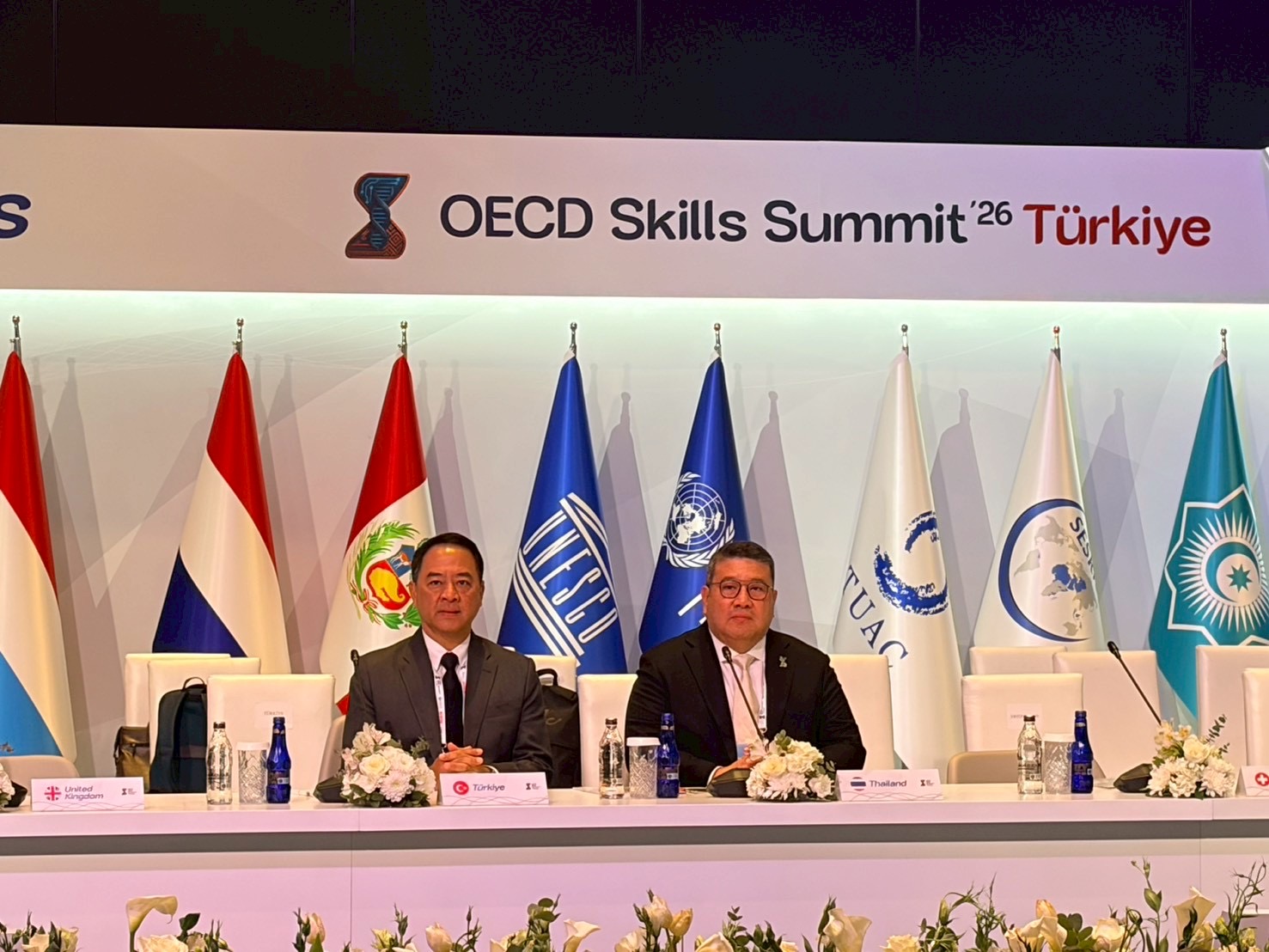
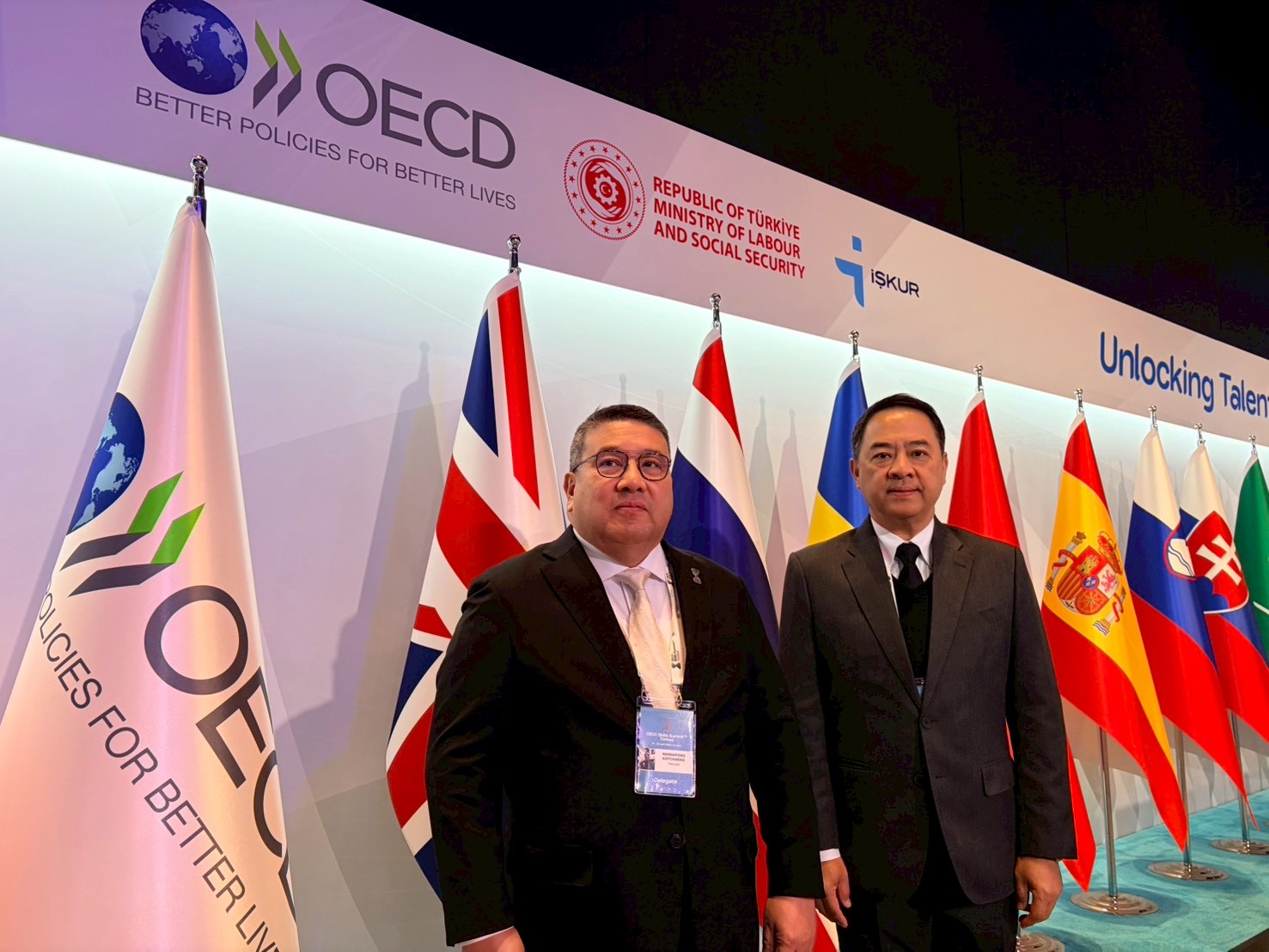
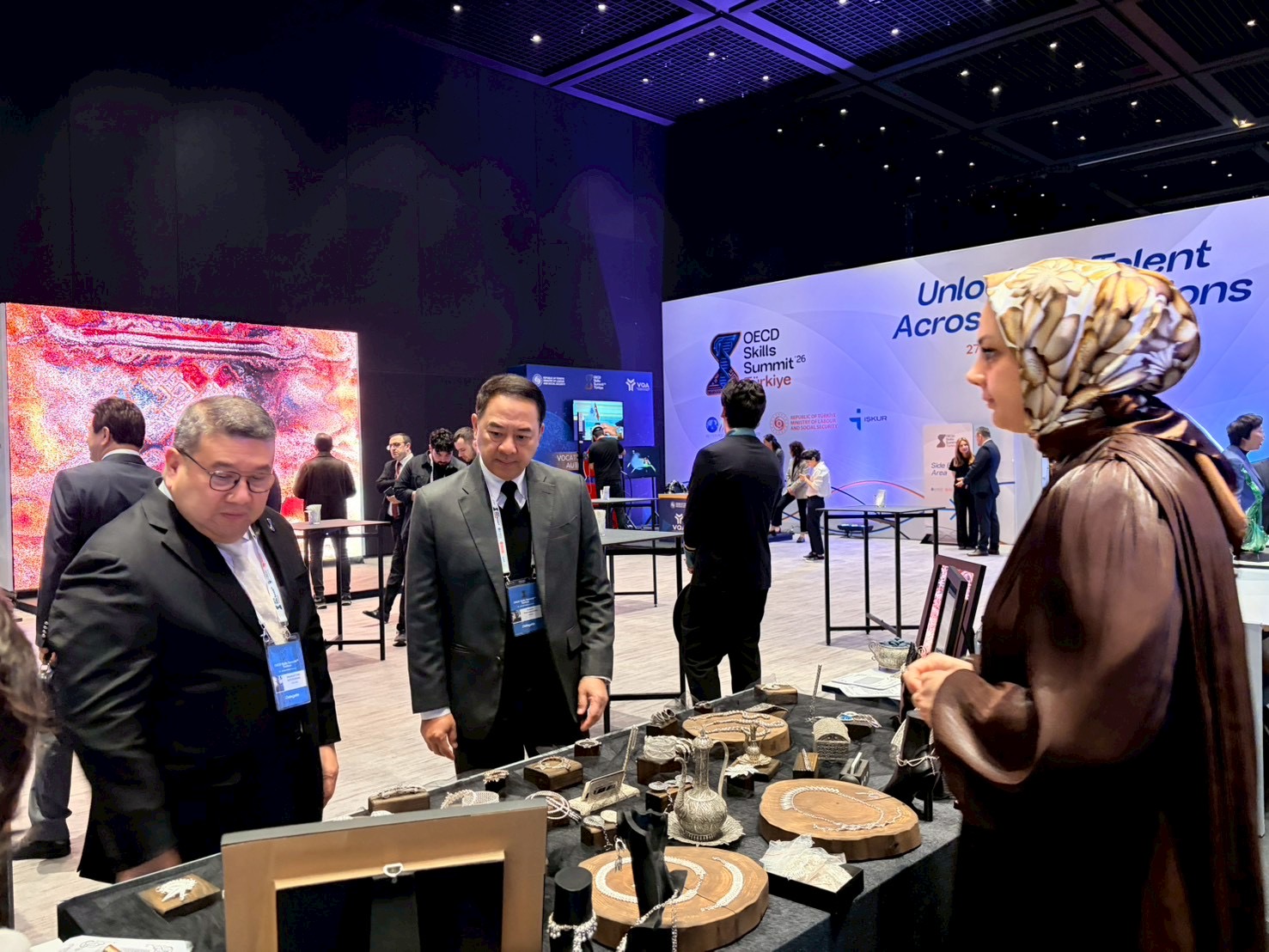
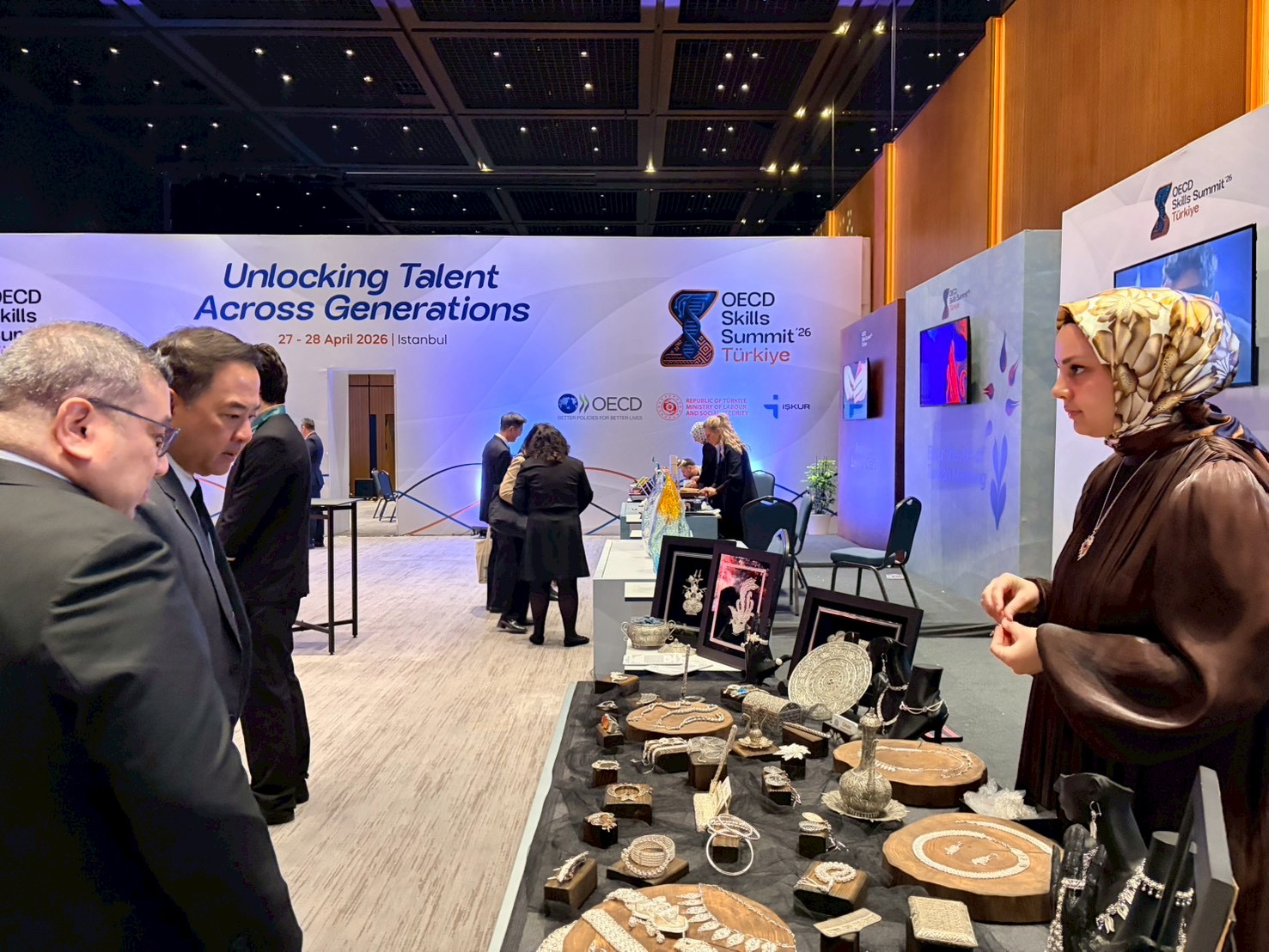
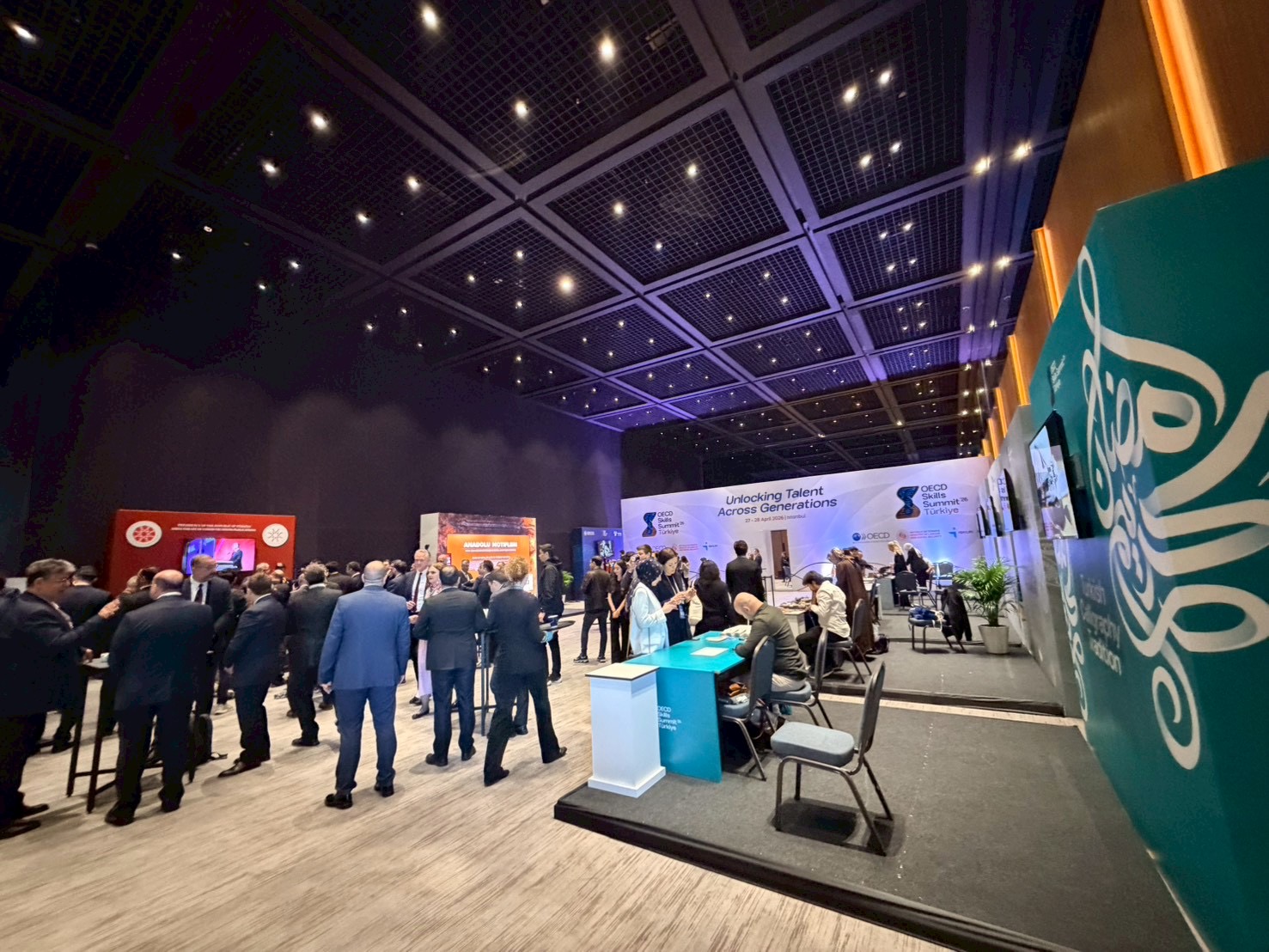
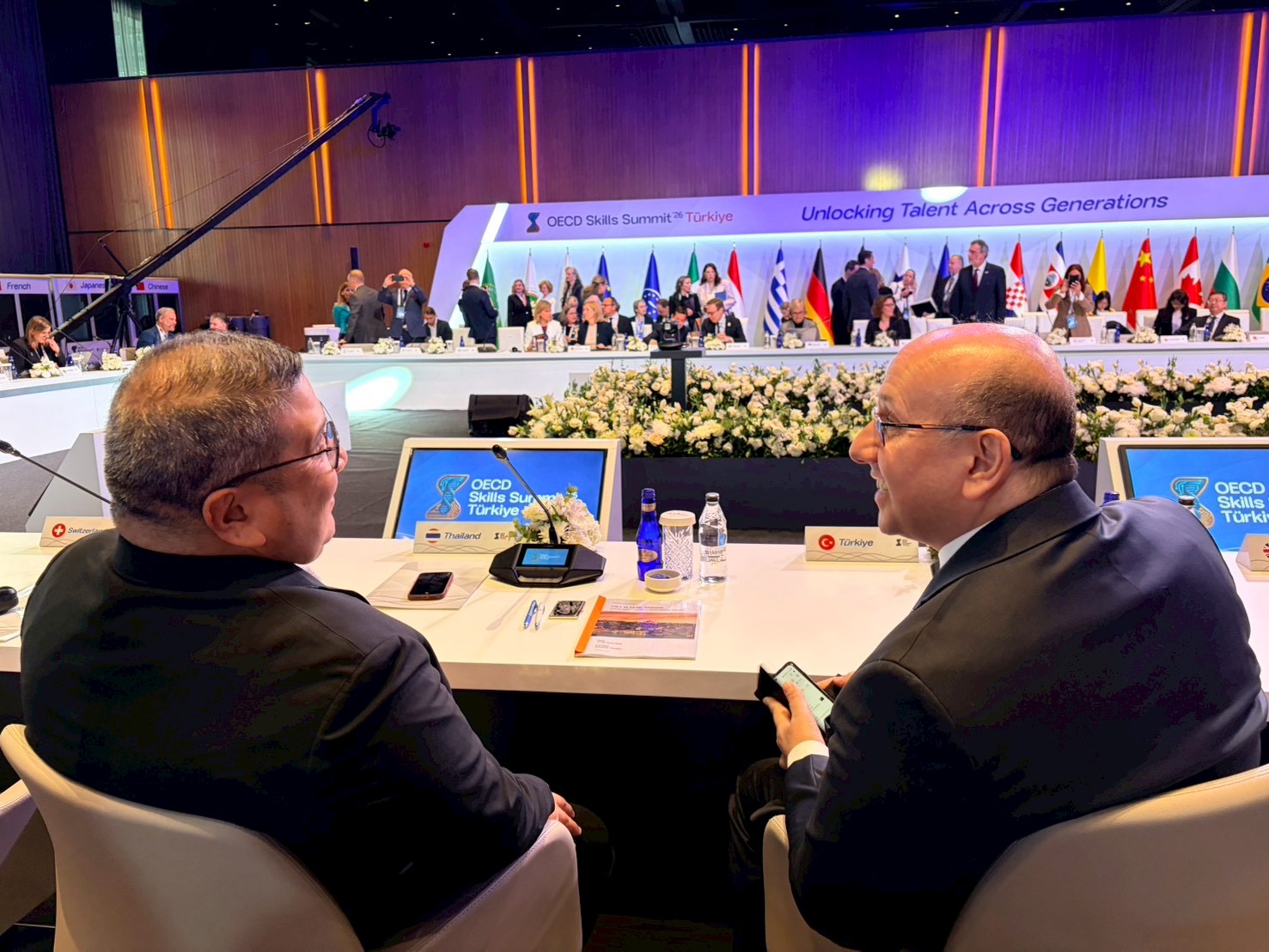
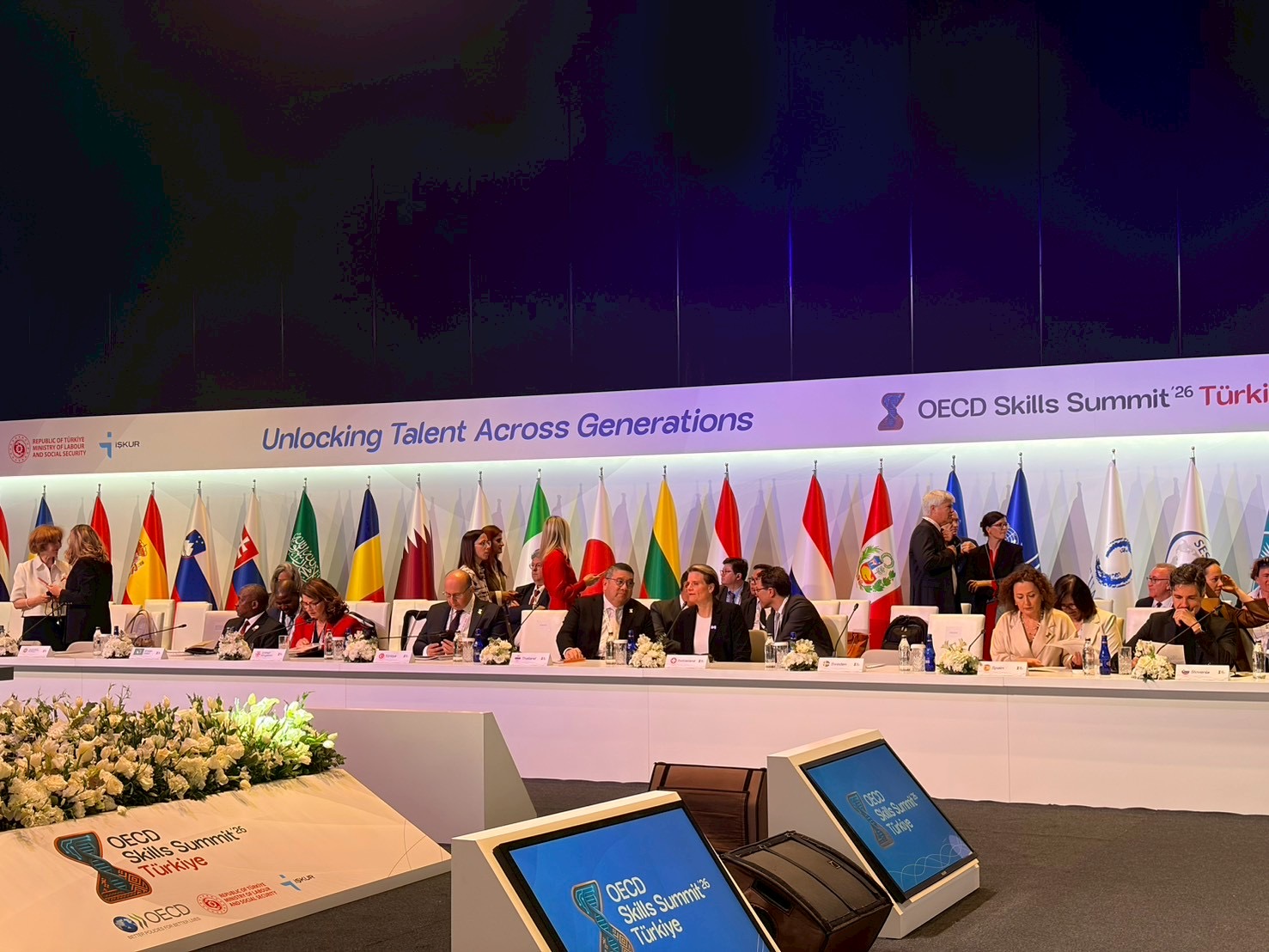
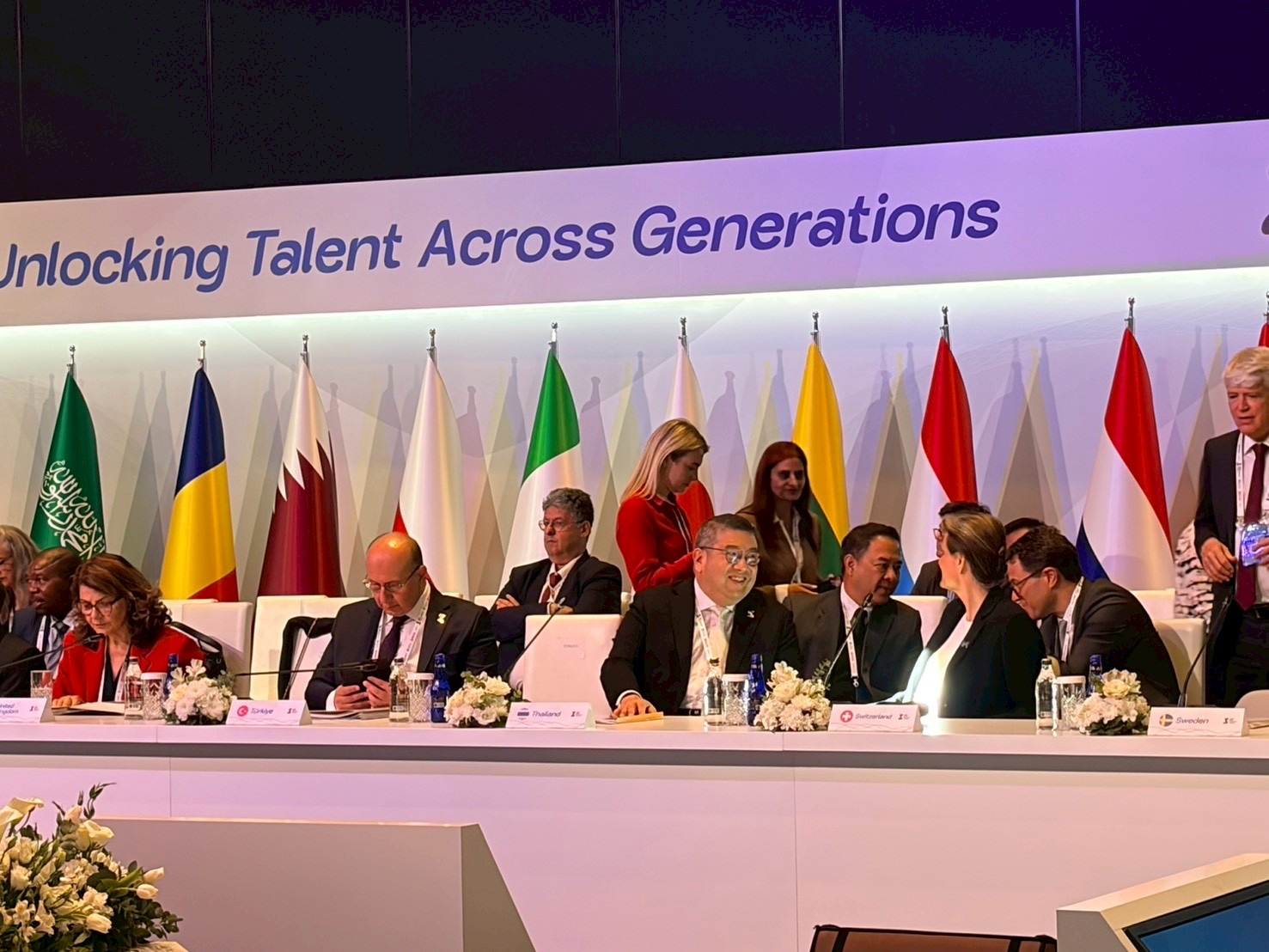
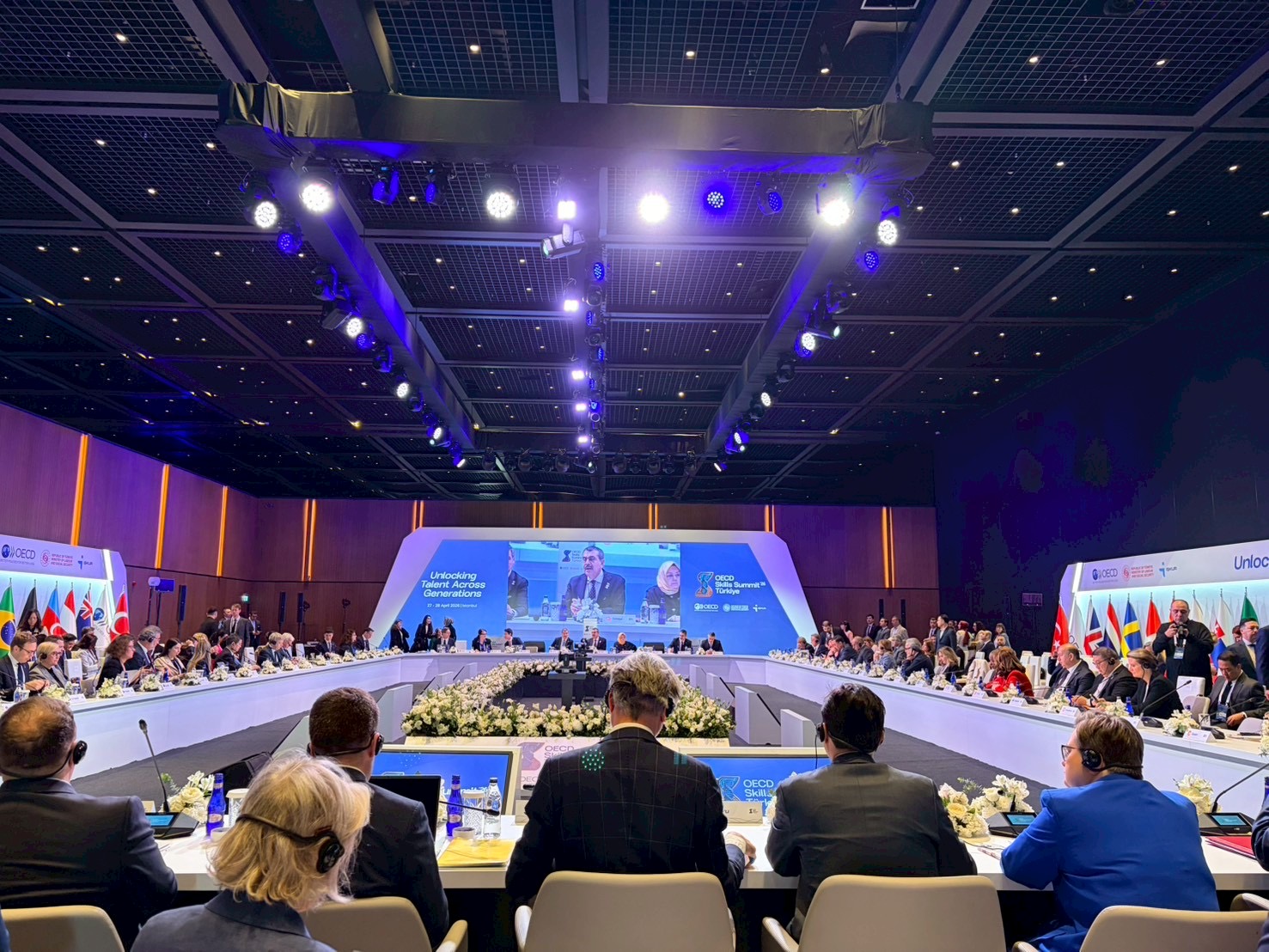
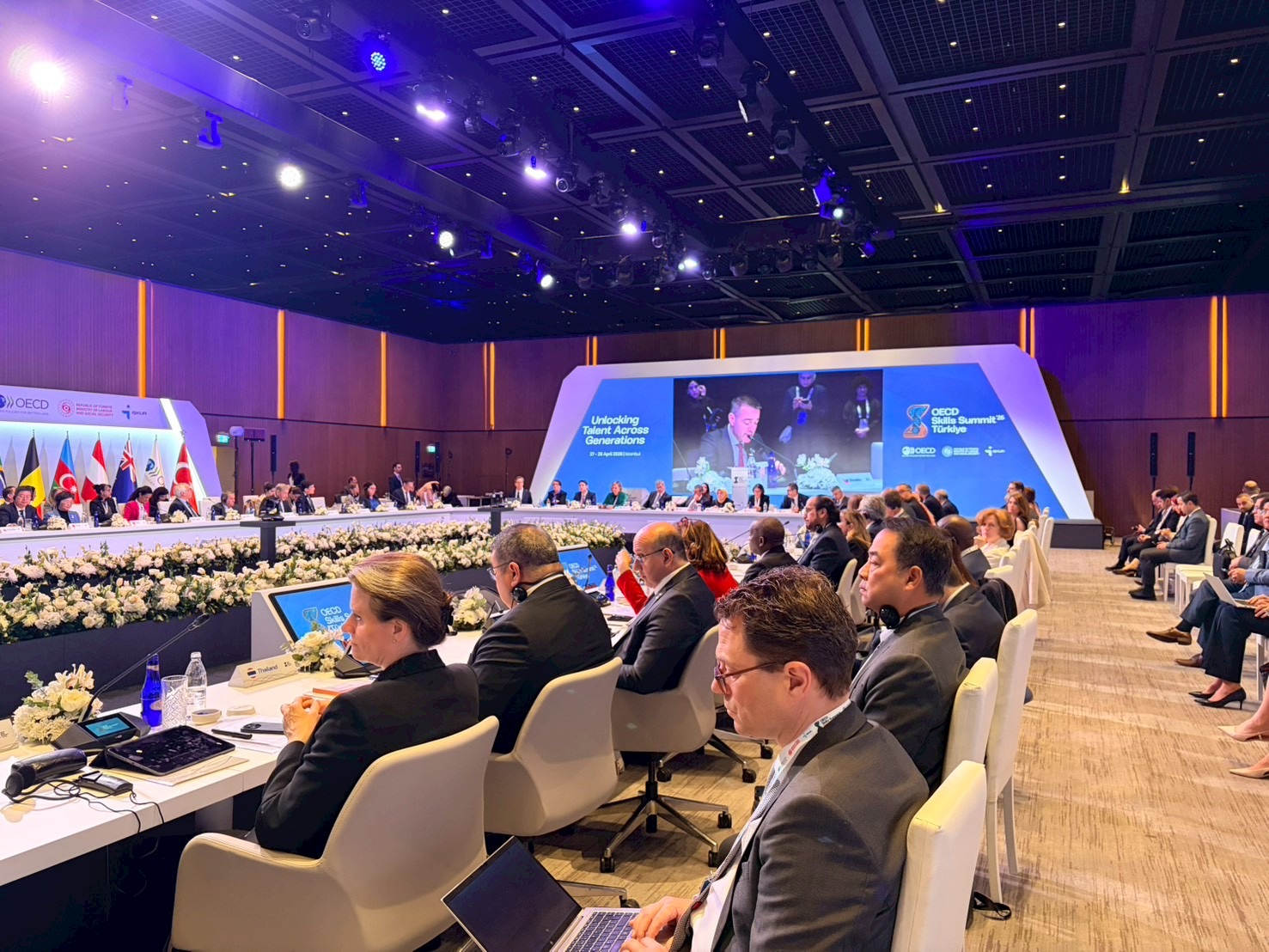
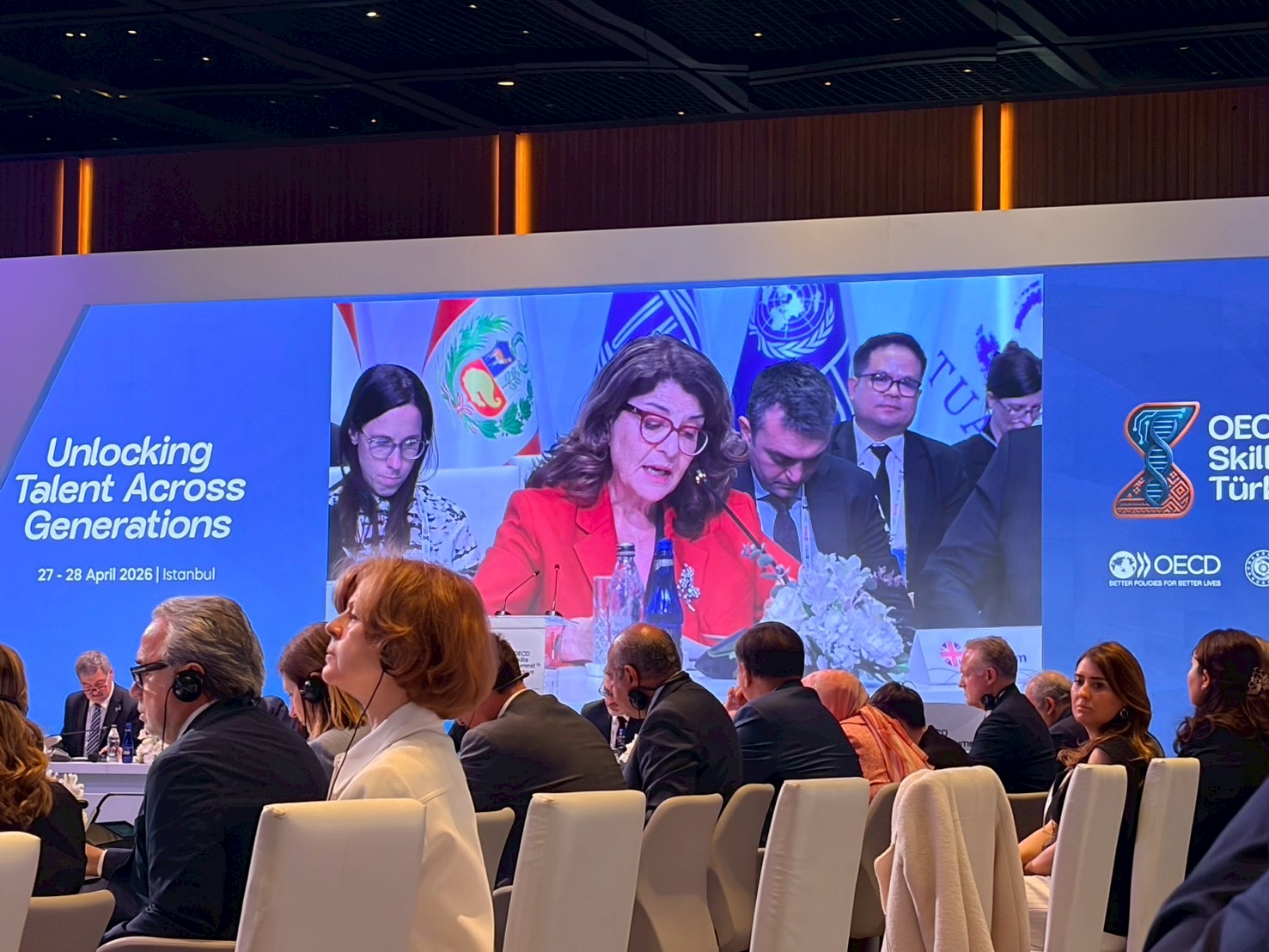
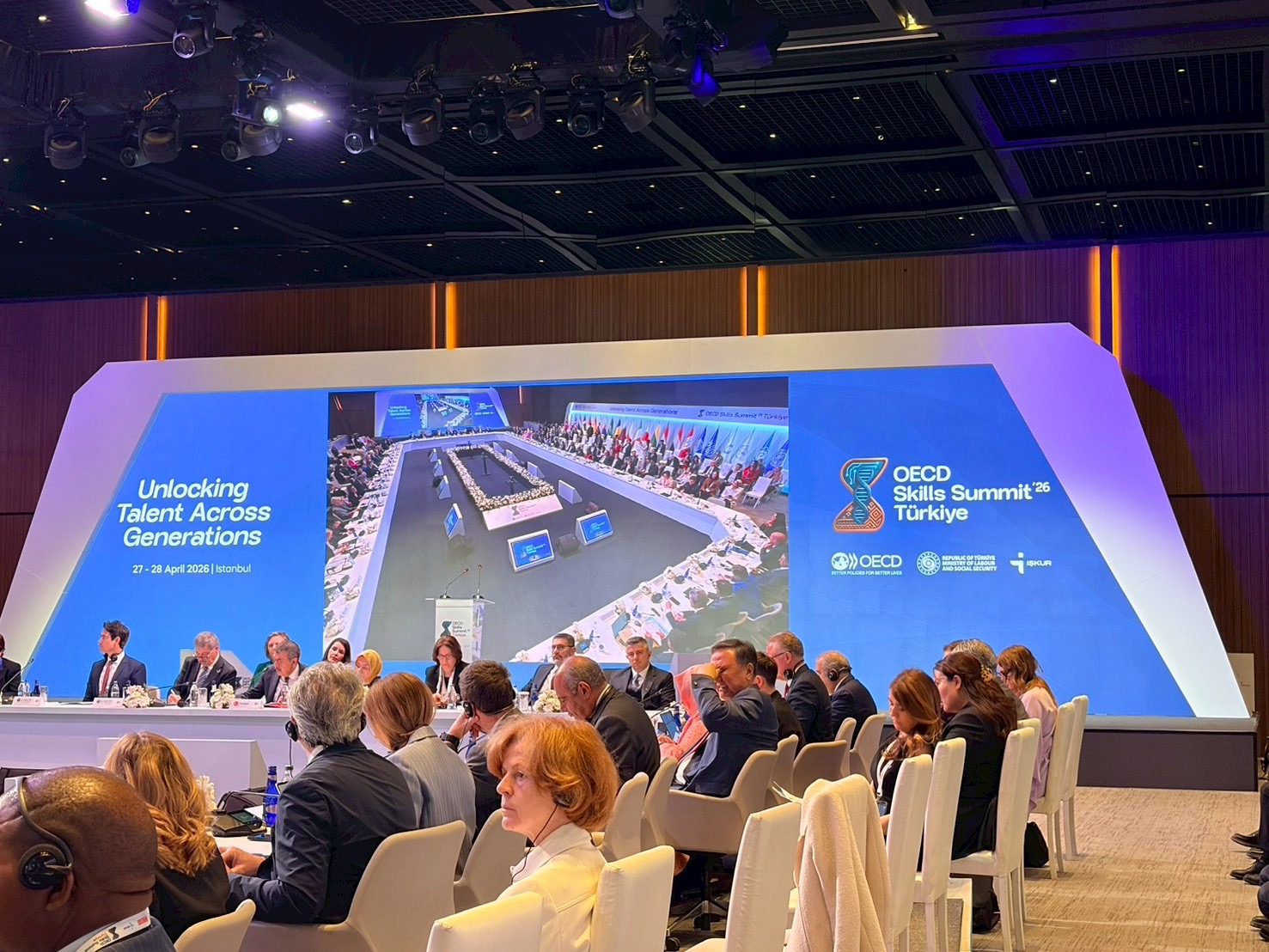
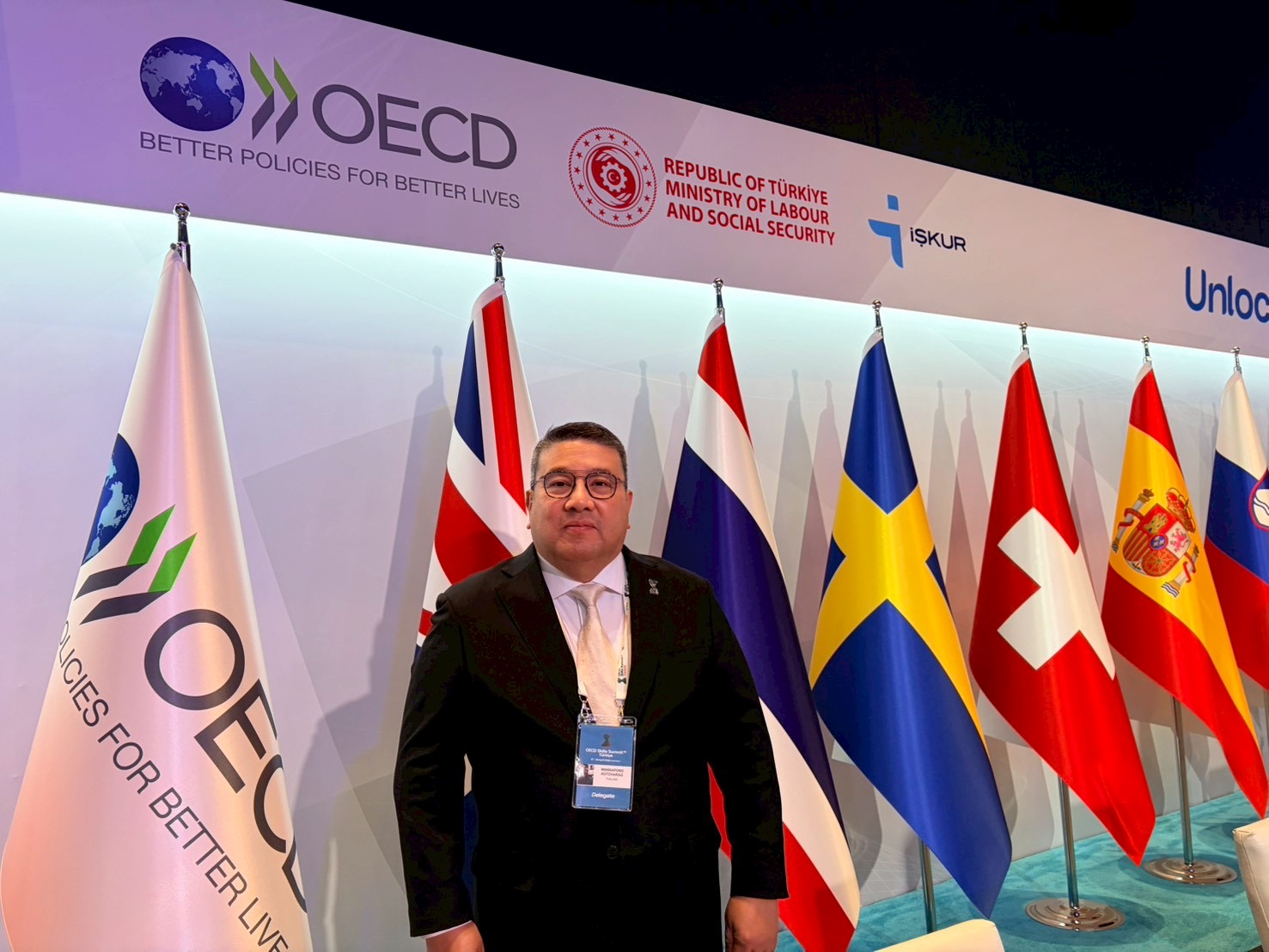
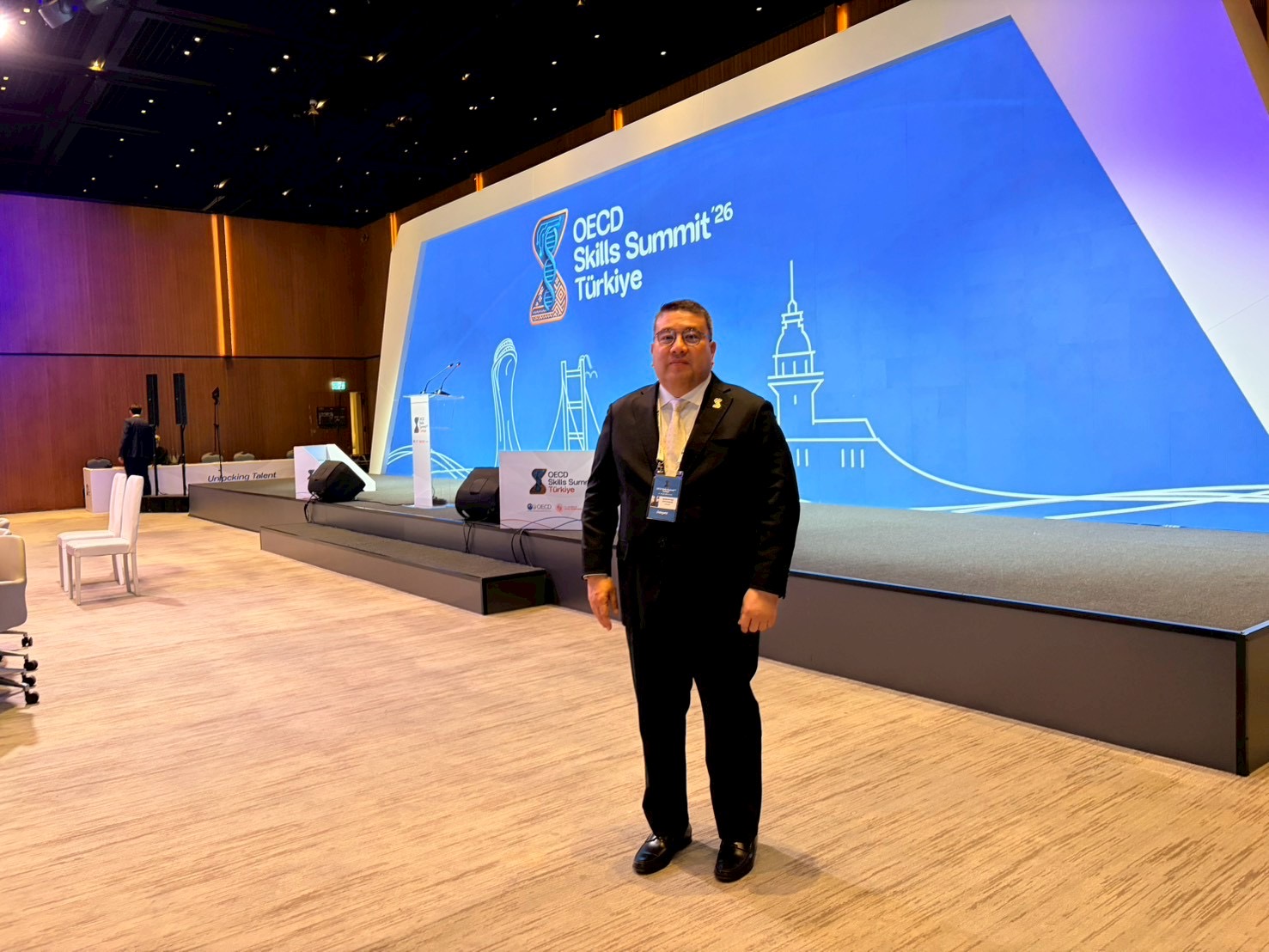
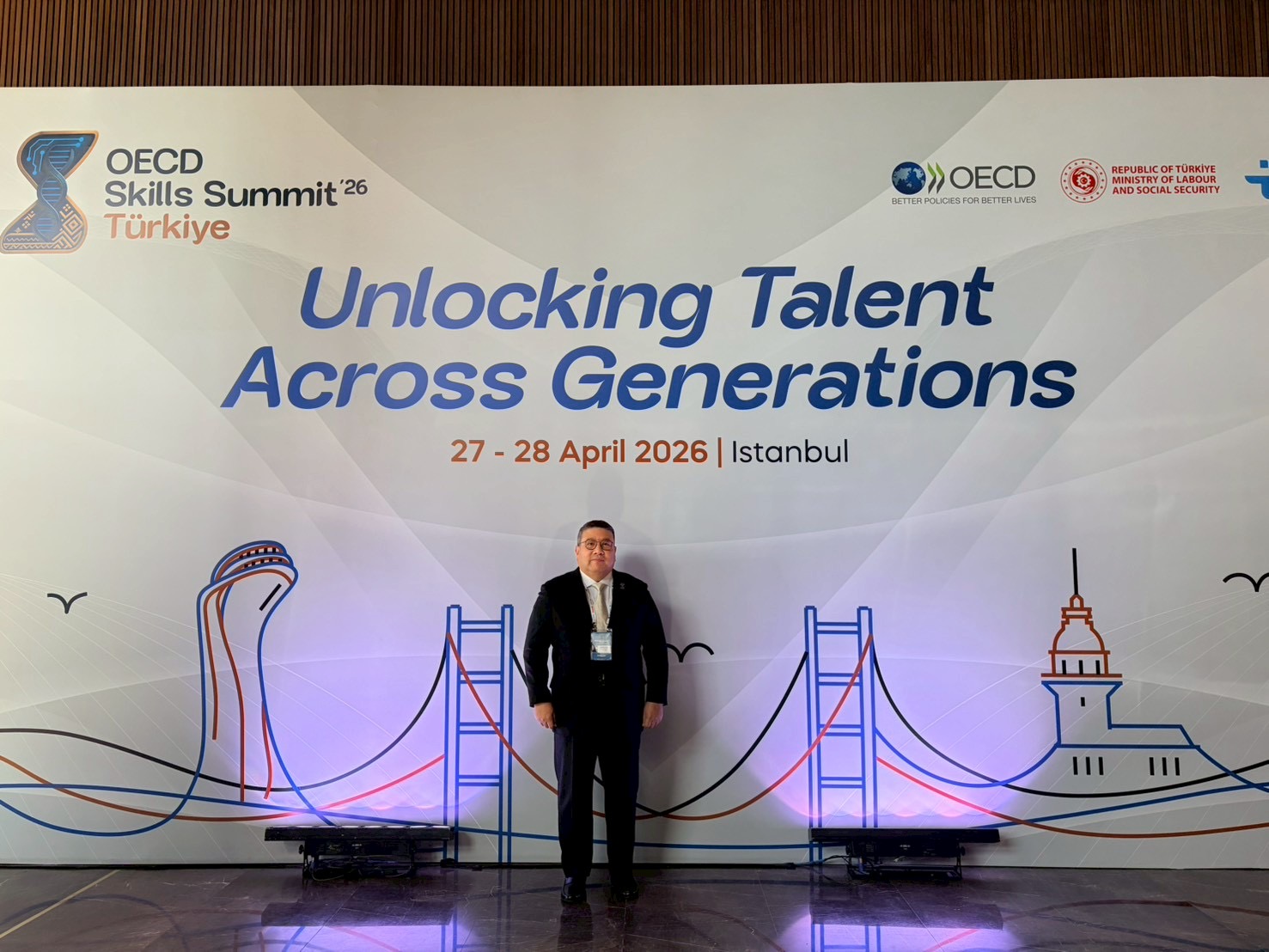
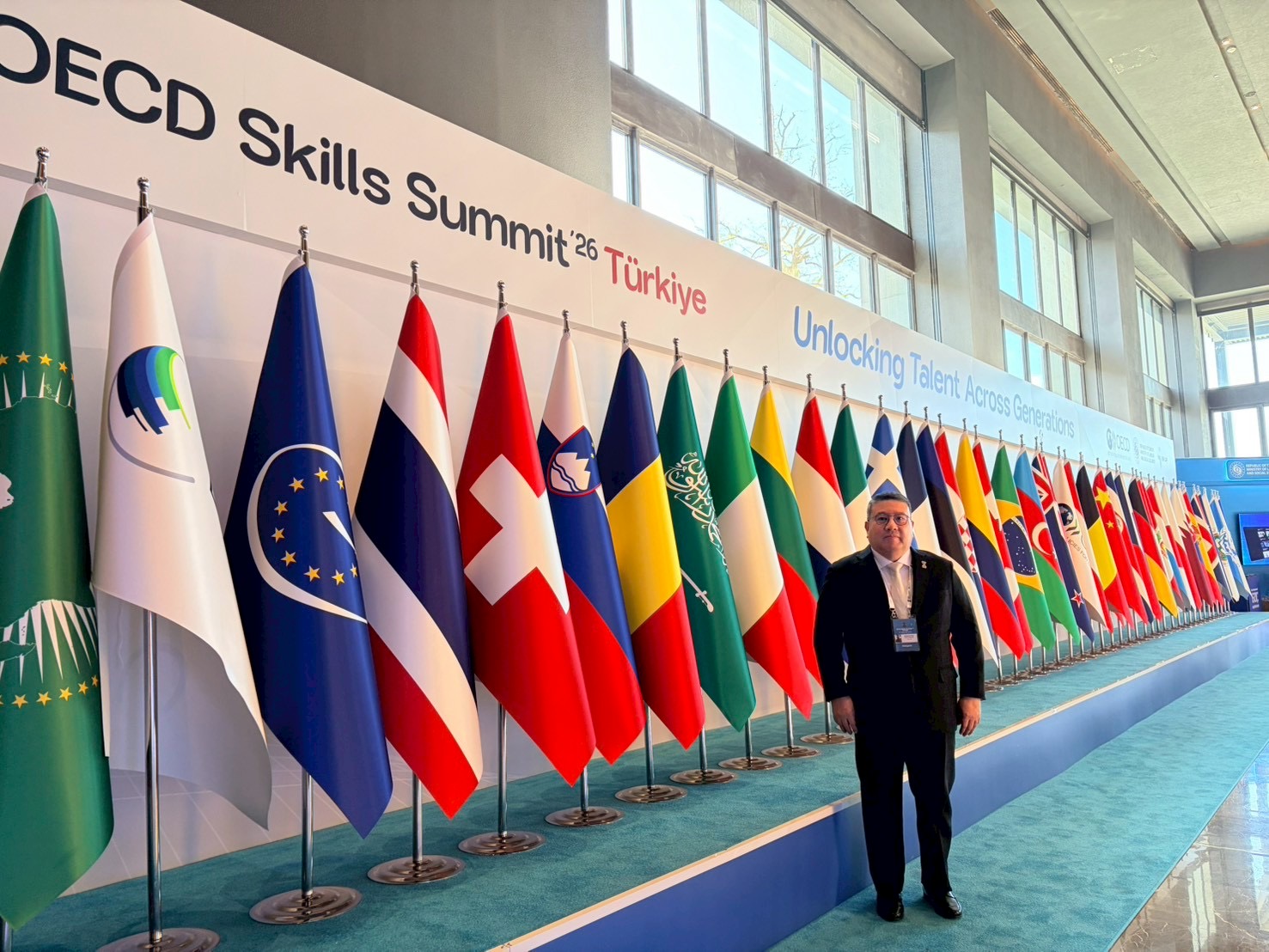
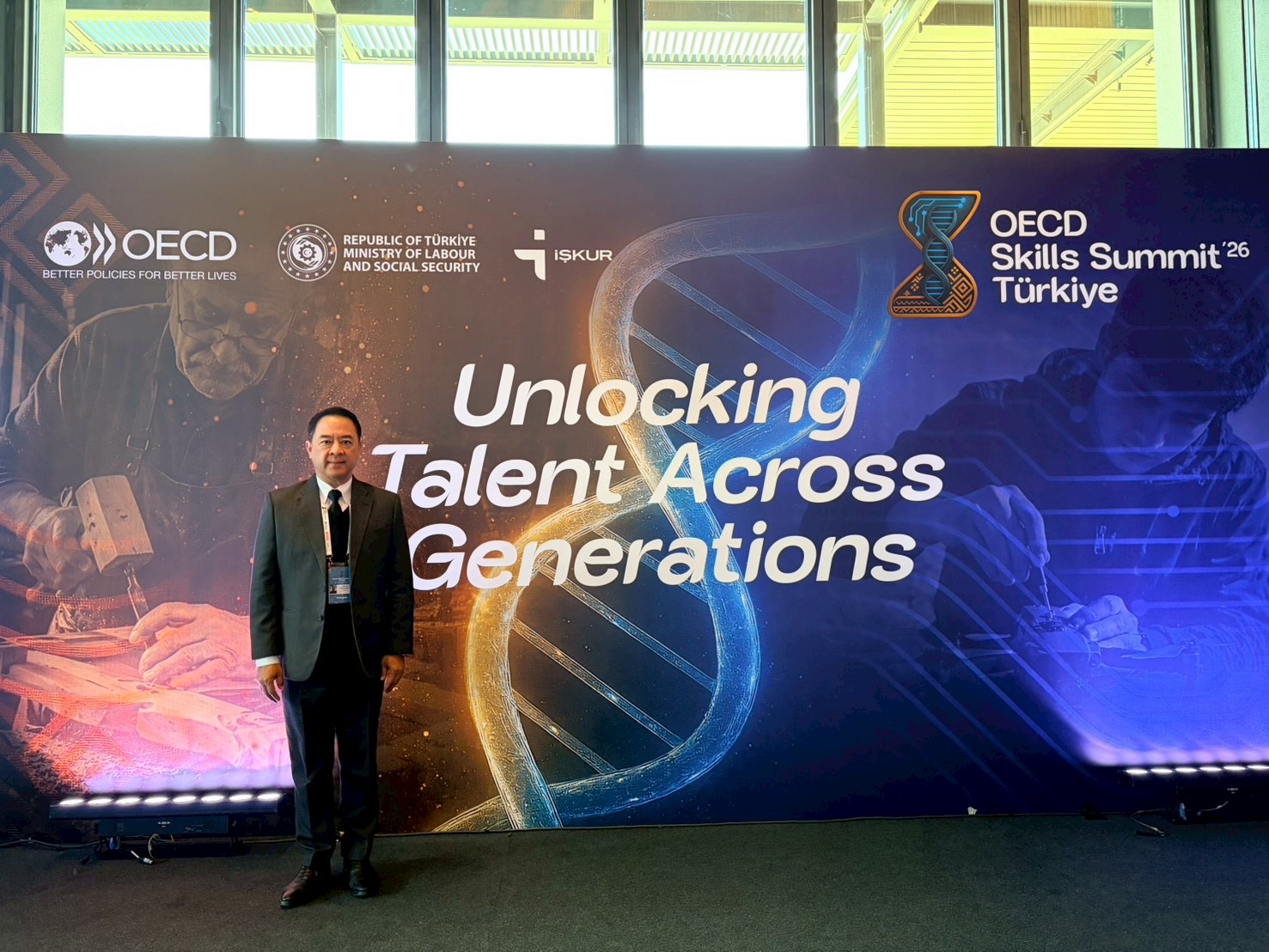
On 27 April 2026, local time in Türkiye, Police Lieutenant Colonel Wannapong Khotraks, Permanent Secretary of the Ministry of Labour, accompanied by Mr. Samas Patamasukon, Director-General of the Department of Skill Development, and delegation, participated in a high-level policy dialogue during the roundtable session of the OECD Skills Summit 2026. Building on the framework established at the 2024 Summit, the discussions focused on responding to global megatrends, particularly digital transformation, artificial intelligence (AI), and the green economy, all of which are significantly reshaping economic structures worldwide.
Thailand presented its strategic vision for developing Future Skills, emphasizing the advancement of competencies in science, technology, engineering and mathematics (STEM) and AI alongside soft skills. The objective is to address labour shortages, reduce inequality, and promote lifelong learning through micro-credentials and Individual Learning Accounts (ILAs), enabling workers to transition efficiently into emerging occupations.
From Thailand’s perspective, Police Lieutenant Colonel Wannapong Khotraks underscored that the Ministry of Labour recognizes the urgent importance of digital technologies, artificial intelligence (AI), and automation. The Ministry has therefore adopted proactive policies aimed at upskilling and reskilling the Thai workforce to become an innovation-driven workforce capable of meeting the demands of the future economy.
Meanwhile, Mr. Samas Patamasukon, Director-General of the Department of Skill Development, presented Thailand’s initiatives on Green Skills, which are closely aligned with the Government’s energy policy to accelerate the transition to clean energy and reduce greenhouse gas emissions.
The Ministry of Labour is expediting the development of skilled personnel to support priority industries under the national energy strategy, including maintenance and manufacturing for the electric vehicle (EV) industry, as well as the installation and management of solar energy systems. These initiatives are intended to strengthen investor confidence and position Thailand as a regional hub for a low-carbon economy.
The Ministry’s policy also emphasizes close collaboration with the private sector to establish a modern and inclusive skills ecosystem that serves all target groups. Particular attention is given to expanding opportunities for informal workers and young people to gain equitable access to future-oriented technology and clean energy skills. These efforts are consistent with the OECD’s vision of building sustainable skills systems that leave no one behind, while strengthening Thailand’s competitiveness on the global stage in a sustainable manner.